Key Points
- Reform UK London Assembly members Keith Prince and Alex Wilson walked out of a City Hall plenary session on Thursday afternoon after a dispute over a Liberal Democrat motion on Havering’s potential independence from London.
- The two members blamed the Assembly chair, Conservative Andrew Boff, for admitting what they described as a “flagrantly misleading” motion that they said falsely claimed Cllr Prince had rejected the principle of a referendum on Havering leaving the capital.
- Cllr Prince, who is also Leader of Havering Council, insisted he has not ruled out a referendum and has repeatedly said he is open to one if there is sufficient public demand and a credible, costed case.
- The walkout descended the session into chaos and was condemned by other Assembly members, with critics accusing Reform UK of misleading voters and abandoning Havering residents on the issue.
- The incident comes amid wider scrutiny of Reform UK’s flagship Havering council and its priorities, including a £70 million budget deficit and a recent “Requires Improvement” rating for adult social care.
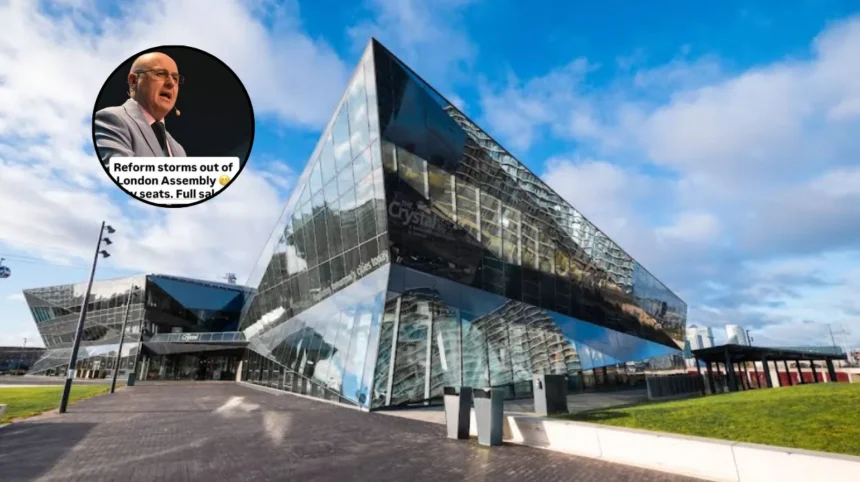
Havering (East London Times) July 7, 2026 –Reform UK’s two London Assembly members, Keith Prince and Alex Wilson, quit a plenary session at City Hall on Thursday after a heated row over a Liberal Democrat motion referencing Havering’s potential departure from Greater London.
- Key Points
- Why did Reform UK members walk out of the Assembly?
- What did Keith Prince say about the referendum claim?
- How did other politicians react to the walkout?
- What is the background to the Havering independence debate?
- What challenges does Havering Council currently face?
- What is the procedural status of a Havering exit from London?
- Background of the Havering independence development
- Prediction: How could this development affect Havering residents and London-wide politics?
As reported by the East London Times, the pair walked out after the chair, Conservative Andrew Boff, allowed the motion to be put to the Assembly, which they said contained a false claim that Cllr Prince had rejected the principle of a referendum on Havering gaining independence from London.
Why did Reform UK members walk out of the Assembly?
Keith Prince and Alex Wilson said they left because they believed the motion was “flagrantly misleading” and should not have been admitted by the chair.
As reported by the East London Times, Cllr Prince argued that the motion wrongly suggested he had ruled out a referendum, whereas he has maintained he is open to one if there is enough public demand and a financially sound case.
What did Keith Prince say about the referendum claim?
Cllr Prince insisted he had never ruled out holding a referendum and has repeatedly stated he is open to the possibility should there be sufficient public demand. As reported by the Evening Standard, he said:
“This motion is a shameless, unveiled attempt to sow disagreement between myself and my party colleagues where it doesn’t exist.”
He added: “By walking out of the Assembly today, we have made it abundantly clear that Reform UK will not stand for political gameplaying.” Prince also said:
“This flagrantly misleading motion should have never been admitted by the chair.”
How did other politicians react to the walkout?
The incident prompted strong criticism from other Assembly members. As reported by the Evening Standard, opponents accused Reform UK of misleading Havering voters at the election and then abandoning them
“on the floor of the Assembly, because Reform can’t make their mind up.”
The session descended into chaos as the walkout unfolded, with multiple members exchanging accusations over the wording and intent of the motion.
What is the background to the Havering independence debate?
The row forms part of a longer-running debate over whether Havering should seek to leave the Greater London Authority (GLA), a notion sometimes referred to as “Hexit.”
Ahead of the May local elections, Nigel Farage suggested other boroughs in east Outer London, including Bromley and Bexley, could also quit the capital under a Reform UK government.
Romford MP Andrew Rosindell, who defected to Reform from the Conservatives, has previously raised the prospect that Havering could splinter away from London.
However, during a council meeting later in May, Cllr Prince made clear he would not prioritise pursuing a Havering independence vote. As reported by the Evening Standard, he said:
“However, let me make this crystal clear. At this moment in time, from the research that I have done, it is quite clear that many of our residents would be significantly worse off financially if we were to leave London.”
He explained further: “So, while there are those who are emotionally attached to the attraction of leaving London, I and this administration have yet to be presented with a well-thought research and costed proposal which outlines the benefits to our residents.” Prince concluded:
“Therefore, we will not be wasting our time pursuing ‘Hexit’ or leaving the Greater London Authority, but we will be concentrated our time and energies on getting Havering back on track.”
What challenges does Havering Council currently face?
The independence debate is unfolding against a backdrop of significant financial and service pressures in Havering.
As reported by the London Echo, Prince highlighted a £70 million budget deficit and indicated the council has more pressing issues to address.
In June, the new Reform UK administration responded to a Care Quality Commission rating of “Requires Improvement” for adult social care, with Cllr Prince saying his team was “deeply disappointed” and vowing to act swiftly.
What is the procedural status of a Havering exit from London?
Any move for Havering to leave the GLA would require legislation from central government; the council does not have the authority to unilaterally exit.
This legal hurdle has been cited by critics, including former council leader Ray Morgon, who accused Reform UK of making unrealistic promises to voters.
Background of the Havering independence development
The idea of Havering leaving Greater London gained prominence during the 2026 local election cycle, with Reform UK figures including Nigel Farage and Andrew Rosindell floating the prospect of a referendum under a future Reform-led government.
The proposal was framed as a way to address perceived neglect of outer London boroughs and to give residents more control over local services and funding. However, after gaining control of Havering Council in May, the new leadership under Keith Prince signalled a more cautious approach, emphasising financial viability and the lack of a costed, evidence-based case for leaving London.
The Liberal Democrat motion at the London Assembly sought to pin down the council’s position, but its wording triggered the walkout after Prince and Wilson said it misrepresented his stance.
Prediction: How could this development affect Havering residents and London-wide politics?
For Havering residents, the immediate effect is likely to be continued uncertainty over the “Hexit” idea, with the council’s focus shifting towards addressing budget deficits and improving services such as adult social care.
If Reform UK maintains its current position—that a referendum is possible in principle but not a priority without a credible financial case—then the prospect of an actual vote remains distant unless central government changes the law or new evidence emerges.
Politically, the Assembly walkout may deepen distrust between Reform UK and other parties at City Hall, potentially complicating cross-party cooperation on London-wide issues such as transport, policing and housing.
For voters, the episode underscores the gap between campaign rhetoric and the practical constraints of governing, which could influence how future promises on constitutional or structural changes are received in Havering and other outer London boroughs.