Key Points
- Five suspects were arrested within 15 minutes following a brazen robbery at the Boots store on Hornchurch High Street.
- The Havering Joint Task Force, led by Sergeant Tanner, identified and intercepted the vehicle believed to have been used, on Southend Road.
- Perfume believed to be worth just under £10,000 was recovered and returned to the Hornchurch store.
- Havering Council Leader, Councillor Keith Prince AM, publicly praised the Task Force and Council-funded Section 92 police officers for their swift action.
- No staff or members of the public were reported injured during the incident.
- The council and members of the public have commended the professionalism and speed of the officers; the incident is presented as an example of proactive neighbourhood policing.
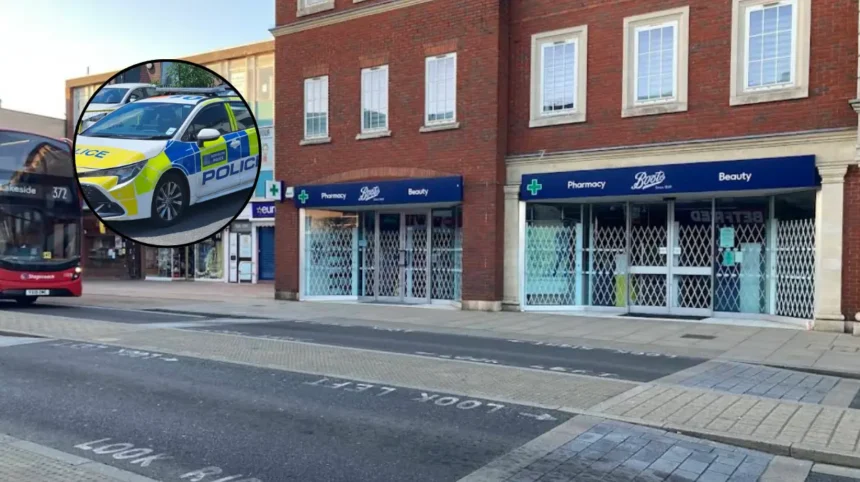
Hornchurch (East London Times) July 24, 2026 –Hornchurch’s Boots store on the High Street was the scene of a bold daytime robbery that prompted an immediate response from the Havering Joint Task Force. As reported by council statements, the incident prompted the Task Force, under the direction of Sergeant Tanner, to identify a vehicle believed to be connected to the offenders. The vehicle was intercepted on Southend Road and five suspects were arrested within 15 minutes of the alleged robbery. Officers recovered perfume with an estimated value of just under £10,000, and all stolen items were returned to the Hornchurch store.
- Key Points
- Who has praised the police response and what did they say?
- How did Sergeant Tanner and the Havering Joint Task Force carry out the arrest?
- What items were recovered and what is their reported value?
- Why are local officials emphasising the role of Section 92 officers?
- What has been the public reaction and how is the incident being framed locally?
- How might this incident affect local businesses and policing priorities in Havering?
- What information has been provided by independent media or other journalists?
- Who is Sergeant Tanner and what is the Havering Joint Task Force?
- Background of the particular development
- What has Havering Council said previously about town centre safety?
- How common are retail robberies of this type in the area?
- Prediction: how this development can affect local residents, businesses and policing in Havering
Who has praised the police response and what did they say?
As reported by Havering Council (Council press release), Councillor Keith Prince AM, Leader of Havering Council, praised the officers involved and singled out the Council-funded Section 92 police officers for their fast response. Councillor Prince stated:
“We are grateful to our Council-funded S92 police officers for their swift response and for arresting the perpetrators of the dreadful robbery in Hornchurch High Street.”
He described the footage of the incident as “shocking and totally unacceptable,” and said:
“Our town centres should be safe places for residents, visitors and businesses. We are hell bent on clamping down on this type of crime and antisocial behaviour and I want to reassure residents – together with our fantastic local police colleagues – we will drive these thugs out of our high streets whatever it takes.”
He also noted relief that no staff or members of the public were injured and committed to continuing close work with police and local businesses to help keep Havering’s communities safe.
How did Sergeant Tanner and the Havering Joint Task Force carry out the arrest?
According to the council’s account of the operation, the Havering Joint Task Force quickly identified the vehicle believed to have been used in the robbery. Led by Sergeant Tanner, officers intercepted the vehicle on Southend Road and arrested all five suspects.
The council said the suspects were located in less than half an hour, bringing what could have been a lengthy investigation to a swift conclusion. The recovered items, including perfume valued at just under £10,000, were returned to the store.
What items were recovered and what is their reported value?
Council communications state that perfume believed to be worth just under £10,000 was recovered during the arrests, and that all of the stolen items were returned to the Hornchurch Boots outlet. No further inventory or brand-by-brand valuation was released in the council statement.
Council statements confirmed that no staff members or members of the public were injured during the robbery and subsequent arrests.
Why are local officials emphasising the role of Section 92 officers?
Havering Council highlighted the contribution of Council-funded Section 92 police officers in the rapid arrest of the suspects. Section 92 funding commonly refers to council-supported policing arrangements that provide additional local officers or resources; in this case, councillors and local officials framed that investment as delivering tangible results in terms of quick response and recovery of stolen goods.
What has been the public reaction and how is the incident being framed locally?
The council said the professionalism and speed shown by Sergeant Tanner and his team earned praise from both the council and members of the public.
The operation was described as a further example of proactive policing, showing
“the difference that dedicated neighbourhood officers can make when responding quickly to crime.”
Councillor Prince’s remarks framed the arrest as part of an ongoing effort to clamp down on crime and antisocial behaviour in Havering’s town centres.
How might this incident affect local businesses and policing priorities in Havering?
Local leaders have used the incident to underline commitments to keep town centres safe, and to stress the value of neighbourhood policing and the Council-funded officers. Councillor Prince said the council will continue to work closely with the police and local businesses to help protect communities.
The quick recovery of high-value stolen goods and rapid arrests may be cited in future discussions about investment in local policing resources and collaborative efforts with businesses on security and crime prevention.
What information has been provided by independent media or other journalists?
The account given here follows the official reporting by Havering Council and its public statements. At time of writing, further details from independent media reporting — including witness statements, body-worn camera footage or statements from the police’s own press office — were not provided in the council release. Any subsequent coverage by local news outlets or police press offices should be sought for additional perspectives and verification of operational details.
Who is Sergeant Tanner and what is the Havering Joint Task Force?
As described in the council statement, Sergeant Tanner is the officer leading the Havering Joint Task Force involved in this operation. The Havering Joint Task Force is a local policing team tasked with tackling serious crime and antisocial behaviour across the borough.
The council credited the Task Force with proactive policing and neighbourhood-level responsiveness that led to the quick location and apprehension of the suspects.
Background of the particular development
Havering has previously invested in additional policing capacity through council-funded arrangements intended to support local neighbourhood policing.
Section 92 funding is an example of a mechanism where local authorities provide resources that supplement regular police funding to deliver extra on-the-ground officers or dedicated teams focused on local priorities.
The Havering Joint Task Force is one of the borough’s units set up to target serious crime, organise rapid responses to incidents affecting town centres, and tackle persistent antisocial behaviour.
In recent years, many London boroughs have explored similar partnerships or additional funding to augment policing as they balance local crime concerns, budgetary pressures and policing priorities set by the Metropolitan Police.
What has Havering Council said previously about town centre safety?
Havering Council leadership has repeatedly emphasised the importance of keeping town centres safe for residents, visitors and businesses.
Councillor Keith Prince AM, among others, has positioned investment in neighbourhood policing and close collaboration with local police as central to that strategy.
The council’s prior statements and funding decisions reflect a focus on visible policing in commercial hubs such as Hornchurch High Street.
How common are retail robberies of this type in the area?
Retail theft and robberies are a concern for many urban high streets, with incidents varying in frequency and scale. The council framed this incident as particularly serious due to the value of the goods stolen and the audacity of the robbery, but also highlighted that the swift police response limited the potential escalation and recovered the stolen items. For comprehensive statistics on retail crime trends in Havering and comparative boroughs, official Metropolitan Police crime data and local council crime reports are the appropriate sources.
Prediction: how this development can affect local residents, businesses and policing in Havering
- Short-term reassurance for businesses and residents: The rapid arrests and recovery of nearly £10,000 in goods are likely to provide immediate reassurance to local businesses and shoppers that coordinated, rapid responses are possible. This can temporarily bolster confidence among retailers and customers that town-centre safety is being actively managed.
- Potential increase in collaboration between businesses and police: The visible success of the Havering Joint Task Force may encourage more businesses to participate in intelligence-sharing, adopt security measures suggested by police, or support council initiatives that fund or supplement local policing. Retailers may reinvest in loss-prevention measures, including CCTV upgrades and staff training.
- Influence on local policy and funding debates: Evidence of a successful outcome involving Council-funded Section 92 officers could be used by council leaders and councillors to advocate continued or expanded investment in such arrangements. Conversely, opponents may seek independent audits or more detailed data to measure long-term impact beyond headline arrests.
- Deterrent effect and possible displacement: High-profile arrests can act as a short-term deterrent, but criminal activity can be displaced rather than eliminated without sustained policing, prevention work and social interventions. The incident may prompt renewed emphasis on repeat offender targeting and proactive operations by the Joint Task Force.
- Community expectations for policing: Residents may expect consistently rapid responses following the high-profile coverage of this arrest. That expectation can increase pressure on local police and council leaders to maintain visible and well-resourced neighbourhood teams.
- Legal and investigative follow-up: The arrested suspects will be subject to processing and any criminal proceedings that follow. The outcome of those cases, including charges and convictions if pursued, will shape longer-term perceptions of the effectiveness of the operation and the justice system’s handling of retail robbery.