Key Points
- Hackney’s Green-led council has voted, in principle, to begin ending its 1968 twinning agreement with the Israeli city of Haifa.
- The decision was taken despite strong opposition from Labour and Conservative councillors, who described it as “divisive” and “performative”.
- The de-twinning process has started before an equalities impact assessment is completed, with a period of engagement with interested parties now under way.
- The Mayor of Hackney will write to the Mayor of Haifa to seek the municipality’s views on the proposed termination.
- A new cross-party twinning working group, chaired by Cllr Sam Mathys, will review all five of Hackney’s existing twinning relationships and make a final recommendation to a future full council meeting.
- The Green Party made ending the Haifa twinning arrangement an election manifesto pledge after taking control of the council in May 2026 with 42 of 57 seats.
- Campaigners, including the Hackney Palestine Solidarity Campaign, have long petitioned for de-twinning, citing Israel’s actions in Gaza and allegations of apartheid.
- Jewish community leaders and some councillors have condemned the move, with Conservative Cllr Simche Steinberger saying: “To be honest, if I was Haifa, I’d be ashamed to twin with Hackney in such a situation.”
Hackney (East London Times) July 29, 2026 – Hackney’s Green-led council has voted to begin the controversial process of ending its decades-long twinning agreement with the Israeli city of Haifa, despite furious opposition from Labour and Conservative groups.
- Key Points
- Who voted to end the Haifa twinning agreement and why?
- What did Labour and Conservative councillors say about the vote?
- What is the next step in the de-twinning process?
- What do campaigners and community groups say?
- What has been the reaction from Jewish community leaders?
- Background: How did the Haifa twinning agreement originate and evolve?
- Prediction: How could this development affect Hackney residents and the wider community?
The decision, which some councillors condemned as “divisive” and “performative,” will see the council move, in principle, towards formally terminating the 1968 twinning agreement and all municipal ties with Haifa.
The de-twinning process has now begun before an equalities impact assessment has happened – and will include a period of engagement with interested parties
With the Greens’ large majority, the proposal was always set to pass at Tuesday evening’s meeting of full council.
The Mayor of Hackney will now write formally to the Mayor of Haifa to seek the municipality’s views on the proposal to terminate the twinning partnership.
Who voted to end the Haifa twinning agreement and why?
The Green Party, which took control of Hackney Council in May 2026 with 42 of 57 seats, made ending the Haifa twinning arrangement a key election pledge.
In their manifesto, the Hackney Greens stated:
“In Haifa, Palestinian people live under occupation and apartheid by the Israeli state; this is not a city that reflects Hackney’s values.”
They added:
“Hackney’s current and future twinning relationships should reflect our values, rather than undermine them,”
and promised to de-twin from Haifa at the “earliest opportunity”.
As reported by journalists covering the vote, Green councillors argued that maintaining civic relations with Haifa contradicts the north London borough’s values in light of Israel’s actions in Gaza and allegations of apartheid and genocide.
According to council documents, the agreement with Haifa has been “dormant” since the COVID-19 pandemic and the council
“will not engage in any twinning activity with Haifa whilst conflict is ongoing”.
What did Labour and Conservative councillors say about the vote?
Labour and Conservative groups opposed the move, with some describing it as “divisive” and “performative”.
Conservative Cllr Simche Steinberger said: “To be honest, if I was Haifa, I’d be ashamed to twin with Hackney in such a situation.”
Critics, including prominent members of the British Jewish community, have cited the fact that Haifa is a mixed Jewish-Arab city with a record of coexistence, and warned that singling it out risks alienating moderate voices in Israel.
What is the next step in the de-twinning process?
The council has established a new cross-party twinning working group, chaired by Cllr Sam Mathys, to review the council’s twinning policy and all five existing twinning relationships.
The working group will consider responses from Haifa, input from other interested parties, and the results of an equalities impact assessment before making a final recommendation to a future Full Council meeting on whether to formally terminate the partnership.
Published council documents state that the group is expected to meet three times and present their recommendations to the full council to vote on at a future date.
In the meantime, the immediate proposal for Mayor Garbett to write to the Mayor of Haifa and “seek their views on the proposed termination of the twinning” was put to the full council for a vote on Tuesday 28 July.
What do campaigners and community groups say?
The Hackney Palestine Solidarity Campaign welcomed the move, saying ending the partnership is a stand against the discrimination faced by Palestinians.
They also noted that Israeli arms company Elbit Systems is headquartered in Haifa.
According to Hackney Council documents published before the vote, the council has been petitioned to end twinning relations in protest against the war on Gaza and the ongoing humanitarian crisis in the enclave.
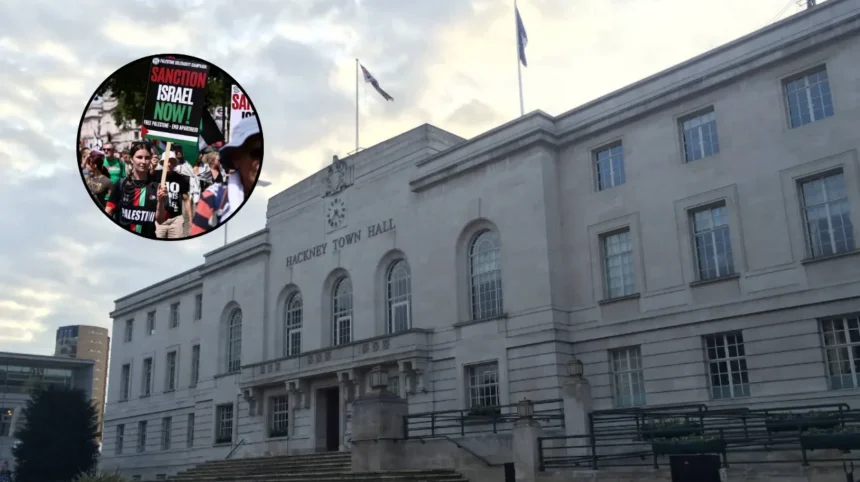
Following the outbreak of the Israel-Hamas war in 2023, calls to end the “sister cities” partnership have grown increasingly loud, with thousands signing petitions and staging protests outside Hackney Town Hall.
What has been the reaction from Jewish community leaders?
The plan sparked outrage among prominent members of the British Jewish community, who have cited the fact that Haifa is a mixed Jewish-Arab city with a record of coexistence.
Some warned that shunning even a model of Jewish-Arab cooperation as morally tainted raises uncomfortable questions about whether political activism has crossed into isolationism.
One opinion piece noted that, for roughly 30 years, the Haifa twinning relationship was centred on links between Homerton University Hospital and Rambam, a major Israeli hospital.
Background: How did the Haifa twinning agreement originate and evolve?
Hackney’s twinning agreement with Haifa was first signed in 1968, making it one of the longest-standing “sister city” relationships in the UK.
For decades, the arrangement included cultural exchanges, educational links, and, for roughly 30 years, a focus on connections between Homerton University Hospital in Hackney and Rambam Medical Centre in Haifa.
In recent years, the relationship became increasingly dormant, particularly after the COVID-19 pandemic, and no active twinning activities were taking place while conflict persisted in the region.
Before the Greens took power, the Labour-led council had repeatedly rejected calls to end the twinning, with the mayor in 2024 stating the council was “committed” to the controversial relationship after thousands signed a petition to cut ties.
In October 2025, an emergency council meeting saw a “divisive” motion tabled by Green and Independent opposition groups urging the council to “cut all ties with Israel’s genocide” defeated, while an amended Labour motion was carried instead.
That amended motion pledged to “explore options” around divestment and to pause twinning activity where conflict was ongoing, but did not commit to ending the Haifa relationship.
Prediction: How could this development affect Hackney residents and the wider community?
For Hackney residents, particularly those in Jewish and pro-Palestinian communities, the decision is likely to deepen existing divisions and intensify debates over the role of local authorities in foreign policy issues.
Jewish residents and community leaders may feel increasingly alienated if they perceive the council as singling out Israel while maintaining other international links, potentially affecting trust in local institutions.
Pro-Palestinian activists and supporters of the Boycott, Divestment and Sanctions (BDS) movement are likely to view the move as a significant victory, which could encourage further campaigns targeting other twinning arrangements or council investments.
For the council itself, the outcome of the equalities impact assessment and the working group’s final recommendation will be critical in determining whether the formal termination proceeds, and whether similar reviews are applied to Hackney’s other four twinning relationships.
If the process is seen as procedurally robust and balanced, it may set a precedent for other UK councils facing similar pressures; if it is perceived as rushed or one-sided, it could invite legal challenges or further community backlash.