Key Points
- Funding Suspended: Al Khair Foundation has temporarily paused all future funding to an overseas implementing partner organisation.
- Worker Detained: Mohammad Yousef Hasna, an employee of the overseas partner organisation, was detained in the United Kingdom on 31 July on suspicion of terrorism offences.
- Employment Status Clarified: Al Khair Foundation explicitly clarified that Hasna is employed by the partner entity and is not an employee of Al Khair Foundation.
- Regulatory Compliance: The UK-registered charity has submitted a Serious Incident Report to the Charity Commission and confirmed full cooperation with investigating authorities.
- Due Diligence Process: The charity maintained that all funds are transferred via official banking channels for pre-approved programmes following strict sanction list checks and due diligence.
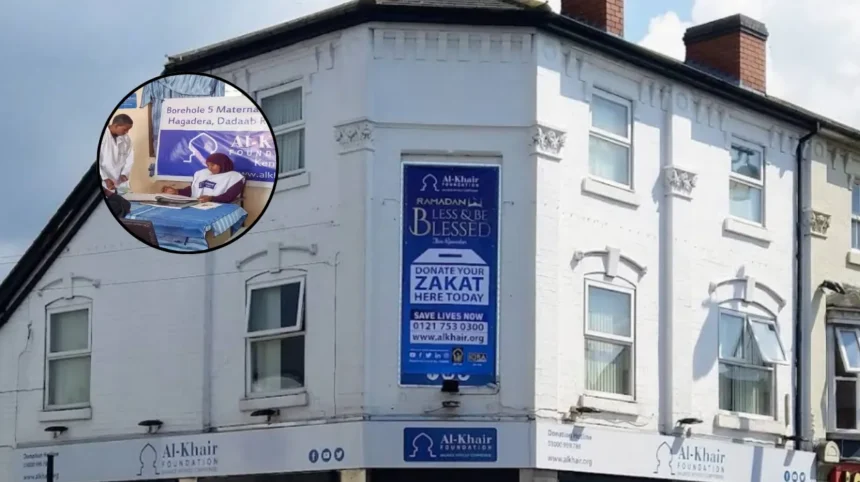
LONDON (East London Times) August 8, 2026 –Al Khair Foundation, a prominent UK-registered humanitarian charity, has officially suspended all future funding to one of its overseas implementing partner organisations following the detention of a partner employee in the United Kingdom under suspicion of terrorism offences. The regulatory action and funding freeze were initiated after Mohammad Yousef Hasna, who is employed directly by the overseas partner entity rather than the foundation itself, was taken into custody by British authorities on 31 July during a visit to the UK. In response to the development, the foundation submitted a Serious Incident Report to the Charity Commission and confirmed that it is fully cooperating with the regulatory body and law enforcement agencies while investigations remain ongoing.
- Key Points
- What led to the suspension of funding by Al Khair Foundation?
- How does Al Khair Foundation monitor and safeguard donor funds?
- What operational challenges do UK humanitarian charities face abroad?
- Why has Al Khair Foundation restricted further legal commentary?
- Background of the development
- Prediction: How this development affects British humanitarian charities and donors
What led to the suspension of funding by Al Khair Foundation?
The decision to freeze financial distributions to the overseas implementation partner was triggered directly by the UK law enforcement action against Mohammad Yousef Hasna on 31 July. The foundation moved swiftly to distance its internal operations from the individual while initiating internal compliance protocols.
In an official statement issued by Al Khair Foundation, the charity clarified the legal and employment boundaries regarding the detained individual, explicitly stating:
“Mohammad Yousef Hasna is employed by one of our implementing partner organisations. He is not an employee of Al Khair Foundation.”
Despite Hasna not being a direct member of the charity’s staff, the organisation confirmed that it had
“temporarily paused any future funding to the implementing partner organisation while the relevant authorities carry out their investigations.”
The foundation emphasised that no allegations of direct wrongdoing have been made against Al Khair Foundation itself, and the pause specifically targets future disbursements to the entity linked to Hasna.
How does Al Khair Foundation monitor and safeguard donor funds?
Addressing potential concerns regarding financial oversight and partner checks, Al Khair Foundation outlined its standard operational procedures for vetting partner bodies and tracking cross-border humanitarian aid disbursements.
The organisation stressed that financial transactions are routed strictly through vetted, legal banking channels for clear, pre-approved humanitarian projects.
As stated by Al Khair Foundation in their official public release:
“Before entering into any partnership, we undertake due diligence and compliance checks to help ensure that partner organisations and relevant individuals are not subject to applicable sanctions or included on relevant lists of designated or proscribed persons or organisations maintained by the competent authorities.”
The foundation further noted:
“We take our responsibility to safeguard the funds entrusted to us by our generous donors with the utmost seriousness and are committed to ensuring they are used for their intended humanitarian purposes.”
What operational challenges do UK humanitarian charities face abroad?
Operating in high-risk zones, conflict regions, and areas impacted by severe geopolitical instability presents significant compliance and logistical obstacles for international non-governmental organisations (INGOs). Al Khair Foundation highlighted that its global relief operations span over 75 countries dealing with war, famine, displacement, and natural disasters.
In its official commentary regarding these field conditions, Al Khair Foundation explained:
“Humanitarian organisations frequently operate in environments affected by conflict and complex geopolitical realities. These conditions can create significant operational challenges, but they do not alter our commitment to delivering impartial humanitarian assistance in accordance with humanitarian principles, applicable laws and our charitable objectives.”
Established in 2003, the UK-registered charity affirmed that its mission remains rooted in impartial aid provision regardless of the political or geographical environment. As stated by Al Khair Foundation:
“Our sole purpose is to save lives, alleviate suffering and help people rebuild their futures, regardless of nationality, ethnicity, religion or political affiliation.”
Why has Al Khair Foundation restricted further legal commentary?
Following legal advice and in light of active law enforcement proceedings, Al Khair Foundation confirmed that it will refrain from disclosing specific details regarding the underlying legal claims or allegations made against Hasna.
In its formal statement, Al Khair Foundation noted:
“Given that this is an ongoing matter, and having taken legal advice, it would not be appropriate for us to comment further at this stage.”
The charity reassured stakeholders, supporters, and beneficiaries that its broader global operations remain active, with the current funding suspension restricted strictly to the partner organisation involved in the investigation. The organisation concluded its communication by stating:
“We remain committed to transparency, accountability and the responsible stewardship of the resources entrusted to us, while continuing our humanitarian mission to support those most in need.”
Explore More UK News
Blind Singer Ms Sunny Sarah Pursues Music Industry Success in Liverpool
Argentina Banned From World Cup? What Really Happened
Background of the development
The detention of a partner worker under anti-terrorism legislation highlights longstanding systemic friction between international counter-terrorism financing rules and overseas humanitarian delivery.
Registered in the United Kingdom in 2003, Al Khair Foundation operates primarily by channeling funds through local implementing partners—a standard industry model used by international relief agencies to deliver aid in difficult-to-access, high-risk regions.
Under UK charity law and regulations enforced by the Charity Commission, registered charities retain ultimate legal responsibility for ensuring that donor funds do not breach statutory counter-terrorism laws or reach designated or proscribed entities, regardless of how many third-party intermediaries are involved. When a local partner or partner staff member becomes subject to law enforcement action, UK charities are statutory bound to submit a Serious Incident Report to the Charity Commission, suspend transfers to mitigate financial risk, and undergo regulatory reviews to prove that their due diligence, anti-money laundering (AML), and counter-terrorist financing (CTF) frameworks remain robust.
Prediction: How this development affects British humanitarian charities and donors
This development is likely to accelerate institutional scrutiny across the UK charity sector, directly impacting donors, international relief organisations, and overseas beneficiaries.
UK-based humanitarian charities operating in active conflict zones will face stricter scrutiny from both the Charity Commission and commercial banking partners.
Banks are expected to heighten their risk-aversion strategies, potentially leading to delayed fund transfers or temporary account freezes for charities delivering aid to high-risk areas.
Donors and philanthropy oversight bodies will demand greater transparency regarding how UK charities vet non-employee contractors and third-party overseas implementing partners.
Charities will likely be forced to invest more heavily in third-party auditing, real-time sanctions screening software, and stricter partner vetting frameworks to maintain donor trust.
For vulnerable communities in disaster and conflict zones, temporary funding freezes against local implementing partners can pause critical food, medical, and shelter distribution networks.
As UK charities adapt to higher regulatory hurdles, the operational speed of field aid delivery through third-party partners may experience noticeable delays.