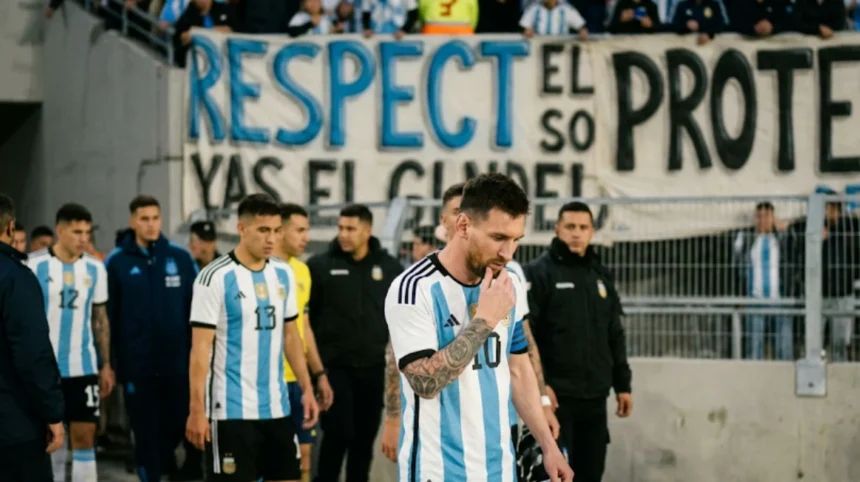
The claim that Argentina were banned from the World Cup is false. The controversy came from a post-match banner and possible disciplinary action, not from any confirmed tournament ban.
- What does “Argentina banned from World Cup” mean?
- Why did the Argentina controversy start?
- What is the Falklands dispute?
- Can FIFA ban a team from the World Cup?
- What punishments are more likely?
- Was Argentina actually banned in 2026?
- How do World Cup discipline rules work?
- What is the broader significance?
- What should readers remember?
What does “Argentina banned from World Cup” mean?
It refers to a rumor about punishment after a World Cup incident, not an actual removal from the tournament. FIFA reviewed the matter, but Argentina were not banned from the competition.
The phrase spread because headlines used dramatic language after Argentina players displayed a Falklands-related banner during celebrations. That banner created political backlash, which led many readers to assume a ban had already happened.
In football, a ban from a World Cup is a severe sanction. It is not the same as an investigation, warning, or fine. In this case, the available reporting pointed to review and possible discipline, not exclusion.
Why did the Argentina controversy start?
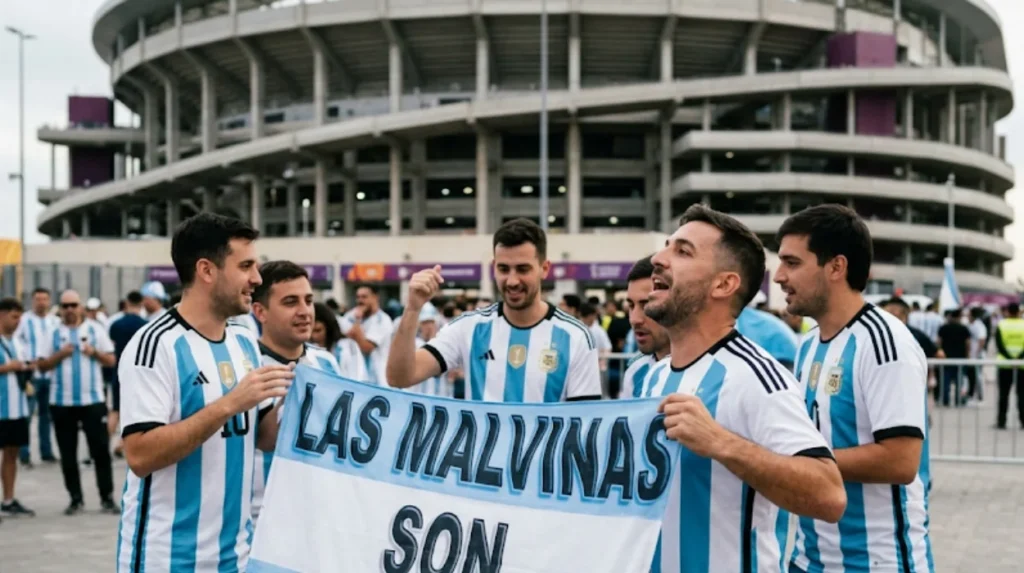
The controversy started after Argentina players held up a politically charged banner during World Cup celebrations. The message referred to the Falkland Islands dispute and prompted complaints from the United Kingdom.
The banner said “Las Malvinas son Argentinas,” a statement tied to Argentina’s claim over the Falkland Islands. Because the display happened during a high-profile match against England, the reaction was immediate and intense.
FIFA then began reviewing reports from the match. That review is the key reason the story became so widely discussed. A review is not the same thing as a ban.
What is the Falklands dispute?
The Falkland Islands are a British Overseas Territory in the South Atlantic. Argentina claims the islands and calls them Las Malvinas.
That long-running dispute gives the banner political weight. When it appeared during a World Cup celebration, it turned a sporting moment into an international controversy.
Can FIFA ban a team from the World Cup?
Yes, FIFA can ban teams in extreme cases, but that is rare. A banner incident does not normally lead to a full World Cup ban.
A full ban usually comes from major rule violations, federation suspension, or serious governance problems. In contrast, political messaging during a match usually leads to fines, warnings, or disciplinary review.
That is why the Argentina case was serious but not automatically disqualifying. The governing body had options short of removing the team from the tournament.
What punishments are more likely?
More likely punishments include a fine, a warning, or action against individuals involved. Those penalties are much more common than a tournament ban.
This distinction matters because headlines often blur the difference. A disciplinary review can sound dramatic, but it does not mean the team has been expelled.
Was Argentina actually banned in 2026?
No confirmed report said Argentina were banned from the World Cup. The team remained in the competition while FIFA reviewed the incident.
That is the most important fact to remember. Some headlines suggested a ban, but the actual reports described possible punishment, not confirmed removal.
Argentina had already qualified for the World Cup before the controversy, so the issue was not about qualification. It was about conduct during the tournament.
How do World Cup discipline rules work?
World Cup discipline rules cover player conduct, team behavior, and political messaging. FIFA can investigate match reports and issue penalties based on the breach.
The process usually starts with a report from the match. FIFA then decides whether a rule was broken and what kind of punishment fits the case.
Political banners are sensitive because World Cup matches are global events. Messages that carry national or territorial claims can trigger immediate scrutiny, especially when the match involves countries linked to the dispute.
What is the broader significance?
The broader significance is that football discipline now reaches beyond the pitch. Political symbols, public messages, and celebration behavior can all become part of a tournament’s disciplinary process.
The Argentina case shows how fast a sporting celebration can become an international news story. It also shows how easily a headline can turn “possible punishment” into “ban.”
For readers, the clearest takeaway is simple. Argentina were not confirmed as banned from the World Cup. The incident led to review and debate, not a verified tournament exclusion.
What should readers remember?
Readers should remember that Argentina were not banned from the World Cup. The story was about a disciplinary review after a political banner, not a confirmed expulsion from the tournament.
That is the factual version of the story in plain language. The claim spread quickly, but the verified outcome was much less dramatic than the headline suggested.
Were Argentina banned from the 2026 FIFA World Cup?
No. Argentina were not banned from the 2026 FIFA World Cup. Reports focused on a disciplinary review following a post-match political banner, but no official FIFA decision removed the team from the tournament.