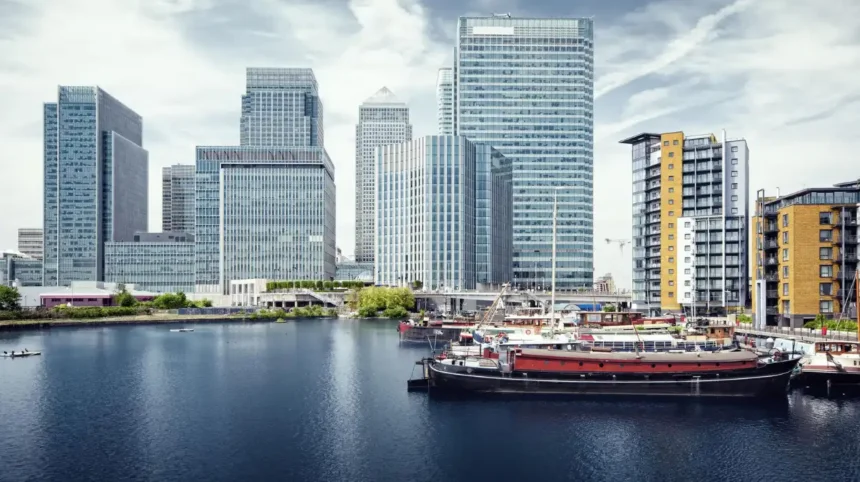
Canary Wharf is one of East London’s most recognisable destinations. Its high-rise financial district sits on the Isle of Dogs beside the River Thames and the historic West India Docks. The wider London Borough of Tower Hamlets extends well beyond the skyscrapers, covering waterfront districts, historic neighbourhoods, parks, museums, markets and cultural destinations.
- What are the best attractions to visit near Canary Wharf?
- Why is London Museum Docklands one of the best attractions near Canary Wharf?
- What can visitors see and do around West India Docks?
- Is Crossrail Place Roof Garden worth visiting in Canary Wharf?
- Which parks and green spaces are best near Canary Wharf?
- How can visitors explore Canary Wharf’s public art and architecture?
- What waterfront walks can visitors take around Canary Wharf and Tower Hamlets?
- What other Tower Hamlets attractions should visitors explore beyond Canary Wharf?
- How should visitors plan a Canary Wharf and Tower Hamlets sightseeing itinerary?
- Why are Canary Wharf and Tower Hamlets important for East London tourism?
- What is the best way to experience Canary Wharf and Tower Hamlets?
For visitors, Canary Wharf works as a practical starting point for exploring Tower Hamlets. The area has direct transport connections through the Jubilee line, Elizabeth line, Docklands Light Railway (DLR), buses and river services. London Museum Docklands is within walking distance of the central business district, while Greenwich is accessible through the Greenwich Foot Tunnel from Island Gardens.
Tower Hamlets also contains major green spaces. Victoria Park covers about 86 hectares and receives more than nine million visits each year. Mile End Park forms a 32-hectare linear green corridor between Victoria Park and Limehouse Basin. Mudchute Park and Farm provides open countryside-style space within the Isle of Dogs.
The borough’s attractions reflect its industrial, maritime, commercial and residential history. West India Docks opened in 1802 as London’s first enclosed dock system. The docks handled commodities including sugar, rum, coffee and tea before the area underwent major redevelopment during the late twentieth century.
This combination gives visitors a broad range of experiences without travelling far from Canary Wharf. A short itinerary can combine museums, waterfront walks, public art, shopping, parks and historic sites.
What are the best attractions to visit near Canary Wharf?
The best attractions near Canary Wharf include London Museum Docklands, Crossrail Place Roof Garden, West India Docks, Mudchute Park and Farm, the Thames waterfront, Greenwich Foot Tunnel, Canary Wharf public art and nearby Limehouse attractions for visitors.
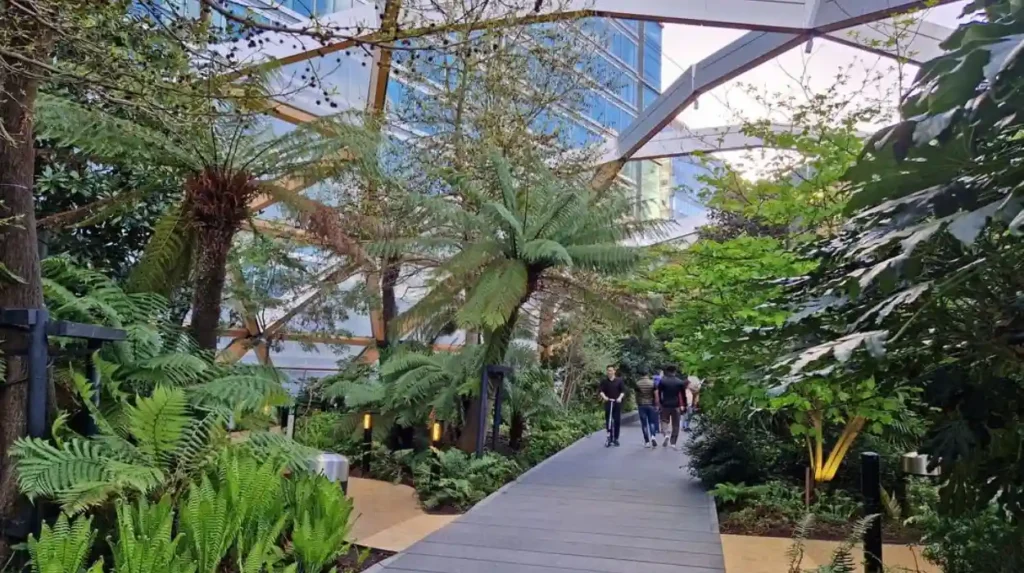
Canary Wharf itself contains several visitor attractions within a compact walking area. Crossrail Place connects directly with the Elizabeth line station and contains a landscaped roof garden. The garden provides an elevated green space surrounded by the district’s modern architecture.
West India Quay provides another important visitor area. Its historic warehouse buildings stand beside restaurants, cafés, shops and the London Museum Docklands. The museum occupies No. 1 Warehouse, a surviving nineteenth-century warehouse associated with the West India Docks.
Canary Wharf also has an extensive outdoor public art collection. Canary Wharf Group states that the estate contains more than 100 permanent works, including sculptures, architectural installations, murals and light artworks. The collection is free to view and distributed throughout the estate.
For visitors interested in waterfront scenery, the docks provide several connected walking environments. North Dock, Middle Dock and South Dock create a network of waterside spaces around the business district. The Thames is also accessible from the western and southern sides of the Isle of Dogs.
The combination of modern buildings, historic warehouses and water makes Canary Wharf particularly suitable for short visits. Visitors staying in the area for business can explore several attractions during a lunch break or after working hours.
Why is London Museum Docklands one of the best attractions near Canary Wharf?
London Museum Docklands is one of Canary Wharf’s most important cultural attractions because it occupies a historic West India Docks warehouse and explains London’s port history, international trade, migration, slavery, wartime experience and Docklands redevelopment through permanent galleries.
London Museum Docklands stands at No. 1 Warehouse, West India Quay. The building dates from the early nineteenth century and is one of the remaining original warehouses of the West India Docks. The museum is free to enter and is open daily from 10am to 5pm, according to its current visitor information.
The museum explains the development of London as a major port. Its galleries cover the city’s relationship with the River Thames, international commerce, dock workers and changing urban communities.
The historic context is particularly important. West India Docks opened in 1802 and were created to improve the handling and security of cargo arriving in London. The docks were closely connected to Caribbean plantation economies and the trade in goods produced through enslaved labour. London Museum documents this history directly.
The museum also covers the later Docklands period. Shipping patterns changed during the twentieth century, and large-scale dock operations declined before the redevelopment that created modern Canary Wharf.
Visitors can therefore understand the physical relationship between the old warehouses and the surrounding financial district. The museum is particularly useful before a walking tour because many of the streets, docks and buildings around Canary Wharf are connected to the history presented inside.
The museum is approximately a seven-minute walk from Canary Wharf’s DLR, Jubilee and Elizabeth line connections, while West India Quay DLR station is around three minutes away. Canary Wharf Pier is also within walking distance.
As you explore the modern financial district, you are crossing land with a deep maritime heritage. Read the full to understand its origins.
What can visitors see and do around West India Docks?
West India Docks combines historic warehouses, waterside promenades, restaurants, public spaces and modern architecture. Visitors can walk beside the former commercial docks, view preserved buildings, visit London Museum Docklands and connect the historic waterfront with Canary Wharf’s contemporary business district.
West India Docks forms the historical core of modern Canary Wharf. The enclosed dock system was built on the Isle of Dogs to provide a more controlled environment for unloading and storing imported goods.
The docks were designed on a large scale. London Museum records that the West India Docks stretched for almost a kilometre and had moorings for up to 500 vessels. Large warehouses stood around the basins to protect valuable cargo.
The historic warehouses remain one of the area’s defining features. No. 1 Warehouse now houses London Museum Docklands, while other surviving structures contribute to the architectural character of West India Quay.
Visitors can walk along the dock edges and observe the contrast between nineteenth-century industrial buildings and twenty-first-century towers. This is one of the easiest ways to understand how the Docklands landscape changed.
The area also provides access to food and leisure facilities. West India Quay has restaurants, cafés and bars close to the museum and waterfront. This makes it suitable for combining cultural sightseeing with a meal.
The docks are particularly useful for visitors who want a shorter itinerary. A two-hour visit can include London Museum Docklands, the surrounding warehouses and a waterside walk before continuing towards Canary Wharf’s central plazas.
The historic significance extends beyond architecture. The docks were part of London’s global trading system and are directly connected with the history of Caribbean trade and slavery. Understanding this context provides a more accurate interpretation of the buildings that visitors see today.
Is Crossrail Place Roof Garden worth visiting in Canary Wharf?
Crossrail Place Roof Garden provides a free landscaped public space above Canary Wharf’s transport infrastructure, combining tropical planting, covered walkways and views of surrounding buildings. It is particularly useful for visitors seeking greenery, photography, a quiet break or a short stop between attractions.
Crossrail Place is one of the most distinctive modern public spaces in Canary Wharf. The roof garden sits above the Elizabeth line station and is designed as an enclosed landscaped environment.
Its planting creates a clear contrast with the surrounding office towers. The covered structure also makes the space useful during variable London weather.
The garden works well as part of a walking route rather than as a standalone full-day attraction. Visitors can combine it with West India Quay, London Museum Docklands, Jubilee Park and the Canary Wharf public art collection.
The surrounding architecture also makes Crossrail Place useful for photography. The roof structure creates a strong geometric setting, while the plants soften the appearance of the transport infrastructure.
The Elizabeth line provides direct connections from Canary Wharf to central London destinations including Liverpool Street, Tottenham Court Road and Paddington. The Jubilee line and DLR provide additional connections.
This transport accessibility makes Crossrail Place particularly relevant to business travellers and digital nomads. Visitors can use the area as a meeting point before exploring the waterfront or continuing towards other East London attractions.
The garden is also part of Canary Wharf’s wider public-realm strategy. Modern plazas, parks, waterside paths and art installations create pedestrian spaces within an area dominated by commercial buildings.
Which parks and green spaces are best near Canary Wharf?
The strongest green-space choices near Canary Wharf are Mudchute Park and Farm, Mile End Park and Victoria Park. They provide different experiences, including urban farming, nature, sports, children’s facilities, historic landscapes, walking routes and large open lawns.
Mudchute Park and Farm is located on the Isle of Dogs and provides one of the area’s most distinctive changes of scenery. The site combines open land, animals, community facilities and views across the surrounding urban landscape.
It is especially relevant for families because the farm provides an educational environment within the borough. The wider Mudchute site is also recognised by Tower Hamlets as one of the borough’s two local nature reserves, alongside Tower Hamlets Cemetery Park.
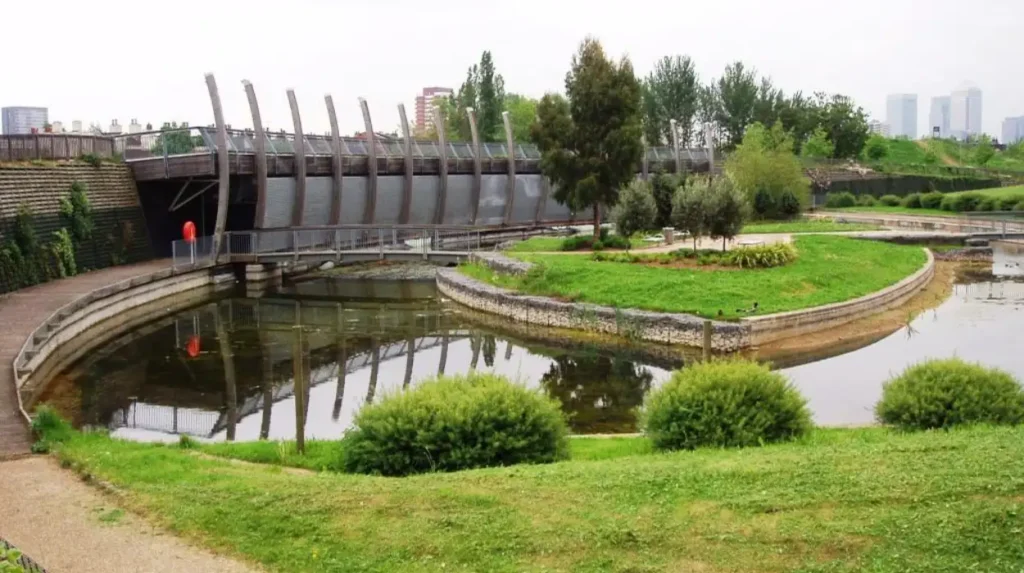
Mile End Park provides a larger linear green route further north. It covers 32 hectares and follows the Regent’s Canal between Victoria Park and Limehouse Basin. The park was developed on heavily damaged industrial land following the Second World War.
Mile End Park contains the Ecology Park, Arts Pavilion, Children’s Park, leisure centre, climbing wall, outdoor gym and skate park. Its Green Bridge crosses Mile End Road and provides a key pedestrian connection through the park.
Victoria Park is the largest major park in Tower Hamlets. It covers about 86 hectares and opened in 1845. Tower Hamlets Council describes it as London’s oldest public park and records more than nine million visits annually.
The park contains historic lakes, a bandstand, monuments, gardens, sports facilities and extensive lawns. It also forms part of a green corridor connecting areas around the Regent’s Canal and Mile End Park.
For visitors staying in Canary Wharf, Mudchute is the most convenient option for an Isle of Dogs nature experience. Mile End Park suits longer walking and family itineraries. Victoria Park suits visitors seeking a large historic public park.
How can visitors explore Canary Wharf’s public art and architecture?
Canary Wharf has one of London’s largest free outdoor public art collections, with more than 100 works distributed across plazas, gardens, streets and buildings. Visitors can explore sculptures, murals, architectural installations and light artworks without purchasing an attraction ticket.
Public art is a major component of Canary Wharf’s visitor experience. The estate’s collection contains more than 100 works, according to Canary Wharf Group’s current art information. The collection includes standalone sculptures, integrated architectural works, murals and light installations.
The artworks are distributed rather than concentrated inside a single gallery. Visitors therefore encounter art while moving between transport stations, shops, restaurants, offices, parks and waterfront spaces.
This arrangement makes an outdoor art walk easy to combine with other activities. A visitor can begin near Canada Square, continue through Cabot Square and Jubilee Park, then walk towards Crossrail Place and West India Quay.
Architecture is equally important. Canary Wharf contains some of London’s most recognisable modern commercial towers. The skyline developed during the Docklands regeneration programme and transformed the former dock landscape into an international financial and business district.
The public spaces create a pedestrian network between the towers. Canada Square Park, Jubilee Park, Cabot Square and the dockside areas provide places to stop between attractions.
Visitors interested in photography can focus on the relationship between glass towers, historic dock buildings, water and sculpture. This combination distinguishes Canary Wharf from conventional central London sightseeing districts.
The public art collection also supports short visits. A visitor with only one hour can explore several installations without committing to a museum or paid experience. Longer visits can combine the art route with shopping, food and waterfront walks.
What waterfront walks can visitors take around Canary Wharf and Tower Hamlets?
Visitors can build waterfront walks around West India Docks, Canary Wharf’s dock basins, Limehouse Basin, the River Thames and the Greenwich Foot Tunnel. These routes connect historic maritime landscapes with modern Docklands architecture and provide practical alternatives to indoor sightseeing.
Water is central to Tower Hamlets’ geography. The River Thames forms the borough’s southern boundary, while historic docks and canals extend into neighbourhoods including Canary Wharf, Limehouse, Poplar and the Isle of Dogs.
Canary Wharf’s dock network provides short, accessible walking routes. Visitors can walk beside the water while remaining close to restaurants, shops and transport stations.
Limehouse Basin provides a useful extension for visitors who want to continue east-west along the waterfront. The basin connects with the Regent’s Canal and the Thames, creating links between the Docklands and wider London canal network.
Another important route begins at Island Gardens on the southern side of the Isle of Dogs. From there, visitors can use the Greenwich Foot Tunnel to reach Greenwich beneath the River Thames.
The Greenwich Foot Tunnel opened in 1902. It runs between Island Gardens and Greenwich, with the Greenwich entrance located close to the Cutty Sark. The tunnel is a free public route and has lifts and spiral staircases at both ends.
This creates a practical Canary Wharf-to-Greenwich sightseeing connection. Visitors can explore the Isle of Dogs before crossing beneath the Thames and continuing into Greenwich.
The waterfront also provides a useful perspective on the area’s redevelopment. Historic docks were designed around cargo handling and shipping. Modern promenades now serve pedestrians, residents, workers and tourists.
For a relaxed itinerary, visitors can combine London Museum Docklands with a West India Docks walk. For a longer route, the itinerary can continue towards Limehouse or Island Gardens.
What other Tower Hamlets attractions should visitors explore beyond Canary Wharf?
Beyond Canary Wharf, Tower Hamlets offers Victoria Park, Mile End Park, Brick Lane, Spitalfields, Whitechapel, Limehouse, Tower Hamlets Cemetery Park and historic East End neighbourhoods, giving visitors access to markets, culture, green spaces, food, architecture and local history.
Tower Hamlets becomes more varied as visitors travel north and west from Canary Wharf. The borough includes established East End neighbourhoods with distinct architectural, cultural and commercial identities.
Brick Lane is one of the best-known destinations. The street and surrounding Spitalfields area contain food businesses, independent shops, markets, street art and historic buildings. Its cultural identity has been shaped by successive migrant communities, particularly the Bangladeshi community.
Spitalfields Market provides another major visitor destination. Its covered market environment supports independent retail, food businesses and creative activity. The surrounding streets contain historic commercial buildings and residential architecture.
Whitechapel provides access to cultural institutions, markets and the wider East End. The area is also connected to the Elizabeth line, District line, Hammersmith & City line and London Overground services.
Limehouse provides a different experience. Its location beside the Thames and Regent’s Canal links residential streets with historic maritime landscapes. Limehouse Basin is particularly useful for visitors interested in canals, walking and waterside architecture.
Tower Hamlets Cemetery Park provides another heritage and nature destination. It is one of the borough’s two local nature reserves, alongside Mudchute Park and Farm.
Victoria Park offers the strongest large-scale outdoor experience. The park includes historic features, sports facilities, cafés, open lawns and water features. Its size and extensive facilities make it suitable for families and visitors seeking a longer break from dense urban sightseeing.
Mile End Park provides another important visitor route. Its linear design connects several attractions and green spaces while following the Regent’s Canal. The park also contains an Ecology Park and Arts Pavilion, giving visitors cultural and environmental experiences in the same area.
These destinations demonstrate why Tower Hamlets should be treated as a wider visitor area rather than simply an extension of Canary Wharf. The borough combines historic East End neighbourhoods, modern commercial development, waterways, parks and cultural attractions within a relatively compact part of London.
How should visitors plan a Canary Wharf and Tower Hamlets sightseeing itinerary?
A practical itinerary should group attractions by geography and transport connections. Start with Canary Wharf and West India Quay, then choose a waterfront, park, market or Greenwich extension. This approach reduces unnecessary travel while covering culture, history, architecture, shopping and outdoor space.
A half-day itinerary can begin at London Museum Docklands. The museum provides historical context for the surrounding docks and currently operates from 10am to 5pm with free entry.
After the museum, visitors can walk through West India Docks and continue towards Canary Wharf’s central public spaces. Crossrail Place Roof Garden provides a convenient green stop before visitors explore the public art collection.
A shopping-focused itinerary can centre on Canada Place, Jubilee Place, Crossrail Place and the surrounding Canary Wharf retail district. These destinations sit within the same pedestrian area, allowing visitors to combine shopping with cafés, restaurants and public spaces.
A family itinerary can include London Museum Docklands followed by Mudchute Park and Farm. Families seeking a larger green space can travel onwards to Mile End Park or Victoria Park.
A history-focused itinerary should prioritise London Museum Docklands, West India Docks, Limehouse and the historic East End. The museum provides the strongest introduction to the port and Docklands story, while the surrounding neighbourhoods demonstrate how the landscape evolved.
A longer walking itinerary can connect Canary Wharf with Island Gardens and the Greenwich Foot Tunnel. The tunnel provides a free pedestrian crossing beneath the Thames and connects the Isle of Dogs directly with Greenwich.
Visitors should use Transport for London journey-planning information before travelling because station facilities, engineering works, event arrangements and service patterns change.
Accessibility also deserves consideration. London Museum Docklands provides public transport access through Canary Wharf and West India Quay, while Victoria Park has accessible public toilets and a changing places facility. Mile End Park also provides step-free route information for selected journeys from Mile End Underground Station.
The best approach is to choose one main theme and add nearby attractions. Canary Wharf works particularly well for this method because its museums, public art, waterfront spaces, shopping areas and transport connections are concentrated within a relatively small area.
Explore More Area Guide
Ultimate Tower Hamlets Tourist Guide: East London 2026
Best Places to Visit in Tower Hamlets, East London 2026
Why are Canary Wharf and Tower Hamlets important for East London tourism?
Canary Wharf and Tower Hamlets are important East London visitor destinations because they combine historic docks, global commerce, cultural institutions, public art, parks, waterways and diverse neighbourhoods. Their transport network also connects visitors efficiently with central London, Greenwich and wider East London.
The importance of Canary Wharf comes from the scale of its transformation. The former dock landscape became a major financial and commercial district while retaining historic waterfront structures and transport routes.
West India Docks opened in 1802 and remained a significant part of London’s port economy for generations. Shipping activity declined during the twentieth century before the Docklands underwent major redevelopment.
The result is a layered urban environment. Historic warehouses stand beside modern towers. Former industrial waterways now support pedestrian routes. Old dock infrastructure sits beside contemporary stations and public spaces.
Tower Hamlets adds another layer of diversity. The borough contains major parks, canals, local nature reserves, markets, cultural neighbourhoods and historic communities. Its green infrastructure provides a strong contrast with Canary Wharf’s commercial skyline.
The borough’s parks also have measurable visitor significance. Victoria Park receives more than nine million visits each year, while Mile End Park provides a 32-hectare linear green route through the borough.
The transport system reinforces the area’s tourism value. Canary Wharf is served by the Jubilee line, Elizabeth line and DLR. The surrounding network connects the district with central London, Stratford, Greenwich and other parts of East London.
This connectivity makes Canary Wharf suitable for different visitor profiles. Tourists can use it as a sightseeing base. Business travellers can explore nearby attractions after meetings. Residents can use the area for cultural and recreational activities. Digital nomads can combine cafés, public spaces and transport connections with flexible working routines.
The area also demonstrates the importance of heritage-led urban regeneration. The old docks were not simply replaced by new buildings. Several historic warehouses, dock basins and waterfront structures remain part of the modern landscape.
For visitors, this creates a clear geographical story. The modern skyline represents the contemporary commercial role of Docklands, while the docks and warehouses reveal the earlier maritime economy.
What is the best way to experience Canary Wharf and Tower Hamlets?
The best way to experience Canary Wharf and Tower Hamlets is to combine one cultural attraction, one waterfront route, one green space and one neighbourhood experience. This creates a balanced itinerary covering the area’s history, architecture, nature, food, shopping and contemporary East London identity.
Start with London Museum Docklands to establish the historical context. Continue through West India Docks to see the physical remains of the former port. Then move towards Canary Wharf’s public squares, public art and Crossrail Place Roof Garden.
For visitors with additional time, choose either Mudchute Park and Farm, Limehouse, Mile End Park or Victoria Park. Each destination offers a different perspective on Tower Hamlets.
Visitors interested in Greenwich can extend the journey to Island Gardens and cross the Thames through the Greenwich Foot Tunnel. Visitors focused on East End culture can travel towards Spitalfields, Brick Lane and Whitechapel.
The strength of Canary Wharf lies in its concentration of attractions. The strength of Tower Hamlets lies in its variety. Together, they provide a complete East London visitor experience built around history, waterways, architecture, culture and public space.
Canary Wharf should therefore be treated as more than a business district. Its docks, museum, gardens, public art and waterfront spaces form a substantial visitor destination. The wider borough adds historic neighbourhoods, large parks, markets, nature reserves and cultural attractions.
For first-time visitors, the most efficient strategy is to explore Canary Wharf and West India Quay first, then select one wider Tower Hamlets destination based on available time. This approach keeps travel efficient while revealing the historical and contemporary character of East London.
What are the best attractions near Canary Wharf?
The best attractions near Canary Wharf include London Museum Docklands, West India Docks, Crossrail Place Roof Garden, Canary Wharf’s public art collection, Mudchute Park and Farm, and the Thames waterfront. These attractions combine history, architecture, culture, nature and leisure.