Tower Hamlets is one of the most historically layered boroughs in East London. It combines medieval royal heritage, Victorian streets, working-class history, maritime culture, immigrant communities, contemporary art, major markets, public parks and the modern financial district of Canary Wharf.
- What makes Tower Hamlets important to London’s East End?
- Which historic landmarks should tourists visit in Tower Hamlets?
- Which museums explain East End history best?
- Why are Brick Lane and Spitalfields major tourist attractions?
- Which markets should tourists explore in Tower Hamlets?
- What cultural attractions define Tower Hamlets today?
- Where can visitors experience Tower Hamlets’ parks and open spaces?
- How can tourists explore Canary Wharf and the Docklands?
- What is the best way to plan a Tower Hamlets sightseeing day?
- Why should tourists include Tower Hamlets in an East London itinerary?
For tourists interested in London’s East End, the borough provides a concentrated route through several centuries of London history. The Tower of London and Tower Bridge form the best-known landmarks beside the River Thames. Further east, the former docks explain London’s role as a global trading port. Around Whitechapel, Spitalfields, Bethnal Green and Brick Lane, historic streets reveal successive waves of migration, religious change, trade and cultural development.
Tower Hamlets Council describes the borough as the heart of London’s East End and highlights its combination of ancient and modern attractions. Its official visitor information identifies museums, galleries, markets, the Tower of London, Tower Bridge and the Docklands as major attractions.
The borough is also exceptionally dense and well connected. Tower Hamlets recorded a population of 310,300 in the 2021 Census and 328,626 by mid-2023. The council identifies nine London Underground and seven Overground stations, 17 DLR stations, the Elizabeth line and 26 daytime bus routes.
That combination makes Tower Hamlets particularly suitable for visitors who want to combine major London landmarks with neighbourhood exploration.
What makes Tower Hamlets important to London’s East End?
Tower Hamlets is important because it connects London’s royal, maritime, industrial, migrant, cultural and financial histories within one borough. Its landmarks range from the medieval Tower of London to modern Canary Wharf, creating an unusually broad East End visitor experience.
The borough takes its name from the Tower of London and the hamlets historically associated with it. Its location beside the River Thames shaped its development for centuries.
The southern edge follows a major curve of the Thames. This waterfront position supported docks, warehouses, shipbuilding, trade and industries connected with London’s expanding port.
The East End also became a destination for migrant communities. French Huguenots, Jewish communities and later South Asian communities all influenced the streets, buildings, businesses and religious institutions of the area.
Brick Lane provides one of the clearest examples. Tower Hamlets Council identifies the street as a historic focal point of the Bangladeshi community while also documenting earlier French Huguenot and Jewish settlement. The council states that Brick Lane Market was established in 1888, although market activity in the wider Brick Lane area has much older roots.
The modern borough adds another layer. Canary Wharf developed from former docklands into one of London’s major financial districts. Tower Hamlets Council describes Canary Wharf as part of the borough’s transformation from a maritime industrial area into a major business centre.
For visitors, this means Tower Hamlets is not defined by one attraction. Its value comes from the relationship between landmarks, streets, markets, museums, waterways and neighbourhoods.
As you explore the modern East End, you are crossing land shaped by centuries of migration, trade and redevelopment. Read about the full to understand its origins.
Which historic landmarks should tourists visit in Tower Hamlets?
The Tower of London, Tower Bridge, Christ Church Spitalfields, Wilton’s Music Hall and historic streets around Spitalfields provide some of Tower Hamlets’ strongest heritage experiences. Together, they reveal royal power, engineering, religion, entertainment, migration and commerce across different periods.
The Tower of London is the borough’s most internationally recognised historic landmark. Founded after the Norman Conquest, the complex developed into a royal palace, fortress, prison, armoury and treasury. The White Tower is the central surviving structure and dates from the late 11th century.
The Tower also has a strong connection with the River Thames. Its riverside position helped defend the eastern approach to medieval London.
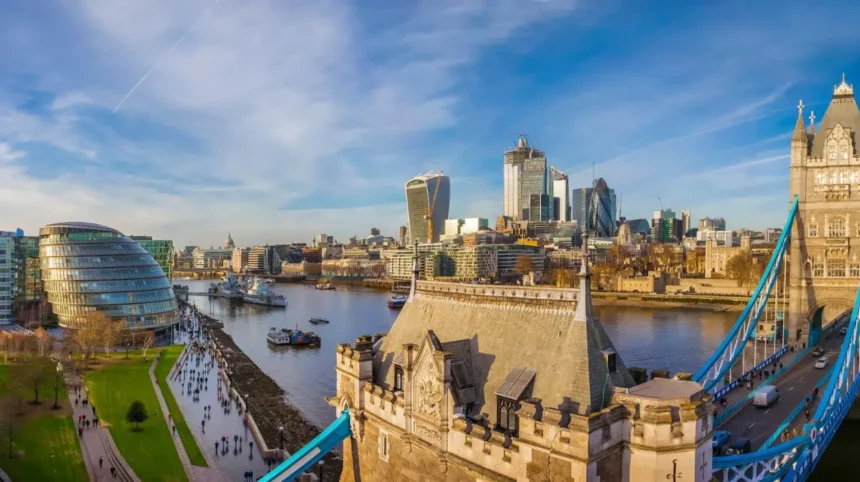
Tower Bridge stands nearby and provides a contrasting example of Victorian engineering. Completed in 1894, its distinctive combined bascule and suspension design was created to maintain a road crossing while allowing tall vessels to reach the Pool of London.
Together, the Tower of London and Tower Bridge establish the historic waterfront as one of the most recognisable visitor zones in East London.
What can visitors see around Spitalfields?
Spitalfields provides a different historical experience. The area contains Georgian architecture, former merchant houses, religious buildings, market structures and streets associated with successive immigrant communities.
Christ Church Spitalfields is one of the area’s most prominent buildings. Designed by Nicholas Hawksmoor, the church was completed in 1729 as part of a programme of new churches intended to serve London’s expanding population.
Fournier Street contains some of the finest surviving Georgian domestic architecture in the East End. Its buildings reflect the area’s historic connection with wealthy Huguenot silk weavers and merchants.
The Brick Lane and Spitalfields cultural trail identified by Tower Hamlets includes 20 sites of particular interest. These include Christ Church Spitalfields, Old Spitalfields Market, Fournier Street, Princelet Street, Whitechapel Gallery, Altab Ali Park, Toynbee Hall and the former Truman Brewery site.
Wilton’s Music Hall provides another important heritage destination. It is associated with the development of London’s entertainment culture and remains a significant surviving example of a historic music hall environment.
Which museums explain East End history best?
The Museum of London Docklands, Ragged School Museum, Royal London Hospital Museum, Dennis Severs’ House and Young V&A provide different perspectives on East End history, covering docks, education, healthcare, domestic life, childhood, migration and social change.
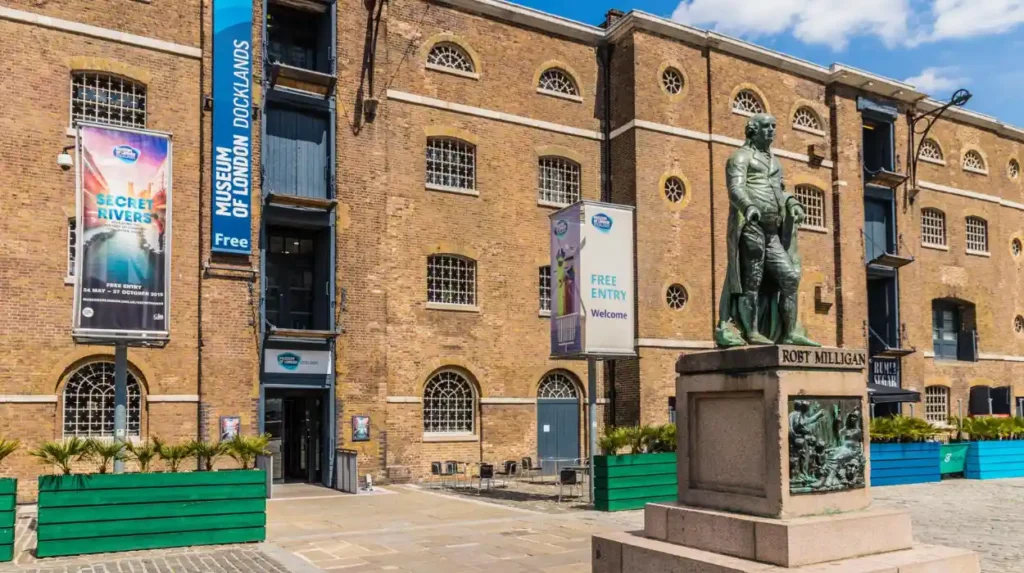
The Museum of London Docklands is one of the strongest starting points for understanding Tower Hamlets. Located beside the former West India Docks, it explores London’s relationship with the River Thames, international trade and the Docklands.
The museum occupies part of a Grade I listed warehouse associated with the historic dock system. Tower Hamlets’ conservation documentation identifies the museum as a key heritage collection explaining the history of the Thames and Docklands.
The Ragged School Museum offers a more local social history. It examines Victorian education and the experiences of children in East London. The museum includes a recreated classroom connected with the work of Dr Thomas Barnardo.
The Royal London Hospital Museum documents healthcare in the East End from the 18th century onwards. It connects medical history with the development of Whitechapel and its communities.
Dennis Severs’ House in Spitalfields presents domestic history through a preserved historic house environment. Its interpretation focuses on the lives and surroundings associated with Huguenot silk weavers.
The former Museum of Childhood, now Young V&A, in Bethnal Green provides another useful attraction for visitors. Its collections focus on childhood, design, play and material culture.
These museums are particularly useful when combined with outdoor exploration. A visit to the Museum of London Docklands explains the docks. A subsequent walk through Canary Wharf shows how that former industrial landscape has changed.
Why are Brick Lane and Spitalfields major tourist attractions?
Brick Lane and Spitalfields are major East End attractions because they combine historic architecture, markets, food, religious heritage, independent businesses, galleries and migration history within a compact area that is easy to explore on foot.
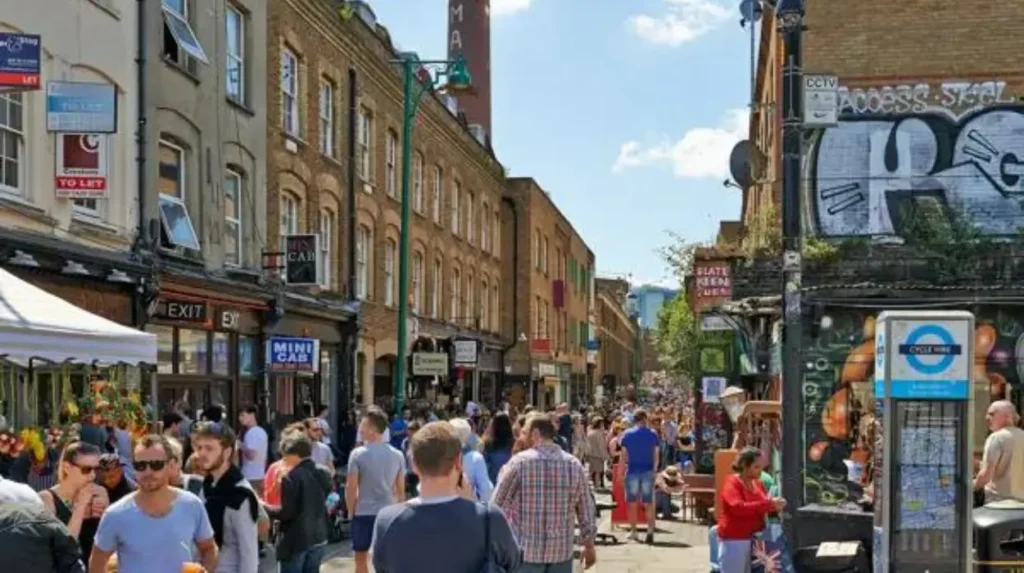
Brick Lane is one of London’s most recognisable East End streets. Its identity has changed repeatedly through migration and commerce.
French Huguenot settlement influenced Spitalfields during the early modern period. Jewish communities later established businesses and institutions in the area. During the 20th century, Bangladeshi migration became a defining influence, particularly through restaurants, food businesses, shops and community institutions.
Brick Lane Jamme Masjid demonstrates this layered religious history. The building was originally constructed as a Huguenot chapel, later became a Methodist chapel and subsequently became a mosque.
The Old Truman Brewery represents the area’s industrial heritage. Brewing activity in the district dates back centuries, while the Truman brewery site developed into a major brewing complex before closing in the late 20th century. Tower Hamlets Council records that the brewery was purchased by Joseph Truman in 1679 and expanded during the 18th century.
Today, Brick Lane is also associated with street art, fashion, food and markets. The combination of historic buildings and contemporary creative businesses makes the area relevant to both heritage tourists and visitors seeking modern East London culture.
Spitalfields Market provides another important attraction. Its market buildings and surrounding streets connect retail history with contemporary food, design and independent commerce.
The area works particularly well as a walking destination because many attractions sit within a relatively small geographic area.
Which markets should tourists explore in Tower Hamlets?
Tower Hamlets has ten council-supported street markets, including Brick Lane, Columbia Road, Whitechapel, Roman Road, Chrisp Street, Petticoat Lane, Bethnal Green Road, Sclater Street, Watney Market and Roman Road Square, each serving different neighbourhood roles.
Markets are central to the identity of London’s East End. Tower Hamlets Council identifies ten street markets across the borough.
Brick Lane Market is particularly associated with Sundays. The council describes it as a market selling fashion, food, art, jewellery, retro clothing and household goods. Its location also places it within the wider Spitalfields and Whitechapel heritage area.
Columbia Road Flower Market offers a different experience. It specialises in flowers and plants and operates on Sundays. The surrounding street contains independent shops, galleries, cafés and pubs.
Whitechapel Market runs along Whitechapel Road and reflects the area’s longstanding commercial and multicultural character. Visitors find fresh produce, spices, clothing, jewellery and other everyday goods.
Roman Road Market provides another historic market environment in Bow. The council describes Roman Road as part of an ancient trade route and identifies the market as operating on Tuesdays, Thursdays and Saturdays.
Chrisp Street Market serves Poplar and dates back to the Victorian period. Its pedestrianised setting and local food businesses provide a strong connection with everyday community life.
Petticoat Lane, including the Wentworth Street area, is another established East End shopping destination. Its history is closely connected with street trading and clothing.
Market opening days and trading hours change, particularly around public holidays and seasonal periods. Visitors should check the relevant council or market operator information before travelling.
What cultural attractions define Tower Hamlets today?
Tower Hamlets has a major contemporary cultural sector that includes Whitechapel Gallery, Rich Mix, Wilton’s Music Hall, street-art districts, festivals and community venues, creating a visitor experience that extends beyond traditional museums and historic landmarks.
Whitechapel Gallery is one of the borough’s leading contemporary art institutions. The gallery opened in 1901 and was established to bring high-quality exhibitions to the East End.
Its early annual report records exhibitions of modern paintings, historic objects and work connected with local schools and institutions. The original building was designed by Charles Harrison Townsend and completed in 1900.
Today, the gallery remains closely associated with contemporary art and the Whitechapel cultural district.
Rich Mix in Bethnal Green provides another contemporary cultural venue. Its programme combines cinema, performance, music, exhibitions and community activity.
The borough’s cultural landscape also includes street art. Brick Lane, Shoreditch’s southern edge and surrounding streets contain murals, installations and changing public artworks.
The distinction between historic and contemporary culture is particularly important in Tower Hamlets. A visitor can move from a Georgian street to a contemporary gallery, then continue towards a market or former industrial site within a short walking route.
Tower Hamlets Council identifies 22 art galleries within the borough and highlights major music festivals and cultural events as part of its visitor offer.
This cultural infrastructure gives the borough relevance for tourists returning to London who want attractions beyond central London’s traditional sightseeing circuit.
Where can visitors experience Tower Hamlets’ parks and open spaces?
Victoria Park, Mile End Park and smaller historic gardens provide accessible outdoor attractions within Tower Hamlets, combining landscaped spaces, water features, recreation areas, historic structures, community events and routes between East End neighbourhoods.
Victoria Park is the borough’s largest and best-known park. It opened in the 19th century and contains historic lakes, landscaped areas, a bandstand and other heritage features.
Tower Hamlets Council identifies two original London Bridge stone alcoves within Victoria Park, alongside the Burdett-Coutts Memorial and historic lakes. The park has also received major public recognition, including the Time Out Best of the City Award for Best Park in London in 2021.
Mile End Park provides another important green corridor. It includes sports facilities, ecological areas and the Art and Ecology Pavilions.
The park’s location makes it useful for visitors walking between Bethnal Green, Mile End and Bow. It also provides an outdoor contrast to the dense streets around Whitechapel and Spitalfields.
Tower Hamlets Council’s parks directory lists 121 park and open-space entries, including Altab Ali Park, Allen Gardens, Boundary Gardens, Christchurch Gardens and Great Eastern Slipway.
Altab Ali Park is particularly relevant to East End cultural history. It is named after Altab Ali, a Bangladeshi garment worker whose murder in 1978 became an important moment in the history of anti-racist activism in the area.
For tourists, the parks provide useful breaks between museums, markets and urban attractions. They also show how public space has developed alongside the borough’s growing population.
How can tourists explore Canary Wharf and the Docklands?
Canary Wharf and the Docklands show how Tower Hamlets changed from a major maritime trading district into a global financial centre, with former docks, warehouses, modern skyscrapers, waterside paths, public art and transport connections creating a distinct East London landscape.
The Docklands form one of the most significant urban transformation stories in modern London.
The West India Docks opened in 1802 and became major centres for international trade. Warehouses stored goods arriving through the River Thames, while docks supported employment and industries across the surrounding communities.
Containerisation changed global shipping patterns during the 20th century. The historic docks eventually closed, with the Isle of Dogs facing substantial economic decline.
The London Docklands Development Corporation was established in 1981 to regenerate the wider Docklands area. Tower Hamlets planning documents record the subsequent transformation of the Isle of Dogs and the development strategy that followed.
Canary Wharf became the centre of this transformation. Its skyline is now dominated by high-rise commercial buildings, including One Canada Square, which became one of London’s most recognisable skyscrapers after its completion in 1991.
The area remains connected to its maritime past through dock basins, waterside public spaces and surviving warehouse structures.
For visitors, Canary Wharf works particularly well as a contrast to Whitechapel and Spitalfields. Whitechapel presents dense historic streets and neighbourhood commerce. Canary Wharf presents large-scale redevelopment, finance, architecture and public realm design.
The Elizabeth line, Jubilee line, Docklands Light Railway and London Underground provide strong connections between Canary Wharf and other parts of London.
Explore More Area Guide
Best Places for a Relaxing Day in Tower Hamlets, East London
Discover Hidden East London: Tower Hamlets Off-Grid Guide
What is the best way to plan a Tower Hamlets sightseeing day?
A practical Tower Hamlets sightseeing day should combine one major historic attraction, one museum or gallery, one market or neighbourhood, and one riverside or park destination, using Underground, Overground, DLR, Elizabeth line and walking connections.
A heritage-focused itinerary can begin at the Tower of London and continue towards Tower Bridge. From the riverside, visitors can travel north towards Whitechapel and Spitalfields.
A cultural itinerary can centre on Whitechapel Gallery, Brick Lane, Old Spitalfields Market and the historic streets around Fournier Street and Princelet Street.
A market-focused visit works particularly well on a Sunday because Brick Lane Market and Columbia Road Flower Market operate on Sundays. Their opening hours differ, so visitors should verify the current schedule before travelling.
A Docklands-focused itinerary can start at the Museum of London Docklands before continuing towards Canary Wharf. This route establishes the historical context before presenting the modern financial district.
A family-oriented day can combine Young V&A with Victoria Park or Mile End Park. These attractions provide indoor and outdoor options within the eastern part of the borough.
Tower Hamlets is well suited to walking because many attractions cluster around Whitechapel, Spitalfields, Brick Lane and the City fringe. Longer journeys towards Canary Wharf, Poplar and the Isle of Dogs are supported by the DLR, Underground, Elizabeth line and buses.
Visitors should check attraction admission requirements, temporary exhibitions, market schedules and transport conditions before setting out. Opening arrangements change more frequently than the underlying historical significance of the destinations.
Why should tourists include Tower Hamlets in an East London itinerary?
Tower Hamlets deserves a central place in an East London itinerary because it combines royal heritage, docklands history, migration, markets, museums, contemporary art, green spaces and modern architecture across a highly connected part of London.
The borough provides a particularly strong example of how London developed through successive economic and cultural phases.
The Tower of London represents medieval royal authority. Tower Bridge represents Victorian engineering. The docks represent industrial-scale international trade. Whitechapel and Spitalfields demonstrate migration and community formation. Brick Lane represents contemporary multicultural commerce. Canary Wharf represents late 20th-century regeneration and global finance.
This sequence gives visitors a clear framework for understanding East London rather than simply visiting disconnected attractions.
The borough’s demographic development reinforces this significance. Tower Hamlets recorded a 22 per cent population increase between 2011 and 2021, rising from 254,096 to 310,300. By mid-2023, the population had reached 328,626. The council also describes Tower Hamlets as one of the most densely populated areas in the country.
The area’s cultural diversity is equally significant. Tower Hamlets Council reports that more than 137 languages are spoken in the borough and that 43 per cent of residents were born in more than 200 different countries.
These statistics help explain why the borough’s visitor attractions are so varied. Its tourism offer is built from living communities as well as preserved heritage.
For tourists interested in London’s East End, Tower Hamlets therefore offers more than a collection of landmarks. It provides a geographically compact way to understand London’s changing relationship with monarchy, trade, migration, industry, culture, finance and urban regeneration.
What are the best attractions in Tower Hamlets for tourists?
The best attractions include the Tower of London, Tower Bridge, Brick Lane, Spitalfields, Museum of London Docklands, Whitechapel Gallery, Victoria Park and Canary Wharf. Together, they cover East End history, culture, markets, museums, architecture and modern urban development.