Tower Hamlets delivers a rare combination of deep historical heritage and cutting-edge modern attractions within one London borough. From the tenth-century St Dunstan’s church to the 2012 Olympic Park’s contemporary architecture, visitors experience 1,000 years of London’s evolution in a compact, accessible area.
- What are the top historical attractions in Tower Hamlets?
- Which modern attractions showcase Tower Hamlets’ contemporary culture?
- Where can visitors experience Tower Hamlets’ regenerated docklands?
- What markets and street experiences define Tower Hamlets?
- Which parks and green spaces offer recreation in Tower Hamlets?
- How does Tower Hamlets blend heritage with modern development?
- What practical information do visitors need for Tower Hamlets?
What are the top historical attractions in Tower Hamlets?
St Dunstan’s Stepney, Georgian Mile End houses, and the London Wall Roman ruins provide authentic historical experiences spanning 1,000 years of East London’s development. These sites offer free or low-cost access to authentic heritage without the crowds of central London attractions.
St Dunstan’s, Stepney, stands as the Mother Church of the East End, founded or re-founded in AD 952 by St Dunstan, Bishop of London and Lord of the manor of Stepney. The church occupies Stepney High Street and retains its dedication to St Dunstan and All Saints since 1029, when Dunstan was canonised. The present church structure dates mostly to a fifteenth-century enlargement and restoration, though a church has existed on the site since at least the tenth century. St Dunstan serves as patron saint of bellringers, bellfounders, metalworkers, musicians and Stepney, with his feast day celebrated on May 19th. The parish originally covered most of what would become inner East London before population growth created numerous daughter parishes, earning it the title “Church of the High Seas” due to its connection to maritime communities.
The Georgian houses at 133–139 Mile End Road represent some of the finest preserved eighteenth-century domestic architecture in Tower Hamlets. Built around 1740, these Grade II listed properties survived bomb damage during the Second World War and were wonderfully restored by the Spitalfields Trust. The houses form part of a group of listed buildings on Mile End Road, with the left-hand house at 133/5 Mile End Road having lost its top floor during wartime before restoration. Tredegar Square in Mile End provides another well-preserved Georgian square within the borough, offering visitors a glimpse of eighteenth-century urban planning.
The London Wall Walk provides access to 2,000-year-old Roman ruins visible in modern London. The Tower Hill Section, located just outside the Tower of London behind Tower Hill Underground station, represents one of the most visible and well-preserved portions of the ancient defences. The full trail takes approximately 1–1.5 hours on foot with plenty of stops, passing 21 plaques marking the route from the marshy lands that are now the Tower of London to the current London Museum. These remains are scheduled monuments, often looking slightly adrift in a sea of glass and steel, yet providing tangible connections to Roman Londinium.
Which modern attractions showcase Tower Hamlets’ contemporary culture?
Queen Elizabeth Olympic Park, V&A East Storehouse, and Whitechapel Gallery represent Tower Hamlets’ leading contemporary cultural destinations with world-class facilities and programming. These attractions draw over 20 million annual visits and offer free or affordable access to cutting-edge experiences.
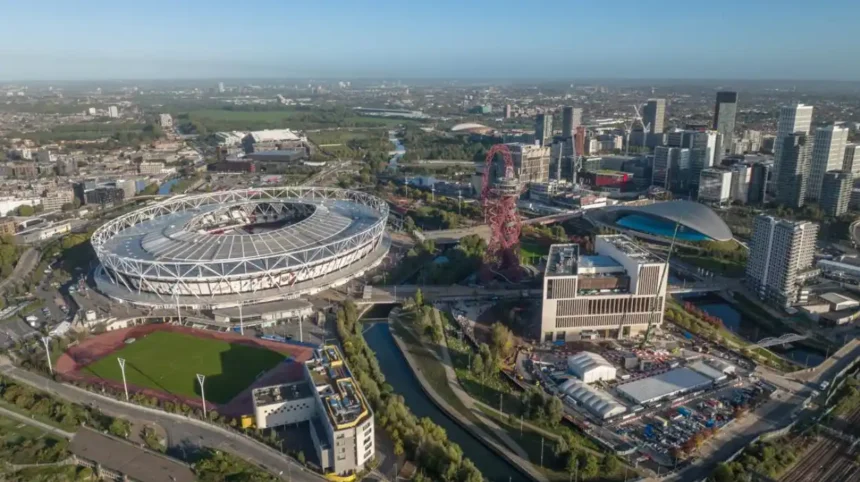
Queen Elizabeth Olympic Park welcomes around 6 million visits every year from local communities, national and international visitors. In 2025/26 alone, the park recorded 7,715,679 visitors, with 41% using it as a public space, 22% accessing sports facilities, and 13% living, studying or working on the Park. The London Aquatics Centre within the park enjoys its highest attendance figures to date, recording 273,761 total visitors in the July–September 2025 quarter. The ArcelorMittal Orbit, the world’s tallest and longest tunnel slide, provides a unique visitor experience combining art, architecture and adrenaline.
V&A East Storehouse opened on Saturday 31 May 2025 at Queen Elizabeth Olympic Park’s East Bank, offering unprecedented behind-the-scenes access to over half a million works from the Victoria and Albert Museum’s collections. The Storehouse operates from 31 May 2025 to 31 December 2026, providing an immersive experience within the Olympic Park’s cultural district. V&A East Museum officially opens its doors on Saturday 18 April 2026, with two galleries and an exhibition space joining the existing Storehouse. The venue’s temporary exhibition programme opens with The Music is Black: A British Story, establishing the museum’s commitment to diverse cultural narratives.
Whitechapel Gallery, founded in 1901, exhibits modern and contemporary art across nine exhibition spaces at 77-82 Whitechapel High Street. The gallery offers free displays and one ticketed exhibition each season, with opening hours Tuesday to Sunday 11am–6pm and Thursday until 9pm. Its very first show in 1901, Modern Pictures by Living Artists, Pre-Raphaelites and Old Masters, attracted 260,000 visitors, establishing its role as a major cultural institution. In 1939, Whitechapel Gallery staged the only British exhibition of Picasso’s Guernica, a powerful anti-war painting, demonstrating its historical significance in bringing major international works to East London. The gallery holds public tours on the first Sunday of every month, typically lasting one hour and covering the site’s history, exhibitions and architecture.
Where can visitors experience Tower Hamlets’ regenerated docklands?
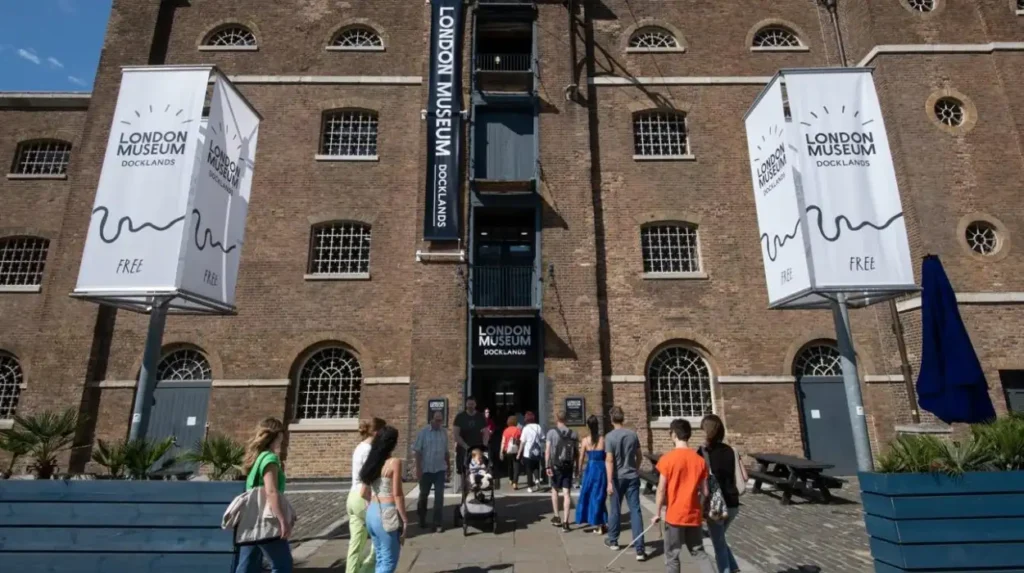
London Museum Docklands at West India Quay provides free daily access to 400 years of docklands history in a 200-year-old former storage warehouse. The museum operates 10am–5pm every day with no booking required, offering comprehensive insight into Thames trade, port communities and global commerce.
London Museum Docklands occupies No. 1 Warehouse, West India Quay, London E14 4AL, in a beautifully converted Georgian warehouse telling the story of the Thames, the Port of London, and the communities that grew up around the river over two thousand years. Entry to the museum’s permanent galleries is free, with galleries clearing 20 minutes before the 5pm closing time. The museum recommends visitors give themselves at least one hour for their visit, with last admission at 4.30pm. The museum closes on 24, 25 and 26 December every year but remains open all other days.
The museum’s collections arrange chronologically, taking visitors on a journey from the development of the Thames as a port in Roman times to modernity. Permanent galleries include No. 1 Warehouse, an introductory gallery about London’s docks and their warehouses; Trade Expansion, covering spice, tea and silk trade between India, China and England; and Sailortown, dedicated to recreating the atmosphere of London’s sailor neighbourhoods. London, Sugar & Slavery examines London’s role in the slave and sugar trade, while First Port of Empire explores how the London docks became the centre of world trade under the British Empire. City and River dedicates itself to the city’s transformation between 1800 and 1840, with Warehouse of the World looking at London docks at the height of their activity in the late nineteenth century. Docklands at War covers how the London port survived WWII, and New Port, New City examines the docklands’ ups and downs during the twentieth century.
The Mudlarks family gallery provides an interactive space for children, with sessions costing £3 for 40 minutes and booking recommended. Special or temporary exhibitions may have separate charges, so visitors should check the website before visiting. Groups of 10 or more receive free entry but must book in advance.
What markets and street experiences define Tower Hamlets?
Spitalfields Market, Brick Lane, and Columbia Road Flower Market offer authentic East London street culture with daily or weekly trading spanning over 350 years. These markets operate seven days a week or on specific days, providing reliable indoor and outdoor experiences regardless of weather.
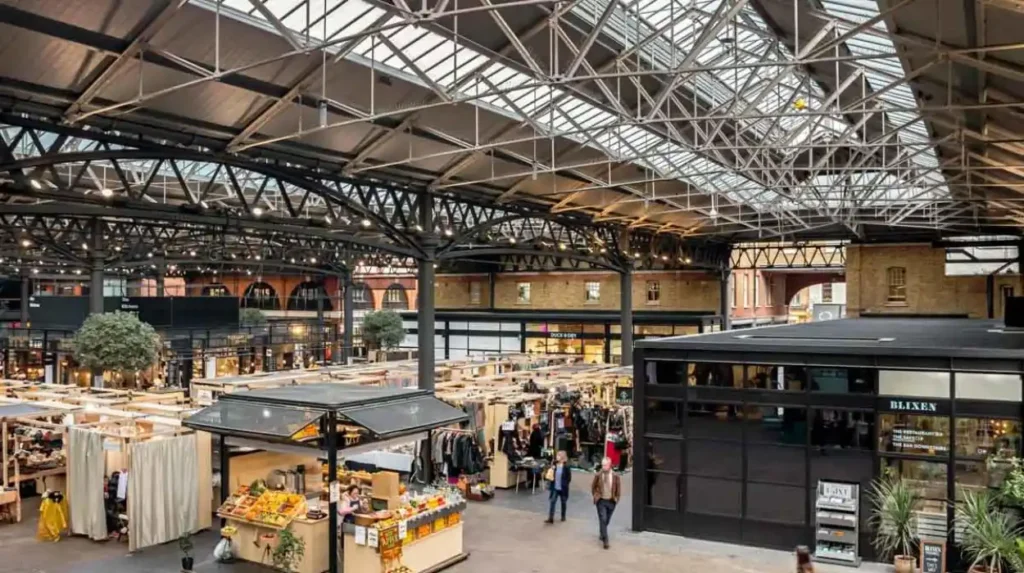
Old Spitalfields Market has operated for over 350 years, with trading taking place on this site since the seventeenth century. The grand Victorian market hall that stands today still hums with the same commercial energy it always has, housing numerous retailers, restaurants and street food vendors. Spitalfields Market at 16 Horner Square, E1, operates seven days a week and serves as the area’s most reliable indoor destination in any weather, typically open 10am–5pm with free entry.
Brick Lane provides characterful cobbled avenues and neat brick houses exuding Victorian charm, forming one of East London’s most visited attractions. First-time visitors should prioritise a walk through Brick Lane alongside other Tower Hamlets experiences. The area’s deep connection to London’s maritime and industrial past remains visible today, with former docklands transformed into lively districts.
Columbia Road Flower Market transforms into a blooming jungle every Sunday from 8am to 3pm on Columbia Road, E2, in Bethnal Green. The market operates only on Sundays, with entry free throughout the morning. Columbia Road itself is a single narrow street of 1860s shops and houses where visitors buy flowers and plants, representing one of the most popular attractions in East London.
Which parks and green spaces offer recreation in Tower Hamlets?
Victoria Park covers 86 hectares between Mile End and Hackney Wick as Tower Hamlets’ grandest green space, with free daily access from 7am to dusk. The park provides extensive recreational facilities alongside Queen Elizabeth Olympic Park’s 20 million annual visits for sports, events and public space use.
Victoria Park at Grove Road, E3, covers 86 hectares between Mile End and Hackney Wick, offering free entry from 7am to dusk daily. The park serves as one of East London’s premier green spaces, hosting a Sunday food market from 10am to 3pm with free entry. Victoria Park functions as a starting point for the Regent’s Canal, which runs from Victoria Park through Hackney and Haggerston toward King’s Cross.
Regent’s Canal provides one of the best free activities in East London, with the towpath offering walking and cycling routes through the borough. Walking the towpath allows visitors to experience the waterway’s industrial heritage alongside contemporary residential and commercial development.
Queen Elizabeth Olympic Park enjoys over 20 million visits annually, with many visitors using it as a public space, sports facility, or for family day outs. The park’s audience profile shows 41% use it as a public space, 22% access sports facilities, 13% live, study or work on the Park, 9% visit for family or group day out, 7% attend attractions or events, and 6% come for shopping. This diversity demonstrates the park’s role as both a recreational destination and a lived-in community space.
Explore More Area Guide
Most Scenic Places to Visit in Tower Hamlets for Photography and Relaxation
Best Cultural Experiences to Enjoy While Visiting Tower Hamlets in London
How does Tower Hamlets blend heritage with modern development?
Canary Wharf’s financial district sits alongside historic warehouses, while the Olympic Park’s 2012 regeneration created new cultural institutions on former industrial land. This layering of old and new defines Tower Hamlets’ unique character within London.
Canary Wharf emerged from former docklands into a gleaming financial district, with landmarks including One Canada Square visible from Tower Bridge. The area’s transformation from industrial port to global business centre represents one of London’s most significant urban regenerations, completed in the late twentieth and early twenty-first centuries. The London Museum Docklands sits within this district, housed in a 200-year-old former storage warehouse at West India Quay, providing historical context to the surrounding modern development.
The Olympic Park’s East Bank cultural district exemplifies heritage-meets-modernity planning, with V&A East Storehouse and the upcoming V&A East Museum joining existing facilities in a regenerated post-industrial landscape. As you explore the modern site, you are crossing land with a deep heritage. Read about the full Tower Hamlets industrial and docklands history to understand its origins. The area’s transformation for the 2012 Olympics created a new cultural quarter that continues to expand with major institutional investments.
Whitechapel’s haunting, haunted lanes have retained the best of their Victorian character while hosting contemporary galleries and cultural institutions. The area’s Victorian streets wind through guided experiences including Jack the Ripper walking tours, which remain among the most popular guided experiences in London despite their controversial subject matter. This preservation of Victorian urban fabric alongside modern cultural programming creates a distinctive visitor experience unavailable in more heavily redeveloped parts of London.
What practical information do visitors need for Tower Hamlets?
Most Tower Hamlets attractions offer free entry with Tuesday to Sunday opening, requiring advance booking only for special exhibitions or group visits. Transport access via Underground, DLR and bus routes makes the borough easily reachable from central London and beyond.
London Museum Docklands operates daily 10am–5pm with free entry and no booking required for permanent galleries. Whitechapel Gallery opens Tuesday to Sunday 11am–6pm, with Thursday until 9pm, offering free displays and one ticketed exhibition each season. V&A East Storehouse opened in May 2025 and will operate alongside V&A East Museum from spring 2026.
Queen Elizabeth Olympic Park welcomes visitors year-round with over 6 million annual visits and no entry charge for public spaces. The London Aquatics Centre, ArcelorMittal Orbit and other facilities within the park may charge separate admission fees. St Dunstan’s, Stepney, remains open for worship and visitors, accessible via District Line to Stepney Green or DLR to Limehouse.
Transport connections include Aldgate East and Aldgate Underground stations for Whitechapel Gallery, Stepney Green for St Dunstan’s, and Stratford for Queen Elizabeth Olympic Park and V&A East. Multiple bus routes serve the borough, with the D3, 15, 115, 135, N15, N550 and N551 accessing Stepney and surrounding areas.
First-time visitors should prioritise the Columbia Road Flower Market on a Sunday morning and a walk through Brick Lane for authentic East London experiences. Two days represents the ideal minimum visit duration: one day for Spitalfields, Shoreditch, and the Whitechapel Gallery area; a second day for Hackney, Broadway Market, Victoria Park, and the canal towpath. This timeframe allows comprehensive exploration of Tower Hamlets’ historical and modern attractions without rushing.
What are the best historical attractions to visit in Tower Hamlets?
The top historical attractions include St Dunstan’s Church in Stepney, the Tower of London, Tower Bridge, London Museum Docklands, the Roman London Wall remains, Georgian houses on Mile End Road, and Wilton’s Music Hall. Together, they showcase nearly 1,000 years of London’s religious, maritime, military, and architectural history.