Key Points
- Car Parking Prices Rising: Parking charges are increasing at both Queen’s Hospital in Romford and King George Hospital in Goodmayes.
- Changes Start 21 September: The new parking charges will take effect from Monday, 21 September.
- 15-Minute Free Parking: A new 15-minute free parking period will be introduced at both hospital sites for quick drop-offs and pick-ups.
- Revised Tariffs: Parking tariffs are being adjusted across short- and long-stay periods for patients and visitors.
- BHRUT Hospitals: Both hospitals are managed by Barking, Havering and Redbridge University Hospitals NHS Trust (BHRUT).
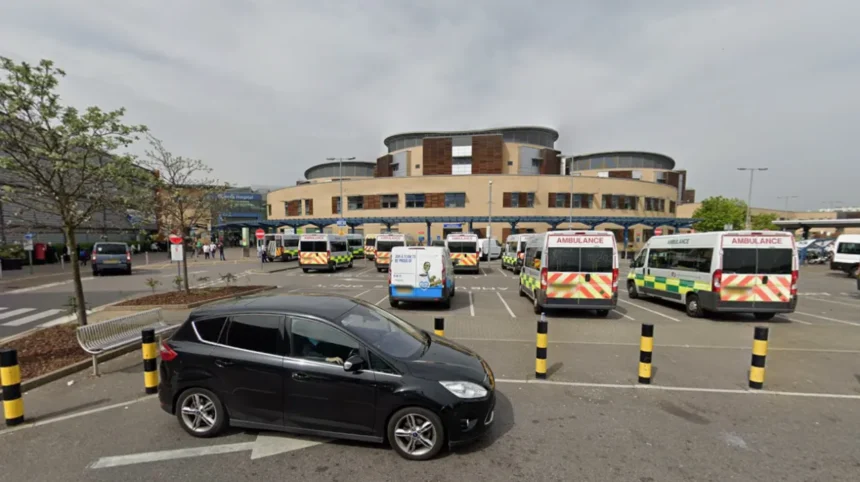
Romford (East London Times) August 27, 2026 — Car parking prices are set to increase at two major east London medical institutions, Queen’s Hospital in Rom Valley Way, Romford, and King George Hospital in Goodmayes, starting from Monday, 21 September.
Alongside the overall upward tariff adjustment, hospital trust administrators confirmed that a new 15-minute free period will be introduced simultaneously across the sites. The changes will directly affect thousands of daily visitors, outpatient attendees, and staff members accessing the healthcare facilities across the London Boroughs of Havering and Redbridge.
What Are the Details of the Approved Parking Charge Adjustments?
As reported by Charlotte Anderson of the Romford Recorder, Barking, Havering and Redbridge University Hospitals NHS Trust (BHRUT) confirmed that the rising costs will apply across all standard public parking zones at both hospital sites.
The decision to revise tariffs comes as part of a review of site accessibility and facility management. The introduction of the 15-minute free grace period is intended to assist drivers conducting quick patient drop-offs, picking up prescriptions, or transferring individuals with limited mobility to and from main entrances without incurring a full hourly fee.
Following the deadline on Monday, 21 September, motorists parking beyond the initial 15-minute free window will be subject to the newly adjusted tariff scales. Automatic number plate recognition (ANPR) systems and payment kiosks situated across the grounds will be updated to reflect the higher charges on the implementation date.
How Will the Tariff Changes Impact Hospital Visitors and Patients?
The price restructuring applies to short-term visitor stays as well as extended patient parking slots across both locations. Under existing operational guidelines, hospital leadership has historically maintained that revenue generated from parking meters contributes to site maintenance, security infrastructure, and direct operational expenditures across the trust facilities.
While standard tariffs are increasing, existing concessions managed by the trust—including provisions for Blue Badge holders, patients undergoing long-term treatments such as chemotherapy or radiotherapy, and immediate relatives of patients receiving end-of-life care—will remain governed by established trust policy guidelines.
Background of the Particular Development
Barking, Havering and Redbridge University Hospitals NHS Trust manages healthcare services across an extensive outer east London catchment area. Queen’s Hospital, which opened its Rom Valley Way site in Romford in 2006, acts as a principal acute hospital and emergency care hub. King George Hospital, located in Goodmayes, serves as a major secondary site supporting local emergency, surgical, and diagnostic care.
Parking fees across NHS hospital trusts in England have long been a subject of policy debate between healthcare managers, local authorities, and patient advocacy groups. NHS trusts are permitted to levy parking fees to manage demand, cover land development costs, and prevent non-hospital users from utilizing hospital spaces. However, trusts are also expected to align pricing structures with local authority parking rates to ensure charges remain proportional to surrounding areas. The latest revision at Queen’s and King George hospitals represents the newest phase in BHRUT’s ongoing site operations and parking management strategy.
Prediction: How This Development Can Affect Hospital Visitors and Local Transport Networks
The implementation of higher car parking prices starting 21 September is anticipated to have several immediate and long-term consequences for local residents, outpatient attendees, and hospital visitors.
First, regular outpatients and frequent visitors who do not qualify for specific health-related parking concessions will face an increased financial outlay per visit. For families supporting long-term inpatients, the cumulative cost of repeated hospital trips could increase overall household spending on essential travel.
Second, the introduction of the 15-minute free parking period may shift driver behaviors near main entrance zones. Short-stay drop-offs are expected to become faster and more frequent, which could reduce short-term congestion near drop-off bays, provided drivers exit within the 15-minute allocation. Conversely, drivers attempting to avoid the higher long-stay tariffs may increase demand for off-site street parking in adjacent residential neighborhoods surrounding Rom Valley Way in Romford and Goodmayes Road in Ilford.
Finally, the price increase may encourage a portion of mobile visitors and non-emergency outpatients to shift toward public transport routes serving Queen’s and King George hospitals, such as local bus routes connecting to Romford station and regional Elizabeth line services. Local transport authorities and hospital management will likely monitor traffic flow around both sites following the September rollout to assess the wider impact on local road networks.