Key Points
- Major Acts Lost: London Stadium operators say planning restrictions have led to the venue losing bids to host major international artists including Jay-Z, Harry Styles and Bad Bunny.
- Planning Application Submitted: London Stadium 185 (LS185) has submitted an application to Newham Council seeking higher event capacities, more event days and increased sound limits.
- Financial Recovery Plan: The proposed changes are part of a wider financial plan to address recorded losses of £19 million.
- More Events and Higher Capacity: LS185 wants to increase the maximum number of concert days from 10 to 24 a year, with capacity rising from 80,000 to 85,000 for up to eight events.
- Noise Limits: The operator is seeking a 75-decibel limit across all event days, replacing the current rules under which four of the 10 permitted events are limited to 65 decibels.
- 2029 World Athletics Bid: Operators say higher capacity limits are also needed to secure the right to host the 2029 World Athletics Championships.
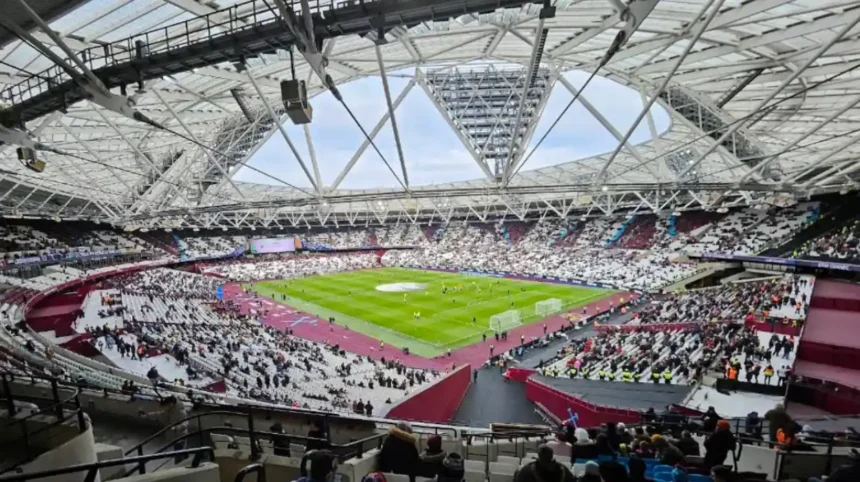
Stratford (East London Times) August 28, 2026 – London Stadium has formally applied for planning permission to expand its annual hosting allowances, raise sound output caps, and increase spectator capacity after losing out on major touring bids for global artists including Jay-Z, Harry Styles, and Bad Bunny. The operator behind the iconic Stratford venue, London Stadium 185 (LS185), submitted the application to Newham Council as a critical measure to offset financial deficits amounting to £19 million, arguing that current regulatory operational limits leave the location unable to compete on equal terms with rival venues across the capital.
Why is London Stadium Seeking Planning Changes?
Under its current planning framework, London Stadium is restricted to hosting a maximum of 10 non-sporting events per year, capped at up to three consecutive nights, with an upper capacity limit of 80,000 spectators per show. In documentation submitted alongside its formal planning application to Newham Council, a statement included by LS185 outlined that these current conditions “are increasingly restrictive, inhibiting LS185’s ability to compete with other major London venues.”
The venue operator noted that limitations on noise levels and calendar availability have directly contributed to missed commercial opportunities, preventing the East London arena from securing major stadium tours. To address these commercial barriers and tackle what has been described as a “particularly bad year” financially, LS185 is requesting permission to increase the allowable calendar allocation to 24 concert days annually. Furthermore, the application seeks permission to raise maximum capacity from 80,000 to 85,000 attendees for eight of those event dates.
The requested modifications also extend to environmental sound output. Under existing permissions, sound levels are restricted to 75 decibels for six annual events, while the remaining four events are limited to a stricter cap of 65 decibels. The submitted application requests a standardized 75-decibel threshold across event days, providing concert promoters with the audio latitude required for stadium-scale sound setups.
In addition to commercial music events, operators stressed that securing an increased maximum attendance cap is “vital” for the venue’s ongoing bid to host the 2029 World Athletics Championships, ensuring the site meets international governing criteria for major global sporting competitions.
Background of the Particular Development
Constructed primarily as the centerpiece venue for the London 2012 Olympic and Paralympic Games, the venue originally known as the Olympic Stadium underwent extensive multi-million-pound reconfigurations following the Games to transition into a multi-purpose arena. West London football club West Ham United subsequently secured a 99-year lease as the primary anchor sporting tenant, moving into the stadium in 2016.
Despite hosting premier football fixtures, international athletics, and occasional summer concert runs, the operational model managed under public sector ownership via the London Legacy Development Corporation (LLDC) and operator LS185 has faced ongoing scrutiny regarding event conversion costs, structural maintenance, and overall financial sustainability. The high operational expenditure associated with reconfiguring the seating bowl between football matches and summer events has contributed to persistent annual operating deficits, necessitating expanded commercial revenue streams through major entertainment bookings.
Prediction: How This Development Can Affect Local Residents and Event Promoters
If approved by Newham Council, the proposed planning alterations will directly impact two primary stakeholder groups: local East London residents and concert promoters.
For local residents residing within the immediate vicinity of the Queen Elizabeth Olympic Park and broader Stratford area, an increase from 10 to 24 annual concert days—combined with an increased noise threshold of 75 decibels across all events—will result in higher frequency sound exposure, increased pedestrian crowd density, and potential transport disruptions on concert nights. Local community groups and residents may express concerns during the public consultation phase regarding late-night noise levels and localized congestion.
Conversely, for music promoters, event organizers, and the broader UK live music sector, the approval of an 85,000-capacity venue with relaxed noise restrictions provides a highly competitive alternative to established London venues such as Wembley Stadium and Twickenham. The increased capacity and expanded calendar availability could allow major global tours to add additional London dates, generating increased local commercial spend across surrounding retail, hospitality, and transport networks.