Key Points
- Rail Minister Lord Hendy has publicly endorsed proposals for international train services to call at Stratford International in east London.
- Sir Richard Branson’s Virgin Group is exploring a Stratford halt as part of plans to launch competitive direct services connecting London with continental Europe.
- Lord Hendy highlighted that utilizing Stratford International could unlock substantial economic growth and capitalize on the station’s existing high-capacity transport linkages.
- Current cross-Channel operator Eurostar does not serve Stratford International, running non-stop between St Pancras International and Kent.
- Advocates argue a secondary London halt would alleviate congestion at St Pancras International, improve regional connectivity, and provide direct international access to east London and the Thames Estuary.
Stratford (East London Times) September 30, 2026 — Virgin’s proposed international rail operations received a major boost after Rail Minister Lord Hendy confirmed his support for high-speed cross-Channel trains to call at Stratford International in east London, The Standard reported.
- Key Points
- Why is Lord Hendy supporting an international railway stop at Stratford?
- What are the main arguments for introducing a second London stop?
- How would a Stratford halt relieve pressure on central London infrastructure?
- How does Stratford’s transport interchange benefit international passengers?
- What role does the station play in regional economic development?
- What challenges remain before international services can call at Stratford?
- Background of the development
- Predictions: How this development could affect passengers and local stakeholders
Why is Lord Hendy supporting an international railway stop at Stratford?
Speaking to The Standard, Lord Hendy explained that Stratford represents a strategic interchange with significant untapped capacity for expanding international connectivity and accelerating regional regeneration. Lord Hendy stated that “Stratford is already a major transport interchange with huge potential to deliver further growth in the local area.”
The Rail Minister’s intervention aligns with plans currently being developed by Sir Richard Branson’s Virgin Group. Virgin is actively investigating options to run open-access passenger services through the Channel Tunnel, challenging the long-standing monopoly held by Eurostar. Under Virgin’s proposal, trains running between London and destinations in France and Western Europe would incorporate a commercial stop at Stratford International before continuing to or from central London.
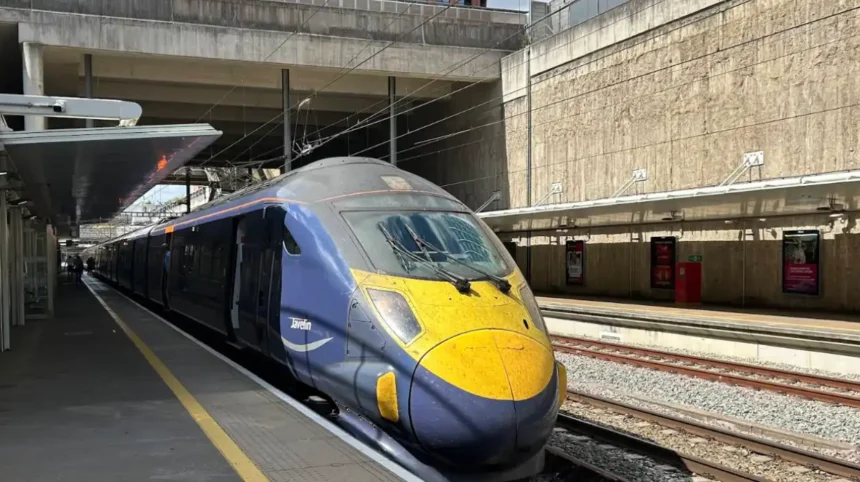
Stratford International was originally constructed as part of the High Speed 1 (HS1) infrastructure project, with concrete platforms built specifically to accommodate cross-Channel trains. However, since the station opened to domestic High Speed services in 2009, no international passenger train has ever stopped to set down or board passengers at the complex. Instead, cross-Channel services run directly through the station platforms without stopping as they travel between St Pancras International and the Channel Tunnel.
What are the main arguments for introducing a second London stop?
Industry figures and local development leaders have long advocated for activating the international platforms at Stratford to address long-term capacity challenges across London’s transport network. St Pancras International, which has served as the primary UK terminal for Eurostar since 2007, faces physical constraints within its border control and security processing areas.
Supporters of the Stratford proposal argue that establishing a second international station in the capital would yield several operational and strategic advantages:
How would a Stratford halt relieve pressure on central London infrastructure?
By enabling entry and exit border checks at Stratford, rail operators could distribute passenger flow more evenly across the capital, reducing peak-hour crowding inside the international departure lounges at St Pancras International.
How does Stratford’s transport interchange benefit international passengers?
Stratford is connected to the Elizabeth line, the London Underground network, the Docklands Light Railway (DLR), national rail lines, and London Overground services. Proponents note that passengers traveling from Essex, East Anglia, and parts of south-east London could board continental trains without traveling into central London first.
What role does the station play in regional economic development?
Local authority leaders in Newham and regional business groups maintain that international rail connectivity would accelerate investment in east London, supporting commercial development around the Queen Elizabeth Olympic Park and the wider Thames Estuary corridor.
What challenges remain before international services can call at Stratford?
Despite the Rail Minister’s endorsement, implementing international passenger calls at Stratford International involves operational, financial, and logistical hurdles.
The primary obstacle involves border security and immigration facilities. To process international passengers, Stratford International would require dedicated passport control booths, baggage screening equipment, and secure zones to keep processed international travelers separated from domestic commuter flows. Fitting out these facilities and staffing them with UK Border Force personnel would require initial capital investment and ongoing operating expenditure.
Additionally, existing track access agreements on the High Speed 1 line and capacity allocations through the Channel Tunnel must be approved by railway regulators before any new operator can commence scheduled commercial services. Virgin and other potential open-access entrants are continuing consultations with HS1 Ltd, Network Rail, and border agencies to assess the technical feasibility and cost structure of activating the station.
Background of the development
Stratford International station was designed during the 1990s and built as part of the overall construction of High Speed 1, the 67-mile high-speed line linking London to the Channel Tunnel. The station structure was completed ahead of the London 2012 Olympic Games, with the expectation that international trains running between London, Paris, Brussels, and beyond would stop in east London to serve the newly regenerated Olympic zone.
When Eurostar transferred its UK operations from London Waterloo to St Pancras International in November 2007, the company elected not to call at Stratford International. Eurostar cited commercial considerations, operational efficiency, and the requirement to keep total journey times between central London and mainland Europe as short as possible. Operating intermediate stops adds dwell time to train schedules and increases operational costs associated with maintaining border security at multiple stations.
In addition to skipping Stratford International, Eurostar suspended calls at its two regional stations in Kent—Ebbsfleet International and Ashford International—during the COVID-19 pandemic in 2020. Eurostar has not resumed services at either Kent location, concentrating all UK operations at St Pancras International to optimize staff utilization and border processing resources.
As a result, the international infrastructure at Stratford International has remained dormant for over a decade, used exclusively by Southeastern domestic High Speed services linking London St Pancras with destinations across Kent. The recent emergence of potential cross-Channel competitors to Eurostar, alongside renewed focus on regional infrastructure growth, has reopened discussions regarding the future utilization of the station.
Predictions: How this development could affect passengers and local stakeholders
If Virgin or another operator successfully brings international services to Stratford International, the impact will be felt across several key groups:
International travelers and commuters
Passengers based in east London, Essex, and the eastern counties of England would experience reduced travel times to continental Europe by bypassing the need to journey into central London. Conversely, international visitors traveling from France or Belgium would gain direct high-speed access to the business, cultural, and retail hubs of east London, including Canary Wharf and the Stratford city complex.
St Pancras International and central London transport networks
Diverting a portion of cross-Channel passenger traffic to Stratford would ease footfall pressure on St Pancras International, potentially reducing queuing times at border control during peak holiday travel periods. It would also redistribute passenger loads on the London Underground network, diverting some interchange traffic away from central London hubs.
East London businesses and real estate markets
Confirmation of an active international rail link would likely boost commercial property investment in Newham and surrounding boroughs. Enhanced connectivity to European financial centers could make Stratford a more attractive location for multinational corporations, hospitality operators, and tourism developments.
Rail market competition and pricing
The entry of Virgin or other open-access operators utilizing Stratford could foster increased market competition on cross-Channel routes. Historically, rail competition on major European corridors has driven down average ticket prices, expanded timetable frequencies, and incentivized improvements in passenger amenities and customer service.