Key Points
- London charity Cycle Sisters launched cycling coaching sessions for women who do not speak English as a first language.
- The organisation identified language proficiency as a main barrier to participation and partnered with local groups to reach immigrant communities.
- Cycle Sisters teamed up with Bethnal Green community group Numbi Arts to run sessions for Somali women.
- Participant Saynab Salah said she sold her car due to fuel, servicing, and MOT costs, switching to a bicycle to save money.
- Organisers provide female coaches to support women who do not traditionally cycle due to cultural or religious reasons.
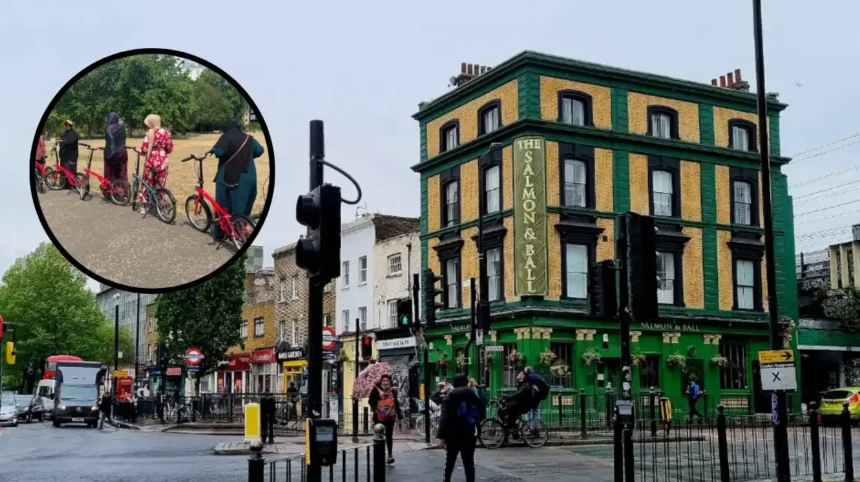
Tower Hamlets (East London Times) September 3, 2026 –As reported by journalist Charlie O’Keeffe of the East London Advertiser, London charity organisation Cycle Sisters has introduced specialized cycling coaching sessions aimed directly at supporting Muslim and ethnically diverse women whose primary language is not English. Recognising that language barriers significantly hinder access to physical activity and community transport, the charity has initiated targeted partnerships with local grassroots groups that maintain deep connections within local immigrant communities.
- Key Points
- How Are Local Partnerships Breaking Down Language and Cultural Barriers?
- Why Are Somali Women Choosing Bicycles Over Private Motor Vehicles?
- How Does Professional Coaching Build Confidence in Public Spaces?
- Background of Community Cycling and Integration Initiatives in Tower Hamlets
- Prediction: How This Development Will Affect the Local Community and Policy Stakeholders
The primary objective of the scheme is to expand access to healthy, affordable transport by removing systemic, social, and linguistic obstacles. By providing tailored environments led by women, Cycle Sisters and its partner groups aim to build foundational skills, boost individual confidence, and foster social inclusion among demographics that have historically faced low participation rates in cycling across urban areas.
How Are Local Partnerships Breaking Down Language and Cultural Barriers?
To directly address accessibility obstacles, Cycle Sisters established a collaboration with Numbi Arts, an established Somali community organization based in Bethnal Green. Under this joint framework, Cycle Sisters supplies professional coaching staff and necessary bicycle equipment, while Numbi Arts engages local residents and coordinates participant attendance.
As reported by Charlie O’Keeffe of the East London Advertiser, Kinsi Abdulleh, a representative working at Numbi Arts, detailed how the partnership originated from existing youth programmes. Abdulleh explained that “most of these women are parents of the children we work with in our youth programme. So, instead of them just standing around, we thought this would be a really nice thing”.
Commenting on the logistical operational execution, Abdulleh highlighted the ease of participation provided by the dual arrangement, stating that
“the feedback has been amazing. Some of them have been going to take out bikes from the same place,”
and added that
“everything is provided, all we have to do is just turn up”.
Abdulleh further emphasised the paramount importance of cultural sensitivity and familiar surroundings when delivering public health and activity interventions. As reported by O’Keeffe, Abdulleh stated that the sessions were
“definitely culturally anchored. It had familiar facilitators, in their local community”.
She noted that
“women feel more comfortable being around other women. Having women as coaches, especially for this group, is very important”.
Why Are Somali Women Choosing Bicycles Over Private Motor Vehicles?
The coaching sessions have delivered practical economic relief for participants navigating high living and transport costs in East London. Local resident Saynab Salah, who is based in Tower Hamlets and attended recent training modules aimed specifically at Somali women, shared insights regarding her personal experiences with the scheme.
As reported by Charlie O’Keeffe of the East London Advertiser, Salah expressed strong appreciation for the initiative, stating:
“It is great, as the Somali community, especially ladies, don’t come out often”.
Beyond the social benefits, Salah pointed directly to the tangible economic advantages of switching from driving to cycling within inner London. According to O’Keeffe’s reporting, Salah stated:
“Driving is hard, it’s easier to cycle, to go cycling. It’s less money, you don’t have to get petrol, or an MOT. I sold my car because of these expenses”.
Explore More Tower Hamlets News
Tower Hamlets Expands EV Network Across East London Borough
Tower Hamlets Lodges Plans for 203 Homes, Tower Hamlets 2026
How Does Professional Coaching Build Confidence in Public Spaces?
For many participants, learning to ride a bicycle presents psychological and physical challenges that require structured support. Salah described the supportive group environment fostered during the coaching blocks, noting that
“it’s good to talk to each other and encourage each other. It was great”.
While gains in confidence are evident, moving from enclosed spaces to urban traffic remains a gradual process. As reported by Charlie O’Keeffe, Salah explained her ongoing development as a cyclist:
“I can still ride only inside the park. I cannot go on the road. I’m a bit scared, but it gives me confidence if I’ve got an instructor with me”.
Despite these personal hurdles, broader shifts in community perception are becoming increasingly visible. Addressing traditional barriers, Salah observed:
“I would encourage them. Normally, in our community we don’t ride a bike culturally, and for religious reasons,”
but added that attitudes are noticeably shifting:
“These days you can see they’re coming more”.
Kinsi Abdulleh of Numbi Arts corroborated this positive uptake, reiterating to the East London Advertiser that “the women really really enjoyed it” and confirming that participants are actively continuing to access bikes locally following completion of the introductory sessions.
Background of Community Cycling and Integration Initiatives in Tower Hamlets
The initiative introduced by Cycle Sisters and Numbi Arts operates against a broader backdrop of active travel investments and health equity programmes in East London. Tower Hamlets remains one of London’s most densely populated and diverse boroughs, characterized by significant demographic variation and pockets of acute socioeconomic deprivation.
Historically, active travel policy in London focused primarily on infrastructure development, such as segregated cycleways and low-traffic neighbourhoods. However, regional transport authorities and local councils have increasingly recognised that physical infrastructure alone does not guarantee equitable usage across all demographic segments. Research across municipal authorities has repeatedly demonstrated that women, particularly those from Muslim and Black, Asian, and Minority Ethnic (BAME) backgrounds, face disproportionate barriers to cycling. These include safety concerns, cultural norms, lack of access to equipment, and linguistic barriers in standard training courses.
Cycle Sisters was established specifically to address these systemic gaps by creating women-only, peer-led cycling groups that respect religious and cultural values, such as providing female instructors and accommodating modest attire. By establishing direct partnerships with trusted neighborhood anchor institutions like Numbi Arts in Bethnal Green, the charity leverages pre-existing community trust to reach demographic groups that standard municipal leisure services frequently fail to engage effectively.
Prediction: How This Development Will Affect the Local Community and Policy Stakeholders
This development is expected to have notable impacts across local residents, transport authorities, and community organisations:
- Increased Mobility and Financial Relief for Local Families:For working-class families and low-income households in Tower Hamlets, the wider adoption of cycling provides a direct buffer against inflationary living expenses. As participants like Saynab Salah demonstrate, transitioning away from vehicle ownership eliminates recurring expenditures including fuel, insurance, servicing, and MOT testing. This shift yields higher disposable income for essential household needs while enhancing personal independence and local mobility for female residents who previously lacked access to private transport.
- Integration and Social Wellbeing in Immigrant Communities:By embedding language support and culturally familiar environments into physical activity, the initiative is poised to reduce social isolation among immigrant women. Regular participation in outdoor group activities fosters informal peer support networks, accelerates English language acquisition through organic interaction, and contributes positively to public health outcomes by reducing physical inactivity and mental health strain.
- Informing Future Municipal Transport and Public Health Strategy:The success of the Cycle Sisters and Numbi Arts collaborative model offers a proven blueprint for Transport for London (TfL) and local councils. Policymakers are likely to increasingly reallocate active travel funding away from purely infrastructure-based projects toward grassroots community partnerships. Demonstrating measurable engagement among hard-to-reach demographics will encourage local authorities to institutionalise targeted, culturally anchored leisure programmes across other London boroughs.