Tower Hamlets is an East London borough where historic neighbourhoods, riverside landmarks, markets, museums, parks, cultural venues and modern business districts occupy the same compact urban area. Its visitor experience connects the East End, the River Thames, the Docklands and Canary Wharf.
- What makes Tower Hamlets an important destination for visitors?
- Which historic places should visitors explore in Tower Hamlets?
- How can visitors experience Tower Hamlets through its markets?
- Which museums and cultural attractions are important in Tower Hamlets?
- What can visitors do in Victoria Park and other green spaces?
- Where can visitors experience the River Thames and Docklands?
- How does Tower Hamlets reflect London’s multicultural heritage?
- Which areas are useful for food, cafés and leisure?
- What leisure activities are available for families and active visitors?
- How can digital nomads and business travellers use Tower Hamlets?
- How should visitors plan a Tower Hamlets cultural itinerary?
- Why does Tower Hamlets remain relevant for future visitors?
What makes Tower Hamlets an important destination for visitors?
Tower Hamlets combines East London heritage, multicultural communities, historic markets, major landmarks, museums, riverside spaces and extensive parks, giving visitors access to cultural, historical, shopping, food and leisure experiences within one London borough.
Tower Hamlets sits in East London and extends from historic areas around the Tower of London and Whitechapel towards Poplar, the Isle of Dogs and Canary Wharf. The River Thames forms its southern boundary, while the borough also connects with major central and East London neighbourhoods.
The name Tower Hamlets reflects the historic relationship between the Tower of London and the hamlets that developed around it. The borough describes itself as the heart of London’s East End and records evidence of human activity dating back thousands of years.
Its visitor appeal comes from the concentration of contrasting environments. Historic streets sit close to contemporary architecture. Traditional markets operate near major financial offices. Victorian parks connect with canals and modern developments. Museums explain the area’s industrial history while restaurants, cafés and cultural venues reflect its diverse present-day population.
This makes Tower Hamlets suitable for different types of visitors. Tourists can combine major landmarks with neighbourhood exploration. Residents can discover parks and markets outside their usual routines. Digital nomads can use cafés, libraries and public spaces between activities. Business travellers can use leisure and cultural attractions during limited free time.
The borough also works well as part of a wider East London itinerary because several attractions are connected by public transport, walking routes and the River Thames.
As you explore the modern borough, you are crossing land shaped by centuries of settlement, trade and migration. Read the full to understand its origins and historical development.
Which historic places should visitors explore in Tower Hamlets?
Historic places in Tower Hamlets include the Tower of London, Tower Bridge, historic East End streets, churches, conservation areas, former docklands and heritage parks, each representing different stages of London’s royal, commercial, industrial and social development.
The Tower of London is one of the borough’s defining historic landmarks. William the Conqueror began constructing the fortress in the 1070s after the Norman Conquest. The complex developed into a royal residence, fortress, prison, armoury and place associated with major episodes of English history.
For visitors, the Tower provides a direct connection between the medieval history of London and the modern city. Its position beside the River Thames also explains the strategic importance of the area.
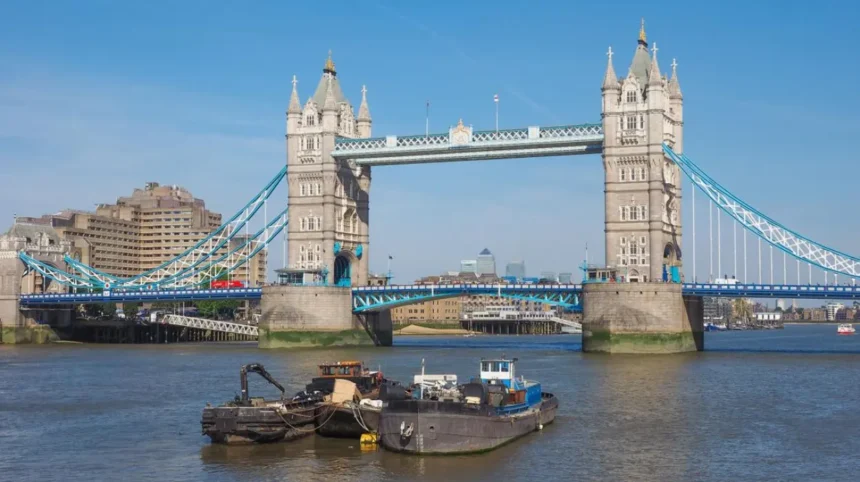
Tower Bridge provides another major heritage experience. The bridge opened in 1894 after an eight-year construction programme. Sir Horace Jones designed the architectural concept with engineer Sir John Wolfe Barry. The bridge was created to provide a new Thames crossing while allowing ships to reach the busy Pool of London docks.
Visitors can enter Tower Bridge rather than simply photographing it from outside. The experience includes the high-level walkways, glass floors and Victorian Engine Rooms. The walkways stand more than 40 metres above the River Thames and provide views across the surrounding city.
The wider area contains historic streets and buildings that reveal the development of the East End. Whitechapel, Stepney, Bethnal Green, Poplar, Bow and Wapping each contain different architectural and social layers.
Religious buildings also form part of the heritage landscape. Historic churches and former churchyards survive alongside public gardens and residential streets. Some former burial grounds were converted into public open spaces during the nineteenth century as urban population growth increased pressure on land.
Visitors interested in heritage should therefore avoid treating Tower Hamlets as a collection of isolated attractions. Its historical value comes from the relationship between landmarks, streets, markets, docks, parks and communities.
How can visitors experience Tower Hamlets through its markets?
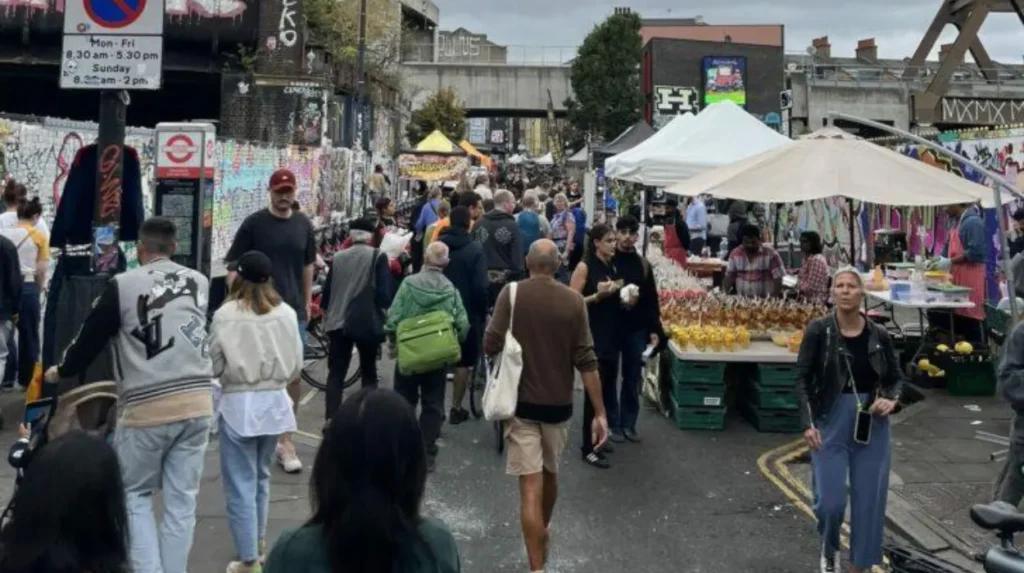
Visitors can experience Tower Hamlets culture through established markets including Brick Lane, Columbia Road, Whitechapel, Roman Road, Chrisp Street and Petticoat Lane, where food, flowers, clothing, household goods, art and specialist products create distinctive local shopping environments.
Markets are central to the identity of Tower Hamlets. The council identifies ten street markets across the borough, including Brick Lane, Bethnal Green Road, Chrisp Street, Columbia Road, Petticoat Lane, Roman Road, Roman Road Square, Sclater Street, Watney Market and Whitechapel Market.
Brick Lane Market is particularly significant for visitors interested in East End culture. The street has a long association with immigrant communities and has been shaped by French Huguenot, Jewish and Bangladeshi histories. The market developed in the nineteenth century and today includes food, fashion, art, vintage products and other goods.
Columbia Road Flower Market provides a different experience. The Sunday market specialises in flowers and plants and is surrounded by independent shops, galleries, cafés and other businesses. Its combination of horticulture and small-scale retail makes the street distinct from the larger general markets elsewhere in the borough.
Whitechapel Market runs along Whitechapel Road and offers fresh produce, vegetables, spices, clothing, jewellery and cultural goods. Its location also places visitors close to other East End landmarks and transport connections.
Chrisp Street Market has Victorian origins and remains an important community market in Poplar. Visitors can find produce, clothing, household goods and food businesses within its pedestrianised setting.
Roman Road Market operates on a historic route through Bow and offers a mixture of household goods, clothing, jewellery, food and other products. The wider Roman Road area connects shopping with cafés, independent businesses and residential streets.
Market days and opening hours vary, so visitors should check current information before travelling. Sunday is particularly useful for combining specialist markets such as Brick Lane and Columbia Road.
Which museums and cultural attractions are important in Tower Hamlets?
Tower Hamlets museums and cultural attractions explain the borough’s maritime, industrial, social and artistic history, with the Museum of London Docklands providing an important introduction to the development of London’s docks, trade, migration and riverside economy.
The Museum of London Docklands is one of the most useful cultural stops for visitors wanting to understand why the borough developed around the River Thames. Its collections and exhibitions explain London’s relationship with the river, docks, trade and communities.
The museum is particularly relevant to the Docklands landscape because the modern Canary Wharf district developed from an area with a very different economic function. The historic docks were once major centres of cargo handling and international trade.
The museum therefore provides context for walking around the Isle of Dogs and Canary Wharf. Visitors can see how dock infrastructure, warehouses and riverside commerce shaped the area before its transformation into a major business district.
Tower Hamlets also has a broader cultural network involving galleries, libraries, community venues, theatres, arts spaces and cultural programmes. The borough’s local attractions information highlights museums, galleries, markets and cultural trails as important components of the visitor experience.
The Idea Stores also have a distinctive role in local life. They combine library services with learning, digital access and community activities. Their facilities provide useful spaces for visitors who need internet access, public computers or a quiet place to work or read.
For digital nomads and business travellers, this creates an alternative to spending an entire day inside commercial cafés. Public cultural facilities can form part of a practical working itinerary when services and opening hours suit the visitor.
What can visitors do in Victoria Park and other green spaces?
Visitors can use Tower Hamlets’ parks for walking, recreation, sport, nature observation and relaxation, with Victoria Park, Mile End Park, Island Gardens and Tower Hamlets Cemetery Park providing different landscapes and heritage settings across the borough.
Tower Hamlets has more than 120 parks and green spaces, ranging from major public parks to smaller gardens and open areas. Fourteen parks hold Green Flag Awards, demonstrating formal recognition of management and environmental standards.
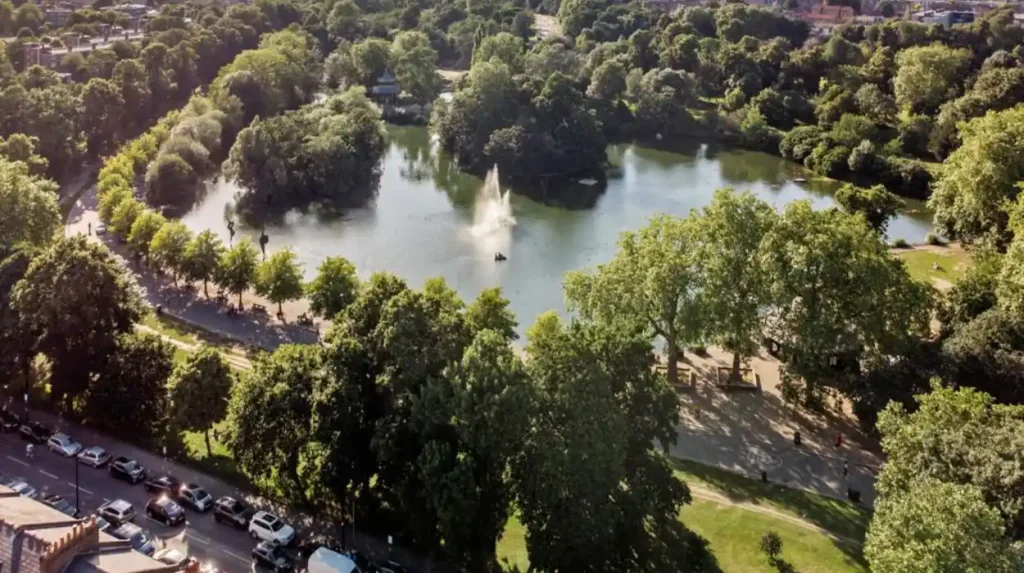
Victoria Park is the borough’s oldest and largest park. It opened in 1845 and was created partly to provide public open space for the growing population of the East End. The park now receives more than nine million visits each year.
The park contains historic lakes, monuments, a bandstand and surviving stone features associated with the original London Bridge. Its scale supports walking, sport, events and informal recreation.
Victoria Park also forms part of a wider green corridor linking areas towards Limehouse, the Regent’s Canal, Mile End Park and the Queen Elizabeth Olympic Park.
Mile End Park offers another type of urban leisure experience. Its facilities include Mile End Stadium, an Ecology Park and an Arts Pavilion. This combination brings together sport, environmental education and cultural activity.
Tower Hamlets Cemetery Park provides a more atmospheric heritage landscape. The cemetery opened in 1841 and became a major burial ground. It later closed for burials and was transformed into public open space. Today it functions as a wooded park and local nature reserve.
Island Gardens provides a riverside setting with views towards Greenwich. The park is one of Tower Hamlets’ nationally registered historic parks and gardens. Victoria Park, Boundary Gardens, Island Gardens, Museum Gardens and the Novo Cemetery are included on the borough’s register of designated historic landscapes.
These spaces give visitors an important alternative to indoor attractions. A Tower Hamlets itinerary can therefore combine heritage buildings with walking, gardens and riverside scenery.
Where can visitors experience the River Thames and Docklands?
Visitors can experience Tower Hamlets’ riverside identity through the Tower of London, Tower Bridge, Wapping, Limehouse, the Isle of Dogs and Canary Wharf, where historic maritime infrastructure connects with contemporary offices, public spaces and waterfront leisure.
The River Thames is fundamental to Tower Hamlets’ history. It supported trade, shipping, manufacturing and dock activity for centuries. The river also shaped the development of neighbourhoods on its northern bank.
Wapping retains strong associations with London’s historic riverside economy. Its location beside the Thames placed warehouses, wharves and workers close to the water.
Limehouse has another important maritime identity. Its position beside the river and canal system contributed to its historic industrial role and connections with shipping.
The Isle of Dogs represents one of the most significant examples of urban transformation in London. Former docks have been replaced or adapted into offices, residential developments, retail spaces and public areas.
Canary Wharf is now a major financial and business district. Its skyline provides one of the clearest examples of the contrast between historic dockland and modern London. Tower Hamlets describes the Docklands as an area of substantial regeneration and identifies Canary Wharf as an internationally recognised financial centre.
For visitors, Canary Wharf provides public spaces, restaurants, retail areas, cultural installations and waterfront routes. It works particularly well for business travellers who have limited free time because leisure activities sit close to major commercial workplaces.
The riverside also creates strong photography opportunities. Tower Bridge, the Tower of London, modern Canary Wharf buildings and the Thames provide different architectural subjects within a relatively short journey.
How does Tower Hamlets reflect London’s multicultural heritage?
Tower Hamlets reflects London’s multicultural heritage through communities, markets, religious buildings, food businesses, historic migration patterns and neighbourhood identities, particularly in areas such as Whitechapel, Brick Lane, Bethnal Green, Spitalfields, Stepney and Poplar.
Migration has shaped Tower Hamlets for centuries. The borough’s streets record the presence of different communities and industries that changed over time.
Brick Lane is a particularly clear example. Tower Hamlets Council records its historical links with French Huguenot and Jewish immigrants before its strong association with the Bangladeshi community.
This heritage is visible through food, shops, religious buildings, community organisations, street names and market activity.
Whitechapel is another major cultural area. Its market and surrounding streets reflect the long-established diversity of the East End. Visitors can combine cultural exploration with food and shopping without travelling between distant parts of London.
Spitalfields provides another important connection between historic trade, migration and contemporary retail. Its market environment links historic buildings with modern shops, restaurants and independent businesses.
For visitors, multicultural heritage is best understood through places and institutions rather than a single attraction. Markets, streets, museums and community spaces collectively explain how the borough changed as different groups settled, worked and established businesses.
Which areas are useful for food, cafés and leisure?
Tower Hamlets offers food and leisure experiences across Brick Lane, Whitechapel, Spitalfields, Bethnal Green, Canary Wharf, Roman Road and the riverside, giving visitors access to street food, restaurants, cafés, independent businesses and modern dining destinations.
Food is closely connected with the borough’s cultural geography. Brick Lane is particularly associated with Bangladeshi heritage and East London food culture. Its surrounding streets also contain cafés, bakeries, restaurants and independent food businesses.
Market areas provide another route into local food. Whitechapel Market and Roman Road include food stalls and businesses serving everyday produce and prepared food. Chrisp Street also contains cafés and traditional London food businesses.
Canary Wharf provides a different dining environment. Its concentration of offices supports restaurants, cafés and food venues serving workers, residents and visitors.
Visitors looking for a short break can therefore match their food choice to the neighbourhood they are already exploring. A museum visit can connect with Docklands dining. A market visit can lead into local cafés. A riverside walk can finish around Canary Wharf or the Isle of Dogs.
This geographic relationship makes Tower Hamlets practical for travellers with limited time.
What leisure activities are available for families and active visitors?
Family and active leisure in Tower Hamlets includes parks, playgrounds, sports facilities, walking routes, outdoor spaces, cultural activities and seasonal programmes, with Victoria Park and Mile End Park providing particularly broad options for recreation and family days out.
Tower Hamlets’ parks support a wide range of activities. The council lists playgrounds, outdoor gyms, gardens, sports facilities and other recreational features across its open spaces.
Victoria Park provides large lawns, lakes, sports areas and event spaces. Its size allows visitors to combine walking with informal recreation without leaving the park.
Mile End Park adds structured leisure facilities. Its stadium, Ecology Park and Arts Pavilion provide opportunities for sport, nature and cultural activity.
The borough also runs seasonal programmes. In 2026, its Summer of Fun programme included family activities, heritage activities, gardening, sport, workshops and cultural events.
Families should check current programmes before visiting because seasonal activities change. Parks themselves remain important year-round destinations, although individual facilities operate according to their own schedules.
For visitors staying in East London, these spaces provide low-cost alternatives to ticketed attractions.
How can digital nomads and business travellers use Tower Hamlets?
Digital nomads and business travellers can combine work with cultural exploration through cafés, libraries, Idea Stores, public parks, Canary Wharf amenities and well-connected neighbourhoods, allowing professional commitments to sit alongside museums, markets, riverside walks and leisure activities.
Tower Hamlets has a practical advantage for visitors who combine work and leisure. Canary Wharf is one of London’s major business districts, while surrounding neighbourhoods offer cultural attractions and public spaces.
The borough’s Idea Stores provide free Wi-Fi and public computers at participating locations, alongside library and learning services.
Cafés across Brick Lane, Spitalfields, Whitechapel, Bethnal Green and Canary Wharf provide additional places to take a break between meetings. Visitors should check individual businesses for Wi-Fi, seating and working policies.
Parks offer another useful transition between work and leisure. A visitor based around Canary Wharf can use the riverside environment for a short walk before returning to meetings.
Business travellers can also build compact cultural visits around their working location. Canary Wharf connects directly with the wider Docklands, while the Tower of London and Tower Bridge provide major heritage attractions within the same borough.
This makes Tower Hamlets particularly relevant to travellers who want to use limited free time efficiently.
Explore More Area Guide
Touring Tower Hamlets: East London Attractions Guide
Tower Hamlets London Guide: Attractions, Markets and Experiences
How should visitors plan a Tower Hamlets cultural itinerary?
A practical Tower Hamlets itinerary should group attractions by location, combine major landmarks with neighbourhood experiences, check market and attraction opening times, and leave time for walking between museums, parks, markets, riverside areas and historic streets.
A heritage-focused day can begin around the Tower of London and Tower Bridge. Visitors can then continue towards Wapping or the riverside before exploring historic East End areas.
A market-focused visit works well on Sunday because Brick Lane and Columbia Road provide two distinctive experiences. Current market hours should be checked before travelling because schedules change.
A green-space itinerary can centre on Victoria Park and Mile End Park. Visitors can combine walking, leisure facilities and environmental attractions with nearby neighbourhood cafés.
A Docklands itinerary can focus on the Museum of London Docklands, the Isle of Dogs and Canary Wharf. This route explains the transition from historic port activity to the modern financial district.
A multicultural East End itinerary can connect Whitechapel, Brick Lane, Spitalfields and surrounding streets. Markets, food businesses, historic buildings and cultural institutions provide the main points of interest.
Visitors should use public transport and walking according to the distance between stops. Tower Hamlets is well served by London’s transport network, including Underground, Overground, DLR and rail connections in different parts of the borough.
The most efficient approach is to choose one geographic cluster rather than attempting to cover every attraction in one day.
Why does Tower Hamlets remain relevant for future visitors?
Tower Hamlets remains relevant because its visitor offer combines protected heritage, historic markets, public parks, cultural institutions, riverside regeneration and major commercial development, creating a destination where historic East London and contemporary London continue to operate side by side.
The borough’s future visitor identity is based on the interaction between old and new. Historic landmarks such as the Tower of London and Tower Bridge remain major attractions. Markets continue to support local commerce and cultural identity. Parks provide public recreation and green infrastructure.
Docklands continues to represent another important dimension. Canary Wharf demonstrates how former industrial land can become a major international business district while remaining connected to the wider riverside landscape.
Environmental infrastructure also has long-term importance. Tower Hamlets manages more than 120 parks and green spaces, while Victoria Park alone receives more than nine million visits annually.
The borough’s historic parks also have formal heritage protection. Five registered parks and gardens include Victoria Park, Boundary Gardens, Island Gardens, Museum Gardens and the Novo Cemetery.
For visitors, this means Tower Hamlets is not simply a place to see individual landmarks. It is a borough where London’s history, migration, commerce, leisure, architecture, food and public spaces can be understood together.
A well-planned visit therefore moves beyond the most recognisable landmarks. Markets reveal everyday commerce. Museums explain industrial change. Parks demonstrate the development of public space. Riverside districts show economic transformation. Historic streets reveal migration and community history.
That combination gives Tower Hamlets a broad visitor offer across culture, heritage and leisure, making it an important part of an East London itinerary.
What is Tower Hamlets known for?
Tower Hamlets is known for the Tower of London, Tower Bridge, Brick Lane, Victoria Park, historic East End neighbourhoods, markets, museums, the Docklands and Canary Wharf.