Tower Hamlets is an East London borough on the north side of the River Thames, stretching from the historic City fringe through Whitechapel, Spitalfields, Bethnal Green, Stepney, Limehouse, Poplar and the Isle of Dogs. Its attractions combine markets, historic buildings, museums, parks, galleries, waterways, community spaces and modern cultural venues.
- Why should visitors explore Tower Hamlets beyond central London?
- Which Tower Hamlets markets are worth visiting?
- What historic places should visitors see in Tower Hamlets?
- Which parks and green spaces are best for a Tower Hamlets visit?
- Which museums and cultural attractions belong on a Tower Hamlets itinerary?
- How can visitors explore Tower Hamlets’ docklands and waterfront?
- What cultural experiences make Tower Hamlets different from central London?
- How should visitors plan a day exploring Tower Hamlets?
- Whitechapel and Spitalfields route
- Bethnal Green and Victoria Park route
- Limehouse and Isle of Dogs route
- Poplar and Bow route
- How accessible is Tower Hamlets for tourists without a car?
- What should visitors know before exploring Tower Hamlets?
- Why does Tower Hamlets matter for London’s wider visitor experience?
The borough provides a different sightseeing experience from Westminster, the West End and South Kensington. Visitors encounter the former docklands, East End markets, Victorian parks, multicultural food districts, contemporary art spaces and neighbourhood streets shaped by centuries of migration and trade.
Tower Hamlets Council identifies markets, museums, galleries, cultural trails, historic places and parks among the borough’s principal visitor attractions. Historic England also records a substantial concentration of listed buildings and heritage sites across the borough, including Spitalfields Market, St Dunstan’s Church, St Mary Stratford Bow and surviving structures associated with the historic London Docks.
Why should visitors explore Tower Hamlets beyond central London?
Tower Hamlets gives visitors access to East London markets, heritage, parks, museums, art and docklands without relying on central London landmarks. Its compact neighbourhoods connect historic streets with contemporary culture, creating varied sightseeing opportunities across Whitechapel, Spitalfields, Bethnal Green, Limehouse, Poplar and the Isle of Dogs.
Tower Hamlets sits immediately east of the City of London. This location makes it geographically close to central sightseeing while retaining a distinct East London identity.
The borough’s visitor offer is unusually varied. Markets provide shopping and food experiences. Historic districts reveal connections with migration, industry and maritime commerce. Parks provide large open spaces. Museums explain London’s trading and social history. Galleries present contemporary art. Former docklands now contain offices, housing, public spaces and waterfront routes.
This mixture makes Tower Hamlets suitable for different types of visitors. A first-time tourist can combine a market with a museum. A returning London visitor can focus on neighbourhood heritage. A business traveller can use parks, cafés and cultural venues during downtime. A digital nomad can combine public attractions with cafés and community-oriented districts.
The important point is that Tower Hamlets is not one single attraction zone. It is a collection of connected neighbourhoods with different identities and visitor experiences.
Which Tower Hamlets markets are worth visiting?
Tower Hamlets has a strong market tradition, with Brick Lane, Columbia Road, Chrisp Street and Roman Road providing distinct experiences in food, flowers, fashion, household goods and local shopping. Market days and opening times vary, so visitors should check current information before travelling.
Markets are among the clearest ways to experience everyday East London. Tower Hamlets Council describes the borough as having a particularly wide range of vibrant and contrasting street markets.
Brick Lane Market
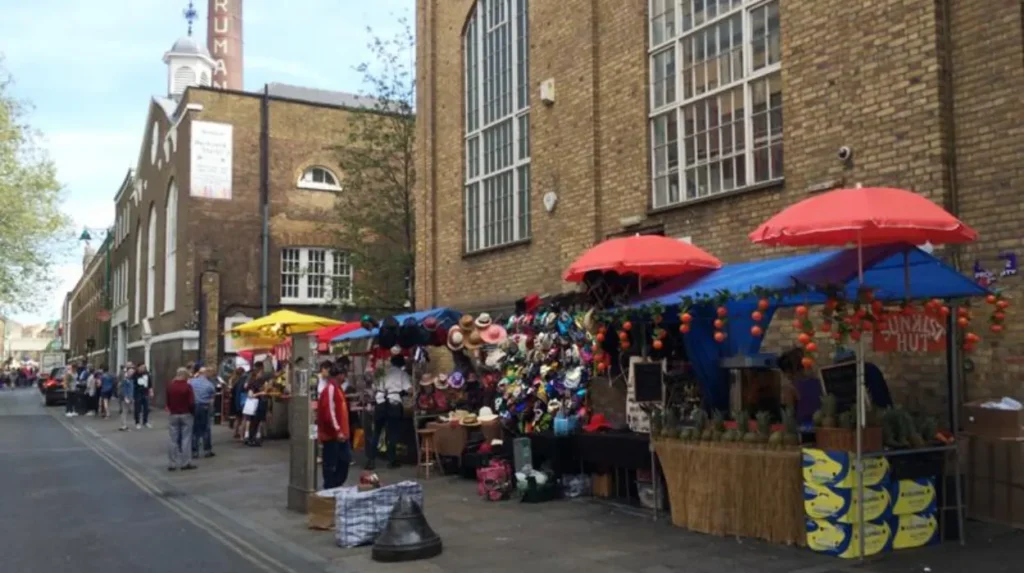
Brick Lane connects Whitechapel, Spitalfields and Shoreditch and is one of East London’s best-known market streets. The council records its market history from 1888. Its trading environment includes food, clothing, art, jewellery, vintage products and household goods.
The street also reflects the area’s migration history. French Huguenot, Jewish and Bangladeshi communities have all contributed to its cultural development.
Brick Lane works well as part of a wider walking route. Visitors can combine the market with Spitalfields, Whitechapel Gallery and nearby East End streets.
Columbia Road Flower Market
Columbia Road Flower Market operates on Sundays, with the market currently advertised from approximately 8am to 3pm. It specialises in flowers and plants and occupies Columbia Road in Bethnal Green.
The surrounding independent shops and cafés add another layer to the visit. The market is particularly suitable for travellers interested in street photography, horticulture, local shopping and neighbourhood atmosphere.
Chrisp Street Market
Chrisp Street Market in Poplar dates from the Victorian period. The council identifies fruit and vegetables, clothing, household goods, cafés and traditional food businesses among its trading offer. The market operates Monday to Saturday.
It provides a useful contrast with the more tourist-oriented character associated with Brick Lane.
Roman Road Market
Roman Road follows an ancient route through Bow and Bethnal Green. The market operates on selected days and forms part of a long-established local shopping district.
For visitors exploring East London beyond the central sightseeing circuit, these markets provide a stronger connection with residential neighbourhoods and everyday commerce.
What historic places should visitors see in Tower Hamlets?
Tower Hamlets contains historic churches, dock structures, markets, civic buildings and surviving streetscapes that document medieval, early modern, Victorian and industrial London. Spitalfields, Limehouse, Stepney, Bow and the former docks provide particularly strong opportunities to explore the borough’s historical development.
The borough’s history is closely linked to London’s expansion eastwards. Religious institutions, trade routes, docks, manufacturing, migration and housing shaped the physical landscape.
Historic England’s Tower Hamlets heritage collection records hundreds of designated heritage assets. Examples include Spitalfields Market, St Dunstan and All Saints Church, St Mary Stratford Bow, historic London Dock walls and Limehouse buildings.
As you explore the modern neighbourhoods, you are crossing land with a deep heritage. Read about the full [Insert Anchor Text for History Article Here] to understand its origins.
Spitalfields
Spitalfields developed around religious, commercial and residential activity. Its historic market building dates from the late nineteenth century and remains a major architectural feature. Historic England identifies Spitalfields Market as a listed heritage asset.
The area also connects with London’s textile and immigrant history. Its streets contain a mixture of historic buildings, converted commercial premises, restaurants, shops and newer developments.
Limehouse
Limehouse developed strongly through maritime activity and industrial commerce. Historic buildings remain visible along Commercial Road and surrounding streets.
St Anne’s Limehouse Parish Church is a Grade I listed building. Historic England dates its first listing to 1950 and identifies it as a significant historic structure.
Limehouse Town Hall, built in 1879, is Grade II listed. Its architectural significance forms part of the area’s historic civic landscape.
Bow and Stepney
Bow and Stepney contain important religious and civic buildings. St Mary Stratford Bow is a Grade II* listed church with medieval origins and later restoration. Historic England identifies it among Tower Hamlets’ significant heritage assets.
These neighbourhoods suit visitors who want to see historic East London outside the principal central tourist circuit.
Which parks and green spaces are best for a Tower Hamlets visit?
Tower Hamlets contains more than 120 parks and green spaces, ranging from major historic parks to nature reserves and small gardens. Victoria Park, Mile End Park, Mudchute Park and Farm and Tower Hamlets Cemetery Park provide particularly distinctive visitor experiences.
Green space is an important part of the borough’s visitor geography. Tower Hamlets Council records more than 120 parks and green spaces, with 14 holding Green Flag Awards.
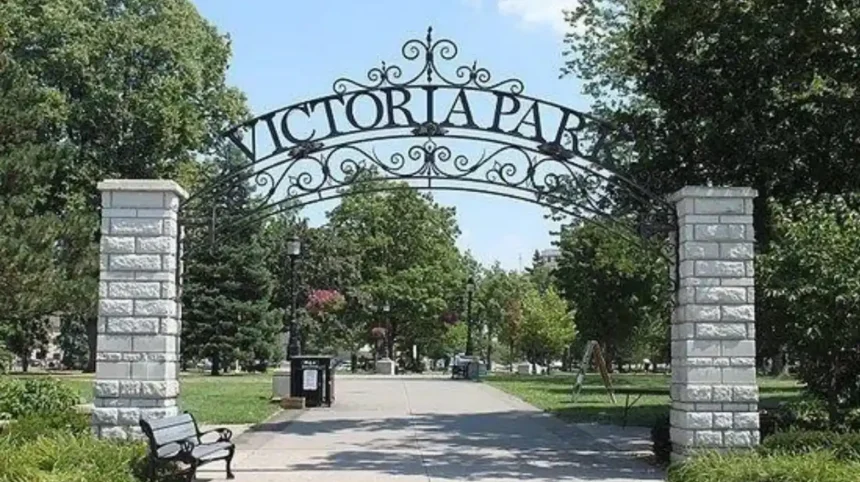
Victoria Park
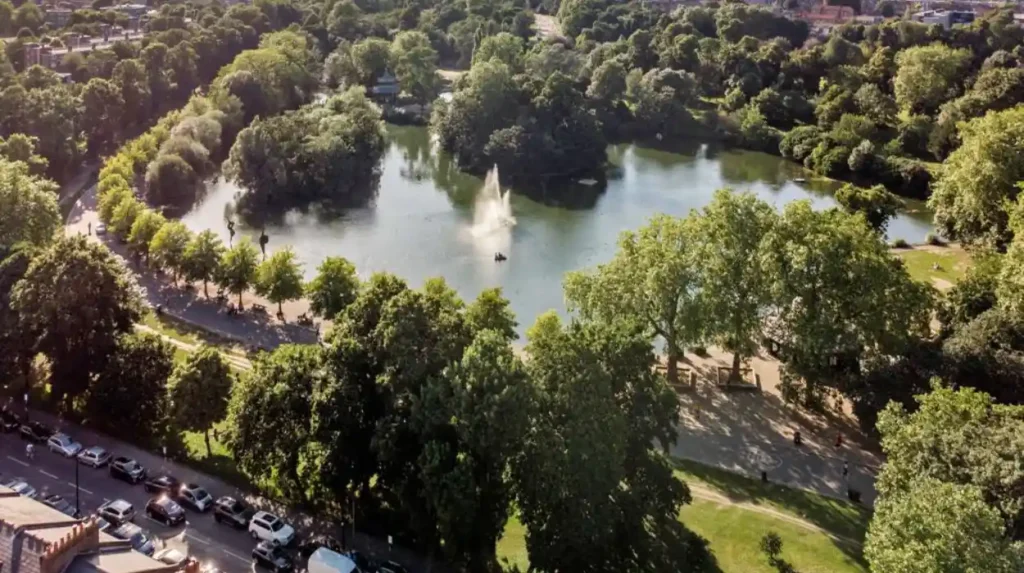
Victoria Park is the borough’s largest park at 86 hectares. It opened in 1845 and was created as a public park for the East End. The council describes it as London’s oldest public park.
The park contains lakes, historic monuments, a bandstand, sports facilities, play areas, cafés and open lawns. Its facilities include cricket, football, tennis, bowls, skating and picnic areas.
Victoria Park also records around nine million visits per year, according to Tower Hamlets Council.
Mile End Park
Mile End Park extends through a heavily urbanised part of East London. Its facilities include the Ecology Park, Arts Pavilion, sports facilities and recreational areas.
The park works particularly well for visitors who want outdoor space close to central East London neighbourhoods.
Mudchute Park and Farm
Mudchute Park and Farm occupies 32 acres on the Isle of Dogs. It combines open countryside, a working farm, woodland, ponds, nature areas and more than 100 animals. Admission is free.
The farm provides an unusual contrast with the surrounding Canary Wharf business district. It also operates educational activities and community programmes.
Tower Hamlets Cemetery Park
Tower Hamlets Cemetery Park covers 31 acres of woodland, meadows and monuments. It is one of the borough’s two local nature reserves and is also a Victorian garden cemetery.
The site combines biodiversity and heritage. It provides an opportunity to examine Victorian burial landscapes while experiencing woodland and meadow habitats within the urban borough.
Which museums and cultural attractions belong on a Tower Hamlets itinerary?
Tower Hamlets’ cultural attractions explain East London’s social, maritime and artistic history through museums, galleries, performance venues and community institutions. The Museum of London Docklands, Whitechapel Gallery and neighbourhood cultural venues provide different perspectives on London’s past and contemporary creative life.
Museums and galleries give visitors structured ways to understand the borough rather than simply viewing its streets.
Museum of London Docklands
The Museum of London Docklands is based within the historic dock area and focuses on London’s relationship with the River Thames, trade and the docks. Its setting connects the museum directly with the former West India Docks and the wider Canary Wharf area.
The museum is particularly relevant for visitors studying London’s maritime economy, global trade and dockland communities.
Its location also provides access to the surrounding waterfront landscape, where modern commercial development stands alongside surviving elements of the historic dock system.
Whitechapel Gallery
Whitechapel Gallery was founded in 1901 to expand access to art in East London. Its historic building contains nine exhibition spaces, an auditorium, study and studio facilities, a bookshop and café.
The gallery focuses on temporary exhibitions rather than maintaining a permanent collection. Its programme includes contemporary artists and international artistic practices.
The gallery sits close to Brick Lane, Shoreditch and Aldgate East, making it easy to combine with a wider East London walking itinerary.
Rich Mix
Rich Mix is a cultural venue on Bethnal Green Road offering film, performance, events, food and community programming. Its venue includes cinema, studio and stage spaces.
The venue currently has major building works affecting its cinema programme, so visitors should check the current schedule before planning a film visit.
Its location near Shoreditch High Street makes it useful for an East London cultural itinerary.
How can visitors explore Tower Hamlets’ docklands and waterfront?
Tower Hamlets’ docklands connect historic maritime infrastructure with modern Canary Wharf, Limehouse, Poplar and the Isle of Dogs. Waterfront exploration reveals former docks, canals, public spaces, historic buildings and contemporary architecture within a relatively compact area of East London.
The River Thames and dock system shaped Tower Hamlets for centuries. The London Docks, West India Docks and Limehouse Basin supported shipping, warehousing and industrial commerce.
Many former industrial areas have since undergone major redevelopment. Canary Wharf represents the modern financial district, while other docklands contain residential developments, public spaces, cultural venues and surviving heritage structures.
Historic England records surviving boundary walls associated with the former London Docks, including structures dating from the early nineteenth century.
Canary Wharf
Canary Wharf is the modern commercial centre of the Isle of Dogs. Its high-rise architecture contrasts with nearby historic dock infrastructure.
Visitors can use the district as a starting point for exploring dockside public spaces, restaurants, retail areas and transport connections.
Limehouse Basin
Limehouse Basin links the Regent’s Canal with the Thames. Its waterside environment reflects the historic importance of canal and river transport.
The area provides a useful connection between Limehouse, the Thames Path and the broader East London docklands.
Isle of Dogs
The Isle of Dogs combines modern commercial development with historic dock landscapes and green spaces. Mudchute Park and Farm provides one of the clearest contrasts, placing a working community farm within sight of Canary Wharf’s towers.
This combination illustrates the geographical diversity of Tower Hamlets without requiring a journey to another part of London.
What cultural experiences make Tower Hamlets different from central London?
Tower Hamlets’ cultural identity developed through successive waves of migration, trade, religion, food, music and artistic activity. Whitechapel, Brick Lane, Spitalfields, Bethnal Green and Poplar contain cultural institutions and commercial streets that reflect this long East London history.
Cultural tourism in Tower Hamlets extends beyond formal museums.
Brick Lane demonstrates the relationship between migration, food and commerce. The council identifies the street as a historic focal point for the Bangladeshi community and records earlier French Huguenot and Jewish settlement.
Whitechapel Gallery provides another expression of cultural diversity. Its programme has included international artists and projects connected with local migrant communities.
Markets add a further dimension. Food stalls, independent shops and street traders create visitor experiences that are closely linked to local commerce rather than conventional tourist attractions.
Tower Hamlets also hosts temporary cultural events. In 2026, Victoria Park hosted a free programme including open-air film screenings, live music, sport, theatre, arts activities and street food.
These programmes change regularly, so visitors should treat event calendars as supplementary to the borough’s permanent attractions.
How should visitors plan a day exploring Tower Hamlets?
A Tower Hamlets day works best when visitors group attractions by neighbourhood rather than attempting to cover the entire borough. Whitechapel and Spitalfields suit markets and galleries, Victoria Park suits outdoor visits, while Limehouse and the Isle of Dogs suit docklands exploration.
Tower Hamlets is geographically compact but contains enough attractions for several separate visits. A neighbourhood-based approach reduces unnecessary travel and creates stronger thematic connections.
Whitechapel and Spitalfields route
Begin around Whitechapel and move towards Spitalfields. Combine Whitechapel Gallery with historic streets and Brick Lane. Continue towards Spitalfields Market and surrounding commercial streets.
This route works particularly well for visitors interested in art, architecture, markets, food and migration history.
Bethnal Green and Victoria Park route
Start around Bethnal Green and continue towards Victoria Park. Add Columbia Road when visiting on Sunday, then walk towards the park through surrounding East London streets.
Victoria Park provides space for a longer outdoor break. Its 86-hectare landscape contains enough facilities and historic features to support several hours of exploration.
Limehouse and Isle of Dogs route
Begin around Limehouse and explore historic buildings before moving towards the waterfront. Continue towards the Isle of Dogs and Mudchute Park and Farm.
This route combines maritime history, modern architecture, green space and local heritage.
Poplar and Bow route
Poplar and Bow provide a different experience from the better-known tourist areas. Chrisp Street Market, Roman Road Market and historic churches offer opportunities to explore neighbourhood commerce and heritage.
This route is particularly relevant for repeat London visitors seeking attractions outside the most heavily promoted central districts.
How accessible is Tower Hamlets for tourists without a car?
Tower Hamlets is well suited to car-free sightseeing because the borough is served by Underground, Elizabeth line, Overground, DLR, buses, walking routes and cycle infrastructure. Visitors can organise attractions around stations and combine short public-transport journeys with neighbourhood walks.
Public transport is central to exploring the borough. Whitechapel connects visitors with the Underground, Overground and Elizabeth line. Aldgate East provides access to Whitechapel Gallery and surrounding attractions.
The Docklands Light Railway is particularly useful for destinations including Poplar, Canary Wharf and the Isle of Dogs.
Walking is also important because many attractions cluster within individual neighbourhoods. For example, Whitechapel Gallery is less than a minute’s walk from Aldgate East Underground station according to the gallery’s visitor information.
Columbia Road Flower Market is also accessible by public transport. The market identifies Hoxton as the nearest Overground station, while Liverpool Street, Old Street, Shoreditch and Bethnal Green provide longer walking options.
Visitors should check Transport for London’s current service information before travelling because engineering works and temporary closures change routes and journey times.
Explore More Area Guide
East London Break Guide: Explore Tower Hamlets
Tower Hamlets for Visitors: Culture, Heritage and Leisure
What should visitors know before exploring Tower Hamlets?
Visitors should check attraction schedules, market days, temporary exhibitions, event programmes and transport conditions before travelling. Tower Hamlets contains both permanent public spaces and changing cultural attractions, so opening arrangements differ significantly between markets, museums, galleries, parks and event venues.
Planning is particularly important for markets. Columbia Road Flower Market operates on Sundays, while other markets have different schedules.
Cultural venues also operate changing programmes. Whitechapel Gallery combines free displays with ticketed seasonal exhibitions, while its opening hours vary through the week.
Parks generally provide more flexible sightseeing opportunities. Victoria Park has extensive public facilities, while Mudchute Park and Farm is free to enter.
Accessibility also differs by venue. Rich Mix provides step-free access, lifts, accessible toilets, hearing systems and wheelchair spaces across its cinema screens, although its current building programme affects cinema operations.
Visitors should also consider weather when planning outdoor attractions. Parks, markets and waterfront routes are exposed to seasonal conditions, while museums and galleries provide useful indoor alternatives.
Why does Tower Hamlets matter for London’s wider visitor experience?
Tower Hamlets expands the traditional London sightseeing map by connecting historic East End communities, global trade, docklands, contemporary art, markets and major green spaces. Its attractions demonstrate how London’s eastern districts developed from peripheral settlements into major cultural and commercial neighbourhoods.
The borough’s significance comes from the interaction between different periods of London’s development.
Medieval churches and historic routes provide evidence of earlier settlement. Markets document long-running commercial activity. The docks reveal London’s industrial and maritime expansion. Migrant communities shaped neighbourhood culture, food and commerce. Contemporary galleries and cultural venues continue that tradition of international exchange.
The borough’s green spaces also form an important part of its identity. Tower Hamlets Council records more than 120 parks and green spaces, while Victoria Park alone covers 86 hectares.
Heritage protection remains visible through listed buildings and registered landscapes. Tower Hamlets has five registered parks and gardens, including Victoria Park at Grade II*, Boundary Gardens at Grade II, Island Gardens at Grade II, Museum Gardens at Grade II and the Novo Cemetery at Grade II.
For visitors, this creates a practical advantage: one borough contains multiple forms of London history and culture within a relatively concentrated geographical area.
Tower Hamlets therefore works as more than an alternative to central London sightseeing. It is a destination in its own right, with markets, heritage sites, parks, museums, galleries, docklands and neighbourhood culture forming a connected East London travel experience.
What is Tower Hamlets best known for?
Tower Hamlets is known for Brick Lane, Spitalfields, Victoria Park, the historic Docklands, Whitechapel Gallery, diverse markets, maritime heritage and the Canary Wharf area.