Key Points
- Havering Council’s Cabinet approved ‘The Havering Plan 2040’ on Wednesday, 16 September 2026, setting out a 16-year blueprint to make the borough “London’s Super Suburb.”
- The comprehensive strategy is structured around core principles, including “Havering First” and “The Havering Way,” designed to prioritize local residents, businesses, and suburban heritage.
- Key initiatives include converting the council-owned housing developer Mercury Land Holdings into the “Havering Growth Company” and overhauling “Invest Havering.”
- Plans highlight major regeneration, including a revamped Romford Masterplan, a “renaissance” for Romford Market, improved green spaces, and safer town centres.
- Council Leader Keith Prince revealed active negotiations to bring a university institution directly to the borough to expand higher education and employment.
- The framework will be rolled out in two phases: Stage 1 establishes the strategic vision and flagship schemes, whilst Stage 2 aligns implementation milestones directly with municipal budget allocations.
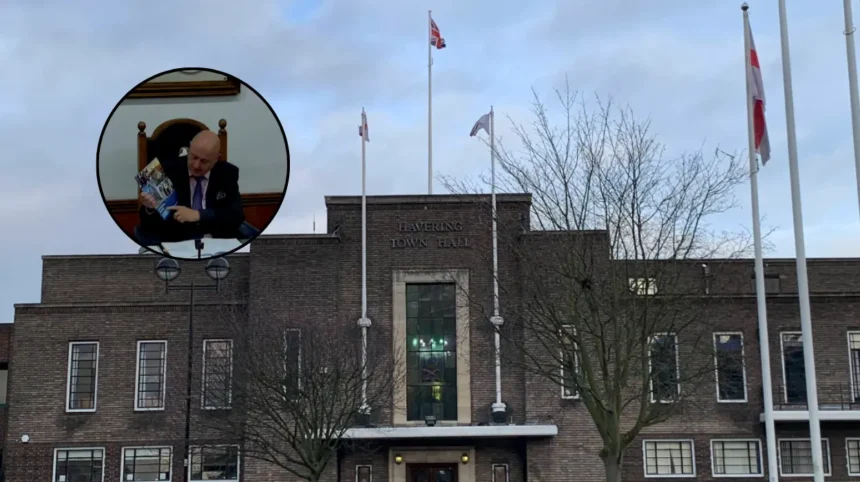
Romford (East London Times) September 17, 2026 — Havering Council has officially adopted an ambitious 16-year strategic roadmap, titled ‘The Havering Plan 2040’, designed to systematically modernise the East London local authority area into what leaders term a “super suburb.” Unveiled and passed during a Cabinet meeting on the evening of Wednesday, 16 September 2026, the broad policy document outlines long-term economic development, educational expansion, housing restructuring, and town centre regeneration. The newly passed framework marks a departure from short-term electoral planning cycles, seeking instead to establish a comprehensive direction for the borough over the next decade and a half.
- Key Points
- What Are the Core Principles Governing the Havering Plan 2040?
- How Will Local Housing and Development Companies Be Restructured?
- What Are the Specific Infrastructure and Town Centre Regeneration Proposals?
- Could a New University Campus Be Built in Havering?
- What Strategic Position Does Havering Occupy in East London’s Growth Plan?
- How Will the Havering Plan 2040 Be Implemented and Financed?
- Background of the Havering Plan 2040
- Prediction: How Will This Development Affect Local Residents and Businesses?
As reported by Sebastian Mann of the Romford Recorder, Council Leader Councillor Keith Prince framed the passage of the document as a landmark municipal event, remarking during the meeting, “This is where we make history. Here we have it: the Havering Plan 2040. Never in the history of this borough has an administration done a 16-year plan.” Prince further highlighted that the plan establishes clear operational metrics, adding,
“What’s important about this document is not just what our ambitions are, how we see things going forward, but the fact that we are laying something before the people of Havering and we expect to be held to account on it.”
What Are the Core Principles Governing the Havering Plan 2040?
As detailed by reporting from the London Borough of Havering Newsroom, the strategy operates under a primary governing framework termed “Havering First.” This concept dictates that decisions regarding local housing developments, school placements, job creation, and municipal spending must directly benefit existing borough residents and local businesses before external parties.
Alongside “Havering First,” the strategy formally introduces “The Havering Way,” described as the administration’s place-making and urban planning philosophy. As noted in local council briefings, this pillar asserts that economic and infrastructure growth must enhance rather than erode the suburban identity, architectural heritage, and natural environment of the borough. Additional strategic tenets include “Build Havering,” which focuses on place-led physical development, “Grow Havering,” aimed at establishing dedicated commercial powerhouse zones, and structural enhancements to public services.
How Will Local Housing and Development Companies Be Restructured?
To execute the physical development outlined in the 2040 roadmap, the council is restructuring its internal entities. As reported by Sebastian Mann of the Romford Recorder, the council-owned commercial housing developer, Mercury Land Holdings, will be formally transitioned into the “Havering Growth Company.”
This newly transformed entity will oversee large-scale redevelopment projects across the borough. Concurrently, municipal economic arms, including “Invest Havering,” are undergoing structural changes to attract commercial investment, boost enterprise, and lure private business capital into the area.
What Are the Specific Infrastructure and Town Centre Regeneration Proposals?
As covered by Francesca Lilleystone of The Havering Daily, the strategic vision prioritises physical environment enhancements, urban renewal, and commercial modernisations across key suburban centres. Central to the urban renewal initiative is a “reimagined” Romford Masterplan, designed to revitalize the region’s largest commercial hub.
The plan specifically targets a full “renaissance” of the historic Romford Market to increase footfall and support street traders. Furthermore, the council has committed to park improvements, public realm upgrades, and joint enforcement initiatives alongside local police forces to curb shoplifting and commercial crime, with the explicit goal of making town centres cleaner, safer, and visually more appealing.
Could a New University Campus Be Built in Havering?
A significant element of the educational expansion strategy involves bringing a dedicated higher education institution to the area. As reported by Francesca Lilleystone of The Havering Daily, Council Leader Keith Prince revealed at a press briefing preceding the Cabinet vote that the administration is actively pursuing higher education providers.
Lilleystone reported that Prince confirmed active negotiations, stating, “One of my aspirations is to bring a university to Havering. We are in talks with university providers.” Stressing his personal commitment to the initiative, Prince added,
“I will move heaven and earth to achieve this.”
Prince explained that establishing a local university would allow young residents to gain higher educational qualifications without leaving the borough, whilst simultaneously serving as an economic anchor to attract skilled industries and create local jobs.
What Strategic Position Does Havering Occupy in East London’s Growth Plan?
Addressing the geographical and commercial potential of the area, media outlets noted the administration’s focus on the borough’s location. As reported by Francesca Lilleystone of The Havering Daily, Leader Keith Prince defined Havering’s location as a pivotal transit corridor between outer Essex, Kent, and Greater London.
Prince stated,
“Havering is a gateway for the east. We have our roots in Essex and have links to travel to Kent and the south east of England. We are the gateway to the east and a tollgate to London.”
The administration intends to leverage this positioning to attract logistical, commercial, and educational investments that rely on transport access between outer suburban counties and central London.
How Will the Havering Plan 2040 Be Implemented and Financed?
According to reporting by The Havering Daily and the Romford Recorder, the local authority is executing the 2040 framework via a phased two-stage model. Stage 1, formally adopted at the Cabinet meeting, outlines the overarching vision, strategic commitments, and primary flagship initiatives.
Stage 2 will directly integrate these long-term policy goals into the council’s annual budget allocations, setting specific timelines, performance indicators, and legal planning controls. As reported by Francesca Lilleystone of The Havering Daily, Deputy Leader Councillor Sue Benjamins noted that the administration seeks to alter community outlook through this phased delivery, stating,
“We want to improve morale for residents here and inspire confidence.”
Background of the Havering Plan 2040
The adoption of ‘The Havering Plan 2040’ comes after prolonged political and financial discussions regarding outer London suburban development, housing targets, and local government solvency. Over recent years, local authorities across Greater London have faced substantial pressure from central government and regional bodies to meet housing quotas, maintain aging public infrastructure, and manage constrained municipal budgets. In Havering, previous administrative approaches relied primarily on short-term operational cycles or localized spatial planning documents, such as the Havering Local Plan adopted in November 2021.
Prior to the introduction of the 2040 strategy, the current local administration established an initial 100-day operational plan centered on basic municipal services, including street cleaning, local policing integration, and initial budgetary stabilization measures. The 2040 plan scales up these initial priorities into a 16-year policy construct. The transition of developer Mercury Land Holdings into the Havering Growth Company reflects a broader trend among London councils seeking direct control over housing delivery and commercial income generation, rather than relying strictly upon private developer-led regeneration models.
Prediction: How Will This Development Affect Local Residents and Businesses?
For residents living in Havering, the implementation of the 2040 Plan will likely mean noticeable changes to local housing policies, infrastructure development, and municipal service delivery over the coming decade. Because the policy formally mandates a “Havering First” priority model, local taxpayers and families are likely to receive preference in municipal housing allocations, local school placements, and borough-backed apprenticeship schemes. The proposed physical regeneration of Romford Market and surrounding town centres aims to reduce vacant storefronts, clean public areas, and increase street safety through targeted policing efforts, potentially improving daily suburban quality of life. However, residents may also experience short-to-medium-term disruption from construction, roadworks, and redevelopment projects as major masterplans are executed.
For the local business community, commercial property owners, and regional investors, the framework offers a predictable, long-term regulatory environment designed to encourage private capital investment. The creation of the Havering Growth Company and the overhaul of “Invest Havering” indicate that the council will actively seek public-private partnerships, potentially boosting construction, retail, and commercial activity. If the administration succeeds in securing a university partner, local commercial enterprises stand to benefit from a growing student population, expanded consumer footfall, and a broader pool of educated, locally based talent. Conversely, the long-term success of these projections remains tied to Stage 2 budgetary execution; if council funding faces future macro-economic squeezes or central government grant reductions, elements of the plan may encounter delivery delays or scaled-back financial support.