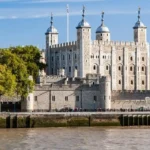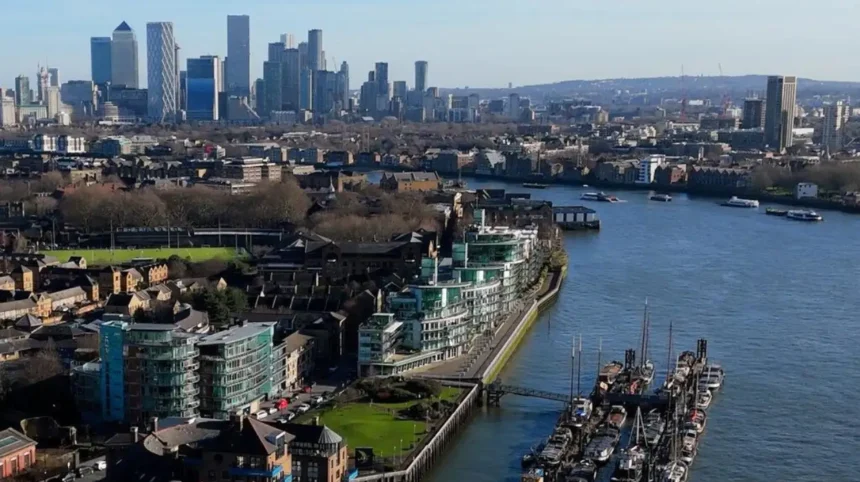
Tower Hamlets is one of East London’s most varied destinations, combining historic streets, markets, museums, parks, former docks, the River Thames and the modern Canary Wharf skyline. A full-day itinerary works best when it moves progressively from the historic East End towards the waterfront and Docklands.
- What should you see in Tower Hamlets in one day?
- How should you start a Tower Hamlets sightseeing itinerary?
- What can you do around Brick Lane and Spitalfields?
- Should you visit Columbia Road Flower Market during a Tower Hamlets day trip?
- Where should you go for history after the markets?
- Which Tower Hamlets museum fits a full-day itinerary?
- What is the best afternoon route through Canary Wharf?
- Where can you experience the Thames and Docklands in Tower Hamlets?
- Can Victoria Park fit into a one-day Tower Hamlets itinerary?
- How should you organise lunch and dinner in Tower Hamlets?
- How can digital nomads and business travellers adapt the itinerary?
- What is the most efficient transport strategy for Tower Hamlets sightseeing?
- What should a full-day Tower Hamlets itinerary look like?
- Why is Tower Hamlets suitable for a full day of East London sightseeing?
The borough occupies a strategically important part of inner East London. Its southern boundary follows the River Thames, while areas such as Whitechapel, Spitalfields, Bethnal Green, Stepney, Poplar, Limehouse and Canary Wharf provide distinctly different visitor experiences. Tower Hamlets Council describes the borough as the heart of the East End and highlights its combination of ancient heritage, markets, museums, the Tower of London and modern Docklands.
This itinerary is designed for visitors who want to cover several major attractions without repeatedly crossing the borough. It combines walking with public transport and leaves enough time for food, photographs, museum visits and waterfront exploration.
What should you see in Tower Hamlets in one day?
A full Tower Hamlets day can cover Whitechapel, Brick Lane, Spitalfields, a historic East End site, a museum or park, Canary Wharf and the Thames. The most efficient route moves eastwards and southwards rather than repeatedly retracing the same streets.
Start in the western part of the borough around Whitechapel or Aldgate East. This gives easy access to Whitechapel Market, Brick Lane and the historic streets around Spitalfields.
Continue towards Brick Lane and Bethnal Green for food, independent shops and East End cultural heritage. If visiting on Sunday, Columbia Road Flower Market provides another major market experience. Tower Hamlets Council lists Brick Lane, Columbia Road, Petticoat Lane, Whitechapel, Roman Road and Chrisp Street among the borough’s established markets.
After lunch, travel towards Canary Wharf or Mile End, depending on your interests. Canary Wharf provides modern architecture, public spaces and waterfront views, while Mile End offers parks and a quieter transition between the historic East End and Docklands.
Finish around the River Thames, where Limehouse, Canary Wharf, Poplar and the Isle of Dogs provide waterfront scenery.
The route is particularly suitable for first-time visitors because it combines several different dimensions of Tower Hamlets rather than concentrating on a single neighbourhood.
How should you start a Tower Hamlets sightseeing itinerary?
Begin around Whitechapel or Aldgate East because these transport hubs provide convenient access to markets, historic streets, Brick Lane and Spitalfields. Starting here creates a logical west-to-east route and leaves the Docklands and Thames for the later part of the day.
Whitechapel is a practical starting point because it connects the historic East End with the wider London transport network. The area also provides immediate access to Whitechapel Road and its market.
Whitechapel Market runs along Whitechapel Road and has a long-established retail role. The council describes stalls selling fresh fruit, vegetables, spices, fashion, cultural clothing and jewellery. Current council information lists trading from Monday to Saturday, 8am to 6pm.
Allow around 45 minutes for the market if you are primarily sightseeing. Allow longer if you want to eat or browse stalls.
From Whitechapel, walk towards Brick Lane. The journey introduces the architectural and cultural transition between Whitechapel and Spitalfields.
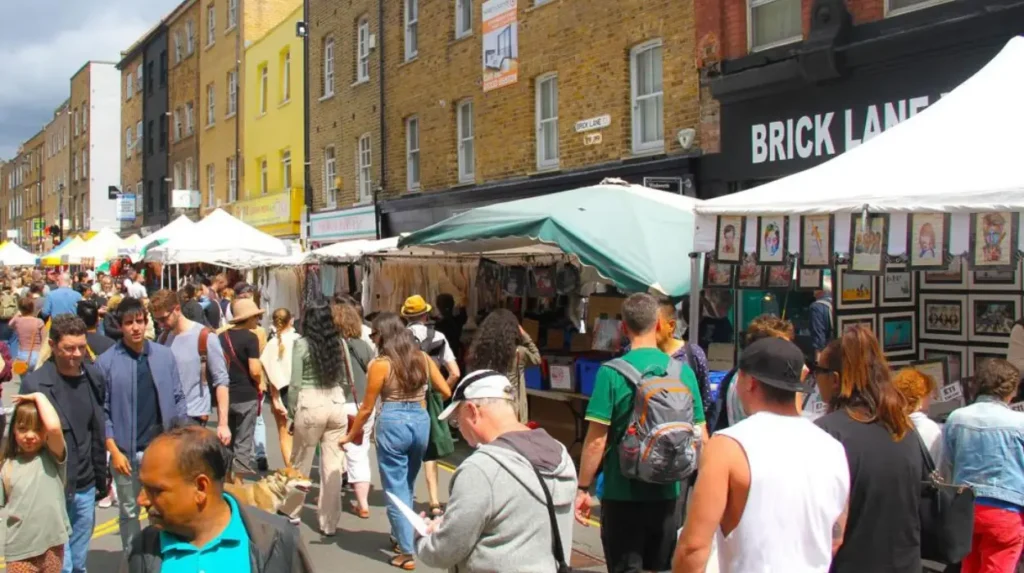
Brick Lane is particularly associated with the East London Bangladeshi community, while its wider history also includes French Huguenot and Jewish settlement. Tower Hamlets Council records Brick Lane Market as dating from 1888.
As you explore the modern street, you are crossing land shaped by centuries of migration, commerce and industry. Read about the full to understand its origins.
What can you do around Brick Lane and Spitalfields?
Brick Lane and Spitalfields provide a concentrated East London experience through markets, food, independent businesses, street-level architecture and migration history. Spend the late morning here before continuing towards Bethnal Green, Victoria Park or the Docklands.
Brick Lane is best explored on foot. Its surrounding streets contain restaurants, cafés, shops, galleries and businesses occupying historic buildings.
On Sundays, Brick Lane Market operates from approximately 10am to 3pm according to Tower Hamlets Council information. The market includes fashion, food, art, jewellery, vintage products and household goods.
The area also connects naturally with Spitalfields. Visitors can explore the historic market district before returning towards Brick Lane.
A full market visit does not require a fixed sequence. Begin with the main street, then use smaller side streets to see older buildings and local businesses.
Food is another major component. Brick Lane is closely associated with South Asian cuisine, particularly Bangladeshi restaurants. It also has cafés, bakeries and international food businesses.
For visitors planning a weekday trip, the market experience differs from Sunday. Brick Lane remains active as a street and dining destination, but the large Sunday market atmosphere is not the same.
How long should you spend in Brick Lane?
Allow 90 minutes to two hours for Brick Lane and Spitalfields. This provides enough time for walking, food and market browsing without consuming the entire itinerary.
Visitors who prioritise food and shopping should extend this period. Visitors focused on museums and heritage should shorten it and continue towards the next destination.
Should you visit Columbia Road Flower Market during a Tower Hamlets day trip?
Columbia Road Flower Market is particularly suitable for Sunday itineraries because it operates on Sundays and combines flowers, plants, independent shops, cafés and galleries. It works best as an early-day alternative or addition before continuing towards Bethnal Green and Docklands.
Columbia Road is in Bethnal Green and provides a different market environment from Brick Lane. The council lists the flower market as operating on Sundays from 8am to 2pm.
The street contains approximately 60 independent shops, galleries and antique sellers, alongside cafés and pubs, according to Tower Hamlets Council.
The market therefore works particularly well for visitors interested in horticulture, photography, independent retail and traditional London street markets.
A Sunday itinerary can begin at Columbia Road in the morning, continue to Brick Lane around midday and then move towards the Docklands.
This creates a market-focused first half of the day.
On other days, replace Columbia Road with Whitechapel Market, Roman Road Market or Chrisp Street Market, depending on the direction of your itinerary. Tower Hamlets operates a network of ten street markets, including Brick Lane, Bethnal Green Road, Chrisp Street, Columbia Road, Petticoat Lane, Roman Road, Roman Road Square, Sclater Street, Watney Market and Whitechapel Market.
Where should you go for history after the markets?
After the markets, explore Tower Hamlets’ historic environment through Stepney, Spitalfields or the former docklands. These areas preserve evidence of medieval settlement, parish history, maritime trade, industrial development, migration and twentieth-century urban change.
Tower Hamlets has an extensive recorded heritage. Historic England’s local heritage material identifies listed sites from the Roman period through the medieval and post-medieval eras, with particularly extensive surviving heritage from the period between 1540 and 1901.
One important historic site is St Dunstan and All Saints, Stepney, a Grade I listed parish church. Historic England records an ancient foundation, a 13th-century chancel, a 15th-century nave and aisles, and a 15th-century west tower.
The church demonstrates the depth of Stepney’s history beyond the better-known attractions around Brick Lane and the Thames.
Nearby historic buildings also illustrate the development of the East End during the 18th and 19th centuries. Historic England’s National Heritage List currently records hundreds of listed sites within Tower Hamlets.
For a practical itinerary, do not attempt to visit every historic building. Select one concentrated area and continue towards the next major attraction.
Which Tower Hamlets museum fits a full-day itinerary?
The Museum of London Docklands is the strongest museum choice for an itinerary focused on Tower Hamlets because it explains London’s relationship with the River Thames, docks, trade and Docklands redevelopment. Its location also connects efficiently with Canary Wharf and the Isle of Dogs.
The Museum of London Docklands provides historical context for the area surrounding the modern financial district.
The museum is particularly relevant because Tower Hamlets’ southern landscape was transformed by London’s port economy. Warehouses, wharves, docks and industrial infrastructure shaped communities around the Thames for generations.
The museum therefore adds historical context before you explore the modern Docklands outside.
A museum visit typically works best after lunch or in the early afternoon. Allow around 90 minutes to two hours for a focused visit.
This is also a useful option when weather conditions make an extended outdoor itinerary less comfortable.
After the museum, continue towards Canary Wharf using the local transport network or walking routes around the Isle of Dogs.
What is the best afternoon route through Canary Wharf?
Spend the afternoon around Canary Wharf to see how former dockland infrastructure became a major financial and commercial district. Walk through the estate’s public spaces, visit the waterfront areas and use the transport connections to reach the Thames efficiently.
Canary Wharf represents one of the most visible transformations in modern Tower Hamlets.
The district developed from former docklands into a major financial centre dominated by high-rise commercial buildings. Tower Hamlets Council identifies Canary Wharf as an internationally recognised Docklands area and a major European financial centre.
The area is highly accessible. Canary Wharf station is served by the Jubilee line, Elizabeth line and DLR, with additional bus connections. Transport for London also lists lifts, escalators, toilets, Wi-Fi and step-free access information at the station.
This makes Canary Wharf particularly useful for visitors who want a structured sightseeing route without long walking distances.
Walk around Canada Square, the surrounding plazas and the waterside areas. The architecture provides a clear contrast with Brick Lane, Whitechapel and Stepney.
The contrast is an important part of understanding Tower Hamlets. The borough contains historic East End streets and one of London’s most prominent modern business districts within a relatively compact area.
Where can you experience the Thames and Docklands in Tower Hamlets?
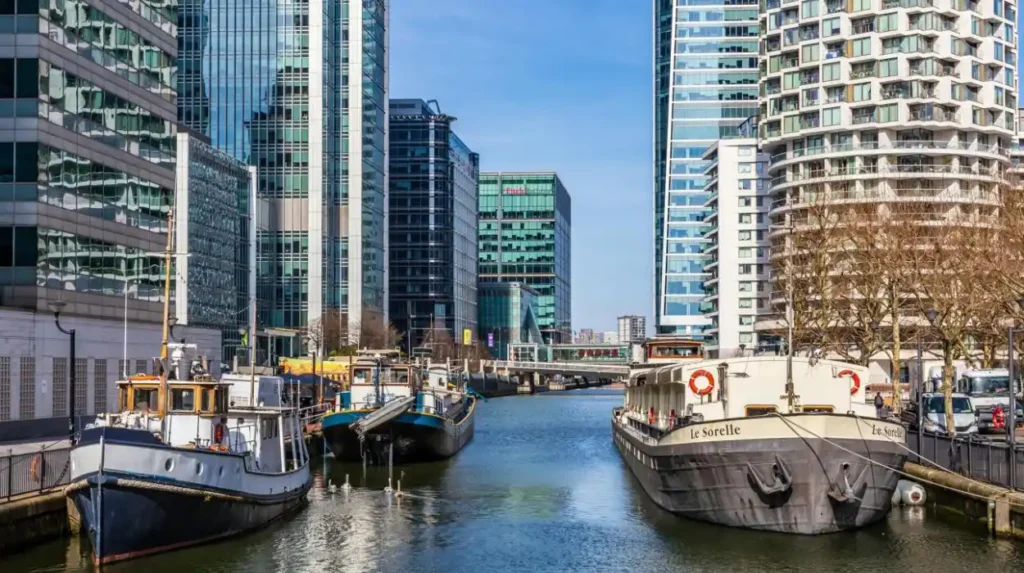
The Thames waterfront around Limehouse, Canary Wharf, Poplar and the Isle of Dogs provides a strong final section for a Tower Hamlets itinerary. These areas combine former industrial waterfronts, modern buildings, historic wharves, public paths and views across the river.
The River Thames defines the southern edge of Tower Hamlets. The council describes the river as the borough’s southern boundary and identifies its distinctive bend as a defining geographical feature.
For a shorter waterfront walk, remain around Canary Wharf and West India Quay.
For a more historic atmosphere, head towards Limehouse. Narrow Street and the surrounding waterfront preserve elements of the area’s maritime character.
Historic England lists St Dunstan’s Wharf at 142 Narrow Street as a Grade II building. The building dates from 1873 and forms part of a historic group around Limekiln Dock.
This area demonstrates how the old dock economy remains visible in the built environment.
A longer route can continue towards Limehouse Basin, where the canal and dock system connect the waterfront with the wider inland waterway network.
The Thames section should be treated as the final sightseeing phase because it provides an appropriate transition from the borough’s historic streets and markets to its maritime geography.
Can Victoria Park fit into a one-day Tower Hamlets itinerary?
Victoria Park fits best into itineraries prioritising green space, walking and East End history. Its 86-hectare landscape provides lakes, lawns, historic features and open routes, but visiting it requires reducing time allocated to markets or museums.
Victoria Park is Tower Hamlets’ largest park at 86 hectares. The council describes it as London’s oldest public park and records its opening in 1845 for the benefit of the East End working class.
The park’s history is directly connected to the rapid growth of the East End during the 19th century.
In 1840, a petition signed by 30,000 residents called for a major public park. Government legislation followed in 1841, and the park opened in 1845.
The park was designed by James Pennethorne, who also worked on other major London landscapes. It was expanded in 1872.
Victoria Park contains historic lakes, the Burdett-Coutts fountain, a bandstand and surviving stone alcoves from London Bridge.
The park is also a nationally recognised heritage landscape. Tower Hamlets identifies Victoria Park as a Grade II* registered park and garden.
For a one-day itinerary, allow approximately 60 to 90 minutes rather than attempting to explore every section.
How should you organise lunch and dinner in Tower Hamlets?
Use Brick Lane, Whitechapel, Spitalfields or Canary Wharf for meals because these districts provide different food environments within the same borough. Market areas suit quick meals, while Canary Wharf provides extensive restaurant and café choices around modern commercial spaces.
Lunch fits naturally around Brick Lane or Spitalfields because these areas sit in the middle of the morning route.
South Asian restaurants provide a major part of Brick Lane’s food identity. Whitechapel and nearby streets also contain restaurants representing different cuisines.
A market lunch reduces the amount of time spent sitting indoors. This is useful on a tightly planned sightseeing day.
For an afternoon break, Canary Wharf provides cafés and food venues around the commercial district and waterfront.
Dinner can be placed at the end of the route near Canary Wharf, Limehouse or the route back towards central London.
Visitors with dietary requirements should check individual restaurant menus before travelling because menus, opening hours and trading arrangements change.
How can digital nomads and business travellers adapt the itinerary?
Digital nomads and business travellers can retain the main sightseeing route while using cafés, market areas and Canary Wharf as short work breaks. Canary Wharf is particularly practical because its transport hub provides extensive connectivity and station facilities.
A business traveller with only a few free hours should prioritise one compact area rather than attempting the entire borough.
Whitechapel and Brick Lane work well for a short morning visit. They provide markets, food and cultural landmarks within a relatively concentrated area.
Canary Wharf is more suitable for visitors who need to combine sightseeing with meetings. The district has major commercial buildings, cafés, public spaces and extensive transport connections.
Transport for London confirms that Canary Wharf connects the Jubilee line, Elizabeth line and DLR.
Digital nomads should treat cafés as short working stops rather than relying on a specific venue for uninterrupted work. Seating, Wi-Fi policies and charging availability vary.
A practical half-day sequence is Whitechapel → Brick Lane → Spitalfields → Canary Wharf.
A longer working-day sequence is Whitechapel → museum → Canary Wharf → Thames waterfront.
What is the most efficient transport strategy for Tower Hamlets sightseeing?
The most efficient strategy combines walking between nearby attractions with the Underground, Elizabeth line and DLR for longer movements. Group attractions geographically, check live transport information and avoid crossing the borough repeatedly during peak periods.
Tower Hamlets benefits from several transport modes.
Whitechapel provides access to the District and Hammersmith & City lines, London Overground and Elizabeth line services.
Canary Wharf provides Jubilee, Elizabeth line and DLR services.
Walking is most efficient for Brick Lane, Spitalfields and neighbouring streets.
Public transport becomes more useful when moving between the historic East End and Canary Wharf.
A good itinerary therefore follows this principle:
Morning: Whitechapel → Brick Lane → Spitalfields
Midday: historic site or museum
Afternoon: Canary Wharf
Evening: Thames waterfront → onward journey
Always check the current TfL journey planner before travelling because engineering works and temporary disruptions change routes.
Explore More Area Guide
How to Spend a Day Exploring Tower Hamlets in East London
Tower Hamlets Travel Guide: East London Attractions Beyond Central London
What should a full-day Tower Hamlets itinerary look like?
A balanced itinerary starts with Whitechapel, continues through Brick Lane and Spitalfields, adds either heritage or a museum, then moves to Canary Wharf and finishes beside the Thames. Sunday visitors can add Columbia Road Flower Market early in the day.
A practical schedule is:
8:30am–9:15am: Start at Whitechapel Market or Columbia Road on Sunday.
9:15am–11:30am: Walk through Brick Lane and Spitalfields, with time for breakfast or an early lunch.
11:30am–1pm: Explore historic Stepney or visit a museum.
1pm–2pm: Lunch around Whitechapel, Brick Lane or Docklands.
2pm–3:30pm: Visit the Museum of London Docklands or explore the Docklands environment.
3:30pm–5pm: Continue to Canary Wharf and explore the modern financial district.
5pm–6:30pm: Walk towards the Thames, Limehouse or another nearby waterfront location.
After 6:30pm: Have dinner around Canary Wharf, Limehouse or another convenient transport hub.
This schedule is deliberately flexible. The exact opening hours of markets and museums determine the best order.
Sunday visitors should prioritise Columbia Road and Brick Lane because their market hours are concentrated around Sunday trading.
Weekday visitors can substitute Whitechapel Market, Roman Road Market or Chrisp Street Market depending on their preferred route.
Why is Tower Hamlets suitable for a full day of East London sightseeing?
Tower Hamlets supports a complete sightseeing day because its attractions cover several connected themes: East End history, migration, markets, public parks, maritime trade, museums, modern architecture and the River Thames. These themes are geographically close enough to combine efficiently.
The borough’s greatest itinerary advantage is its variety.
Visitors can begin among the historic streets of Whitechapel, experience the market culture of Brick Lane, examine medieval and post-medieval heritage in Stepney, learn about London’s docks, see the modern towers of Canary Wharf and finish beside the Thames.
Its parks add another dimension. Tower Hamlets currently manages more than 120 parks and green spaces, including Victoria Park and Mile End Park. The council records 14 Green Flag Awards across its parks.
Its heritage is equally substantial. Historic England’s records show hundreds of listed buildings and protected heritage assets across the borough.
The result is an East London itinerary that does not depend on one landmark. The borough itself provides the sightseeing framework.
For first-time visitors, the strongest approach is to organise the day geographically: historic East End first, Docklands second, Thames waterfront last. This reduces unnecessary travel and creates a clear progression through the borough’s past and present.
What can you do in Tower Hamlets in one day?
A full day in Tower Hamlets can include Whitechapel Market, Brick Lane, Spitalfields, historic Stepney, the Museum of London Docklands, Canary Wharf and the Thames waterfront.