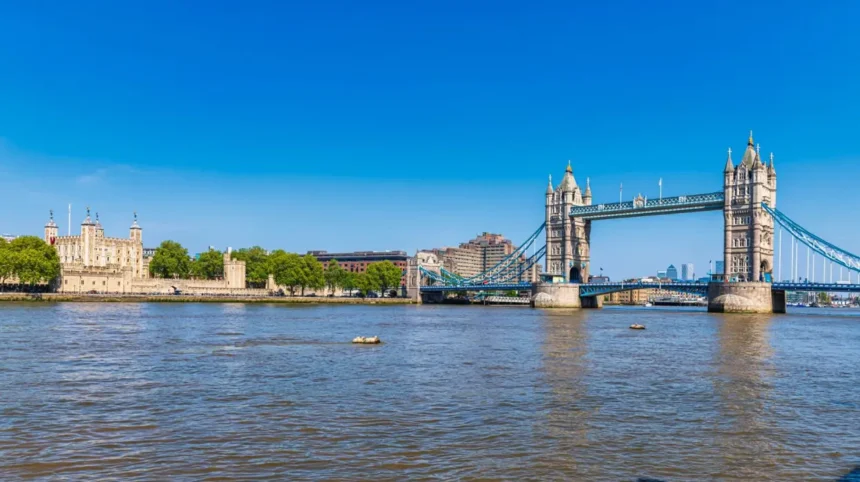
Tower Hamlets is one of London’s most varied boroughs. It combines historic East End neighbourhoods, major museums, markets, parks, riverside walks, former docks, Canary Wharf and important cultural sites. The right amount of time depends on whether you want a quick overview or a detailed exploration.
- How many days do you need to see Tower Hamlets?
- What can you see in Tower Hamlets in one day?
- Is two days enough to explore Tower Hamlets properly?
- How long should you spend exploring Tower Hamlets markets?
- How long does it take to explore Victoria Park and Mile End?
- How long should you spend at the Museum of London Docklands?
- How long does a Tower Hamlets walking itinerary take?
- How long do you need to explore Canary Wharf and the Isle of Dogs?
- Can you explore Tower Hamlets in three days?
- Is four days enough for a deeper Tower Hamlets visit?
- What is the ideal amount of time for a first visit to Tower Hamlets?
The borough covers a compact but information-rich part of East London. Its visitor attractions range from the Tower of London and Tower Bridge in the west to Victoria Park, Mile End, Whitechapel, Spitalfields, Poplar, the Isle of Dogs and Canary Wharf further east. Tower Hamlets Council describes the borough as the historic heart of London’s East End, with a combination of ancient places, cultural attractions and modern developments.
Tower Hamlets is also densely populated. The 2021 Census recorded around 310,300 residents, following a 22.1% population increase since 2011. This density reflects the borough’s mixture of established neighbourhoods, new residential developments, commercial districts and historic communities.
For most leisure travellers, two full days provide a practical introduction to Tower Hamlets. One day covers the main highlights at a faster pace. Three days allow time for museums, markets, parks, neighbourhood walks and the Docklands. Four days or longer suit visitors wanting slower exploration and deeper local coverage.
How many days do you need to see Tower Hamlets?
One day covers the principal landmarks, while two days provide a fuller introduction to museums, markets, parks and neighbourhoods. Three days allow slower exploration of Docklands, riverside routes and local cultural attractions. Four days suit travellers combining major sights with detailed neighbourhood exploration.
A one-day visit works when Tower Hamlets forms part of a wider London itinerary. It requires careful route planning because the borough contains several distinct visitor areas.
A useful first day can concentrate on Tower Hill, Wapping, Whitechapel, Spitalfields and Brick Lane. This route combines major historic landmarks with East End streets, markets, food destinations and cultural sites.
A two-day visit creates more space. The first day can focus on western and central Tower Hamlets. The second can cover Victoria Park, Mile End, Canary Wharf, the Isle of Dogs and riverside areas.
Three days provide a more complete experience. Visitors can include the Museum of London Docklands, dedicated walking routes, local markets and green spaces without treating every stop as a short photo opportunity.
Four days are useful for travellers who want to explore individual neighbourhoods rather than simply visit attractions. This approach suits visitors interested in architecture, local history, public spaces, independent businesses and the relationship between the historic East End and modern Docklands.
What can you see in Tower Hamlets in one day?
A one-day Tower Hamlets itinerary can include the Tower of London area, Tower Bridge, Wapping, Whitechapel, Spitalfields, Brick Lane and a short visit to a museum or market, provided you keep journeys efficient and limit lengthy stops.
Start around Tower Hill. The Tower of London is one of the borough’s most significant historic attractions. The fortress has played roles in royal history, national government, imprisonment and public ceremony.
Tower Bridge stands nearby across the River Thames. Its distinctive structure provides an important landmark for understanding the riverfront relationship between the historic City of London and the former docks of East London.
From Tower Hill, continue towards Wapping. This area contains historic streets and riverside spaces associated with London’s maritime development.
Continue north towards Whitechapel and Spitalfields. Whitechapel has long been an important East End district. Spitalfields connects historic markets, religious buildings, architecture, food businesses and creative activity.
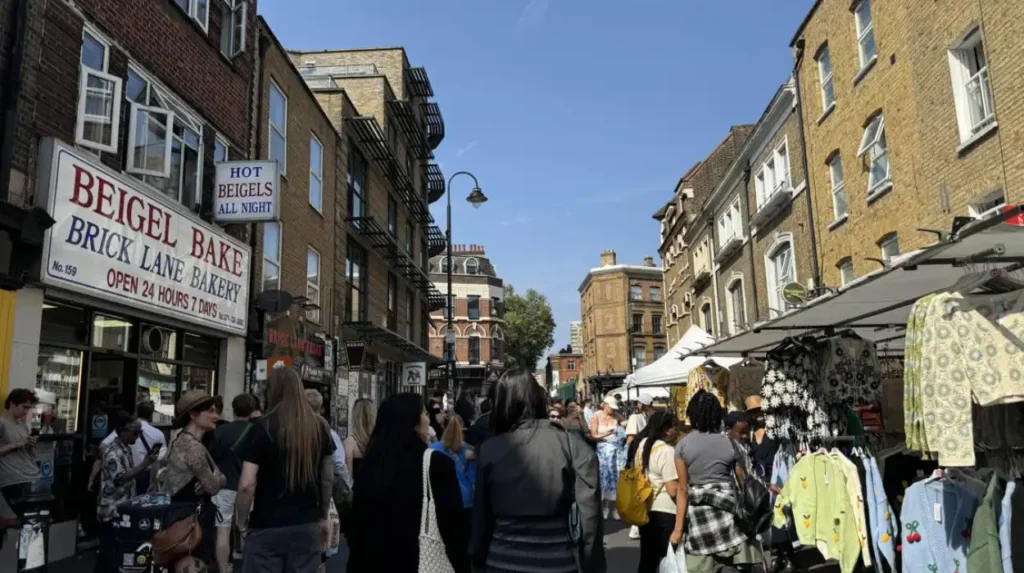
Finish around Brick Lane. Tower Hamlets Council identifies Brick Lane as one of the borough’s established markets. The Sunday market includes fashion, food, art, jewellery and other goods, while the street also has a long association with immigrant communities.
A one-day itinerary should not attempt every major attraction. The geographical spread between western Tower Hamlets and Canary Wharf makes excessive stop-counting inefficient.
Is two days enough to explore Tower Hamlets properly?
Two days are enough for a substantial Tower Hamlets visit because they allow one day for historic East End attractions and another for parks, Docklands, Canary Wharf, museums, markets and riverside areas without requiring an excessively compressed schedule.
Two days provide a useful balance between sightseeing and movement.
On the first day, concentrate on historic and cultural Tower Hamlets. Tower Hill, Wapping, Whitechapel, Spitalfields and Brick Lane work as a connected sequence. Allow additional time for the Tower of London if it is a principal reason for visiting.
The second day can move towards Victoria Park, Mile End and the Docklands. Victoria Park alone occupies 86 hectares and opened in 1845. Tower Hamlets Council describes it as the borough’s largest park and records more than nine million visitors each year.
A two-day itinerary also gives visitors more flexibility around opening hours. Museums and markets operate on different schedules, while parks provide outdoor options throughout the day.
Two days also reduce the need to cross the borough repeatedly. Grouping attractions geographically saves walking time and reduces unnecessary journeys.
For first-time visitors, two days provide enough time to understand the contrast between the historic East End, former docklands and modern Canary Wharf. The borough’s own visitor information highlights this combination of ancient and modern attractions.
How long should you spend exploring Tower Hamlets markets?
Allow two to four hours for a focused Tower Hamlets market visit and a full morning or afternoon for several markets. Brick Lane, Columbia Road, Petticoat Lane, Roman Road and Whitechapel provide different locations, trading patterns and shopping experiences across the borough.
Markets are an important part of Tower Hamlets’ visitor identity. The council lists ten street markets, including Brick Lane, Bethnal Green Road, Chrisp Street, Columbia Road, Petticoat Lane, Roman Road, Roman Road Square, Sclater Street, Watney Market and Whitechapel Market.
The time required depends on the market.
Brick Lane deserves at least two hours when combined with nearby streets, food stops and independent shops. The council records its market history from 1888 and describes its mixture of fashion, food, art, household goods, jewellery and retro clothing.
Columbia Road is particularly associated with flowers and plants. It works well as part of a wider East End walking itinerary.
Roman Road Market provides another perspective. The surrounding area developed alongside growing communities, including silk weavers, and the market continues to serve local shopping needs.
Visitors planning several markets should check individual trading days before travelling. Market activity varies by location and day.
Markets also require more time than their physical size suggests. Browsing stalls, eating, photographing architecture and walking between market areas all increase the total visit duration.
How long does it take to explore Victoria Park and Mile End?
Victoria Park needs at least two hours for a focused visit and three to four hours when combined with Mile End Park, cafés, gardens, walking routes or recreational activities. Its 86 hectares make it one of Tower Hamlets’ largest outdoor destinations.
Victoria Park is a substantial destination rather than a small urban garden. It opened in 1845 and was created as a public park for East London’s working population. Today it contains gardens, sports facilities, play areas, a lake and historic features.
A short visit can focus on the principal gardens, lake and major historic features. A longer visit allows a more relaxed walk across the park.
Tower Hamlets Council states that Victoria Park forms part of a wider green corridor extending towards the Thames, Regent’s Canal, Mile End Park and the Queen Elizabeth Olympic Park area.
Mile End Park adds another outdoor dimension. The council describes it as a natural environment containing facilities including the Art and Ecology Pavilions, sports facilities and a go-kart track.
Combining both parks creates a longer outdoor itinerary. It works particularly well for visitors who want a break from museums and dense urban streets.
Victoria Park also operates as a destination for events, community activities, live music and sport. Its annual visitor figure demonstrates its importance within the borough’s leisure landscape.
How long should you spend at the Museum of London Docklands?
Allow around two to three hours for the Museum of London Docklands, with additional time if you combine it with West India Quay, Canary Wharf or a Docklands walking route. The museum provides essential historical context for understanding London’s port development.
The Museum of London Docklands, now presented as London Museum Docklands, occupies a historic Grade I-listed warehouse at West India Quay. Its permanent galleries examine London’s river, port, people, trade and changing docklands. Entry to the permanent museum is free.
The museum is particularly useful because Tower Hamlets contains extensive evidence of London’s maritime and commercial development.
Its displays cover subjects including the docks, trade, migration, wartime experiences and the development of the Docklands. The museum also contains the Mudlarks family gallery and offers family activities.
Visitors who read the displays carefully require more time than those making a short museum stop. Two hours provides enough time for a focused visit. Three hours works better for visitors interested in detailed historical interpretation.
The museum can also serve as the centre of a Canary Wharf and West India Quay itinerary. Tower Hamlets Council’s published walking route around the Isle of Dogs includes West India Quay Warehouses, the museum, Cabot Square, Canada Square and other docklands landmarks.
The museum therefore adds historical depth to a modern Docklands visit.
As you explore the modern docklands, you are crossing land with a deep heritage. Read about the full to understand its origins.

How long does a Tower Hamlets walking itinerary take?
A focused Tower Hamlets walking route takes one to three hours, while a longer neighbourhood route needs half a day. Official routes cover Canary Wharf, the Isle of Dogs, Limehouse, riverside areas, Island Gardens and the Greenwich Foot Tunnel.
Walking is one of the most effective ways to understand Tower Hamlets because neighbourhoods often change noticeably within short distances.
Tower Hamlets Council publishes routes around the Isle of Dogs and Canary Wharf. One route includes Dock Police Cottages, Dockmasters House, West India Quay, the Museum of London Docklands, Cabot Square, Canada Square and Billingsgate Fish Market.
Another route connects the Thames with Greenwich, passing Limekiln Dock, Canary Riverside, Westferry Circus, the Docklands Sailing and Watersports Centre, Millwall, Island Gardens and the Greenwich Foot Tunnel.
Island Gardens provides a particularly useful riverside stop. The park contains three acres of waterfront space and provides pedestrian access towards Greenwich through the foot tunnel.
The Greenwich Foot Tunnel itself runs beneath the Thames for approximately 390 metres. It connects Island Gardens with Greenwich and creates an unusual cross-river walking option.
Short routes suit visitors with limited time. Longer routes suit travellers who want to understand the physical relationship between docks, housing, commercial development, waterways and parks.
How long do you need to explore Canary Wharf and the Isle of Dogs?
Allow three to five hours for Canary Wharf and the Isle of Dogs, including public spaces, dockside walks, West India Quay, the Museum of London Docklands and riverside viewpoints. A full day provides time for museums, food and longer walking routes.
Canary Wharf represents the modern commercial side of Tower Hamlets. Its skyline contrasts strongly with older East End neighbourhoods.
A short visit can concentrate on Canada Square, Cabot Square, West India Quay and the surrounding docks. These areas provide public spaces, modern architecture, waterside routes and connections to the museum.
A longer visit adds the wider Isle of Dogs. Tower Hamlets Council’s walking information identifies landmarks including Westferry Circus, Limekiln Dock, Canary Riverside, Millwall, Island Gardens and the Greenwich Foot Tunnel.
The area is particularly suitable for visitors interested in the physical transformation of former dockland. The modern financial district developed around historic waterways and dock infrastructure.
A full day also allows visitors to combine the Museum of London Docklands with a walking route. This avoids treating Canary Wharf purely as a skyline or shopping destination.
For digital nomads and business travellers, Canary Wharf also functions as a major commercial district with extensive transport, dining and public spaces. For leisure visitors, its main value lies in combining modern architecture with the surviving dock landscape.
Can you explore Tower Hamlets in three days?
Three days provide enough time for a comprehensive Tower Hamlets visit covering major landmarks, museums, markets, parks, East End neighbourhoods, Docklands and riverside walks without requiring every attraction to be visited at maximum speed.
Three days create the most balanced itinerary for visitors whose main purpose is exploring Tower Hamlets.
Day one can focus on historic Tower Hamlets. Begin around Tower Hill and continue through Wapping, Whitechapel, Spitalfields and Brick Lane. Include the Tower of London if its interior attractions are part of the plan.
Day two can concentrate on parks and East End neighbourhoods. Victoria Park and Mile End Park provide substantial outdoor time. Add Roman Road or another local market according to its trading day.
Day three can focus on Docklands. Visit the Museum of London Docklands, walk around West India Quay and Canary Wharf, then continue towards the Isle of Dogs and Island Gardens.
This structure follows the borough’s geographical and historical divisions. It also reduces backtracking.
Three days allow visitors to spend longer in individual locations. A museum visit does not have to be compressed between two unrelated attractions. A park visit can become a proper walk rather than a brief stop.
The same three-day framework works for visitors with different interests. History-focused travellers can extend museum and heritage stops. Outdoor visitors can prioritise parks and riverside routes. Food-focused visitors can allocate more time to markets and East End neighbourhoods.
Explore More Area Guide
Tower Hamlets Travel Checklist: Best Places to Visit
FindMySchool Ranks Top Primary Schools in London Borough of Havering 2026
Is four days enough for a deeper Tower Hamlets visit?
Four days provide enough time for detailed exploration of Tower Hamlets, including historic landmarks, several markets, museums, parks, neighbourhood walks, Docklands and riverside areas while retaining time for meals, rest and repeat visits.
Four days change the pace of the visit.
Instead of grouping every attraction into dense daily schedules, visitors can divide Tower Hamlets into smaller geographical areas.
A useful four-day structure is historic west, East End markets, parks and central neighbourhoods, then Docklands and the Isle of Dogs.
The additional day creates space for less obvious locations. Visitors can explore Wapping’s riverside environment, walk through Stepney and Whitechapel, spend longer around Roman Road, or extend a route towards Island Gardens.
The borough contains more than major tourist landmarks. Tower Hamlets Council highlights museums, galleries, markets, historic buildings and parks as key parts of its visitor offer.
The borough also contains more than 120 parks according to Tower Hamlets Council, with Victoria Park among its best-known green spaces. Its cultural infrastructure includes galleries and venues such as Whitechapel Gallery and Wilton’s Music Hall.
Four days therefore work particularly well for repeat London visitors. Travellers who have already visited central London’s major attractions can use the extra time to explore neighbourhood character, public spaces and the historical layers of East London.
What is the ideal amount of time for a first visit to Tower Hamlets?
Two to three days provide the most practical first-visit timeframe for Tower Hamlets. Two days cover major attractions and neighbourhoods efficiently, while three days provide additional time for museums, parks, markets, walking routes and Docklands.
The ideal duration depends on the purpose of the trip.
A visitor with one free day should select a compact route and prioritise either historic Tower Hamlets or the East End and Brick Lane.
A visitor with two days can combine historic landmarks with Victoria Park, markets and Docklands.
A visitor with three days can explore the borough comprehensively. This is particularly useful for travellers interested in the relationship between London’s historic port, East End communities and modern financial districts.
Visitors with four days or more can adopt a slower neighbourhood-based itinerary. They can spend more time in markets, parks, museums and riverside spaces.
Tower Hamlets has enough geographical, cultural and historical variety to support different visit lengths. The borough’s official visitor information identifies ancient heritage, museums, markets, modern Docklands and green spaces as significant components of the local experience.
The strongest planning principle is therefore simple: allocate at least two days for a meaningful first visit and three days for a broader exploration. One day works for a targeted introduction. Four days work for deeper local discovery.
How long do you need to explore Tower Hamlets?
Two to three days are suitable for most visitors. One day covers the main highlights, while two days allow time for historic sites, markets, museums and parks. Three days provide a broader experience covering Canary Wharf, the Isle of Dogs and riverside walks.