Victoria Park is one of East London’s most important public green spaces, offering historic gardens, ornamental lakes, walking routes, recreational facilities and access to traditional neighbourhoods. Located in the London Borough of Tower Hamlets, the park connects Bow, Mile End, Bethnal Green and Hackney through an extensive network of pedestrian entrances, cycle routes and canal-side paths.
- Where Is Victoria Park’s Tower Hamlets Entrance Located?
- Which Entrance Should Visitors Use to Access Victoria Park?
- How Can Visitors Reach Victoria Park by Public Transport?
- What Can Visitors Explore Inside Victoria Park?
- The Chinese Pagoda and West Boating Lake
- The Rose Garden and Floral Sunken Garden
- Burdett-Coutts Fountain
- Children’s playgrounds and outdoor recreation
- What Is the Historical Significance of Victoria Park in Tower Hamlets?
- Which Neighbourhoods and Attractions Are Near Victoria Park’s Tower Hamlets Entrance?
- Bow and Roman Road
- Victoria Park Village
- Regent’s Canal and Hertford Union Canal
- Mile End Park
- Bethnal Green
- What Walking and Cycling Routes Can Visitors Follow Around Victoria Park?
- What Gardens, Wildlife and Natural Features Can Visitors Discover?
- What Family Activities and Visitor Facilities Are Available at Victoria Park?
- Children’s play facilities
- Sports and outdoor recreation
- Cafés and refreshments
- Toilets and accessibility
- When Is the Best Time to Visit Victoria Park?
- What Should Visitors Know Before Exploring Victoria Park’s Tower Hamlets Surroundings?
- How Can Visitors Plan a Complete Day Around Victoria Park?
- Morning: Enter through Grove Road
- Late morning: Explore the eastern section
- Afternoon: Explore the waterways
- Late afternoon: Visit nearby neighbourhoods
- Why Does Victoria Park’s Tower Hamlets Entrance Remain Important to East London?
Opened in 1845, Victoria Park is widely recognised as London’s oldest public park. Locally known as Vicky Park or The People’s Park, it covers approximately 86 hectares (213 acres) and attracts more than nine million visitors annually. Its combination of Victorian landscape design, historic monuments, family attractions and open recreational spaces makes it an important destination for tourists and East London residents.
The Tower Hamlets entrances provide convenient access from surrounding residential streets, transport connections and local shopping areas. Visitors can approach the park from Grove Road, Old Ford Road, Cadogan Terrace, Gore Road and the Regent’s Canal towpath. Each entrance offers a different starting point for exploring the park and its surrounding neighbourhoods.
Where Is Victoria Park’s Tower Hamlets Entrance Located?
Victoria Park is situated in East London within the London Borough of Tower Hamlets, with entrances along Grove Road, Old Ford Road, Gore Road and surrounding residential streets. Its central location connects Bow, Mile End and neighbouring Hackney communities.
The park’s principal address is Victoria Park, Grove Road, Bow, London, E3 5TB. It occupies a large area between several established East London neighbourhoods and transport corridors.
Grove Road provides one of the most recognisable approaches from the southern and eastern sides. It divides the park into western and eastern sections, making it an important reference point for visitors navigating the grounds.
The park also has entrances along Victoria Park Road, Cadogan Terrace, Old Ford Road and Gore Road. These access points serve nearby residential streets and provide connections to local walking routes.
Victoria Park is not restricted to a single main entrance. Its numerous gates allow visitors to enter from different directions without walking around the entire perimeter.
Historic England identifies the park’s perimeter entrances as important elements of its historic landscape. The original approach routes, boundary features and surrounding residential development contribute to the park’s architectural character.
The Tower Hamlets side is particularly convenient for visitors approaching from Bow, Mile End and Bethnal Green. The surrounding streets also provide access to neighbourhood cafés, independent shops and local markets.
Which Entrance Should Visitors Use to Access Victoria Park?
Visitors should select their Victoria Park entrance according to their starting location and preferred attractions. Crown Gates and Royal Gates provide access from Grove Road, while Terrace Gate, Cricketers Gate and Gunmakers Gate serve the Old Ford Road and Bow surroundings.
Victoria Park has numerous named gates distributed around its boundary. Each entrance connects to a different part of the surrounding street network.
The principal Tower Hamlets access points include:
- Crown Gates: Located on Grove Road, providing access to the western parkland and nearby walking routes.
- Royal Gates: Situated on Grove Road, offering another prominent approach to the park.
- Terrace Gate: Located on Old Ford Road, convenient for visitors approaching from Bow.
- Cricketers Gate: Also accessed from Old Ford Road, connecting visitors with the eastern parkland.
- Gunmakers Gate: Located near Gunmakers Lane, serving the surrounding residential streets.
- Lock House Gate: Situated on Jodrell Road, providing access towards the canal-side surroundings.
- Bonner Gate: Located on Sewardstone Road, connecting the park with nearby residential areas.
- Gore Gate: Situated on Gore Road, providing access from the northern approach.
- St Agnes Gate: Another Gore Road entrance.
Other named entrances include Iveagh Gate, Queens Gate, St Augustine’s Gate, Cadogan Gate, St Mark’s Gate, Arcade Gate and Rose Gate.
The Crown Gates are useful for visitors arriving from Mile End because they provide a straightforward connection from Grove Road. Visitors approaching from Bow can use the Old Ford Road entrances.
The choice of entrance also affects the attractions encountered first. A visitor entering near Grove Road can explore the western boating lake and Chinese Pagoda, while an approach from the eastern side provides convenient access to the playgrounds, gardens and recreational facilities.
Tower Hamlets Council provides an official park map showing entrances, buildings, historic landmarks and visitor facilities. Checking this map before arrival helps visitors identify the most convenient gate and plan their route.
How Can Visitors Reach Victoria Park by Public Transport?
Victoria Park is accessible by Underground, Overground, local buses and walking routes. Mile End is a convenient Underground station, while Cambridge Heath and Hackney Wick provide rail connections. Local buses also stop along Grove Road and surrounding streets.
Public transport provides practical access to Victoria Park from central London and other East London neighbourhoods. Visitors can choose between Underground stations, railway stations and local bus services depending on their starting point.
Underground connections
Mile End Underground Station is one of the principal transport connections for Victoria Park.
The station is served by three Underground lines:
- Central line, connecting visitors with central London and destinations towards Stratford.
- District line, providing connections across several London neighbourhoods.
- Hammersmith & City line, connecting East London with areas including Whitechapel and Paddington.
From Mile End station, visitors can walk towards Grove Road and continue to the park. Tower Hamlets Council estimates the walk at approximately 10–15 minutes. Another approach follows part of Mile End Park, which runs parallel to Grove Road.
Overground and railway connections
Cambridge Heath and Hackney Wick provide additional railway access.
Cambridge Heath is useful for visitors approaching from Bethnal Green and the northern side of the park. Hackney Wick provides access from the Olympic Park and surrounding Hackney neighbourhoods.
Bow Church DLR station also serves the wider Bow area, although visitors should account for the onward walking distance.
Local bus services
Bus routes provide access to different sides of the park. Routes 277 and 425 serve Grove Road, while other nearby services connect surrounding residential districts.
The route and stop selected should depend on the entrance visitors intend to use. Checking live Transport for London journey information before travelling helps identify diversions, service changes and accessible connections.
Walking from Mile End is particularly practical for visitors who want to explore the surrounding streets before entering the park.
What Can Visitors Explore Inside Victoria Park?
Victoria Park contains historic monuments, ornamental gardens, lakes, playgrounds, sports facilities and landscaped walking routes. Its western and eastern sections offer different attractions, including the Chinese Pagoda, Burdett-Coutts Fountain, boating lake and traditional garden landscapes.
The park combines Victorian landscape design with modern recreational facilities. Its attractions are distributed across two main sections divided by Grove Road.
The official Tower Hamlets park map identifies 25 principal visitor features, including historic structures, gardens, playgrounds and sports facilities.
The Chinese Pagoda and West Boating Lake
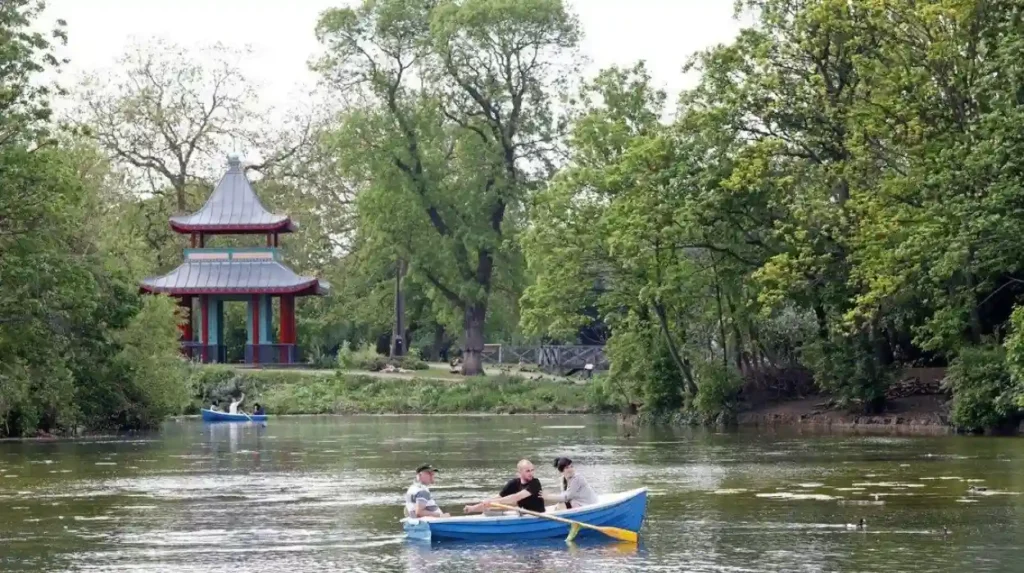
The Chinese Pagoda is one of Victoria Park’s best-known landmarks. It stands on an island beside the West Boating Lake and forms part of the park’s Victorian heritage.
The original pagoda came from the Chinese Exhibition at Hyde Park Corner. It was transferred to Victoria Park in 1847 and erected on the largest island in the boating lake.
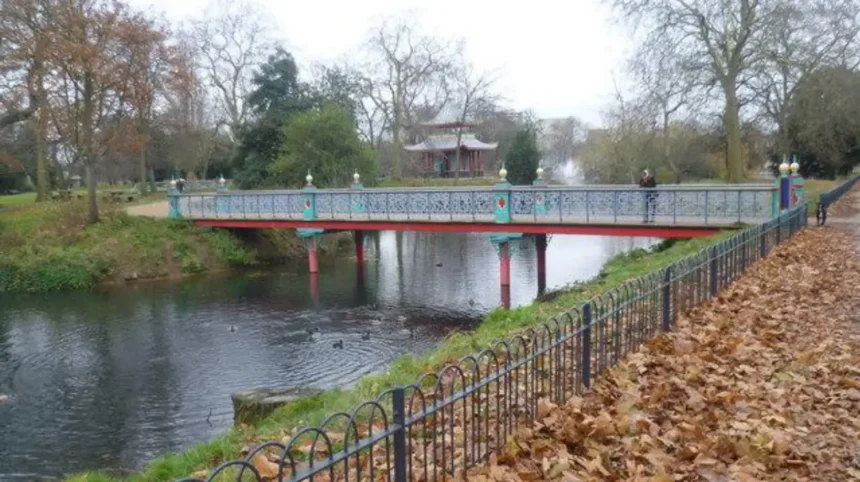
The lake provides a scenic setting for walking, wildlife observation and recreational boating. Visitors can also explore Pennethorne Bridge and the surrounding landscaped paths.
The Rose Garden and Floral Sunken Garden
The Rose Garden and Floral Sunken Garden provide quieter spaces within the western section.
The Floral Sunken Garden uses tiered flower beds to create a structured landscape. Its arrangement provides different viewing levels and seasonal planting displays.
The Old English Garden, situated in the eastern section, features lawns, hedges and traditional planting. These gardens demonstrate the park’s continuing role in horticulture and public landscape design.
Burdett-Coutts Fountain
The Burdett-Coutts Fountain is an important historic feature associated with Angela Burdett-Coutts, a prominent Victorian philanthropist.
The Grade II-listed fountain stands within a landscaped garden containing four mirror pools. Its historical significance connects the park with nineteenth-century charitable activity and the development of public recreation in East London.
Children’s playgrounds and outdoor recreation
Victoria Park contains dedicated facilities for children and recreational users.
The principal attractions include the Victoria and Alexandra Playground, Pools Playground and Wheel Park. These facilities provide different opportunities for play and outdoor activity.
Sports facilities include tennis courts, a bowling green, cricket facilities and grass football pitches. Some activities require payment or advance arrangements through the council.
The park also has picnic areas, cycle paths, open lawns and designated refreshment facilities. Visitors should check the council’s latest information for activity availability and booking requirements.
What Is the Historical Significance of Victoria Park in Tower Hamlets?
Victoria Park was established in response to nineteenth-century public health problems and demand for accessible green space in East London. Opened in 1845, it became London’s first purpose-built public park for working-class communities.
Victoria Park’s history is closely connected with the industrial development of East London. During the early nineteenth century, population growth, overcrowded housing and poor sanitation created serious public health challenges.
The 1839 Annual Report of the Registrar General highlighted the unusually high mortality levels in the East End. The report recognised the need for accessible public recreation and healthier outdoor environments.
In 1840, approximately 30,000 local residents signed a petition to Queen Victoria requesting a Royal Park within Tower Hamlets.
The government subsequently acquired land that had previously been used for market gardening, grazing and gravel extraction. The Victoria Park Act received parliamentary approval in 1841, establishing the legal foundation for the project.
Architect James Pennethorne prepared the original landscape design. His plans included a grand entrance, landscaped lawns, tree-lined routes and a perimeter carriage drive.
Local residents began using the park in 1843 while construction work continued. Victoria Park officially opened in 1845. Queen Victoria visited in April 1873.
The park later experienced significant changes. Parts of the grounds suffered bombing during the Second World War, while the Great Storm of 1987 damaged mature trees and historic features.
A major restoration programme began in 2011, supported by approximately £12 million from Tower Hamlets Council and the Heritage Lottery Fund.
The programme restored important landmarks, including the Chinese Pagoda, Dogs of Alcibiades and Burdett-Coutts Fountain. It also introduced an eastern hub building and improved playground facilities.
As you explore the modern park and its historic entrances, you are crossing land shaped by more than 180 years of social and architectural change. Discover the full [History of Victoria Park and Its Victorian Origins] to understand how public health campaigns, community pressure and landscape design created this important East London landmark.
Historic England recognises Victoria Park as a nationally important historic landscape through its Register of Parks and Gardens of Special Historic Interest.
Which Neighbourhoods and Attractions Are Near Victoria Park’s Tower Hamlets Entrance?
Victoria Park connects several established East London neighbourhoods, including Bow, Mile End, Bethnal Green and Hackney. Nearby attractions include Roman Road Market, Regent’s Canal, Mile End Park and Victoria Park Village, offering additional shopping and walking opportunities.
The surroundings are an important part of the visitor experience. The park provides access to residential neighbourhoods, traditional shopping streets, waterways and other green spaces.
Bow and Roman Road
Bow is one of the principal neighbourhoods surrounding Victoria Park. Its streets combine Victorian residential architecture, independent businesses and local shopping facilities.
Roman Road is particularly relevant for visitors exploring the Tower Hamlets side. The street is known for its traditional East End shopping environment and Roman Road Market.
The market provides an opportunity to browse everyday goods, clothing, household products and food stalls. It operates on selected days, including Tuesday, Thursday and Saturday, so visitors should check current trading arrangements before travelling.
The surrounding streets also contain independent cafés and food businesses. This makes Roman Road a practical extension to a morning park walk or afternoon visit.
Victoria Park Village
Victoria Park Village is a neighbourhood shopping area near the northern side of the park, primarily associated with Lauriston Road and Victoria Park Road.
Its independent businesses provide refreshments and everyday services for local residents and park visitors.
The area includes cafés, restaurants, delis and neighbourhood shops. Examples include ACE Pizza Victoria Park, The Lauriston and The Deli Downstairs.
Visitors can combine a walk through the park with a meal or coffee in the surrounding streets. The village also provides a convenient stopping point for people approaching from the Hackney side.
Regent’s Canal and Hertford Union Canal
The waterways surrounding Victoria Park create connections between East London’s historic industrial landscape and modern recreational routes.
The Regent’s Canal and Hertford Union Canal provide opportunities for waterside walks, cycling and observing canal boats.
The towpaths connect with wider walking routes and neighbouring green spaces. Visitors can extend their park exploration by following the canal towards Mile End or other nearby waterways.
The canal environment also provides a different perspective on the surrounding architecture, including residential buildings and former industrial properties.
Mile End Park
Mile End Park is another significant green space within Tower Hamlets.
Its linear layout provides walking and cycling connections between different parts of the borough. The park runs parallel to Grove Road for part of the route towards Victoria Park.
Visitors travelling from Mile End Underground station can use this green corridor to approach Victoria Park. This creates an alternative to walking entirely along surrounding main roads.
Bethnal Green
Bethnal Green lies west of Victoria Park and provides access to additional East London attractions, residential streets and Underground connections.
Visitors can combine a Victoria Park outing with exploration of Bethnal Green’s cultural and architectural surroundings.
The neighbourhood is also useful as a starting point for visitors travelling towards the western approaches of the park.

What Walking and Cycling Routes Can Visitors Follow Around Victoria Park?
Victoria Park provides extensive pedestrian paths, cycle connections and canal-side routes. Visitors can walk around ornamental lakes, follow tree-lined avenues, explore landscaped gardens or extend their journey towards Mile End Park and surrounding East London waterways.
Walking is one of the most accessible ways to explore Victoria Park. The grounds contain broad paths, landscaped avenues and smaller routes connecting individual attractions.
Walking around the park
A visitor can begin at Crown Gates and explore the western section before continuing towards Grove Road.
The western area contains the boating lake, Chinese Pagoda, Rose Garden and Floral Sunken Garden. These attractions provide several natural stopping points during a leisurely walk.
Crossing towards the eastern section introduces a different collection of features, including the Burdett-Coutts Fountain, Old English Garden, Model Boating Lake and playgrounds.
A complete exploration requires additional time because the park covers approximately 86 hectares.
Visitors should follow the official park map when planning longer walks. The layout contains several connecting paths, so it is possible to create shorter or longer circuits according to available time.
Victoria Park tree walks
Victoria Park contains a substantial collection of mature trees and historic planting.
Tower Hamlets Council provides dedicated tree-walk information to help visitors identify notable specimens and understand the park’s landscape.
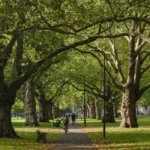
These routes highlight mature plane trees, lime trees, chestnuts, flowering cherries and other species. The tree-lined avenues also demonstrate how Victorian landscape planning continues to shape the park.
Seasonal changes create different conditions for visitors. Spring brings flowering trees and garden displays, summer provides shade beneath mature canopies, autumn introduces changing leaf colours, and winter exposes the structure of the park’s historic planting. towerhamlets.gov.uk+1
Cycling routes and canal connections
Cycling is permitted within Victoria Park, subject to the council’s safety requirements.
The park’s internal paths connect with surrounding streets and canal-side routes. Cyclists should reduce speed around pedestrians, playgrounds and busy entrances.
The nearby waterways also provide opportunities to extend cycling journeys towards other East London districts.
Visitors should distinguish between designated cycle routes, shared park paths and canal towpaths. Towpath conditions and local access rules differ according to the waterway and individual section.
What Gardens, Wildlife and Natural Features Can Visitors Discover?
Victoria Park combines ornamental gardens, mature trees, lakes, grassland and waterside habitats. These environments support birds, insects and other urban wildlife while providing seasonal horticultural displays and accessible outdoor spaces for visitors.
The park is not simply a recreational area. Its vegetation, water features and landscaped grounds contribute to the wider urban environment.
Ornamental gardens and seasonal planting
The Old English Garden and Rose Garden demonstrate the park’s traditional horticultural character.
The Floral Sunken Garden introduces a more formal planting arrangement, while Orchard Meadows provides a naturalistic environment containing grasses, wildflowers and fruit trees.
The Outdoor Classroom also supports educational activities through raised planting beds containing flowers, vegetables and herbs.
These spaces offer different experiences throughout the year. Visitors interested in gardening can observe seasonal planting, changing flower displays and the relationship between formal landscaping and natural habitats. visitlondon.com+1
Lakes and birdwatching
The West Boating Lake and East Fishing Lake are important visual and ecological features.
Visitors can observe waterbirds around the lakes, including ducks, geese and swans. Herons are also associated with the park’s waterside environment.
Birdwatching is most practical from quieter sections around the water. Visitors should avoid disturbing nesting birds and should never feed wildlife unsuitable food.
The landscaped vegetation surrounding the lakes also provides shelter for smaller wildlife.
Urban biodiversity
Victoria Park contributes to urban biodiversity through its trees, meadows, gardens and water features.
Wildflower areas and Orchard Meadows provide resources for pollinating insects, while mature trees create habitat opportunities for birds and invertebrates.
These habitats are important within a densely developed part of London. They provide ecological connections between the park, surrounding waterways and other urban green spaces.
The combination of recreational land and wildlife habitat makes responsible visitor behaviour important. Keeping to paths in sensitive areas and disposing of rubbish correctly helps protect the park’s natural features.
What Family Activities and Visitor Facilities Are Available at Victoria Park?
Victoria Park offers family-friendly facilities, children’s playgrounds, picnic spaces, sports areas, public toilets, cafés and accessible community buildings. Visitors can combine outdoor recreation with refreshments, organised activities and relaxed time across its landscaped grounds.
The park accommodates different age groups and visitor requirements. Its facilities support both informal recreation and organised sporting activities.
Children’s play facilities
The park has dedicated play spaces for children, including facilities for younger visitors and older children.
The Victoria and Alexandra Playground provides an important family attraction. Pools Playground offers another designated play area.
The Wheel Park adds recreational opportunities for visitors interested in wheeled activities.
Parents and carers should supervise children and follow posted safety instructions. Dogs are not permitted inside children’s play areas.
Sports and outdoor recreation
Sports facilities include tennis courts, a bowling green, cricket facilities and grass football pitches.
Some activities operate on a pay-to-play basis. Visitors should consult Tower Hamlets Council for booking details, availability and relevant fees.
The park’s open lawns also support informal activities such as walking, stretching and picnicking.
Cyclists are permitted, but considerate riding is essential because many paths are shared with pedestrians.
Cafés and refreshments
Visitors can find refreshments within the park rather than leaving the grounds.
The Pavilion Café Victoria Park is located beside the boating lake and provides a convenient stopping point during a walk.
The park also has an eastern hub building with community facilities and a café.
Visitors should check current opening hours before travelling, particularly during winter, public holidays and major park events.
Toilets and accessibility
Victoria Park provides public toilets with accessible cubicles. The council also confirms the availability of a Changing Places toilet facility.
Changing Places facilities are designed for people with complex accessibility requirements who need additional space and specialist equipment.
Both community buildings provide step-free access, and the park’s cafés are accessible to wheelchair users.
Visitors with specific access requirements should consult the council’s latest accessibility information before arrival.
When Is the Best Time to Visit Victoria Park?
Victoria Park welcomes visitors throughout the year, opening at 7 am and closing at dusk. Spring and summer provide longer daylight hours, while autumn and winter offer quieter walking conditions and changing seasonal landscapes.
The best visiting time depends on the activities planned.
Spring
Spring is suitable for exploring ornamental gardens, flowering trees and landscaped pathways. The Rose Garden, Floral Sunken Garden and Orchard Meadows provide seasonal interest.
Morning visits also offer opportunities to explore the lakes before the busiest recreational periods.
Summer
Summer is popular for picnics, outdoor recreation, family visits and park events.
The park’s splash pool normally operates from 11 am to 5 pm during the period between the Spring Bank Holiday and the final weekend of the school summer holidays. It closes during rainy conditions. Visitors should confirm seasonal operation with Tower Hamlets Council. towerhamlets.gov.uk+1
Autumn
Autumn provides opportunities to observe changing foliage across the park’s mature tree avenues.
Walking routes become particularly useful for visitors interested in landscape photography, seasonal planting and quieter outdoor recreation.
Winter
Winter visits provide access to the park’s open landscapes and historic monuments without the same level of seasonal visitor activity.
Visitors should plan around shorter daylight hours because the park closes at dusk.
Important opening information: The council states that Victoria Park opens at 7 am throughout the year. It is locked overnight, and the exact daily closing time is displayed on entrance noticeboards. Visitors should check current information before travelling.
What Should Visitors Know Before Exploring Victoria Park’s Tower Hamlets Surroundings?
Visitors should check opening times, entrance locations, transport arrangements and facility availability before arriving. Victoria Park is free to enter, but some sporting activities and organised facilities require payment or advance arrangements.
A little preparation makes exploring the park and surrounding neighbourhoods easier.
Park regulations
Tower Hamlets Council maintains rules designed to protect the grounds and ensure visitor safety.
The principal restrictions include:
- Barbecues are not permitted inside the park.
- Dogs are prohibited from children’s play areas.
- Cyclists must ride considerately and safely.
- Cars are not permitted inside the park except for authorised Blue Badge access.
- The maximum vehicle speed for permitted vehicles is 5 mph.
Visitors should follow the park’s byelaws and instructions displayed around the grounds.
Parking and accessible travel
Victoria Park has car parks, including designated disabled parking facilities.
Blue Badge holders can access the grounds by vehicle under the council’s arrangements. The council encourages eligible visitors to use designated disabled parking bays in the main car parks.
Public transport remains a practical option for most visitors because several Underground, railway and bus connections serve the surrounding neighbourhoods.
Events and community activities
Victoria Park is an important venue for community activities, outdoor entertainment, live music and organised events.
Its extensive open spaces support gatherings that attract visitors from across London.
Large events can affect access arrangements, walking routes and crowd levels. Visitors planning a quieter experience should check the council’s event information before arrival.
The park also has community buildings that support local activities and public engagement.
Explore More Area Guide
Muddy Stilettos Names Top London Living Spot: Walthamstow 2026
Shadwell, East London: Riverside Walks and Historic Places
How Can Visitors Plan a Complete Day Around Victoria Park?
Visitors can combine Victoria Park’s historic attractions, gardens, lakes and walking routes with nearby neighbourhood exploration. A practical itinerary includes an entrance near Grove Road, the boating lake, historic gardens, canal paths and refreshments around Bow or Victoria Park Village.
A well-planned visit allows sufficient time for the park itself and its surrounding streets.
Morning: Enter through Grove Road
Begin at Crown Gates or Royal Gates, depending on the chosen approach.
Walk towards the western boating lake and explore the Chinese Pagoda. Continue towards the gardens and tree-lined pathways.
This section provides opportunities for photography, quiet walking and observing the historic landscape.
Late morning: Explore the eastern section
Continue across Grove Road towards the eastern parkland.
Visit the Burdett-Coutts Fountain, Old English Garden and Model Boating Lake. Families can also explore the playgrounds and recreational facilities.
Allow additional time for the landscaped areas because the attractions are spread across a substantial area.
Afternoon: Explore the waterways
Continue towards the canal-side entrances and explore the surrounding towpaths.
Visitors can follow the Regent’s Canal or Hertford Union Canal, depending on the preferred direction and available time.
The waterways offer a connection between Victoria Park’s historic grounds and East London’s former industrial landscape.
Late afternoon: Visit nearby neighbourhoods
Finish the outing by exploring Roman Road, Bow or Victoria Park Village.
Roman Road provides a traditional market and shopping environment, while Victoria Park Village offers independent cafés, restaurants and local shops.
This combination creates a complete East London outing without requiring extensive travel between attractions.
Why Does Victoria Park’s Tower Hamlets Entrance Remain Important to East London?
Victoria Park’s Tower Hamlets entrances provide access to one of London’s most significant historic public landscapes. Its location connects residential neighbourhoods, historic waterways, transport corridors and recreational facilities.
The park’s significance extends beyond its gardens and monuments. It represents the nineteenth-century campaign for healthier urban environments and accessible public recreation.
Its 86-hectare landscape supports walking, cycling, family activities, organised sports and community events. The Chinese Pagoda, Burdett-Coutts Fountain, ornamental gardens and boating lakes preserve important elements of its Victorian identity.
The surrounding neighbourhoods add further value to a visit. Bow and Roman Road provide traditional East London shopping experiences, while Victoria Park Village offers independent businesses and cafés. Regent’s Canal and Mile End Park create additional opportunities for exploring the borough on foot.
For tourists, Victoria Park provides a combination of heritage, nature and outdoor recreation. For residents, it remains an important everyday green space. Its multiple entrances make it accessible from different parts of East London and support its continuing role as a community destination.
Visitors planning a trip should consult the official Tower Hamlets park map, check current opening information and select the entrance closest to their intended attractions.
Where is Victoria Park’s Tower Hamlets entrance?
Victoria Park is located in East London within the London Borough of Tower Hamlets. Visitors can access it through several entrances, including Crown Gates, Royal Gates, Terrace Gate and Cricketers Gate.