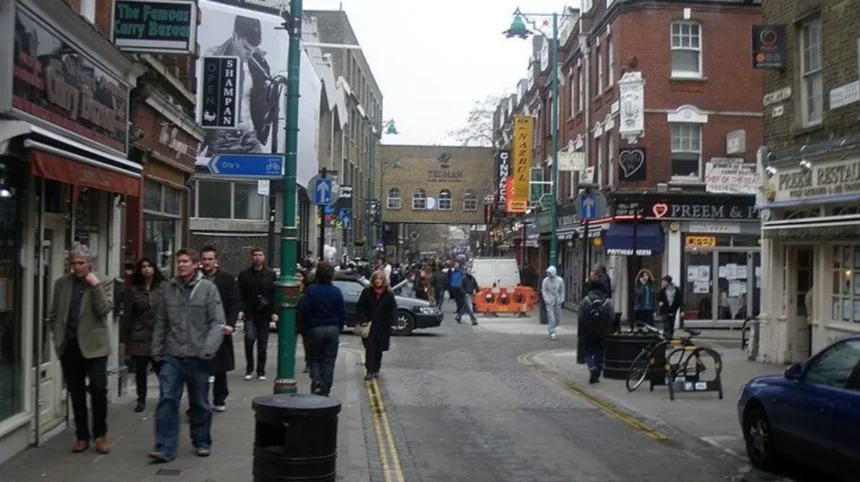
Tower Hamlets is one of London’s most historically layered boroughs. It stretches from the Tower of London and the River Thames through Wapping, Whitechapel, Spitalfields, Stepney, Limehouse, Bow, Poplar and the Isle of Dogs. Its heritage includes royal fortifications, medieval churches, Victorian schools, dock warehouses, cemeteries, social housing, markets and industrial waterways.
- What is the Tower Hamlets Heritage Trail?
- Which Tower of London heritage sites should visitors explore?
- How can visitors explore Tower Bridge and the riverside heritage?
- What can visitors discover around Wapping and St Katharine Docks?
- Which Stepney heritage sites belong on the trail?
- What should visitors see in Limehouse?
- Which museums explain Tower Hamlets’ social and industrial history?
- What heritage can visitors find in Spitalfields and Whitechapel?
- Where can visitors explore Victorian parks and cemetery heritage?
- How can visitors explore Docklands heritage around Canary Wharf and Poplar?
- How should visitors plan a Tower Hamlets heritage walk?
- Why is Tower Hamlets heritage important for visitors today?
The borough describes itself as the heart of London’s East End and identifies evidence of human activity dating back thousands of years. Its modern identity developed around the River Thames, docks, trade, migration, industry and dense urban communities.
A Tower Hamlets heritage trail therefore works best as a connected journey rather than a single marked route. Visitors can combine major landmarks with smaller historic streets and buildings. The result is a practical way to understand how royal London, the port, Victorian East End and modern Docklands developed side by side.
What is the Tower Hamlets Heritage Trail?
The Tower Hamlets Heritage Trail is a visitor-focused route through historic landmarks, buildings, streets, museums, churches, docks and open spaces across the borough. It connects major attractions with lesser-known heritage sites that explain East London’s development.
There is no single official route that contains every historic attraction in Tower Hamlets. Instead, the borough provides heritage information, historic walks, conservation material and listings that allow visitors to build their own itinerary. The council also provides information about historic and modern buildings across the borough.
Heritage in Tower Hamlets covers several periods. Roman activity forms part of the borough’s early history. The medieval period is represented by churches and the Tower of London. The 18th and 19th centuries brought docks, warehouses, markets, industrial employment and rapid population growth. The Victorian period produced schools, cemeteries, churches and public parks.
Modern heritage is also important. Docklands regeneration transformed former industrial areas into offices, residential districts and public spaces. Historic buildings remain alongside contemporary architecture.
The borough’s listed-building system provides another useful guide. Tower Hamlets identifies locally important heritage assets as well as nationally designated listed buildings. These local assets include buildings, structures and townscape features valued for architectural, historical and local significance.
As you explore the modern borough, you are crossing land with a deep heritage. Read about the full [Insert Anchor Text for History Article Here] to understand its origins.
Which Tower of London heritage sites should visitors explore?
The Tower of London is the defining historic landmark at the western edge of Tower Hamlets. Visitors can explore its medieval fortress, royal buildings, defensive walls and historic grounds while understanding its roles as palace, fortress, prison, armoury and royal institution.
The Tower of London is a Scheduled Monument, a Grade I listed complex and a World Heritage Site. Historic England records its district as the London Borough of Tower Hamlets.
The White Tower provides the central architectural reference point. Historic England dates its construction to approximately 1078–1100 during the reigns of William I and William II. It is a major surviving example of Norman military architecture.
The wider fortress developed over several centuries. Its curtain walls, towers, chapels, royal buildings and defensive features reflect successive phases of medieval and post-medieval construction.
The site also illustrates the changing function of royal fortifications. It operated as an armoury, arsenal, store, mint, prison and military fortress. Historic England records the imprisonment of figures including Sir Walter Raleigh and members of the Gunpowder Plot.
Visitors interested in architecture should examine the outer curtain wall and mural towers. Sections of the outer wall date from the late 13th and 14th centuries, with later repairs and alterations.
The Chapel of St Peter ad Vincula adds another historic layer. The present chapel dates mainly from the early 16th century and was restored in the Victorian period.
The Tower also provides a strong starting point for a wider heritage walk. From here, visitors can follow the Thames towards Tower Bridge, Wapping and the historic docklands.
How can visitors explore Tower Bridge and the riverside heritage?
Tower Bridge connects Tower Hamlets with Southwark and forms a major riverside heritage landmark. Its Victorian engineering, bridge towers, Thames views and relationship with the former port make it an essential part of a Tower Hamlets heritage itinerary.
Tower Bridge opened in 1894 and became an important crossing over the River Thames near the expanding docks. The Tower Hamlets section is Grade I listed by Historic England.
The bridge is particularly significant because it connects two different aspects of London’s history. The northern side leads directly into Tower Hamlets, while the southern side leads towards Southwark and the historic central London riverfront.
The surrounding riverside is also part of the heritage experience. The Thames formed the southern boundary and economic foundation of much of Tower Hamlets. Ships, warehouses, wharves and riverside industries shaped communities in Wapping, Limehouse, Poplar and the Isle of Dogs.
The relationship between transport and heritage is visible throughout the area. Historic roads were laid out to connect the City with the docks. Commercial Road, for example, was constructed in the early 19th century as a direct route towards the East and West India Docks.
For visitors, the riverside route also provides a natural transition from medieval London to industrial London. The Tower represents royal and military power. Tower Bridge represents Victorian engineering. The former docks represent London’s international trading economy.
What can visitors discover around Wapping and St Katharine Docks?
Wapping and St Katharine Docks preserve the physical relationship between Tower Hamlets and London’s historic river trade. Visitors can explore former dock landscapes, riverside streets, warehouses, churches and surviving structures connected with maritime commerce.
Wapping developed beside the Thames as a maritime community. Its historic streets preserve evidence of warehouses, wharves, workers’ housing and riverside businesses.
St Katharine Docks sits immediately east of the Tower of London. Its development formed part of the expansion of London’s enclosed dock system during the 19th century. Today, the dock basin is surrounded by modern commercial and residential buildings, while the historic dock setting remains visible.
Wilton’s Music Hall provides another important Wapping-area heritage destination. Located on Grace’s Alley, the building is Grade II* listed. Historic England identifies it as a mid-19th-century former music hall with surviving historic interior features, including its stage and balcony.
The building previously operated as the Albion Saloon before becoming a music hall. It also had later uses including a chapel and a seamen’s club. Its surviving interior contributes significantly to its heritage value.
Wellclose Square strengthens this heritage cluster. Historic England records listed buildings around the square, including St Paul’s Mission Room and Infant Nursery. The square and its listed buildings form a historic group with Wilton’s Music Hall.
This section of the trail is especially useful for visitors who want to understand everyday urban history rather than only major monuments.
Which Stepney heritage sites belong on the trail?
Stepney provides some of Tower Hamlets’ strongest connections between medieval parish history, maritime culture, historic streets and East End community life. St Dunstan and All Saints, Stepney Green and nearby historic buildings form a compact heritage area for walking.
St Dunstan and All Saints Church stands on Stepney High Street and is Grade I listed. Historic England identifies it as the Church of the High Seas, reflecting the strong maritime connections of its historic congregation.
The church is one of the most important surviving historic buildings in Stepney. Its relationship with sailors and the River Thames demonstrates how religious institutions served communities connected to maritime employment.
Tower Hamlets Council includes St Dunstan and All Saints in its Stepney walking route. The council’s walk also identifies Mercer’s Cottages, Stepney Green Park and other local landmarks.
Stepney Green itself has a long history. The council records that parts of the green were enclosed between 1669 and 1684. The area was later opened as a public garden in 1872.
Visitors should also pay attention to the smaller buildings and street patterns around Stepney. Heritage value is not limited to monumental architecture. Historic roads, churchyards, cottages and surviving building groups reveal how the district evolved.
Stepney also demonstrates the importance of East London’s religious and cultural history. The area has been home to different communities over many generations, and its built environment reflects that changing population.
What should visitors see in Limehouse?
Limehouse combines historic churches, waterways, industrial architecture and streets shaped by London’s expansion towards the docks. St Anne’s Church, the Limehouse Cut and nearby historic buildings create a heritage-focused route between Stepney, the Thames and the Docklands.
St Anne’s Church is one of Limehouse’s most important historic buildings. It is Grade I listed and stands on Commercial Road. Historic England records its listing as a nationally significant historic building.
The church was furnished between 1723 and 1725 and consecrated in 1730. It suffered a major fire on Good Friday in 1850 and was restored by Philip Hardwick between 1851 and 1854. Later restoration took place in the late 20th century.
The surrounding street network reveals the transformation of Limehouse from a village environment into an industrial East End district.
Commercial Road was laid out in 1802–04. Its purpose was to provide a direct connection between the City of London and the newly developing East and West India Docks.
Waterways are another defining feature. The Limehouse Cut connects with the wider canal network and demonstrates how canals supported industrial movement before modern road transport dominated.
Limehouse therefore provides an important bridge between architectural heritage and industrial heritage. Visitors can see how churches, roads, canals and commercial buildings developed together.
Which museums explain Tower Hamlets’ social and industrial history?
Tower Hamlets has museums that explain Victorian education, dockland commerce, healthcare, migration and East End life. The Museum of London Docklands and Ragged School Museum are particularly valuable for visitors seeking structured historical context alongside physical heritage sites.
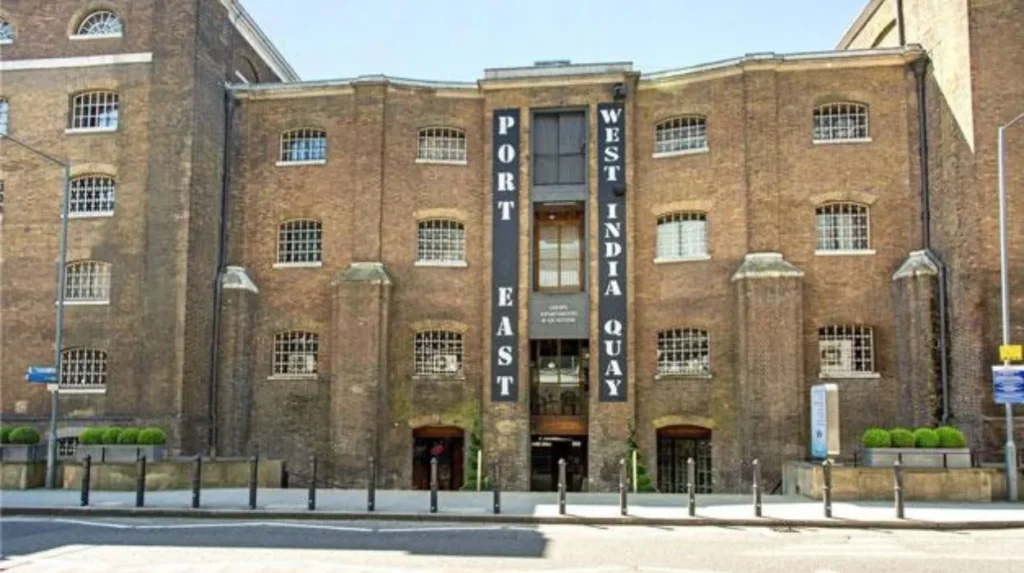
The Museum of London Docklands occupies part of a historic warehouse at West India Docks. Tower Hamlets Council identifies it as a Grade I listed warehouse and describes its collections as documenting the history of the River Thames, the port and Docklands.
The museum provides context for the physical dock landscape around Canary Wharf and the Isle of Dogs. Visitors can connect surviving warehouses and dock basins with the wider story of London’s international trade.
The Ragged School Museum provides a different perspective. It occupies three canalside buildings that originally formed one of London’s largest ragged schools. The institution provided free education for poor children in Victorian East London.
Thomas Barnardo opened his first ragged school in 1867. The Copperfield Road Free School opened in 1877 and operated for 31 years before closing in 1908. The buildings later faced demolition before local people formed the Ragged School Museum Trust. The museum opened in 1990.
The museum retains an authentic Victorian classroom. Its education programme gives visitors direct insight into Victorian schooling and social conditions.
The museum’s buildings originally served as warehouses associated with the Regent’s Canal. Their changing uses demonstrate how one site can represent industrial, educational and social history across different periods.
What heritage can visitors find in Spitalfields and Whitechapel?
Spitalfields and Whitechapel contain historic churches, markets, streets, former homes, community buildings and surviving commercial architecture. The area is particularly important for understanding migration, trade, religious diversity, textile production and the changing social history of the East End.
Spitalfields developed as a major centre for textile production and migrant communities. Huguenot refugees settled in the area from the late 17th century, bringing specialist textile skills and contributing to the district’s economic development.
The built environment still reflects that history. Narrow streets, former workshops, terraces, churches and commercial buildings form a dense heritage landscape.
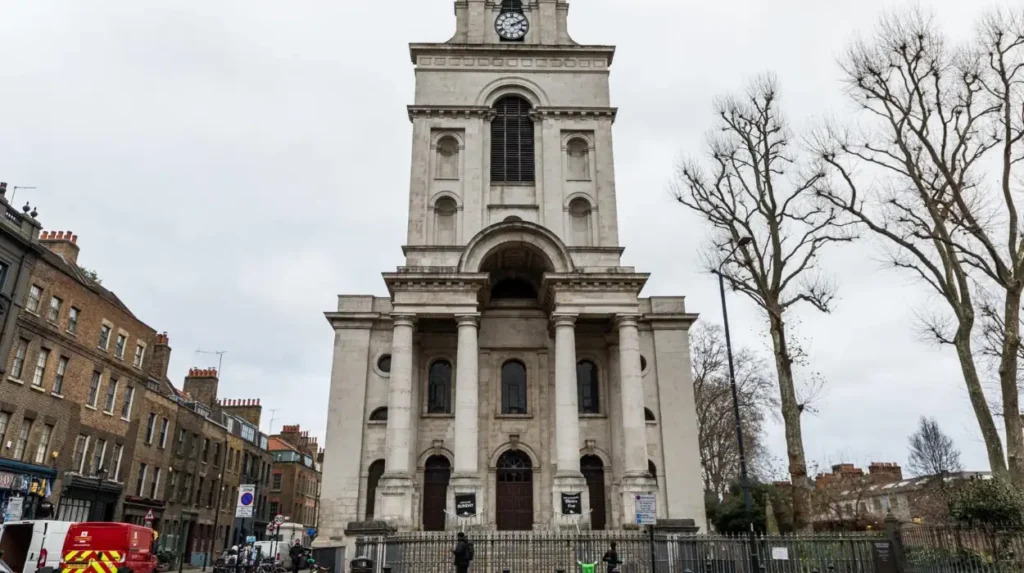
Christ Church Spitalfields is one of the principal architectural landmarks. Historic England identifies Hawksmoor’s church as Grade I and describes it as an exceptional building within the surrounding group of listed sites.
Whitechapel adds further layers of social and commercial history. Historic streets around Artillery Lane contain surviving listed buildings. For example, 56 Artillery Lane is a Grade I listed mid-18th-century building with a historic shopfront.
The area also demonstrates the importance of immigration to East London. Tower Hamlets’ conservation strategy identifies the Museum of Immigration and Diversity at 19 Princelet Street as a museum located in a Grade II* listed building. The building was formerly associated with a Huguenot silk-weaving merchant and later became a synagogue.
Visitors should therefore treat Spitalfields and Whitechapel as living heritage districts. Their importance comes from the combination of buildings, streets, businesses, communities and historical associations.
Where can visitors explore Victorian parks and cemetery heritage?
Tower Hamlets Cemetery Park, Victoria Park and Meath Gardens show how public green spaces developed in response to population growth, public health concerns and changing urban needs. They combine landscape history, memorials, ecology and recreation.
Tower Hamlets Cemetery Park opened for burials in 1841 and is recognised as one of London’s Magnificent Seven Victorian cemeteries. Burials ended in 1966, when the site was closed as a cemetery by Act of Parliament and designated as public parkland.
The cemetery covers about 12.55 hectares and contains listed monuments, woodland, meadows, historic graves and wildlife habitats. It was declared a Local Nature Reserve in 2001.
The cemetery therefore works as both a heritage site and an urban nature site. Visitors can examine memorials and historic graves while walking through woodland and meadow habitats.
Victoria Park has an equally important public-history story. Rapid population growth in the East End during the 19th century created severe overcrowding and poor environmental conditions. A 1839 report highlighted exceptionally high mortality rates and argued for a major public park. A petition signed by 30,000 local residents followed in 1840.
An Act of Parliament passed in 1841 established Victoria Park. Tower Hamlets Council describes it as the first public park in London specifically planned to meet the needs of surrounding communities and the first park planned in the country for that purpose.
Meath Gardens provides another example. The site was formerly Victoria Park Cemetery, founded in 1842. Burials ended in 1876, and the gardens opened in 1894. Only a small number of gravestones remain.
These sites show that heritage extends beyond buildings. Public health, burial practices, recreation and landscape planning are central parts of Tower Hamlets history.
How can visitors explore Docklands heritage around Canary Wharf and Poplar?
Docklands heritage around Canary Wharf, Poplar and the Isle of Dogs explains the transformation of Tower Hamlets from a major port district into a modern financial and residential centre. Former docks, warehouses, waterways and industrial landscapes remain important heritage references today.
The West India Docks opened in the early 19th century and became central to London’s international trading system. Their surviving structures provide a physical link between the historic port and modern Canary Wharf.
The Museum of London Docklands is particularly useful here because it occupies a former dock warehouse and interprets the development of London’s port.
The wider docklands landscape also includes Millwall and West India Docks, Poplar Dock, East India Dock Basin and Blackwall Basin. Tower Hamlets identifies these as sites of ecological or environmental importance, demonstrating that former industrial landscapes now have additional public and environmental value.
Island Gardens provides another useful viewpoint across the water towards Greenwich. The park is one of five registered parks and gardens in Tower Hamlets, with Grade II status. Other nationally registered landscapes include Victoria Park at Grade II*, Boundary Gardens at Grade II, Museum Gardens at Grade II and the Novo Cemetery at Grade II.
The docklands section of the heritage trail is particularly relevant for visitors interested in urban regeneration. Modern towers stand alongside dock basins, warehouses and surviving industrial infrastructure.
This combination demonstrates how heritage can remain physically embedded within a rapidly changing city.
Explore More Area Guide
Tower Hamlets Food Guide: Brick Lane, Spitalfields and East London
Tower Hamlets Markets and Shopping Areas: Visitor Guide
How should visitors plan a Tower Hamlets heritage walk?
Visitors should divide the Tower Hamlets Heritage Trail into geographic sections rather than attempting the entire borough in one walk. A practical itinerary combines the Tower, riverside, Wapping, Stepney, Limehouse, Spitalfields, museums and Docklands.
A short heritage visit can focus on the Tower of London, Tower Bridge and Wapping. This route concentrates on royal, military, maritime and riverside history.
A longer walking day can extend eastwards towards Stepney and Limehouse. St Dunstan and All Saints, Stepney Green and St Anne’s Church provide strong architectural and historical stops.
Another route can concentrate on Spitalfields and Whitechapel. This section works particularly well for visitors interested in immigration, religious history, textile production, historic shops and dense urban architecture.
A museum-focused itinerary can combine the Museum of London Docklands with the Ragged School Museum. The first explains port and dock history. The second explains Victorian education and working-class East End life.
Visitors interested in green heritage can combine Tower Hamlets Cemetery Park with Mile End Park or Victoria Park. The cemetery provides Victorian burial history and biodiversity, while Victoria Park demonstrates the development of public recreation and public health infrastructure.
Public transport makes it practical to divide the trail into several sections. Visitors should check opening times before travelling because churches, museums and heritage interiors do not operate on identical schedules.
Walking is especially useful for understanding Tower Hamlets because many heritage assets survive as part of ordinary streets. The relationship between individual buildings, roads, waterways and public spaces often provides more historical information than a single attraction.
Why is Tower Hamlets heritage important for visitors today?
Tower Hamlets heritage explains how royal power, maritime trade, immigration, industry, public health, education and urban regeneration shaped East London. Its surviving buildings and landscapes provide direct evidence of the borough’s changing role within London.
The borough’s heritage is significant because different historical periods remain visible within a relatively compact urban area.
The Tower of London represents medieval monarchy and military architecture. Tower Bridge represents Victorian engineering. Wapping and Limehouse represent maritime communities. The docks represent global trade. Spitalfields represents migration and textile production. Ragged School Museum represents Victorian education. Cemetery Park represents changing burial and public-space policy.
This layered history also explains why conservation remains important. Tower Hamlets has nationally listed buildings alongside locally listed assets. The council states that locally listed heritage assets contribute to architectural quality, historic character and distinctive townscapes.
Heritage protection also supports contemporary tourism. Visitors do not need to choose between historic London and modern East London. Tower Hamlets contains both.
The borough’s environmental heritage is equally relevant. The council identifies the River Thames, London’s canals, Tower Hamlets Cemetery Park, Mudchute Park and Farm, Mile End Park and other areas as sites important for nature conservation.
This creates a broader understanding of heritage. Historic landscapes are not only monuments. They include waterways, parks, cemeteries, streets, public spaces and working urban environments.
For tourists, the Tower Hamlets Heritage Trail provides a way to understand East London through places that remain visible today. For residents and business travellers, it offers accessible cultural exploration between other activities. For digital nomads, the combination of museums, parks, cafés, canals and historic neighbourhoods provides several areas for a short cultural break.
Tower Hamlets remains a borough where historic structures and modern development occupy the same landscape. That continuity is the central reason to explore its heritage on foot.
What is the Tower Hamlets Heritage Trail?
The Tower Hamlets Heritage Trail is a collection of historic streets, buildings, markets, religious sites, museums, cemeteries and docklands across East London. Key areas include Spitalfields, Brick Lane, Whitechapel, Bethnal Green, Limehouse and Wapping.