Tower Hamlets, in East London, combines historic market squares, riverside walkways, landscaped parks, public art and community gathering places. Located east of the City of London, the borough includes well-known destinations such as Canary Wharf, the Isle of Dogs, Whitechapel, Bethnal Green, Poplar and Stepney. Its public spaces reflect the area’s maritime heritage, industrial development, migration history and modern regeneration.
- What Makes Tower Hamlets’ Public Spaces Important to East London?
- Which Parks Offer the Best Opportunities to Explore Tower Hamlets Outdoors?
- Where Can Visitors Discover Tower Hamlets’ Historic Squares and Market Spaces?
- Where Can Visitors Enjoy Tower Hamlets’ Riverside Public Spaces?
- Which Public Spaces in Canary Wharf Are Worth Exploring?
- Where Can Visitors Discover Public Art in Tower Hamlets?
- How Do Community Spaces Reflect Tower Hamlets’ Cultural Identity?
- How Can Visitors Plan a Walking Route Between Tower Hamlets’ Public Spaces?
- What Facilities and Access Rules Should Visitors Check Before Exploring?
- Why Will Tower Hamlets’ Public Spaces Remain Important to East London?
For visitors, these places provide opportunities to explore London’s East End beyond its major attractions. Residents use them for exercise, relaxation and community activities. Business travellers working around Canary Wharf benefit from waterfront promenades, green spaces and pedestrian routes during breaks from meetings.
Understanding Tower Hamlets’ public spaces requires looking at their different functions. Victoria Park provides extensive green space, while Wapping’s riverside paths reveal the area’s relationship with the Thames. Spitalfields and Whitechapel connect public life with markets, independent businesses and cultural activity. Canary Wharf demonstrates how public spaces operate within a modern commercial district.
This guide explores the borough’s principal parks, squares, waterfronts, markets and public art locations, explaining their character, historical significance, accessibility and value for visitors.
What Makes Tower Hamlets’ Public Spaces Important to East London?
Tower Hamlets’ public spaces connect recreation, transport, local commerce, cultural heritage and community life. Parks, market streets, riverside paths and landscaped squares provide places for exercise, social interaction and public events across the borough’s residential, historic and commercial neighbourhoods.
The London Borough of Tower Hamlets occupies an important position between the City of London and the River Thames. Its neighbourhoods developed around docks, warehouses, manufacturing, markets and residential communities. The decline of traditional port industries transformed many former industrial areas, creating opportunities for housing, commercial development and new public spaces.
Public spaces serve different purposes depending on their location. Large parks provide open landscapes for walking and sports. Small squares offer seating and meeting points near shops and offices. Waterfront promenades support pedestrian movement and provide access to river views. Market areas combine shopping with street activity and local cultural traditions.
The borough’s urban landscape also reflects differences in land use. Canary Wharf contains landscaped plazas and pedestrian routes within a major financial district. Bethnal Green and Bow have established residential communities alongside traditional high streets. Wapping retains historic riverside features, while Poplar and the Isle of Dogs include public spaces shaped by dockland redevelopment.
These settings make public-space exploration useful for several types of visitor. Tourists can combine parks with historical attractions, digital nomads can find outdoor places for breaks between work sessions, and business travellers can explore nearby promenades without leaving the main commercial districts.
Public access varies by location. A public park, a pedestrian street and a privately managed plaza do not necessarily operate under the same rules. Visitors should check local notices before organising gatherings, using sports facilities or planning activities that require permission.
Which Parks Offer the Best Opportunities to Explore Tower Hamlets Outdoors?
Victoria Park, Mile End Park and smaller neighbourhood green spaces provide different ways to experience Tower Hamlets outdoors. Victoria Park offers extensive landscaped grounds, Mile End Park connects communities through a linear green corridor, and local gardens provide quieter places for everyday recreation.
Victoria Park
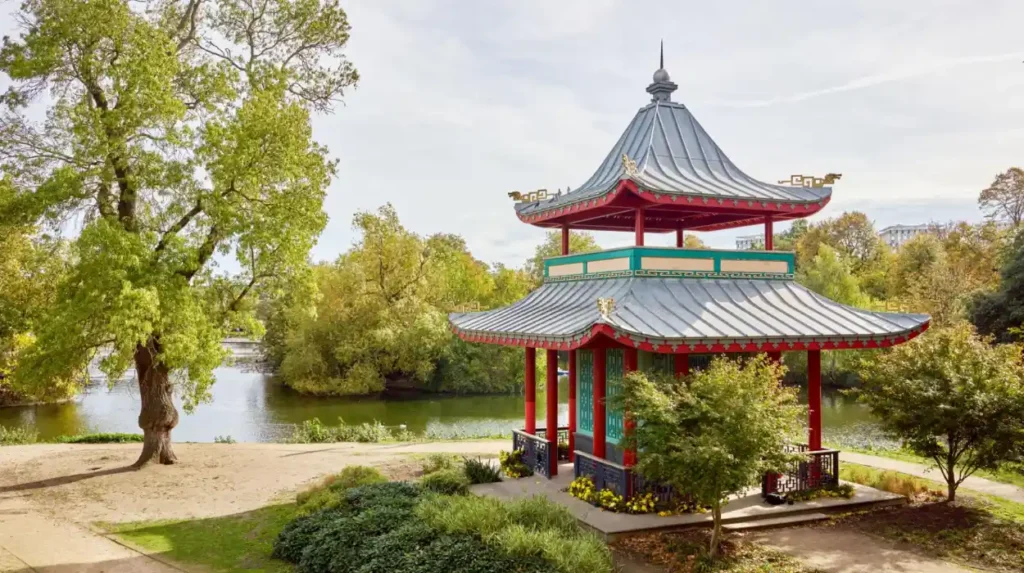
Victoria Park is one of East London’s best-known public parks. It opened in 1845 following a campaign for a major public green space for London’s growing East End population. The park covers approximately 86 hectares and extends across the Tower Hamlets and Hackney area.
Its landscape includes ornamental gardens, lakes, mature trees, open lawns, footpaths and recreational facilities. Visitors use the park for walking, jogging, cycling on designated routes, picnics and outdoor relaxation. The lakes and landscaped areas provide different environments within the same park.
Victoria Park also hosts organised events and community activities. Its open spaces support seasonal gatherings, while its paths attract people exercising before or after work. Event dates, temporary closures and access arrangements vary, so visitors should check official park information before travelling.
The park’s historical significance makes it more than a recreational destination. Its creation addressed the shortage of accessible green space during London’s nineteenth-century expansion. Today, it continues to provide an important outdoor resource for densely populated neighbourhoods.
Mile End Park
Mile End Park is a linear park that follows a north–south corridor through Tower Hamlets. Its layout links neighbourhoods that developed around the historic Mile End Road and former industrial land. Rather than forming one continuous traditional landscape, the park contains distinct sections with different facilities and designs.
Visitors encounter planted areas, walking routes, open lawns, play facilities and spaces for physical activity. The park’s urban location makes it useful for people who want outdoor recreation without travelling far from residential streets or public transport.
The Ecology Park section introduces visitors to urban wildlife and habitat conservation. Water features and planting demonstrate how green infrastructure supports biodiversity within a built-up London borough. The park also helps connect walking routes between residential areas and nearby destinations.
Mile End Park works particularly well for a longer walk. Visitors can explore separate sections rather than concentrating on one central viewpoint. Those planning an accessible visit should check the current condition of paths and the opening arrangements for individual facilities.
Smaller Neighbourhood Green Spaces
Neighbourhood gardens and small green spaces complement the borough’s larger parks. These places offer seating, planted borders and informal outdoor areas close to homes, schools and local shopping streets.
Their value lies in everyday accessibility. A visitor exploring Whitechapel or Bethnal Green can incorporate a nearby green space into a walking itinerary without dedicating several hours to a large park. Residents benefit from places for short walks, informal meetings and time outdoors.
Management arrangements differ between council parks, community gardens and residential developments. Some gardens have restricted opening times or rely on volunteer maintenance. Visitors should follow signs, respect planting and avoid assuming that every landscaped area is open to unrestricted public access.
Where Can Visitors Discover Tower Hamlets’ Historic Squares and Market Spaces?
Historic market streets and public gathering areas around Spitalfields, Whitechapel and Petticoat Lane reveal how commerce shapes public life in Tower Hamlets. These locations combine shopping, food, architecture and pedestrian activity, connecting contemporary East London with its long-established market traditions.
Old Spitalfields Market
Old Spitalfields Market is a historic market destination near Liverpool Street and the City of London. Its covered market environment brings together independent traders, food businesses, retail stalls and organised market activity.
The surrounding public realm includes pedestrian approaches and streets that connect the market with nearby offices, transport stations and historic buildings. Visitors can combine shopping with a walk through the wider Spitalfields neighbourhood.
Spitalfields has long been associated with migration, textile production and trading. Huguenot refugees, Jewish communities and later migrant populations contributed to the area’s changing commercial and cultural character. The market continues this tradition of exchange, although its present-day businesses serve a different urban economy from that of earlier centuries.
Opening times and stall availability vary by day. Visitors should check the market’s official schedule if they want to see a particular type of trader or attend a special event.
Petticoat Lane Market
Petticoat Lane Market is associated with the historic commercial streets around Middlesex Street and Wentworth Street. Its name reflects a long-established East End market tradition, although the market’s official name and location are more closely associated with Middlesex Street today.
The market is known for clothing, accessories, household products and other retail goods. Market stalls occupy public-facing streets and designated trading areas, producing a different experience from a permanent indoor shopping centre.
Visitors should distinguish between the market itself and the surrounding street network. Nearby routes connect to Spitalfields, Aldgate and the wider City fringe, making the area suitable for a walking itinerary focused on markets and urban history.
Trading schedules vary across the week, with the main market traditionally busiest on Sundays. Checking current council guidance and market information helps visitors plan around trading hours, pedestrian congestion and temporary arrangements.
Whitechapel’s Public Streets and Market Activity
Whitechapel’s public realm centres on busy streets, local shops, food businesses and market activity. Whitechapel Road connects residential neighbourhoods with transport links and commercial destinations, creating a public environment shaped by everyday movement rather than monumental squares.
The area reflects Tower Hamlets’ cultural diversity. Businesses serve different communities through specialist groceries, clothing, restaurants and household goods. Visitors can observe how commercial streets support both local needs and destination shopping.
Whitechapel’s historical significance extends beyond its markets. Its streets contain layers of migration history, religious institutions, medical heritage and industrial development. Public-space exploration is therefore most informative when visitors consider both the commercial activity visible today and the neighbourhood’s wider background.
As you explore its contemporary streets and market spaces, you are crossing an area shaped by centuries of migration and trade. Discover the full [Insert Anchor Text for Tower Hamlets History Article Here] to understand the origins of its changing neighbourhoods and public places.
Visitors should allow time to walk rather than treating Whitechapel as a single attraction. Its character emerges from the connections between individual streets, local businesses, public transport entrances and surrounding residential areas.
Where Can Visitors Enjoy Tower Hamlets’ Riverside Public Spaces?
Tower Hamlets’ riverside public spaces connect the borough’s industrial past with modern urban life. Wapping, Limehouse and the Isle of Dogs offer pedestrian routes, dockside settings and views across the Thames, providing opportunities for walking, photography and exploring London’s historic waterfront.
Wapping’s Historic Waterfront
Wapping occupies a stretch of the Thames north bank associated with warehouses, wharves and London’s maritime trade. Its riverside environment combines historic buildings, converted industrial premises, narrow streets and pedestrian routes beside the water.
The Thames Path provides a way to explore sections of the waterfront on foot. Visitors encounter views of the river, historic dock structures and buildings that reflect Wapping’s former role in London’s port economy. The surroundings differ from Canary Wharf’s contemporary commercial architecture, offering a closer connection with the older riverside settlement.
Wapping is suitable for a quieter walking itinerary focused on architecture and industrial heritage. Visitors should follow signed public routes because some waterfront sections pass private residential developments or premises without unrestricted public access.
Limehouse Basin
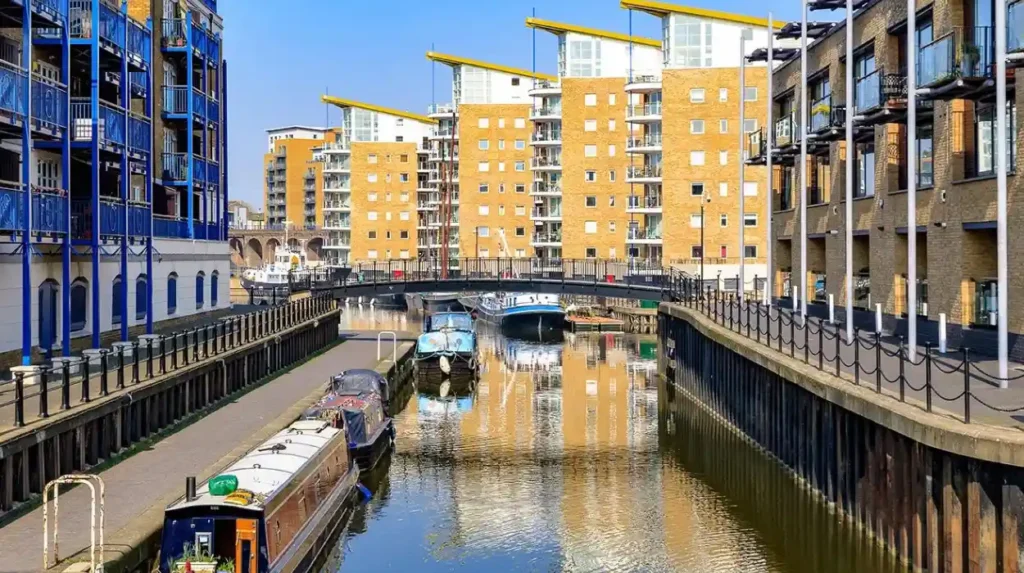
Limehouse Basin connects the Regent’s Canal with the Thames through a historic dock basin. It developed as part of London’s canal and dock network, supporting the movement of goods between inland waterways and the river.
Today, the basin provides a waterside environment with moored boats, pedestrian paths, residential buildings and views across the water. Its setting illustrates the transformation of former industrial infrastructure into a mixed residential and recreational neighbourhood.
Walking around Limehouse Basin also provides context for the area’s wider history. The nearby canal network links different parts of East London, while the surrounding streets retain evidence of the borough’s maritime development.
Visitors should remain on designated paths and respect residential boundaries. The basin is a working waterside environment as well as a public-facing destination, so access to individual moorings and facilities is not automatically unrestricted.
Island Gardens
Island Gardens occupies the southern end of the Isle of Dogs, facing the River Thames and the historic Greenwich waterfront. Its lawns, trees and riverside position provide a public green space with views towards Greenwich, including the distinctive profile of the Old Royal Naval College.
The park offers a different perspective on the Thames from Wapping and Limehouse. Instead of looking across a working dock environment, visitors see an important historic landscape on the opposite bank.
Island Gardens is useful for photography, short walks and combining riverside recreation with a wider itinerary around the Isle of Dogs. The nearby Greenwich Foot Tunnel connects the area with Greenwich on the opposite side of the river. Visitors should check the tunnel’s current access arrangements before planning a crossing.
The park also demonstrates how small public green spaces contribute to the identity of a neighbourhood. Its location between residential streets and the river gives it a clear recreational function without requiring the extensive grounds of a major park.
Which Public Spaces in Canary Wharf Are Worth Exploring?
Canary Wharf combines landscaped gardens, pedestrian plazas, waterside promenades and public art within a major business district. Crossrail Place Roof Garden, Jubilee Park and Canada Square Park provide different outdoor settings for visitors, office workers and residents exploring modern East London.
Crossrail Place Roof Garden
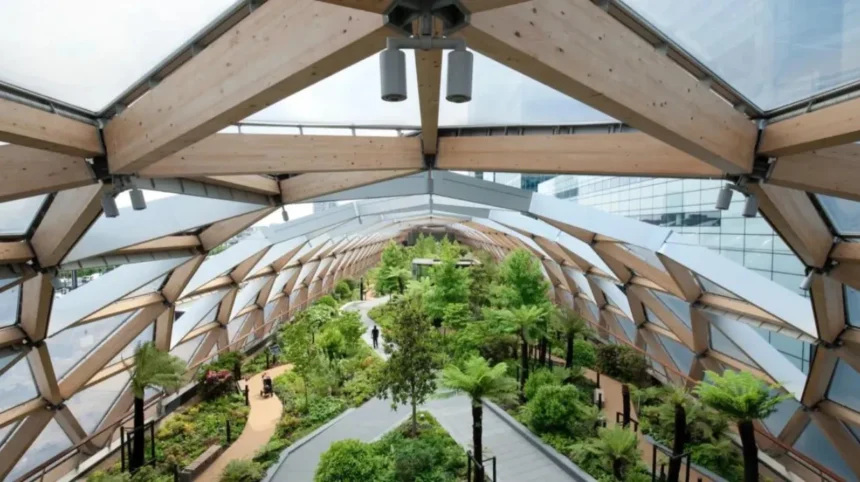
Crossrail Place Roof Garden is a landscaped garden above the Elizabeth line station at Canary Wharf. Its enclosed design incorporates planting, walking routes and architectural features that create a green environment within a major transport and commercial development.
The garden provides an opportunity to explore horticulture and contemporary architecture together. Its planting reflects different geographical regions, while its elevated location demonstrates how green space can be integrated into dense urban development.
The garden is particularly convenient for business travellers and visitors arriving by rail. It provides a green retreat within a commercial district dominated by offices, retail premises and transport infrastructure.
Visitors should check current opening arrangements and any access restrictions before travelling. The roof garden’s operating arrangements differ from those of a traditional council park.
Jubilee Park
Jubilee Park is a landscaped public space in the centre of Canary Wharf. Its lawns, planting and pedestrian paths provide an open setting between major commercial buildings.
The park functions as both a recreational space and a route through the business district. Office workers use the surrounding public realm during lunch breaks, while visitors incorporate the gardens into walks between shops, restaurants and transport stations.
Jubilee Park illustrates the role of landscaping in contemporary commercial development. Trees, planted areas and seating introduce green features into a district where building density and pedestrian movement are central to the urban design.
Canada Square Park
Canada Square Park is a central gathering place within Canary Wharf. Its open layout supports public events, seasonal activities and informal recreation, making it an important part of the district’s outdoor environment.
The square is surrounded by commercial buildings, retail premises and places to eat. This arrangement allows visitors to combine a walk with shopping or refreshments without leaving the central business district.
Event programming changes throughout the year. Visitors should check the official Canary Wharf website for current information about performances, screenings and temporary installations.
Canada Square Park also demonstrates an important distinction between public access and ownership. Public-facing spaces within commercial estates are often managed privately, so event permissions, opening hours and permitted activities differ from those in council-managed parks.
Where Can Visitors Discover Public Art in Tower Hamlets?
Public art in Tower Hamlets appears in parks, commercial plazas, streets and cultural districts. Canary Wharf’s outdoor artworks, Mile End Park’s arts facilities and neighbourhood installations provide opportunities to explore sculpture and contemporary design while moving through the borough’s everyday public spaces.
Canary Wharf contains an established programme of public art integrated into its streets, gardens and buildings. Visitors encounter sculptures and installations as part of ordinary pedestrian routes rather than only inside galleries.
The district’s public art programme connects visual culture with architecture and urban planning. Works positioned near waterfronts, plazas and landscaped gardens encourage visitors to pay attention to the design of their surroundings.
Mile End Park adds another dimension through its Art Pavilion, which hosts exhibitions and workshops. Unlike permanent outdoor sculptures, the pavilion provides a venue for organised cultural activity and changing displays. Visitors should check the council’s official information for current exhibitions and opening arrangements.
Public art also contributes to how people recognise and navigate urban spaces. A sculpture at a plaza or a distinctive installation near a pedestrian route can become a meeting point, while temporary artwork introduces new uses for familiar locations.
For visitors interested in contemporary culture, combining outdoor installations with nearby markets and parks provides a practical way to explore East London without committing to a full day inside museums or galleries.
How Do Community Spaces Reflect Tower Hamlets’ Cultural Identity?
Community spaces in Tower Hamlets support local gatherings, recreation, cultural activities and everyday social interaction. Parks, gardens, market streets and community venues serve residents from different backgrounds, reflecting the borough’s long history of migration, neighbourhood development and changing economic activity.
Tower Hamlets has a diverse population shaped by successive waves of migration, including longstanding Bangladeshi communities and earlier Jewish, Irish and other migrant populations. This history is visible in the borough’s commercial streets, religious buildings, food businesses and community institutions.
Altab Ali Park in Whitechapel provides a particularly significant example. The park commemorates Altab Ali, a Bangladeshi textile worker murdered in a racist attack in 1978. Its memorial role connects a public green space with the history of anti-racist campaigning and the experiences of local communities.
The park also occupies a location associated with the former St Mary’s Churchyard. This combination of landscape and remembrance demonstrates how public spaces preserve historical meaning while continuing to serve everyday needs.
Other neighbourhood spaces support informal recreation, children’s play and community-led activities. Their value depends on proximity to residential areas, the quality of facilities and how effectively people can access them.
Visitors should approach memorials respectfully and follow any notices governing events or organised gatherings. Understanding the significance of these spaces adds historical context to a walking tour of Whitechapel and the wider East End.
How Can Visitors Plan a Walking Route Between Tower Hamlets’ Public Spaces?
Visitors can explore Tower Hamlets by grouping nearby parks, markets and waterfronts into manageable walking routes. A Victoria Park itinerary suits green-space exploration, a Whitechapel and Spitalfields route focuses on markets and history, while a Canary Wharf walk combines gardens with modern architecture.
A practical itinerary starts with a clear geographical focus. Tower Hamlets covers several distinct neighbourhoods, so attempting to visit every major park and waterfront in one short outing involves unnecessary travel.
A Victoria Park route can include the park’s lakes, gardens and historic features, followed by a walk towards Mile End Park. Visitors interested in architecture and local commerce can instead begin around Spitalfields Market and continue towards Petticoat Lane and Whitechapel.
A Canary Wharf itinerary centres on Crossrail Place Roof Garden, Jubilee Park, Canada Square Park and the surrounding waterfront. This route suits visitors who want to explore the modern business district while taking breaks in landscaped public spaces.
For a maritime theme, Limehouse Basin and Wapping offer opportunities to examine former dock infrastructure and riverside streets. The route should account for the distance between individual destinations and any restrictions on access through private developments.
Transport planning is important because walking distances, step-free access and station entrances vary. Visitors should use current Transport for London journey information and official park maps to select suitable routes.
Weather also affects the experience. Rain changes conditions on exposed waterfront paths, while major events increase visitor numbers in some parks and plazas. Checking local notices before departure helps avoid temporary closures and crowded event areas.
Explore More Area Guide
Tower Hamlets Cultural Guide: Best Stops for a Day of Discovery
Tower Hamlets Landmarks: Best Historic Sites and Attractions
What Facilities and Access Rules Should Visitors Check Before Exploring?
Visitors should check opening hours, accessible entrances, toilet facilities, transport connections and activity restrictions before exploring Tower Hamlets’ public spaces. Council parks follow local management rules, while privately managed plazas and market areas operate under separate arrangements that affect events and permitted activities.
The London Borough of Tower Hamlets maintains an official directory of more than 120 parks and green spaces. Its published information covers facilities, playgrounds, outdoor gyms, accessible features and other details that help visitors choose a suitable destination.
Victoria Park has accessible toilet facilities, step-free access in its community buildings and designated facilities for visitors requiring additional support. The council also publishes information about park entrances, opening times and restrictions.
Visitors should distinguish between a park’s general opening hours and the schedules of individual facilities. A garden, sports venue, café or exhibition space within a larger destination follows its own operating arrangements.
Rules also differ between locations. Victoria Park does not permit barbecues, and visitors must follow the relevant park byelaws. Other spaces have specific restrictions relating to cycling, dogs, organised events or commercial activity.
For accessible travel, check step-free routes, seating availability, toilets and the condition of paths before departure. Historic waterfronts sometimes include uneven surfaces, while landscaped commercial districts have different pedestrian layouts.
Visitors planning photography, performances, group activities or commercial filming should check whether permission is required. Public access does not automatically grant the right to hold an organised event or install equipment.
Why Will Tower Hamlets’ Public Spaces Remain Important to East London?
Tower Hamlets’ public spaces remain important because they provide recreation, ecological value, cultural identity and pedestrian connections within a densely developed part of London. Parks, gardens, markets and waterfronts support everyday life while adapting to regeneration, changing transport needs and future environmental priorities.
Green spaces help provide habitats for urban wildlife, reduce the dominance of hard surfaces and give residents places to spend time outdoors. Tower Hamlets’ parks strategy includes nature conservation, improvements to facilities and the development of accessible outdoor environments.
Waterfronts also remain significant as former industrial sites continue to serve new residential, commercial and recreational purposes. Limehouse Basin, Wapping and the Isle of Dogs demonstrate how public access and historic infrastructure contribute to the character of regenerated neighbourhoods.
Commercial districts face a different challenge. Canary Wharf’s plazas and gardens must accommodate pedestrian movement, events, retail activity and environmental planting within a highly developed urban setting.
Community spaces also retain a social function. Memorial parks and neighbourhood gardens provide settings for remembrance, informal meetings and local activities, connecting contemporary residents with the history of the borough.
For visitors, these places offer more than isolated attractions. They form a network that links East London’s historical development, cultural diversity, natural environments and modern economy. Exploring them on foot provides a practical way to understand how Tower Hamlets continues to evolve while retaining connections to its past.
What are the most interesting public spaces in Tower Hamlets?
Some of Tower Hamlets’ notable public spaces include Victoria Park, Mile End Park, Island Gardens, Limehouse Basin, Crossrail Place Roof Garden and Canada Square Park. These destinations offer green spaces, riverside views, historic surroundings and modern urban landscapes.