Tower Hamlets is one of East London’s most culturally diverse boroughs, combining historic maritime landmarks, world-class museums, contemporary art, public galleries and multicultural neighbourhoods. From the preserved warehouses of the former Port of London to the independent creative spaces of Whitechapel and the historic streets of the East End, the borough offers visitors a detailed view of London’s social, artistic and commercial development.
- What Makes Tower Hamlets an Important Cultural Destination in East London?
- Which Museums Should Culture Seekers Visit in Tower Hamlets?
- Which Art Galleries Should You Explore in Tower Hamlets?
- Where Can You Discover Tower Hamlets’ Maritime and Industrial Heritage?
- Which Historic Buildings Reveal Tower Hamlets’ Religious and Architectural Heritage?
- How Can You Explore Brick Lane’s Multicultural History?
- Which Cultural Venues Offer Theatre, Music and Independent Cinema?
- Which Markets and Public Spaces Add to the Cultural Experience?
- How Can You Plan a Cultural Day Trip Around Tower Hamlets?
- Morning: Explore Spitalfields and Brick Lane
- Midday: Visit Whitechapel’s Cultural Attractions
- Afternoon: Discover the Docklands
- How Can You Travel Between Attractions?
- What Should Visitors Know Before Exploring Tower Hamlets?
- Why Should Tower Hamlets Be on a Culture Seeker’s London Itinerary?
Located immediately east of the City of London, Tower Hamlets includes well-known districts such as Whitechapel, Bethnal Green, Spitalfields, Poplar, Limehouse, Bow, Canary Wharf and the Isle of Dogs. Each area has a distinct identity shaped by migration, industry, trade, architecture and community life.
For culture-focused travellers, Tower Hamlets offers more than traditional sightseeing. Visitors can explore the history of British maritime trade, learn about the experiences of migrant communities, view contemporary exhibitions, discover historic religious buildings and experience the area’s food, markets and public art.
The borough also suits travellers with limited time. Several major attractions are accessible by the London Underground, Docklands Light Railway (DLR), Elizabeth line and local bus services. A well-planned visit connects museums, heritage sites and neighbourhoods without requiring travel across the whole of London.
What Makes Tower Hamlets an Important Cultural Destination in East London?
Tower Hamlets is an important cultural destination because its history connects London’s maritime trade, migration, industry, religion and contemporary creativity. Its museums, historic buildings, markets and galleries provide visitors with opportunities to understand how East London developed and how different communities continue to shape its identity.
Tower Hamlets sits between the historic City of London and the River Thames, a location that influenced its economic and cultural development. For centuries, riverside settlements supported shipping, warehousing, shipbuilding and international commerce. Industrial employment attracted workers from different parts of Britain and overseas, creating communities with distinct languages, religious traditions and cultural practices.
The borough’s identity also reflects major changes in London’s economy. Traditional docks and warehouses declined as shipping operations changed during the twentieth century. Former industrial areas subsequently experienced redevelopment, particularly around Canary Wharf, where modern offices, public spaces and cultural installations occupy parts of the former Docklands.
Alongside this redevelopment, older neighbourhoods retain historic streets, markets, places of worship and community institutions. Whitechapel reflects the area’s longstanding connections with migration and working-class history. Spitalfields preserves elements of its Huguenot, Jewish and Bangladeshi heritage. Bethnal Green has important collections relating to childhood, design and social history.
This combination makes Tower Hamlets valuable for travellers interested in both historical interpretation and contemporary urban culture. Rather than treating East London as a single attraction, visitors can explore how individual neighbourhoods developed and how their identities overlap.
Which Museums Should Culture Seekers Visit in Tower Hamlets?
The Museum of London Docklands and the V&A Museum of Childhood collection at Young V&A are two major museum destinations associated with Tower Hamlets. They explore London’s trading history, social development, childhood, design and material culture through exhibitions, collections and educational displays.
Museums provide a structured introduction to the borough’s past. They help visitors understand the industries, communities and everyday experiences that shaped East London before exploring its streets and historic buildings.
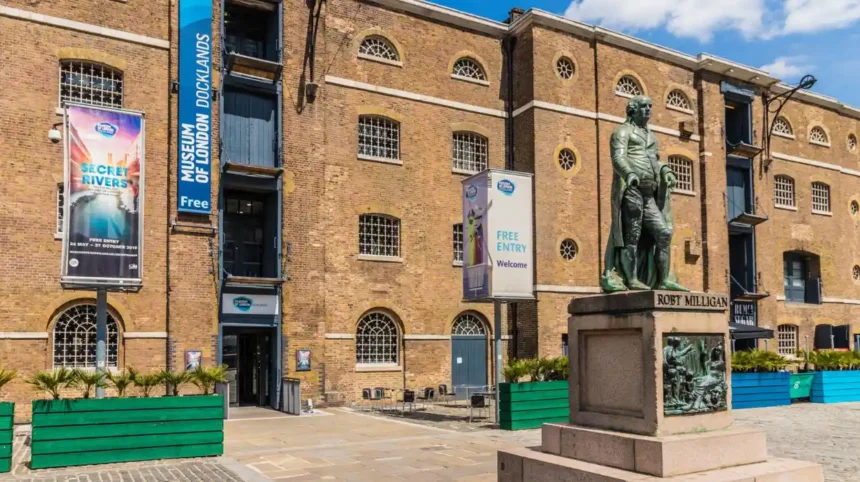
Museum of London Docklands
Location: No. 1 Warehouse, West India Quay, Canary Wharf
The Museum of London Docklands is one of the most important places to visit for an understanding of the River Thames and London’s maritime economy.
Housed in a historic warehouse at West India Quay, the museum examines the development of the port, the expansion of global trade, the growth of the Docklands and the lives of people who worked along the river. Its location is particularly significant because the surrounding warehouses once stored goods transported through London’s docks.
Exhibitions address the relationship between trade, migration, slavery, industrial development and urban change. These subjects help visitors understand how international commerce affected London and its residents over several centuries.
The museum also explains the transformation of the Docklands from an industrial shipping centre into a modern business district. Canary Wharf’s office towers and transport connections stand close to buildings associated with the earlier port economy.
Visitors interested in architecture should examine the contrast between the preserved warehouse structures and the contemporary skyline. The surrounding West India Quay area provides additional opportunities to observe the relationship between historic dock infrastructure and modern redevelopment.
Check the museum’s official website for current opening hours, exhibition schedules, admission arrangements and accessibility information before travelling.
Young V&A in Bethnal Green
Location: Cambridge Heath Road, Bethnal Green
Young V&A is a museum dedicated to children, young people, creativity and design. It developed from the former V&A Museum of Childhood and presents collections that connect play, objects, fashion, technology and everyday life.
The museum’s collection includes toys, games, dolls, books and other objects that demonstrate how childhood experiences have changed over time. These items also reveal developments in manufacturing, design, popular culture and family life.
Young V&A is particularly relevant to visitors interested in social history because ordinary objects often reveal changing attitudes towards education, leisure and childhood. Historical toys, for example, demonstrate differences in materials, production techniques and cultural expectations across generations.
The museum also supports creative learning through interactive displays and activities. Its approach makes it suitable for families, educators, students and visitors interested in design history.
Bethnal Green’s surrounding streets offer an additional cultural experience, with residential architecture, independent businesses and community spaces reflecting the neighbourhood’s long history.
How Can You Plan a Museum Visit?
Museum visits work best when travellers choose locations according to their interests and available time. The Museum of London Docklands suits visitors interested in maritime trade and industrial history, while Young V&A is especially relevant to childhood, design and material culture.
Check current exhibition information before visiting. Temporary displays, public programmes and opening arrangements change over time, so official museum information provides the most reliable planning details.
Which Art Galleries Should You Explore in Tower Hamlets?
Tower Hamlets has an established contemporary art scene, with Whitechapel Gallery, independent exhibition spaces and creative venues presenting modern art, photography, installations and community-led projects. These locations connect international artistic practice with East London’s history, cultural diversity and changing urban environment.
Whitechapel Gallery
Location: Whitechapel High Street, Whitechapel
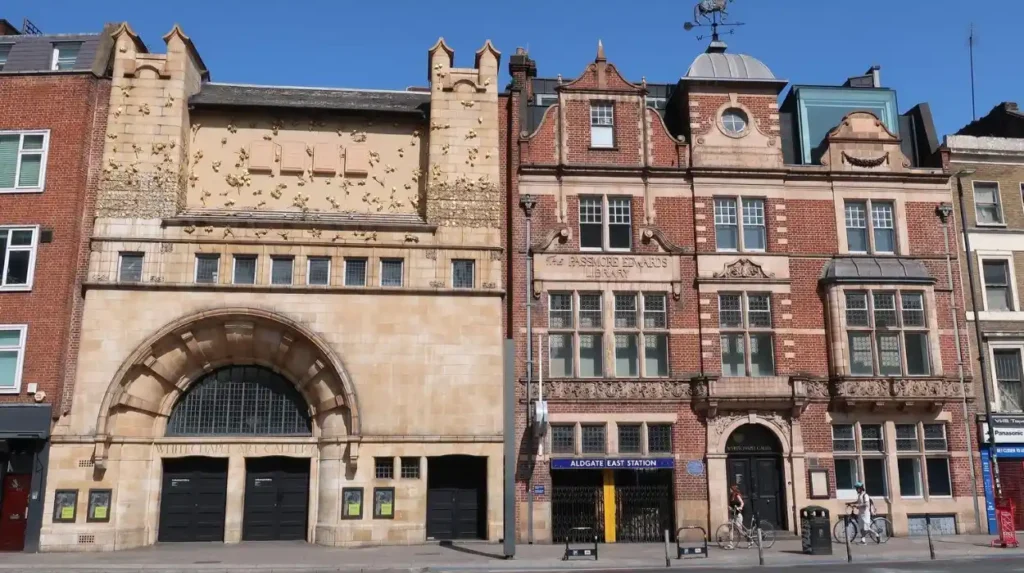
Whitechapel Gallery is one of East London’s best-known public art galleries. Established in 1901, it was created to make significant works of art accessible to people in the East End.
The gallery presents contemporary and modern art through temporary exhibitions, public events, talks, educational programmes and interdisciplinary projects. Its programme connects established artists with emerging practitioners and examines subjects such as identity, politics, migration, technology and society.
The gallery’s location is significant. Whitechapel has a long history of migration, trade and working-class community life. Exhibitions in this setting often encourage visitors to consider the relationship between artistic expression and the social environment.
Architecture is another reason to visit. The gallery occupies a historic Arts and Crafts building that has been expanded to accommodate additional exhibition space and visitor facilities.
Check the official programme before your visit because exhibitions change throughout the year. Some events require advance booking, while access arrangements depend on the exhibition or activity.
Old Truman Brewery
Location: Brick Lane, Spitalfields
The Old Truman Brewery is a former brewing complex that has become an important creative and commercial destination in East London.
The brewery’s history reflects the development of the area’s manufacturing economy. Brewing operations expanded over several centuries, and the site became associated with the Truman brewing business. After industrial activity ended, parts of the complex acquired new uses connected with retail, exhibitions, events and creative enterprises.
Today, the site hosts a changing range of activities, including independent retail, design-led businesses, markets and cultural events. Its industrial buildings provide a visible connection between the area’s manufacturing past and its contemporary creative economy.
The brewery is particularly convenient to combine with a walk along Brick Lane. Visitors can explore its public-facing spaces before continuing towards Spitalfields Market, historic streets and nearby galleries.
Access to individual exhibitions and events depends on their schedules. Check the venue’s current programme before making a dedicated journey.
Where Can You Discover Tower Hamlets’ Maritime and Industrial Heritage?
Tower Hamlets’ maritime and industrial heritage is visible in former docks, historic warehouses, riverside buildings and surviving industrial structures. West India Quay, the Isle of Dogs and Limehouse provide particularly useful locations for understanding the relationship between London’s port economy and modern urban redevelopment.
West India Quay
West India Quay provides a direct connection to the history of London’s commercial docks. The warehouses here formed part of the West India Docks, which opened in 1802 to handle international cargo.
The docks supported the movement and storage of goods entering and leaving London. Their development changed the surrounding landscape, creating employment and encouraging the growth of dockside communities.
Several historic warehouse buildings survive alongside contemporary offices, restaurants and public spaces. The combination provides a useful example of how industrial heritage can remain visible within a redeveloped urban district.
Visitors can walk around the quay and observe the historic buildings before entering the Museum of London Docklands. This combination provides both physical evidence of the port’s development and a museum-based explanation of its economic and social importance.
Limehouse and the Thames Path
Location: Riverside paths around Limehouse Basin
Limehouse offers a different perspective on London’s maritime history. Its development was influenced by river traffic, shipping-related employment and the industries that supported vessels travelling along the Thames.
Limehouse Basin connects the Regent’s Canal with the Thames. The basin and surrounding waterways demonstrate how canals and docks supported the movement of goods before modern road and rail logistics became dominant.
The nearby riverside paths provide views of historic waterfront structures, residential developments and modern buildings. Walking here helps visitors understand the physical relationship between London’s waterways and its economic growth.
Travellers interested in industrial archaeology should pay attention to the surviving dock infrastructure, canal entrances and changes in building design. These features reveal how the area’s original functions have evolved.
As you explore the modern waterfront, you are also crossing a landscape shaped by centuries of trade and migration. Read the full [Tower Hamlets History and Heritage: From Maritime Trade to Modern East London] to understand the area’s historical development.
Which Historic Buildings Reveal Tower Hamlets’ Religious and Architectural Heritage?
Historic churches, former synagogues, mosques and Georgian streets reveal how religious communities shaped Tower Hamlets. Christ Church Spitalfields, Brick Lane’s historic mosque and the preserved houses of Fournier Street demonstrate changing patterns of worship, migration, architecture and community life.
Christ Church Spitalfields
Location: Commercial Street, Spitalfields
Christ Church Spitalfields is an important architectural landmark designed by Nicholas Hawksmoor, an English architect associated with the English Baroque style.
Construction began in the early eighteenth century, and the church was completed in 1729. Its prominent tower, monumental proportions and carefully designed interior make it one of Spitalfields’ defining historic buildings. The church also reflects efforts to strengthen the presence of the established Church of England in rapidly growing urban districts.
Its location connects it with the development of Spitalfields, where French Huguenot refugees and other communities established homes and businesses. The surrounding streets preserve buildings associated with silk weaving, garment production and commercial activity.
Visitors can examine the church’s exterior and explore the surrounding historic streets. Check current access arrangements before visiting the interior, as opening times depend on the church’s activities and programme.
Brick Lane Jamme Masjid
Brick Lane’s Jamme Masjid is one of the most revealing examples of religious and cultural continuity in East London.
The building was constructed as a French Protestant chapel in the eighteenth century. It subsequently became a Methodist chapel, then a synagogue in the late nineteenth century, and later a mosque serving the area’s growing Muslim community. The mosque’s conversion took place in 1976.
This sequence reflects the arrival and settlement of different communities in Spitalfields. French Huguenots established silk-weaving businesses, Jewish migrants developed commercial and religious institutions, and Bengali residents contributed to the neighbourhood’s contemporary identity.
The building remains a particularly clear example of how an existing architectural structure can serve successive communities while retaining evidence of earlier periods.
Visitors should treat the mosque as an active place of worship. Dress respectfully, avoid disrupting prayers and check visitor arrangements before entering.
Fournier Street and Georgian Architecture
Fournier Street contains some of Spitalfields’ best-known surviving Georgian houses. Developed during the early eighteenth century, the street features brick façades, sash windows, decorative doorways and traditional proportions.
These houses reflect the area’s connection with the silk-weaving trade and the prosperity of merchants and craftspeople who lived and worked locally.
The buildings also demonstrate the importance of conservation. Historic streets in East London experienced periods of industrial use, deterioration and redevelopment. Conservation initiatives helped preserve buildings that now contribute to the area’s architectural character.
Visitors can explore the street on foot, observing the façades and the relationship between historic residential buildings and nearby commercial districts. As many properties remain private homes or businesses, sightseeing should take place respectfully from public areas.
How Can You Explore Brick Lane’s Multicultural History?
Brick Lane is one of Tower Hamlets’ most recognisable cultural destinations because its streets reflect successive waves of migration. French Huguenot, Jewish and Bangladeshi communities shaped its architecture, businesses, food culture and religious institutions, creating a distinctive East London neighbourhood.
Brick Lane’s history stretches back several centuries. Its name is associated with brickmaking, and the surrounding area developed significantly from the seventeenth century onwards.
French Protestant refugees arrived from the 1680s, bringing skills that helped establish Spitalfields as a centre for silk weaving. Jewish communities subsequently developed businesses and institutions in the East End. Bengali migrants, including people with connections to the merchant navy and the Sylhet region, contributed to the neighbourhood’s later development.
These changes remain visible in the area’s buildings, markets, shops, food businesses and places of worship. The local authority’s cultural trail identifies landmarks including the Boundary Estate, Princelet Street, the Old Truman Brewery, Christ Church Spitalfields, Whitechapel Gallery and Altab Ali Park.
What Should You See Along Brick Lane?
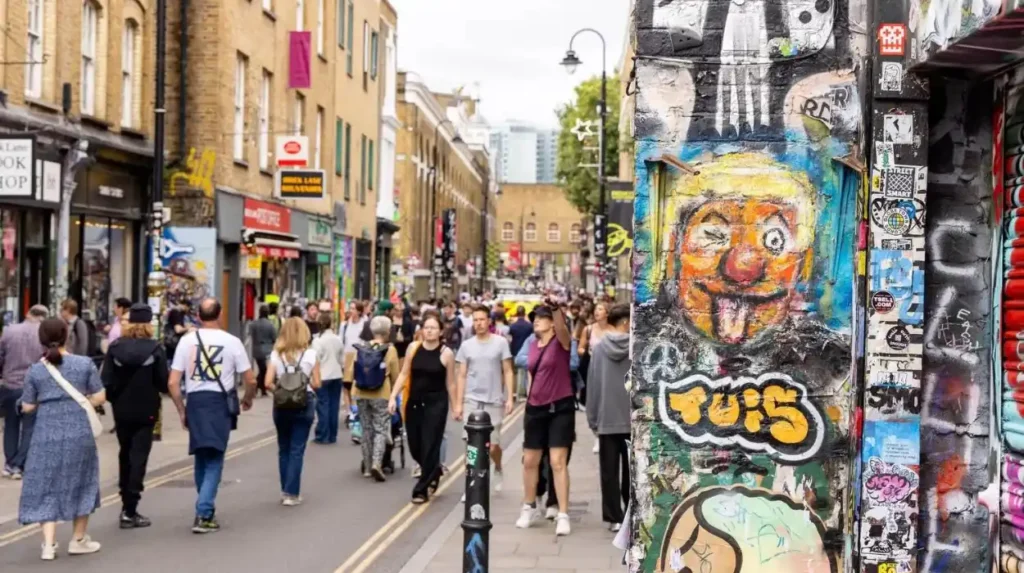
Begin with the street itself and examine its mix of independent shops, food businesses, historic buildings and street art. The area is particularly well known for Bangladeshi restaurants, Jewish beigel shops and international food businesses.
Continue towards the Old Truman Brewery to explore the former industrial complex and its creative uses. Nearby streets provide further examples of Georgian architecture and the changing commercial life of the East End.
Spitalfields Market is another useful stop. Its history reaches back to a market licensed in 1682, while the surviving Victorian market buildings reflect later phases of commercial development.
Visitors interested in migration history should also look for the former religious buildings along Brick Lane. The Jamme Masjid illustrates how the same structure served different religious communities over time.
Why Is Altab Ali Park Culturally Significant?
Altab Ali Park is a public green space with an important connection to the history of racism and the Bangladeshi community in East London.
The park was named in memory of Altab Ali, a Bangladeshi textile worker murdered in a racist attack in 1978. His death became a significant event in the community’s campaign against racist violence.
The park includes memorial features associated with Bangladeshi identity, remembrance and the language movement. It provides a place to understand how local history includes both cultural achievement and struggles for equality.
Visitors should approach the site as a place of remembrance rather than simply a sightseeing stop. Its significance extends beyond its landscaped grounds to the wider history of anti-racism and community activism in Britain.
Which Cultural Venues Offer Theatre, Music and Independent Cinema?
Tower Hamlets supports a varied performing arts scene through historic theatres, contemporary music spaces, community venues and independent cinemas. Wilton’s Music Hall, Rich Mix and Genesis Cinema provide distinct ways to experience live performance, film, music and culturally diverse programming in East London.
Wilton’s Music Hall
Location: Graces Alley, Whitechapel
Wilton’s Music Hall is a historic performance venue associated with London’s nineteenth-century entertainment culture.
The building preserves the atmosphere of an early music hall, a form of entertainment that combined singing, comedy and popular performance for urban audiences. Its historic fabric provides an important contrast with modern performance spaces.
Today, Wilton’s presents theatre, music, cabaret and other live events. Its programme combines contemporary performance with the character of the historic building.
Check the current listings before visiting, as performances run on particular dates and ticket availability varies. A visit is best planned around a specific show rather than assuming that the building operates as a conventional museum.
Rich Mix
Location: Bethnal Green Road, Shoreditch and Whitechapel area
Rich Mix is an independent arts and cultural venue that supports film, music, talks, exhibitions and community events.
Its programme reflects East London’s cultural diversity and includes activities that bring artists, audiences and local organisations together. The venue provides an alternative to larger commercial entertainment destinations by offering a programme connected with independent creative work.
Visitors should check its current listings for film screenings, live performances, workshops and public discussions. This is particularly useful for travellers staying in East London who want to experience contemporary cultural activity beyond traditional tourist attractions.
Genesis Cinema
Genesis Cinema is an independent cinema in the Whitechapel area. It screens films and hosts events that complement the borough’s wider creative scene.
Independent cinemas are useful cultural destinations because their programming often extends beyond mainstream releases to include specialist screenings, themed events and community-oriented activities.
Check the cinema’s schedule for current films and events. Pairing a screening with a visit to nearby Brick Lane or Whitechapel creates a practical evening itinerary.
Which Markets and Public Spaces Add to the Cultural Experience?
Markets and public spaces help visitors experience Tower Hamlets as a living cultural destination. Old Spitalfields Market, Columbia Road Flower Market, Petticoat Lane and Victoria Park connect local commerce, design, food, community activity and outdoor recreation with the borough’s wider history.
Old Spitalfields Market
Old Spitalfields Market combines historic market architecture with contemporary retail and food businesses.
The market’s origins date to the seventeenth century, while the surviving Victorian market structures reflect its later role in London’s wholesale produce trade. The site subsequently adapted to changing retail patterns.
Today, visitors encounter a mixture of independent sellers, food outlets, design products and market events. The range of stalls changes, so the experience depends on the day and the current programme.
The market is also a convenient starting point for exploring Spitalfields’ Georgian streets, Christ Church and Brick Lane.
Columbia Road Flower Market
Columbia Road Flower Market is known for its Sunday flower and plant market.
The street attracts visitors interested in horticulture, independent shops and the neighbourhood’s distinctive commercial character. Flower stalls create a lively public market, while the surrounding shops provide opportunities to explore local design, homeware and independent retail.
The market is generally associated with Sundays, but seasonal arrangements and operating details should be checked before travel. Arriving earlier in the day helps visitors explore the stalls before the busiest period.
Victoria Park
Victoria Park is one of East London’s major public parks. Opened in 1845, it was created to provide open space for the growing population of the East End.
The park’s landscape, lakes, historic features and public pathways offer a different perspective on the borough’s cultural history. Its development reflects Victorian concerns about public health, recreation and access to green space in densely populated urban districts.
Victoria Park also hosts events and community activities throughout the year. Visitors should check event listings if they want to combine a walk with a festival, performance or other organised activity.
How Can You Plan a Cultural Day Trip Around Tower Hamlets?
A cultural day trip works best when attractions are grouped by neighbourhood. Start with Spitalfields and Brick Lane for migration history and markets, continue to Whitechapel for art and historic buildings, then visit the Docklands for maritime heritage and modern architecture.
A practical itinerary reduces unnecessary travel and gives each area enough time for exploration.
Morning: Explore Spitalfields and Brick Lane
Start around Old Spitalfields Market and the surrounding Georgian streets. Visit Christ Church Spitalfields, explore Fournier Street and continue towards Brick Lane.
This part of the itinerary focuses on architecture, migration, markets and contemporary street culture. Allow time to observe historic façades and learn about the different communities that shaped the area.
Midday: Visit Whitechapel’s Cultural Attractions
Continue towards Whitechapel Gallery and Altab Ali Park. The gallery provides a contemporary artistic perspective, while the park offers an opportunity to reflect on the history of the Bangladeshi community and anti-racist activism.
Stop for lunch at a local restaurant or café. Brick Lane and Whitechapel offer a range of food businesses reflecting the borough’s multicultural character.
Afternoon: Discover the Docklands
Travel to West India Quay for the Museum of London Docklands and a walk around the historic waterfront.
This part of the itinerary provides a contrast with the narrow streets of Spitalfields. The warehouses and dock infrastructure explain the commercial history of the river, while Canary Wharf illustrates the area’s transformation into a major business district.
If time allows, continue towards Limehouse Basin for additional riverside views.
How Can You Travel Between Attractions?
Tower Hamlets is served by the Underground, DLR, Elizabeth line, London Overground and local buses. Walking is practical within compact areas such as Spitalfields and Brick Lane, while public transport helps connect these neighbourhoods with Canary Wharf and the Docklands.
Use Transport for London journey-planning information to check routes, service changes and accessibility. Museum opening hours and event schedules should determine the order of your itinerary.
Explore More Area Guide
Best Places to Learn About Tower Hamlets | East London
Exploring Tower Hamlets’ Creative Side: Art, Culture and Hidden Gems
What Should Visitors Know Before Exploring Tower Hamlets?
Visitors should plan around opening times, transport connections, accessibility requirements and local customs. Museums and galleries have different admission arrangements, religious buildings require respectful behaviour, and markets and performance venues operate on specific schedules that should be checked before travel.
Advance planning helps travellers make better use of their time.
Museum admission varies by institution and exhibition. Young V&A provides free general admission, while special exhibitions can carry separate charges. Other museums and cultural venues have their own ticketing policies.
Accessibility also differs between sites. Check step-free access, lifts, seating, accessible toilets and assistance services before visiting, particularly when planning a multi-stop itinerary.
Photography rules depend on the venue and exhibition. Some galleries restrict photography, and visitors should always respect notices and staff instructions. Photography inside active places of worship requires particular sensitivity.
Markets are public commercial environments rather than formal museums. Visitors should remain aware of crowds, respect stallholders and check market schedules before travelling. At memorial sites such as Altab Ali Park, visitors should be mindful of the historical significance of the location.
Travellers with limited time should prioritise attractions according to their interests. Maritime history is best explored around West India Quay, contemporary art around Whitechapel, and migration history around Brick Lane and Spitalfields.
Why Should Tower Hamlets Be on a Culture Seeker’s London Itinerary?
Tower Hamlets deserves a place on a London cultural itinerary because it brings together maritime history, historic architecture, contemporary art, multicultural heritage and community life. Its neighbourhoods show how migration, industry and urban change shaped East London across several centuries.
The borough offers cultural experiences that extend beyond a single museum or landmark. Visitors can explore former dock warehouses, study Georgian streets, discover changing religious traditions, attend live performances and experience markets that remain part of everyday local life.
Its cultural significance also lies in the connections between attractions. The history of Brick Lane becomes clearer when considered alongside its historic religious buildings, while the Museum of London Docklands provides context for the warehouses and waterfront structures around West India Quay.
Contemporary venues such as Whitechapel Gallery and Rich Mix show how the borough continues to support artistic production and public cultural activity. Historic sites and modern business districts demonstrate that East London’s identity remains closely connected to both its past and its continuing development.
For tourists, residents, digital nomads and business travellers, Tower Hamlets provides a practical way to explore several dimensions of London’s cultural identity within a relatively compact area. Grouping attractions by neighbourhood, checking current programmes and allowing time for independent exploration creates a more complete understanding of the borough.
The result is a cultural itinerary that connects history, architecture, art and community rather than treating each attraction as an isolated stop.
What are the best cultural attractions in Tower Hamlets?
The best cultural attractions in Tower Hamlets include the Museum of London Docklands, Whitechapel Gallery, Young V&A, Christ Church Spitalfields, Brick Lane and Wilton’s Music Hall. These destinations showcase the area’s maritime history, art, architecture and multicultural heritage.