Tower Hamlets is one of East London’s most historically significant and culturally diverse boroughs. It combines the Tower of London, historic docks, major markets, contemporary galleries, riverside districts, large parks and modern Canary Wharf. Its geography connects the City of London with the wider East End and Docklands.
- What makes Tower Hamlets worth visiting on a London trip?
- Which historic landmarks should visitors explore in Tower Hamlets?
- What can visitors see around Whitechapel and Spitalfields?
- Which Tower Hamlets markets are worth adding to a trip?
- Where can visitors experience Tower Hamlets’ museum and cultural attractions?
- Which parks and green spaces should visitors explore in Tower Hamlets?
- What can visitors explore around Canary Wharf and the Isle of Dogs?
- Which Tower Hamlets neighbourhoods are best for experiencing local East London?
- How easy is Tower Hamlets to explore by public transport?
- How can visitors plan a one-day Tower Hamlets itinerary?
- What makes Tower Hamlets important for understanding modern London?
- Why should Tower Hamlets be included in an East London travel itinerary?
For visitors, Tower Hamlets offers a strong mix of heritage, food, architecture, shopping, green space and contemporary culture. The borough also works well for short London breaks because several major attractions sit close to Underground, Overground, DLR and Elizabeth line stations.
The borough was created from the former metropolitan boroughs of Bethnal Green, Poplar and Stepney. Its present character reflects centuries of migration, trade, industry, dock activity and urban redevelopment. The Tower Hamlets Local History Library and Archives preserves records covering this development from medieval parchment to modern digital material.
What makes Tower Hamlets worth visiting on a London trip?
Tower Hamlets brings together major London landmarks, historic neighbourhoods, markets, museums, parks and modern Docklands attractions within one East London borough, making it suitable for heritage visits, cultural trips, shopping, family days and short leisure itineraries.
The borough occupies a strategic position immediately east of the City of London. Its southern boundary follows the River Thames, while districts such as Whitechapel, Spitalfields, Bethnal Green, Stepney, Poplar, Limehouse, Wapping and the Isle of Dogs provide distinct visitor experiences.
Tower Hamlets Council identifies the borough as the heart of London’s East End and highlights its combination of ancient and modern attractions. The Tower of London and Tower Bridge dominate the western riverside, while Canary Wharf represents the modern Docklands economy.
The visitor experience changes significantly from one part of the borough to another. Whitechapel is strongly associated with contemporary art, historic markets and multicultural East End life. Bethnal Green combines museums, residential streets and independent cultural venues. Poplar and Limehouse reveal the industrial and maritime history of the former docks.
The Isle of Dogs provides the contrasting environment of Canary Wharf, with high-rise offices, public art, waterside spaces, restaurants and shopping. Victoria Park and Mile End provide major green spaces further north.
This variety gives visitors several ways to organise a Tower Hamlets itinerary. A first-time visitor can focus on landmark history. A returning London visitor can concentrate on markets, galleries, neighbourhoods or parks.
Which historic landmarks should visitors explore in Tower Hamlets?
Tower of London, Tower Bridge, St Katharine Docks and the surviving docklands landscape provide Tower Hamlets’ strongest concentration of historic landmarks, connecting medieval royal history with nineteenth-century maritime trade and the transformation of London’s eastern riverfront.
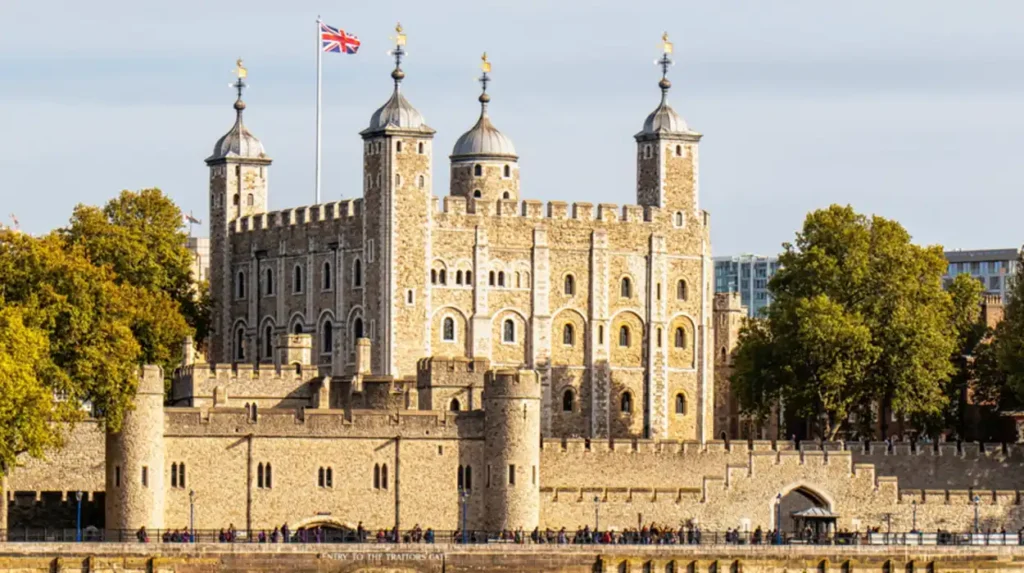
The Tower of London is the borough’s most internationally recognised historic attraction. The fortress stands beside the River Thames and has served as a royal palace, fortress, prison and place of execution. Its development began after William the Conqueror established the White Tower following the Norman conquest.
The wider area also contains Tower Hill and St Katharine Docks. St Katharine Docks opened on 25 October 1828 after an engineering project associated with Thomas Telford. The dock complex was built with two linked basins and an entrance lock connecting it with the Thames.
St Katharine Docks now combines its historic dock structures with restaurants, offices, boats and public spaces. The location works well as part of a walking route linking the Tower of London with the riverside.
Tower Bridge stands immediately east of the Tower of London. Although the bridge is commonly associated with central London sightseeing, its northern side is within Tower Hamlets. Its Victorian architecture and elevated walkways make it an important part of the borough’s Thames-side identity.
The history becomes more industrial as visitors travel east. Former docks, warehouses, wharves and waterways show how London developed into a major international trading port.
As you explore these modern riverside sites, you are crossing land with a deep heritage. Read about the full [Insert Anchor Text for Tower Hamlets History Article Here] to understand its origins.
The historic landscape is therefore not limited to individual monuments. Streets, warehouses, docks, churches and former industrial areas collectively explain how East London developed.
What can visitors see around Whitechapel and Spitalfields?
Whitechapel and Spitalfields combine contemporary art, historic streets, markets, religious heritage and migrant communities, giving visitors one of Tower Hamlets’ clearest introductions to the cultural development of London’s East End.
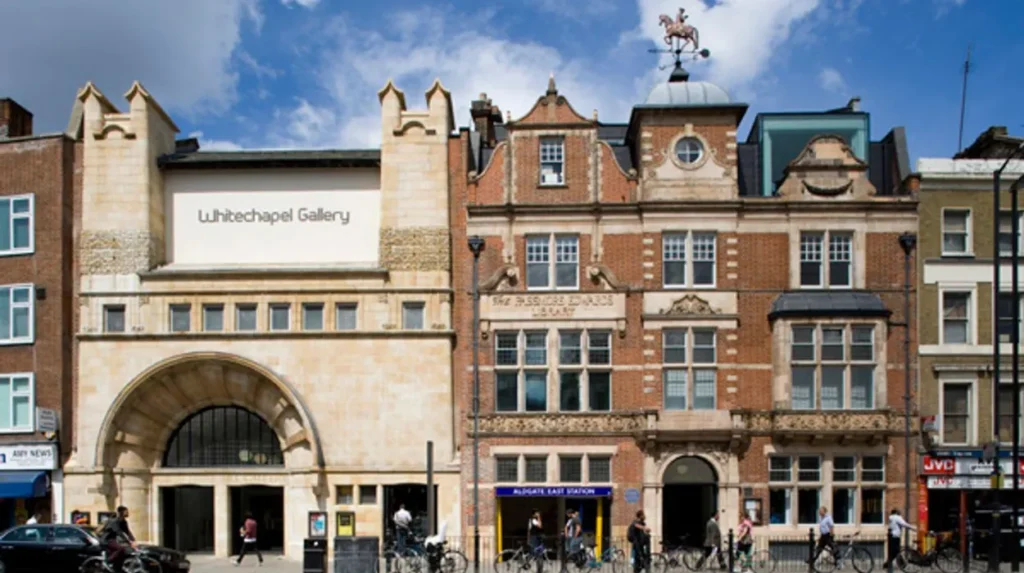
Whitechapel is one of the borough’s principal cultural districts. Whitechapel Gallery opened in 1901 after being founded by Canon Samuel Barnett and Henrietta Barnett. Its original purpose was to bring major art to East London communities.
The gallery has an important place in modern British cultural history. Pablo Picasso’s Guernica was displayed there in 1939 during its first and only visit to Britain. The gallery has also presented major works by artists including Jackson Pollock, Frida Kahlo, David Hockney and Gilbert & George.
The gallery remains particularly relevant for visitors interested in contemporary art. Its current programme continues the institution’s long-standing focus on international artists, local communities and new ideas.
Whitechapel also provides access to Whitechapel Market and the surrounding commercial streets. The market operates along Whitechapel Road and offers fresh produce, spices, clothing, jewellery and cultural goods. Tower Hamlets Council lists it among the borough’s established street markets.
Spitalfields sits close to the western edge of Tower Hamlets and provides another useful cultural stop. Its streets reflect the district’s connections with Huguenot, Jewish, Bangladeshi and other migrant communities.
The area is particularly useful for visitors who want to combine food and shopping with architectural sightseeing. Brick Lane connects these experiences through restaurants, cafés, street art, independent shops and market activity.
Which Tower Hamlets markets are worth adding to a trip?
Brick Lane, Columbia Road, Petticoat Lane, Whitechapel Market, Roman Road Market and Chrisp Street Market offer different shopping experiences, ranging from flowers and street food to clothing, produce, antiques, household goods and independent trading.
Markets are one of Tower Hamlets’ defining visitor experiences. The council currently identifies 10 street markets across the borough, including Brick Lane, Bethnal Green Road, Chrisp Street, Columbia Road, Petticoat Lane, Roman Road, Sclater Street, Watney Market and Whitechapel Market.
Brick Lane Market is particularly significant. The market operates on Sundays and has a long history dating from 1888. Its stalls include food, fashion, art, jewellery and vintage goods. Brick Lane also reflects the history of the Bangladeshi community and earlier French Huguenot and Jewish settlement.
Columbia Road is different because its principal identity is flowers and plants. Sunday is the key market day, making it particularly suitable for visitors planning a weekend East London itinerary.
Petticoat Lane provides another long-established market experience around Wentworth Street and surrounding streets. Food, fashion and general goods form the main visitor offer.
Roman Road Market serves Bow and the surrounding neighbourhoods. The council describes Roman Road as an old trade route, with market trading currently taking place on Tuesdays, Thursdays and Saturdays.
Chrisp Street Market in Poplar dates from the Victorian period. Its pedestrianised setting contains produce stalls, clothing, household goods, cafés and food businesses.
These markets have different operating days, so itinerary planning matters. Visitors should check current opening information before travelling because trading hours and individual stalls change.
Where can visitors experience Tower Hamlets’ museum and cultural attractions?
Tower Hamlets has museums and cultural venues covering childhood, design, docklands, contemporary art and historic entertainment, allowing visitors to combine formal exhibitions with neighbourhood exploration and heritage walks across East London.
London Museum Docklands is one of the strongest choices for understanding the borough’s maritime history. The museum occupies a former warehouse at West India Quay and explores 400 years of Docklands history.
The museum is free to enter and contains nine galleries covering London’s river, port and people. Its exhibitions address subjects including the development of the docks, slavery in London, wartime Docklands and the transformation of Canary Wharf.
The building itself contributes to the experience. It was originally the No. 1 Warehouse of the West India Docks, where commodities including sugar, rum and tea were stored.
Young V&A in Bethnal Green provides a different cultural experience. The museum is dedicated to children, young people, design and creativity. Its three principal galleries are called Imagine, Play and Design. General admission is free.
Young V&A is housed on Cambridge Heath Road and is approximately a two-minute walk from Bethnal Green Underground station. Cambridge Heath Overground station is approximately five minutes away on foot.
Wilton’s Music Hall in Whitechapel provides another important heritage experience. The Grade II* listed venue traces its history to the 1690s, while the Victorian music hall itself was built in 1859 by John Wilton. It remains a working theatre and music venue.
These cultural attractions demonstrate that Tower Hamlets is not simply a collection of famous landmarks. The borough supports institutions that explain art, design, migration, entertainment, industry and community history.
Which parks and green spaces should visitors explore in Tower Hamlets?
Victoria Park and Mile End Park are the principal green destinations for visitors, while Tower Hamlets’ wider network provides gardens, sports areas, walking routes, historic landscapes and open spaces across the borough.
Tower Hamlets has more than 120 parks and green spaces. The council states that 14 parks hold Green Flag Awards and that Victoria Park is among the country’s recognised leading parks.
Victoria Park is the largest park in Tower Hamlets, covering 86 hectares. It opened in 1845 as a public park intended to serve the working population of the East End. The council reports more than 9 million visits each year.
The park contains historic lakes, a bandstand, the Burdett Coutts Memorial and two original stone alcoves from London Bridge. It also forms part of a wider green corridor connecting towards Limehouse, Mile End Park and Queen Elizabeth Olympic Park.
Mile End Park provides a more linear green-space experience. It contains the Art Pavilion, Ecology Pavilion, sports facilities and spaces for walking and cycling. The park is useful for visitors who want outdoor time between museum or neighbourhood stops.
Tower Hamlets Cemetery Park provides a different type of green experience. The historic cemetery was established as a commercial burial ground in 1841 and later became a public open space. The site is now part of the borough’s heritage landscape.
Visitors interested in landscape history can also explore the borough’s registered parks and gardens. Tower Hamlets has five registered parks and gardens, including Victoria Park, Boundary Gardens, Island Gardens, Museum Gardens and Novo Cemetery.
What can visitors explore around Canary Wharf and the Isle of Dogs?
Canary Wharf and the Isle of Dogs show the modern side of Tower Hamlets through skyscrapers, public art, waterside spaces, shopping, restaurants, transport connections and former dock infrastructure transformed into a major financial district.
Canary Wharf developed from the former West India Docks into one of London’s principal business districts. Its skyline contrasts strongly with the older streets of Whitechapel, Stepney and Wapping.
The district is also an important cultural destination. Canary Wharf has developed a large free public art collection containing more than 100 pieces, including sculptures, murals, integrated architectural works and light installations.
Crossrail Place adds another major visitor destination. Its architecture combines transport infrastructure with public spaces and a large roof garden. The surrounding estate includes restaurants, shops, cafés and riverside walking areas.
The district is particularly suitable for visitors with limited time. Canary Wharf can be combined with London Museum Docklands because the museum is only a short walk from Canary Wharf and West India Quay stations.
The area also works well for business travellers. Office districts, restaurants, cafés, public spaces and strong transport links allow visitors to use a few free hours between meetings without travelling far across London.
For photographers and architecture enthusiasts, Canary Wharf offers a clear contrast between preserved industrial infrastructure and modern high-rise development.
Which Tower Hamlets neighbourhoods are best for experiencing local East London?
Whitechapel, Bethnal Green, Spitalfields, Stepney, Wapping, Limehouse, Poplar and Bow each reveal different aspects of East London, from migrant history and markets to docks, Georgian streets, Victorian development and modern regeneration.
Whitechapel is the strongest choice for combining art, markets, food and East End history. Its proximity to the City makes it convenient for visitors arriving from central London.
Bethnal Green offers museums, parks, cafés and residential streets. Young V&A provides a major family attraction, while nearby streets connect visitors with the wider East End cultural scene.
Spitalfields and Brick Lane provide a strong combination of food, shopping, street culture and architectural history. The area works particularly well as a walking destination because several attractions sit within a relatively compact area.
Wapping offers a quieter riverside environment and historic dock architecture. Its warehouses and former industrial buildings demonstrate the importance of the Thames to East London’s development.
Limehouse connects the historic docks with canals and riverside paths. The area is useful for visitors seeking a slower walking experience away from the busiest central tourist streets.
Poplar provides access to the former docklands landscape and Chrisp Street Market. It also connects with the Isle of Dogs and Canary Wharf.
Bow and Roman Road provide a more neighbourhood-focused experience. Roman Road Market gives visitors access to traditional street trading while nearby parks and residential streets provide a different perspective on East London life.
This neighbourhood structure is important because Tower Hamlets is not a single uniform destination. Visitors get a more accurate understanding of the borough by combining landmark areas with residential and community-focused districts.
How easy is Tower Hamlets to explore by public transport?
Tower Hamlets is highly accessible by public transport, with Underground, Elizabeth line, London Overground, DLR, buses and National Rail connections supporting journeys between Whitechapel, Bethnal Green, Canary Wharf, Poplar, Bow and central London.
Whitechapel is one of the borough’s most useful transport interchanges. It is served by the District line, Hammersmith & City line, Elizabeth line and London Overground.
The Elizabeth line provides a particularly useful connection for visitors travelling across London. Whitechapel connects with services towards central London and eastwards towards stations including Stratford, Canary Wharf and Abbey Wood, while services also operate towards Paddington, Heathrow and destinations west of London.
Bethnal Green Underground station provides access to the Central line and is particularly convenient for Young V&A. The museum states that the station is around a two-minute walk away.
Canary Wharf is served by the Jubilee line, Elizabeth line and DLR, giving the financial district strong connections with central London and other East London destinations.
The DLR is particularly useful for reaching areas such as Poplar, Limehouse, Canary Wharf and the Isle of Dogs. Visitors can therefore build itineraries around clusters rather than travelling repeatedly back towards central London.
Walking is also effective. Whitechapel, Spitalfields, Brick Lane, Tower Hill and the riverside are connected through relatively short urban routes.
How can visitors plan a one-day Tower Hamlets itinerary?
A one-day Tower Hamlets itinerary works best when attractions are grouped geographically, starting with western historic landmarks, continuing through Whitechapel and Brick Lane, and finishing around the Docklands, Canary Wharf or a major East London park.
A heritage-focused morning can begin around the Tower of London and Tower Bridge. Visitors can then walk towards St Katharine Docks before continuing towards Whitechapel.
An art and food-focused itinerary can start at Whitechapel Gallery, continue through Whitechapel Market and then move towards Brick Lane and Spitalfields. This route combines cultural institutions, street markets, food and architecture.
A family-focused itinerary can centre on Young V&A and Bethnal Green, followed by Victoria Park or Mile End Park. Young V&A provides free general admission and dedicated spaces for play, imagination and design.
A Docklands-focused day can begin at London Museum Docklands, continue through West India Quay and Canary Wharf, and finish with public art and waterside exploration. London Museum Docklands recommends allowing at least an hour for a visit.
A green-space itinerary can centre on Victoria Park and Mile End Park, with nearby Roman Road providing food and market opportunities.
The most efficient approach is to select one principal theme and add nearby attractions. Tower Hamlets contains enough destinations to support multiple visits without repeating the same experience.
Explore More Area Guide
Tower Hamlets Travel Planner: Explore East London
Best Visitor Destinations in Tower Hamlets London 2026
What makes Tower Hamlets important for understanding modern London?
Tower Hamlets demonstrates how London developed through migration, international trade, industrialisation, social change, cultural production and regeneration, making the borough important for understanding both the historic East End and contemporary London.
The borough has a particularly strong history of migration. Tower Hamlets Council reports that more than 137 languages are spoken locally and that 43 per cent of residents were born in more than 200 different countries.
This diversity is visible in markets, restaurants, religious buildings, community organisations, cultural venues and local high streets. Brick Lane is one of the clearest examples because its history includes Huguenot, Jewish and Bangladeshi communities.
The docks provide another major historical theme. London’s port connected the capital with international trade, while warehouses and dock infrastructure transformed the Thames-side economy.
The later redevelopment of Docklands produced a radically different urban landscape. Canary Wharf became an international financial centre surrounded by high-rise commercial buildings, retail areas, public art and transport infrastructure.
Cultural institutions continue to connect these historical layers. London Museum Docklands interprets the port and its people. Whitechapel Gallery connects East London with international contemporary art. Wilton’s preserves a surviving Victorian entertainment venue. Young V&A places creativity and design at the centre of a major East London museum.
Tower Hamlets therefore offers more than a list of tourist attractions. Its importance comes from the relationship between its places.
Why should Tower Hamlets be included in an East London travel itinerary?
Tower Hamlets deserves a place on East London itineraries because it combines world-famous landmarks with markets, museums, historic neighbourhoods, green spaces, riverside districts and modern Docklands attractions, offering visitors a broad view of London within one connected borough.
The borough suits different visitor priorities. History enthusiasts can focus on the Tower of London, Tower Bridge, St Katharine Docks and former docklands. Art visitors can explore Whitechapel Gallery and the wider East End cultural scene.
Families can visit Young V&A and Victoria Park. Food-focused travellers can build itineraries around Brick Lane, Whitechapel Market, Columbia Road and other local markets.
Visitors seeking outdoor space have access to more than 120 parks and green spaces, including the 86-hectare Victoria Park.
Business travellers can use Canary Wharf and Whitechapel for convenient leisure activities between appointments. Digital nomads can combine cafés, public spaces, cultural venues and transport hubs across the borough.
The strongest reason to explore Tower Hamlets is its range. Medieval royal history, Victorian entertainment, global migration, maritime trade, contemporary art, major markets and twenty-first-century finance all exist within the same borough.
For travellers exploring East London, Tower Hamlets provides a practical starting point for understanding how London’s eastern districts developed and how those historic layers continue to shape the city today.
What is Tower Hamlets famous for?
Tower Hamlets is famous for the Tower of London, Tower Bridge, Brick Lane, Whitechapel, Canary Wharf, Victoria Park and the historic Docklands. The borough combines royal history, markets, multicultural communities, museums, parks and modern architecture.