Tower Hamlets is one of East London’s most historically significant boroughs, combining centuries-old riverside pubs, Georgian streets, Victorian commercial buildings and traditional neighbourhood markets. Located on the north bank of the River Thames, the borough preserves important evidence of London’s maritime, industrial, commercial and multicultural development. Its historic character is particularly visible in Wapping, Limehouse, Whitechapel, Spitalfields, Bethnal Green and Stepney.
- What Makes Tower Hamlets Important for Historic Pubs and Traditional Streets?
- Which Historic Pubs Should Visitors Explore in Tower Hamlets?
- What Is the History of the Prospect of Whitby in Wapping?
- Why Is the Town of Ramsgate Important to Wapping?
- What Makes the Ten Bells a Historic Spitalfields Pub?
- What Is the Historical Significance of the Blind Beggar?
- Why Should Visitors Include The Grapes in Limehouse?
- Which Traditional Streets Best Represent Tower Hamlets’ History?
- What Can Visitors Discover Along Fournier Street?
- Why Is Brick Lane Important to East London’s Cultural Heritage?
- What Makes Wapping High Street a Historic Walking Destination?
- What Is Special About Narrow Street in Limehouse?
- Why Should Visitors Explore Artillery Passage?
- How Can Visitors Explore Tower Hamlets’ Historic Markets and Commercial Streets?
- What Can Visitors Experience at Old Spitalfields Market?
- Why Is Whitechapel Market Significant?
- What Is the Role of Roman Road in Tower Hamlets’ Local History?
- How Can Visitors Plan a Historic Pubs and Streets Walking Tour in Tower Hamlets?
- Which Route Is Suitable for Exploring Spitalfields?
- How Can Visitors Explore Wapping’s Maritime Heritage?
- What Should Visitors Include in a Limehouse Heritage Walk?
- How Does Tower Hamlets Preserve Its Historic Pubs and Traditional Streets?
- What Is a Conservation Area?
- How Does Listed-Building Protection Work?
- Where Can Visitors Research the History of Tower Hamlets’ Streets?
- How Has Modern Development Changed Tower Hamlets’ Historic Character?
- Why Is Heritage Important for Local Tourism?
- What Is the Future of Historic Streets in Tower Hamlets?
- How Can Visitors Connect Tower Hamlets’ Historic Past With Its Modern Attractions?
For visitors, exploring Tower Hamlets offers an opportunity to experience London’s traditional pub culture alongside streets shaped by generations of merchants, sailors, dock workers, immigrants and local communities. Historic establishments such as the Prospect of Whitby, the Ten Bells, the Blind Beggar and the Town of Ramsgate provide connections to the borough’s social history. Meanwhile, Brick Lane, Fournier Street, Wapping High Street and Narrow Street reveal different periods of architectural and cultural development.
Tower Hamlets also has an extensive conservation network. The local authority identifies 58 conservation areas, protecting neighbourhoods with special architectural and historical significance. These areas include Brick Lane and Fournier Street, Wapping Pierhead, Narrow Street, Whitechapel High Street and Stepney Green.
Visitors interested in traditional London streets and historic pubs can explore much of this heritage on foot. Combining a riverside walk with a visit to an old public house, market or historic church provides a practical way to understand the borough’s identity.
What Makes Tower Hamlets Important for Historic Pubs and Traditional Streets?
Tower Hamlets is important for historic pubs and traditional streets because its neighbourhoods preserve evidence of London’s maritime trade, Georgian architecture, Victorian industry and migration. Historic public houses, market streets and surviving buildings connect visitors with the borough’s changing social and economic history.
The borough developed around several important economic activities. These included shipping, shipbuilding, trade, manufacturing, market commerce and river transport. Its location beside the Thames made it particularly important to London’s maritime economy.
During the eighteenth and nineteenth centuries, the docks attracted sailors, merchants, warehouse workers and traders. Public houses became important meeting places for people working around the waterfront. Traditional streets developed around markets, industrial premises, housing and transport routes.
The historic character of Tower Hamlets is not limited to one neighbourhood. Wapping retains its riverside connections, while Limehouse reflects the history of maritime communities. Spitalfields preserves Georgian streets and commercial buildings. Whitechapel and Brick Lane demonstrate the influence of successive immigrant communities.
The borough’s conservation areas provide formal recognition of this heritage. Tower Hamlets Council describes conservation areas as places of special architectural or historical interest whose character and appearance receive protection through the planning system.
How Did the Thames Shape Local Pub Culture?
The River Thames influenced the development of riverside settlements and commercial activity throughout Tower Hamlets. Wapping and Limehouse became closely associated with shipping, dock employment and waterfront businesses.
Public houses served sailors, dock workers, merchants and local residents. Their locations near riverside roads and former commercial premises made them convenient meeting places.
Wapping High Street provides a particularly clear example of this relationship. The street was first laid out in 1570 and developed into a settlement associated with sailors, taverns and waterfront employment. By 1750, it contained 36 taverns, although only the Town of Ramsgate survives from that historic group according to the council’s walking-history account.
Why Do Historic Pubs Matter to East London’s Heritage?
Traditional pubs represent an important part of Britain’s social and architectural history. Their buildings often preserve distinctive façades, traditional interiors, decorative tiles, timber features and historic street-corner layouts.
In Tower Hamlets, public houses also document changes in local employment and population. Some developed around docklands, while others served market traders, factory workers and residential communities.
The borough’s local heritage documentation recognises public houses as important community buildings and local landmarks. Their architectural features contribute to the character of traditional commercial streets.
Which Historic Pubs Should Visitors Explore in Tower Hamlets?
Visitors exploring Tower Hamlets can discover historic public houses in Wapping, Spitalfields, Whitechapel and Limehouse. Notable examples include the Prospect of Whitby, Town of Ramsgate, Ten Bells, Blind Beggar and Grapes, each connected to a different part of East London’s history.
The borough’s historic pubs offer different settings and historical associations. Riverside establishments reflect the maritime economy, while pubs near markets and commercial streets illustrate the social life of London’s East End.
Visitors should distinguish between a pub’s surviving building, its documented architectural history and traditional claims about its foundation. Some establishments have occupied sites associated with earlier taverns, while others preserve more recent Victorian or Georgian structures.
What Is the History of the Prospect of Whitby in Wapping?
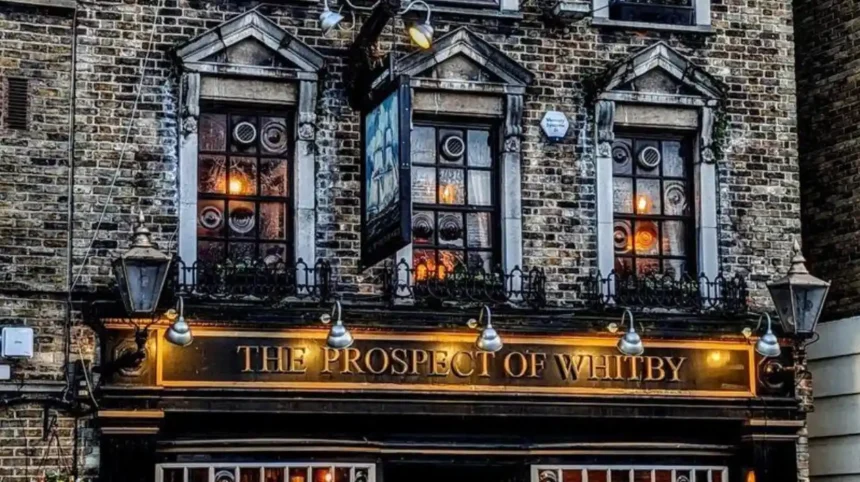
The Prospect of Whitby is a historic riverside pub in Wapping, traditionally associated with a tavern dating to around 1520. Its surviving building is Grade II listed and recognised for its historical connections with London’s waterfront and maritime communities.
The Prospect of Whitby is one of Tower Hamlets’ best-known historic public houses. It stands at 57 Wapping Wall, close to the River Thames.
The establishment was formerly known as the Devil’s Tavern until 1777. Its historical associations include sailors, river thieves, smugglers and the diarist Samuel Pepys. The London Museum records its long-standing riverside history and the surviving flagstone flooring.
Historic England lists the building at Grade II. Its architectural description identifies yellow brickwork, a three-storey frontage and a riverside balcony. The listing recognises its importance as a surviving historic riverside inn. Historic England
Visitors can explore the surrounding Wapping waterfront before entering the pub. The location provides an opportunity to understand how traditional public houses served London’s river-based economy.
Why Is the Town of Ramsgate Important to Wapping?
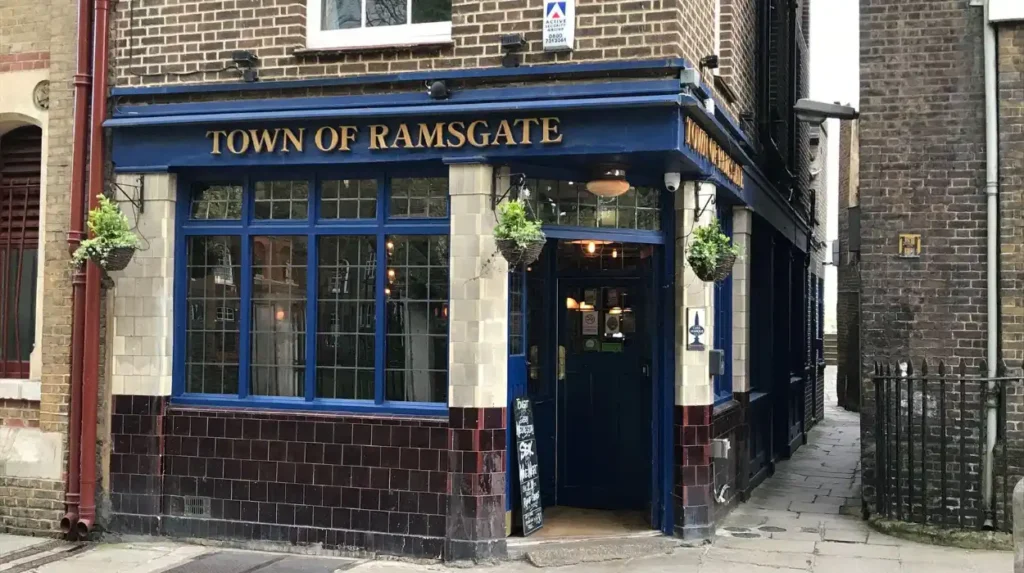
The Town of Ramsgate is a traditional Wapping public house associated with the neighbourhood’s historic tavern culture. Its position on Wapping High Street connects the establishment with a street that developed around sailors, shipping businesses and riverside trade.
The Town of Ramsgate is particularly relevant to visitors interested in the historic character of Wapping High Street.
The street once contained numerous taverns serving the waterfront population. The Town of Ramsgate is identified by Tower Hamlets Council as the surviving establishment from the 36 taverns recorded there in 1750.
Its riverside setting makes it a useful stop during a walk between Wapping’s historic streets and former dock areas.
Visitors can combine the pub with a visit to Old Wapping Stairs and Wapping Pierhead. These locations preserve important connections with the borough’s maritime landscape.
What Makes the Ten Bells a Historic Spitalfields Pub?
The Ten Bells is a historic public house on Commercial Street in Spitalfields. Its significance comes from its connection with nineteenth-century East End social history, the surrounding market district and the area’s association with Victorian London.
The Ten Bells stands near Brick Lane and Old Spitalfields Market. Its location places it within one of East London’s most historically significant commercial neighbourhoods.
The pub is widely associated with the history of Victorian Spitalfields and the Jack the Ripper murders of 1888. Visitors should distinguish documented historical events from later interpretations and popular crime-tour narratives.
Its location also makes it convenient for exploring Commercial Street, Fournier Street and the surrounding market district.
The surrounding neighbourhood contains historic religious buildings, Georgian houses, former commercial premises and traditional street layouts.
What Is the Historical Significance of the Blind Beggar?
The Blind Beggar is a well-known Whitechapel public house with connections to East London’s working-class history. Its location on Whitechapel Road places it within a historic commercial neighbourhood shaped by markets, migration and industrial employment.
The Blind Beggar is particularly recognised for its association with the East End’s twentieth-century social history.
It is also connected with the 1966 murder of gangster Ronnie Kray’s associate George Cornell, an event that contributed to the pub’s notoriety.
The surrounding Whitechapel Road has a much longer history as a commercial and transport route. Visitors can combine the pub with a walk towards Whitechapel Market, Altab Ali Park and the Whitechapel Art Gallery.
Why Should Visitors Include The Grapes in Limehouse?
The Grapes is a historic Limehouse public house on Narrow Street, a traditional riverside route associated with London’s maritime and dockland communities. Its location connects visitors with the history of waterfront employment, shipping and residential life.
The Grapes stands on Narrow Street, where historic buildings and riverside development preserve Limehouse’s distinctive character.
The surrounding neighbourhood developed through centuries of maritime activity. Its streets served residents, sailors, merchants and people working in nearby docks and warehouses.
The Grapes is also associated with literary history and writer Charles Dickens. Visitors interested in the historical connections of Limehouse can explore the surrounding waterfront and former dockland buildings.
Narrow Street is particularly suitable for visitors seeking a quieter heritage walk away from the busiest commercial areas of Spitalfields and Brick Lane.
Which Traditional Streets Best Represent Tower Hamlets’ History?
Tower Hamlets contains several historic streets that preserve the borough’s architectural and cultural identity. Fournier Street, Brick Lane, Wapping High Street, Narrow Street, Commercial Street and Artillery Passage provide examples of Georgian housing, maritime development and traditional commerce.
The borough’s historic streets developed for different purposes. Some supported international trade and market activity, while others accommodated dock workers, merchants and growing residential communities.
Walking through these neighbourhoods allows visitors to examine how architectural styles and commercial activities changed over time.
What Can Visitors Discover Along Fournier Street?
Fournier Street is one of the most architecturally significant streets in Spitalfields. It contains surviving early eighteenth-century houses associated with the development of the Georgian neighbourhood.
The street was developed after 1718 on land previously used as market gardens. Its buildings feature sash windows, decorative doorways, brick façades and classical architectural details.
Many houses were originally occupied by wealthy Huguenot silk merchants. French Protestant refugees, known as Huguenots, established communities in Spitalfields following religious persecution in France.
The buildings later experienced industrial use and deterioration. Conservation work helped preserve much of their historic architectural character.
Tower Hamlets Council identifies the Fournier Street area as an important conservation area containing significant early Georgian architecture.
Visitors can also explore nearby Christ Church Spitalfields, designed by architect Nicholas Hawksmoor. Construction began in 1714, and the church was completed in 1729.
The street provides a useful starting point for understanding the relationship between migration, architecture and commercial development in East London.
Why Is Brick Lane Important to East London’s Cultural Heritage?
Brick Lane is one of Tower Hamlets’ most recognisable streets. It reflects centuries of migration, religious change, market commerce, food culture and independent retail.
The neighbourhood developed through successive communities. French Huguenots established themselves in the surrounding area during the seventeenth and eighteenth centuries. Jewish migrants from Eastern Europe became prominent in the late nineteenth and early twentieth centuries. Bangladeshi communities later transformed the street’s cultural and commercial identity.
One of the most significant buildings is the Brick Lane Jamme Masjid, also known as the Brick Lane Mosque. Its history demonstrates the changing religious communities of Spitalfields.
The building was constructed as a French Huguenot chapel in 1744. It became a Methodist chapel in 1819 and was converted into a synagogue in 1897. In 1976, it became a mosque serving the expanding local Muslim community.
Today, Brick Lane is known for restaurants, cafés, independent fashion businesses, street art and market activity. Its commercial character reflects the area’s multicultural development.
Visitors can also explore the nearby Old Truman Brewery, which preserves connections with the area’s brewing industry.
What Makes Wapping High Street a Historic Walking Destination?
Wapping High Street preserves the character of an old riverside settlement. Its history is connected with London’s shipping industry, sailors, waterfront businesses and traditional taverns.
The street was first laid out in 1570. Its historic development was closely associated with maritime employment and the expansion of London’s river trade.
During the eighteenth century, Wapping became known for its concentration of taverns and sailors’ accommodation. Tower Hamlets Council records 36 taverns along the street in 1750. Tower Hamlets
Old Wapping Stairs is another important historic feature. These stairs provided access between the riverside and the surrounding streets.
Wapping Pierhead also deserves attention. Its houses were constructed between 1811 and 1813 beside the entrance to the original London Docks.
The area provides a practical walking route for visitors interested in historic waterfront buildings and traditional public houses.
What Is Special About Narrow Street in Limehouse?
Narrow Street is a historic Limehouse road with strong connections to London’s maritime economy. Its surviving buildings and riverside position illustrate the relationship between residential development, shipping and dockland employment.
Limehouse developed as a settlement associated with maritime industries, warehouses and waterfront businesses.
Narrow Street contains historic properties that reflect different periods of development. Its traditional buildings contrast with the newer residential developments found along parts of the former dockland landscape.
The street also provides access to The Grapes and nearby riverside walking routes.
Visitors interested in literary history can explore the area’s associations with Charles Dickens and nineteenth-century descriptions of London’s riverside neighbourhoods.
Why Should Visitors Explore Artillery Passage?
Artillery Passage is a historic pedestrian passage in Spitalfields known for its narrow street layout and surviving older buildings. It provides an example of the smaller commercial routes that developed around London’s historic markets.
The passage sits within an area shaped by centuries of trading and commercial activity.
Its narrow proportions, older façades and independent businesses create a different experience from the larger surrounding roads.
The location is particularly useful for visitors exploring Spitalfields on foot. It connects with the wider historic street network around Bishopsgate, Brushfield Street and Commercial Street.
Tower Hamlets includes Artillery Passage among its designated conservation areas, recognising its architectural and historical character.
How Can Visitors Explore Tower Hamlets’ Historic Markets and Commercial Streets?
Visitors can explore Tower Hamlets’ commercial heritage through Brick Lane, Old Spitalfields Market, Whitechapel Market and Roman Road. These destinations preserve connections with traditional trading, independent businesses, immigrant communities and the borough’s historic neighbourhood economies.
Markets have played an important role in the development of East London. They provided access to food, clothing, household goods and specialist products.
Traditional commercial streets also supported local employment and community interaction. Their shops and market stalls reflect changes in consumer demand and population.
What Can Visitors Experience at Old Spitalfields Market?
Old Spitalfields Market is an important commercial destination in the historic Spitalfields neighbourhood. The market combines traditional market heritage with contemporary retail, independent traders and food businesses.
The site has a market history dating to the seventeenth century. King Charles II licensed a market there in 1682.
The present Victorian market buildings were constructed between 1883 and 1893. The market historically served London’s fruit and vegetable trade before closing in 1986 and being redeveloped for new commercial uses.
Visitors can explore the market’s architecture, food outlets, independent retailers and surrounding streets.
Why Is Whitechapel Market Significant?
Whitechapel Market is a traditional East London shopping destination with connections to the area’s working-class and multicultural communities.
The market is situated along Whitechapel Road, an important commercial route in Tower Hamlets.
Its trading environment reflects the influence of successive migrant communities and the continued importance of affordable local shopping.
Visitors can explore food stalls, clothing retailers and nearby cultural attractions. The Whitechapel Art Gallery and Altab Ali Park provide additional points of interest within the neighbourhood.
What Is the Role of Roman Road in Tower Hamlets’ Local History?
Roman Road is a traditional East London commercial street associated with local shopping, market trading and residential community life.
The area is particularly relevant to visitors interested in neighbourhood commerce beyond the major tourist destinations.
Its market and surrounding businesses provide a view of everyday life in Bow and the wider borough.
Tower Hamlets Council identifies Roman Road East and Roman Road West among its district high streets. The council’s high-street programme also recognises the importance of maintaining local retail centres and supporting community businesses.

How Can Visitors Plan a Historic Pubs and Streets Walking Tour in Tower Hamlets?
Visitors can explore Tower Hamlets through separate walking routes covering Spitalfields, Whitechapel, Wapping and Limehouse. Each route combines historic streets, traditional public houses, market buildings and architectural landmarks within a manageable neighbourhood itinerary.
The most practical approach is to explore nearby attractions together rather than travelling repeatedly between distant parts of the borough.
A walking itinerary also allows visitors to examine historic façades, street layouts and smaller heritage details that are easily missed when travelling by vehicle.
Which Route Is Suitable for Exploring Spitalfields?
A Spitalfields heritage walk can begin at Liverpool Street or Aldgate East station.
The route can include:
- Old Spitalfields Market.
- Commercial Street.
- The Ten Bells.
- Fournier Street.
- Christ Church Spitalfields.
- Brick Lane.
- Artillery Passage.
This route introduces visitors to Georgian architecture, Victorian commercial development, traditional pubs and multicultural street culture.
Visitors should allow approximately two to three hours, depending on time spent in markets, shops and historic buildings.
How Can Visitors Explore Wapping’s Maritime Heritage?
Wapping offers a route focused on the history of London’s waterfront.
Visitors can begin near Wapping station and explore:
- Wapping High Street.
- Town of Ramsgate.
- Old Wapping Stairs.
- Wapping Pierhead.
- Prospect of Whitby.
- The former London Docks area.
The route provides an understanding of the relationship between traditional taverns, shipping and riverside employment.
The Prospect of Whitby is a particularly useful stopping point because its listed building preserves documented architectural features associated with the historic waterfront.
What Should Visitors Include in a Limehouse Heritage Walk?
Limehouse is suitable for visitors interested in quieter historic streets and riverside architecture.
A route can include Narrow Street, The Grapes, Limehouse Basin and nearby sections of the Thames Path.
Limehouse Basin provides a connection between the Thames and London’s historic canal and dock network.
Visitors can examine the surviving historic buildings alongside modern residential developments. This contrast illustrates the transformation of former industrial waterfront areas into contemporary urban neighbourhoods.
How Does Tower Hamlets Preserve Its Historic Pubs and Traditional Streets?
Tower Hamlets preserves its historic environment through conservation areas, listed-building protection, local heritage policies and archival research. These mechanisms recognise buildings, streets and public spaces with architectural or historical importance and guide future development.
Heritage protection is important because historic neighbourhoods experience continuous development and changes in land use.
Conservation policies help maintain the character of traditional streets while allowing appropriate improvements to buildings and public spaces.
What Is a Conservation Area?
A conservation area is a location recognised for special architectural or historical interest. Local planning authorities have a legal duty to preserve or enhance its character and appearance.
Tower Hamlets has 58 conservation areas. Each has an adopted character appraisal and management guidelines explaining its heritage significance and the considerations relevant to future development.
Examples include:
- Brick Lane and Fournier Street.
- Wapping Pierhead.
- Narrow Street.
- Artillery Passage.
- Stepney Green.
- Whitechapel High Street.
- Roman Road Market.
These areas protect different aspects of the borough’s historic identity.
How Does Listed-Building Protection Work?
Listed-building protection recognises buildings with special architectural or historical interest.
Historic England maintains the National Heritage List for England, which records protected buildings and other heritage assets.
The Prospect of Whitby is an example of a Grade II listed public house in Tower Hamlets.
Listed status means that alterations affecting a building’s special architectural or historic character require the appropriate planning consent.
Where Can Visitors Research the History of Tower Hamlets’ Streets?
Tower Hamlets Local History Library and Archives provides resources for people researching the borough’s buildings, streets and communities.
Its collections include historical documents dating from 1384, photographs, maps, plans, newspapers and publications.
Visitors and researchers can investigate how individual streets developed, identify former businesses and examine the experiences of different communities.
The archive also provides material about local industries, migration and the changing East End landscape.
For visitors who want to explore the borough beyond its well-known attractions, these historical collections provide a useful starting point for understanding its development.
Explore More Area Guide
Tower Hamlets Public Squares: Modern Urban Landscapes in East London
Where to Explore Independent Galleries in Tower Hamlets
How Has Modern Development Changed Tower Hamlets’ Historic Character?
Modern development has transformed Tower Hamlets through residential regeneration, commercial investment and improvements to public spaces. Historic pubs, traditional streets and protected buildings remain important features of neighbourhood identity alongside contemporary housing and business developments.
Former docklands have experienced significant redevelopment. Areas once dominated by warehouses, shipping facilities and industrial premises now contain residential buildings, offices, restaurants and leisure destinations.
However, historic streets continue to provide a connection with earlier periods of urban development.
Spitalfields demonstrates how historic architecture operates alongside modern retail and hospitality businesses. Wapping combines former dockland buildings with contemporary riverside housing. Limehouse retains traditional streets beside redeveloped waterfront areas.
These changes create an important planning consideration: preserving architectural character while supporting modern economic and residential requirements.
Why Is Heritage Important for Local Tourism?
Historic pubs and traditional streets contribute to Tower Hamlets’ tourism economy by attracting visitors interested in architecture, food, local history and cultural experiences.
Heritage tourism also supports surrounding businesses. Visitors exploring Brick Lane, Spitalfields and Wapping use local restaurants, cafés, shops and public houses.
Traditional pubs provide opportunities to experience British hospitality while learning about the social history of individual neighbourhoods.
The borough’s conservation areas also give visitors identifiable heritage destinations. Their protected streets and buildings distinguish Tower Hamlets from newer urban districts.
What Is the Future of Historic Streets in Tower Hamlets?
The future of Tower Hamlets’ historic streets depends on effective conservation, appropriate development and continued community participation.
Maintaining historic buildings requires regular maintenance and responsible alterations. Commercial streets also need viable businesses, accessible public spaces and suitable infrastructure.
The borough’s conservation policies provide a framework for managing these responsibilities.
Continued investment in local archives, heritage interpretation and walking routes will also help residents and visitors understand the historical importance of the area.
How Can Visitors Connect Tower Hamlets’ Historic Past With Its Modern Attractions?
Visitors can understand Tower Hamlets more completely by combining historic pubs and traditional streets with modern markets, cultural attractions and regenerated waterfront spaces. This approach reveals how the borough’s maritime, commercial and multicultural heritage continues shaping contemporary East London.
The borough’s historic environment is not separate from its modern identity. Brick Lane’s commercial activity, Wapping’s waterfront and Spitalfields’ independent businesses all reflect different stages of local development.
Visitors exploring these places encounter buildings and streets shaped by migration, trade, industry and changing lifestyles.
For a deeper understanding of these neighbourhoods, explore the [Historical Development of Tower Hamlets and Its East London Communities] to discover how migration, docklands, industry and urban expansion shaped the borough’s present-day identity.
Combining historical research with an in-person walking tour provides a broader understanding of the area’s architectural and cultural significance.
Tower Hamlets offers visitors an extensive introduction to East London’s historic pub culture and traditional streets. The Prospect of Whitby and Town of Ramsgate preserve connections with Wapping’s maritime past, while the Ten Bells and Blind Beggar reflect the social history of Spitalfields and Whitechapel.
Fournier Street, Brick Lane, Narrow Street and Wapping High Street provide further opportunities to explore historic architecture, traditional markets and changing neighbourhood identities.
With 58 designated conservation areas, the borough has a substantial protected historic environment. Its combination of historic buildings, riverside routes, commercial streets and multicultural attractions makes Tower Hamlets an important destination for visitors interested in London’s heritage.
What are the most famous historic pubs in Tower Hamlets?
Some of the best-known historic pubs in Tower Hamlets include the Prospect of Whitby in Wapping, the Town of Ramsgate, the Ten Bells in Spitalfields, the Blind Beggar in Whitechapel and The Grapes in Limehouse. Each has connections with East London’s social and maritime history.