Tower Hamlets is one of East London’s most historically significant boroughs. Its streets preserve the architectural, commercial and social history of Victorian London. From nineteenth-century terraced houses in Stepney to historic warehouses in Wapping, the borough offers visitors a detailed view of how the East End developed during Britain’s industrial expansion.
- What Makes Tower Hamlets Important to Victorian Architectural Heritage?
- How Did Victorian Industry Shape Tower Hamlets’ Historic Streets?
- Which Historic Streets in Spitalfields Preserve Victorian and East End Architecture?
- Fournier Street and Its Historic Townhouses
- Brick Lane and the Changing East End
- Elder Street and Georgian-Victorian Urban Character
- Where Can Visitors Find Victorian Terraced Houses in Bethnal Green?
- Driffield Road and Its Victorian Terraces
- Globe Road and Traditional East End Housing
- Why Victorian Terraced Housing Matters
- What Historic Buildings Should Visitors Explore in Stepney and Whitechapel?
- The Former Royal London Hospital
- Whitechapel High Street and Historic Commercial Buildings
- Historic Religious Buildings and Community Heritage
- What Victorian Heritage Can Visitors Discover in Limehouse and Wapping?
- Narrow Street and Limehouse’s Historic Character
- Limehouse Town Hall
- Wapping’s Historic Dockland Streets
- What Is the History of the Boundary Estate and Arnold Circus?
- How Does Tower Hamlets Protect Its Victorian Buildings and Historic Streets?
- What Is a Conservation Area?
- What Is a Listed Building?
- How Can Visitors Identify Protected Buildings?
- How Can Visitors Explore Tower Hamlets’ Victorian Heritage on a Walking Tour?
- Why Is Tower Hamlets’ Victorian Heritage Still Relevant Today?
The London Borough of Tower Hamlets sits immediately east of the City of London and includes historic neighbourhoods such as Whitechapel, Spitalfields, Bethnal Green, Stepney, Limehouse, Poplar and Wapping. Each neighbourhood reflects a different stage of London’s urban development. Victorian architecture remains particularly visible in residential terraces, former commercial buildings, religious institutions, public houses and streets associated with the docks.
The borough’s heritage also reflects the lives of working-class communities, dockworkers, merchants, craftspeople and immigrant populations. These communities shaped its distinctive streets, markets and buildings throughout the nineteenth century.
According to Tower Hamlets Council, the borough contains 58 designated conservation areas, each supported by an adopted character appraisal and management guidelines. These designations help protect the architectural and historic character of important neighbourhoods. towerhamlets.gov.uk+1
For visitors interested in Victorian architecture, historic streets and East End history, Tower Hamlets provides opportunities to explore London’s nineteenth-century development through surviving buildings and preserved streetscapes.
What Makes Tower Hamlets Important to Victorian Architectural Heritage?
Tower Hamlets is important to Victorian architectural heritage because its historic neighbourhoods preserve nineteenth-century housing, commercial buildings, religious institutions and industrial structures. Its architecture reflects the growth of London’s docks, expanding population, working-class communities and commercial activity.
During the Victorian period, between 1837 and 1901, Tower Hamlets experienced substantial urban expansion. Industrialisation increased employment opportunities around the River Thames and the expanding docklands. Thousands of workers moved into the East End to find employment in shipping, manufacturing, construction, retail and related industries.
This population growth increased demand for affordable housing, public services, schools, places of worship and commercial premises. Developers constructed rows of terraced houses, while businesses established warehouses, workshops and shops along important roads.
The resulting architecture reflected the economic position of the neighbourhood. Wealthier merchants occupied larger properties, while dockworkers and industrial employees often lived in smaller terraced houses and densely populated courts.
Victorian architecture in Tower Hamlets therefore represents more than decorative building styles. It records the economic and social organisation of nineteenth-century East London.
How Industrialisation Changed the Borough
The expansion of the Port of London influenced the development of surrounding neighbourhoods. The West India Docks, East India Docks and London Docks created employment opportunities and encouraged commercial investment.
Roads connecting the docks with the City of London became important transport corridors. Commercial Road, Whitechapel Road and other major streets developed into busy commercial routes.
Warehouses, public houses, shops and residential buildings appeared along these routes. Their architectural features reflected the practical requirements of a rapidly expanding industrial economy.
What Architectural Features Define Victorian Buildings?
Victorian buildings in Tower Hamlets commonly feature:
- Red and yellow London stock brick.
- Decorative brickwork around windows and entrances.
- Sash windows and traditional timber doors.
- Bay windows on residential terraces.
- Cast-iron railings and balconies.
- Slate roofs and brick chimneys.
- Ornamental stonework and stucco detailing.
Not every building displays all these characteristics. Commercial premises often feature larger windows, decorative façades and shopfronts, while residential properties generally have more restrained architectural details.
These features help visitors identify nineteenth-century buildings throughout the borough.
How Did Victorian Industry Shape Tower Hamlets’ Historic Streets?
Victorian industrial expansion transformed Tower Hamlets through new roads, warehouses, housing developments and commercial districts. Streets connected factories and docks with residential neighbourhoods, creating dense urban communities that supported London’s expanding port economy.
The nineteenth century was a period of major physical change across the East End. The growth of shipping and manufacturing increased demand for accessible roads and commercial premises.
Commercial Road provides an important example of this transformation. Constructed between 1802 and 1806, it connected the West India Docks and East India Docks with the City of London. It originally operated as a toll road before becoming a public road during the 1860s. towerhamlets.moderngov.co.uk+1
Although Commercial Road predates Queen Victoria’s accession, its surrounding development became closely associated with Victorian East London.
By the nineteenth century, the road supported shops, warehouses, residential terraces and other commercial premises. Its position between the City and the docks made it an important movement corridor.
Commercial Road and Its Victorian Buildings
The Commercial Road Conservation Area preserves surviving examples of Victorian townscape.
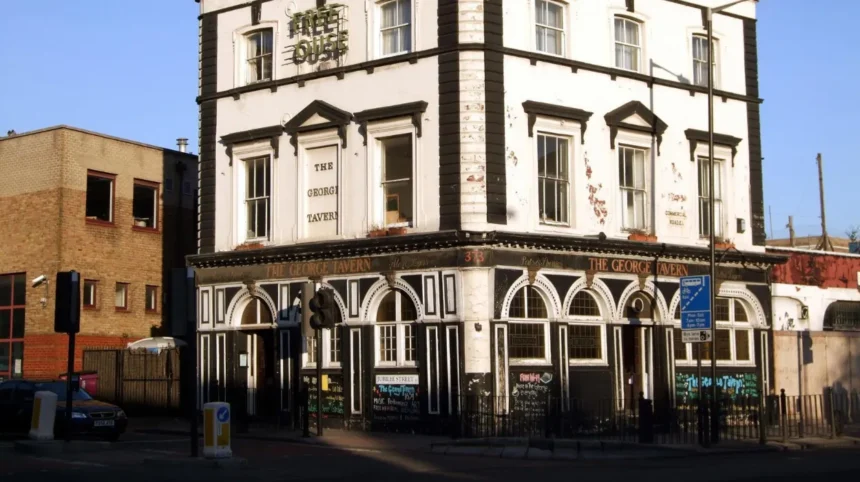
Important architectural features include the listed terraces at 300–334 Commercial Road and 1–11 Dean Cross Street. The George Tavern, a Grade II listed public house, forms part of this historic group.
The area also includes the former synagogue and the Grade II listed St Mary and St Michael Church. Together, these buildings demonstrate the residential, commercial and religious character of nineteenth-century East London. towerhamlets.moderngov.co.uk
Visitors exploring Commercial Road can observe how historic buildings survive alongside modern commercial developments and transport infrastructure.
Whitechapel Road and Its Commercial Heritage
Whitechapel Road developed as one of the East End’s most important commercial streets. Its location attracted retailers, traders, public institutions and businesses serving the surrounding population.
The street contains buildings from different periods, including eighteenth-century commercial properties and nineteenth-century Victorian structures.
Tower Hamlets’ urban characterisation study identifies Whitechapel Road as a historically significant east-west route. Its surviving buildings illustrate the area’s changing commercial importance.
The former Gardiner’s department store once dominated the junction between Whitechapel High Street and Commercial Road. Known as Gardiner’s Corner, the location became an important commercial landmark before the building disappeared in 1972.
Which Historic Streets in Spitalfields Preserve Victorian and East End Architecture?
Spitalfields preserves important historic streets containing Victorian commercial premises, traditional terraces and earlier Georgian buildings. Fournier Street, Brick Lane, Elder Street and surrounding streets demonstrate the architectural development of this East London neighbourhood.
Spitalfields is one of the most recognisable historic districts in Tower Hamlets. Its architectural character reflects several centuries of migration, textile production, trade and urban development.
The neighbourhood became associated with Huguenot silk weavers during the late seventeenth and eighteenth centuries. Their settlement influenced the area’s textile economy and residential architecture.
During the Victorian period, Spitalfields continued to accommodate commercial businesses, workshops and working-class communities. Its streets became increasingly associated with markets, clothing production and the wider East End economy.
Fournier Street and Its Historic Townhouses
Fournier Street is known for its well-preserved eighteenth-century townhouses and architectural connection to the Huguenot silk-weaving community.
Although much of its best-known architecture predates the Victorian period, the street helps explain the foundations of Spitalfields’ later nineteenth-century development.
Its houses feature brick façades, sash windows, decorative door surrounds and traditional rooflines. Christ Church Spitalfields, designed by Nicholas Hawksmoor and completed in the eighteenth century, provides an important architectural landmark nearby.
The street demonstrates why Victorian heritage should be understood within a broader historical context. Nineteenth-century businesses and residents occupied an urban environment shaped by earlier architectural traditions.
Brick Lane and the Changing East End
Brick Lane connects Spitalfields with Bethnal Green and remains one of East London’s most recognisable historic streets.
Its development reflects changing patterns of migration and employment. Huguenot, Jewish and Bengali communities contributed to the area’s commercial and cultural identity.
The street’s buildings include former industrial premises, warehouses, shops and residential properties. Former brewery buildings also reflect the area’s manufacturing history.
The Brick Lane and Fournier Street Conservation Area protects important architectural and historic features across this district.
Visitors can combine architectural exploration with a visit to the street’s markets, independent businesses and cultural landmarks.
Elder Street and Georgian-Victorian Urban Character
Elder Street provides another example of Spitalfields’ historic residential environment.
Its traditional townhouses and surviving street layout reflect the area’s development before and during the nineteenth century. The street is particularly valuable for understanding how older residential properties remained part of the Victorian East End.
The surrounding conservation area includes buildings that illustrate the transition between Georgian and Victorian architectural traditions.
Where Can Visitors Find Victorian Terraced Houses in Bethnal Green?
Bethnal Green contains some of Tower Hamlets’ best-preserved Victorian residential streets. Driffield Road, Globe Road and surrounding conservation areas feature traditional terraced houses, decorative brickwork, original architectural details and historic residential layouts.
Bethnal Green developed rapidly during the nineteenth century as London’s population expanded eastwards. Its location near commercial districts and industrial employment centres attracted working-class families, tradespeople and small business owners.
Developers constructed residential streets to accommodate this growing population. Many properties followed a consistent terrace layout, creating continuous building frontages and clearly defined residential streets.
Driffield Road and Its Victorian Terraces
Driffield Road is one of the most valuable locations for exploring Victorian residential architecture in Tower Hamlets.
The Driffield Road Conservation Area was designated in January 1988 and extended in October 2008 to include Chisenhale Road. Its character appraisal identifies the architectural qualities, historic development and features that require protection. towerhamlets.gov.uk
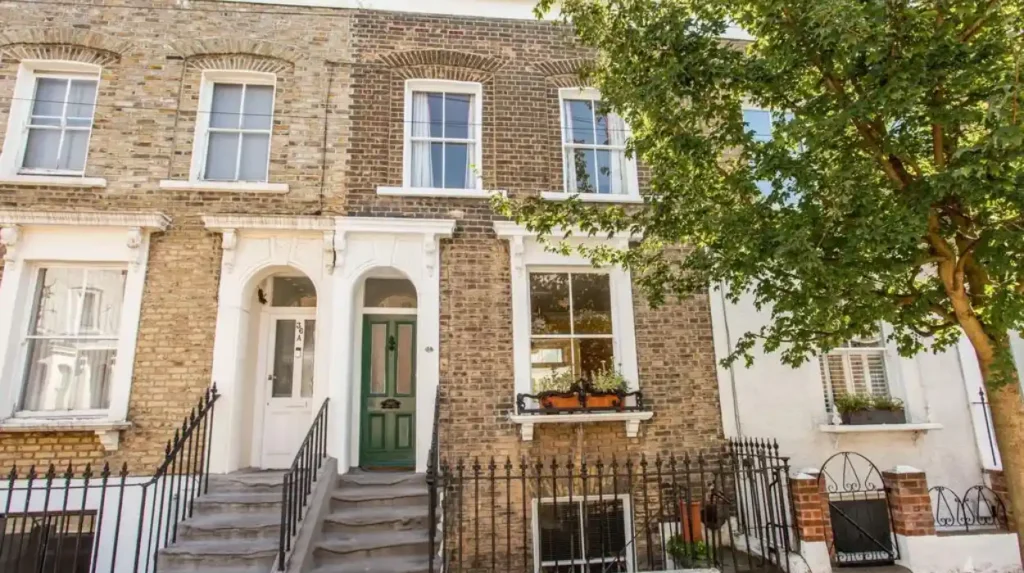
The area’s residential architecture includes traditional brick terraces, decorative façades, sash windows and historic boundary treatments.
Visitors can examine how individual properties maintain a consistent architectural appearance while displaying differences in entrances, windows and decorative details.
The surrounding residential streets also provide an opportunity to understand how nineteenth-century housing developments shaped the East End’s neighbourhood structure.
Globe Road and Traditional East End Housing
Globe Road is another useful location for understanding Bethnal Green’s historic residential character.
Its surroundings contain traditional housing, local commercial premises and buildings associated with the area’s development as a working-class neighbourhood.
The street’s location connects residential parts of Bethnal Green with other historic districts of East London.
A visit to Globe Road provides additional context for understanding the relationship between Victorian housing, employment and neighbourhood services.
Why Victorian Terraced Housing Matters
Victorian terraced houses represent an important stage in London’s housing development.
Their repeated layouts allowed builders to accommodate growing populations within relatively limited urban space. Many properties contained multiple floors, separate living spaces and small rear yards.
The survival of these buildings provides evidence of nineteenth-century domestic architecture and changing housing standards.
What Historic Buildings Should Visitors Explore in Stepney and Whitechapel?
Stepney and Whitechapel preserve important religious, institutional and commercial buildings from different periods. Their Victorian heritage includes former hospital buildings, churches, public houses and historic terraces associated with the development of East London’s working communities.
Stepney and Whitechapel played important roles in the social and economic development of the East End.
Their historic buildings reflect population growth, migration, religious diversity, medical development and commercial activity.
Whitechapel became an important destination for immigrant communities, including German, Irish, Eastern European Jewish and Bengali populations. Its history is closely connected with employment, trade and changing patterns of settlement. University College London
The Former Royal London Hospital
The former Royal London Hospital is one of Whitechapel’s most important historic institutional sites.
The hospital was established in 1740 as the London Infirmary and moved to Whitechapel in the eighteenth century. Its nineteenth-century expansion reflected the growing medical requirements of East London’s population.
The Alexandra Wing opened in 1866, while the Grocers’ Company Wing opened in 1876. Both were designed by Charles Barry Jr. Further development around 1900 was overseen by hospital surveyor Rowland Plumbe. UCL The Survey of London
These buildings illustrate the relationship between Victorian architecture and the development of public healthcare.
The former hospital site is also included within the borough’s heritage conservation framework.
Whitechapel High Street and Historic Commercial Buildings
Whitechapel High Street preserves architectural evidence of the area’s long commercial history.
The street contains historic properties from different periods, including nineteenth-century buildings associated with retail and business activity.
The Whitechapel High Street Conservation Area appraisal identifies buildings such as 102–105 Whitechapel High Street and 2 Commercial Street as examples of the area’s commercial architectural development.
The Victorian Church of St Mary Whitechapel was rebuilt between 1875 and 1878, then reconstructed again in 1880 following serious fire damage. The building was later destroyed during the Second World War. towerhamlets.gov.uk
This history demonstrates how architectural heritage includes both surviving structures and documented buildings that no longer exist.
Historic Religious Buildings and Community Heritage
Religious buildings provide important evidence of Tower Hamlets’ changing population and cultural identity.
Churches, former synagogues and other places of worship served communities throughout the nineteenth century. Their architectural styles and locations reflect the religious and social development of individual neighbourhoods.
St George in the East is an important historic church in the Shadwell area. The church was designed by Nicholas Hawksmoor and completed in the early eighteenth century. Its later history reflects the continuing religious life of the Victorian East End.
The former synagogue on Commercial Road also contributes to the area’s record of religious diversity.
Visitors exploring these buildings gain a wider understanding of how migration, employment and religious institutions shaped East London.
What Victorian Heritage Can Visitors Discover in Limehouse and Wapping?
Limehouse and Wapping preserve historic dockland architecture through warehouses, riverside streets, former industrial buildings and residential properties. Their heritage reflects nineteenth-century shipping, maritime trade and the communities that supported London’s expanding port economy.
The River Thames played a central role in the development of Limehouse and Wapping.
During the Victorian period, London’s docks handled substantial volumes of imported and exported goods. Warehouses, wharves, workshops and transport facilities supported the movement of commodities through the port.
The surrounding streets accommodated dockworkers, merchants, sailors and business owners.
Although redevelopment transformed much of the dockland landscape during the twentieth century, historic buildings and street patterns remain visible.
Narrow Street and Limehouse’s Historic Character
Narrow Street is one of Limehouse’s most recognisable historic streets.
Its buildings reflect the area’s relationship with river transport, shipping and commercial storage. Former warehouses and industrial properties demonstrate how the riverside supported London’s trading economy.
The Narrow Street Conservation Area protects the historic character of the area.
Some warehouse buildings were converted into residential properties during the Docklands redevelopment period of the 1970s. The conversion of buildings at 22–28 Narrow Street forms part of this architectural transition.
The street provides a clear example of how former industrial buildings gained new uses while retaining their historic architectural character.
Limehouse Town Hall
Limehouse Town Hall is an important Victorian public building on Commercial Road.
Constructed in 1881, the building features brick construction and stone detailing. It is Grade II listed and forms part of the St Anne’s Church Conservation Area.
Its original civic function connected it with local government and community administration. Its subsequent conversion into a cultural venue demonstrates how historic institutional buildings continue to support modern activities.
The building is particularly relevant to visitors interested in Victorian public architecture.
Wapping’s Historic Dockland Streets
Wapping contains a distinctive combination of riverside warehouses, historic streets and former maritime buildings.
Its location beside the Thames made it an important part of London’s dock economy. Warehouses stored imported goods, while wharves provided facilities for loading and unloading ships.
The Wapping Pierhead Conservation Area preserves an important part of this historic environment.
The surrounding architecture demonstrates the relationship between the river, commercial buildings and residential development.
Free Trade Wharf is another significant dockland structure. Although it dates from 1796 rather than the Victorian period, its subsequent conversion into offices and residential accommodation illustrates the reuse of historic waterfront buildings.
Visitors can explore the riverside streets and observe the contrast between traditional warehouse architecture and modern residential development.
What Is the History of the Boundary Estate and Arnold Circus?
The Boundary Estate is a landmark in East London’s housing history. Built between 1894 and 1900, it replaced the Old Nichol slum with planned residential blocks, landscaped public space and community facilities. Arnold Circus forms its architectural centrepiece.
The Boundary Estate stands near the border of Bethnal Green and Shoreditch. It represents an important development in London’s approach to public housing and urban improvement.
Before its construction, the area contained the Old Nichol, a densely populated neighbourhood associated with poor housing conditions and overcrowding.
The Housing of the Working Classes Act 1890 provided an important legislative framework for local authority housing intervention.
The London County Council developed the Boundary Street improvement scheme to replace the existing housing with purpose-built accommodation.
How Was the Boundary Estate Designed?
Construction took place between 1894 and 1900. The completed estate included five-storey residential blocks arranged around Arnold Circus, a raised central garden with a bandstand.
The London Archives identifies the Boundary Estate as the world’s first council housing estate.
Its original facilities included 18 shops, a surgery, workshops, a central laundry with bathrooms and clubrooms. The estate provided 1,069 residences for approximately 5,524 people when officially opened in 1900.
The design incorporated improved accommodation and shared facilities within a planned residential environment.
Why Is Arnold Circus Historically Important?
Arnold Circus provides the central public space of the Boundary Estate.
Its raised circular garden, historic bandstand and surrounding residential blocks create a distinctive architectural arrangement.
The estate’s buildings and bandstand are Grade II listed. Their protected status recognises the historical and architectural significance of this early public housing development. The London Archives
Visitors can walk around the central garden and examine the surrounding residential façades.
The estate also provides an important opportunity to understand the relationship between Victorian social reform and twentieth-century housing policy.
How Does Tower Hamlets Protect Its Victorian Buildings and Historic Streets?
Tower Hamlets protects its historic environment through conservation area designations, listed building controls, local heritage records and planning policies. These measures help preserve architectural features, historic streetscapes and buildings with recognised cultural and historical significance.
Heritage protection is essential because historic buildings face pressure from redevelopment, alterations, changes of use and modern construction.
Tower Hamlets Council manages these issues through its conservation and urban design policies.
The borough currently has 58 conservation areas. These include Brick Lane and Fournier Street, Commercial Road, Driffield Road, Stepney Green, Whitechapel High Street, Wapping Pierhead and Narrow Street. towerhamlets.gov.uk
What Is a Conservation Area?
A conservation area is a designated location with special architectural or historical interest.
Under Section 69 of the Planning (Listed Buildings and Conservation Areas) Act 1990, local planning authorities designate areas where preserving or enhancing their character and appearance is desirable.
Conservation area controls help protect important features such as:
- Historic building façades, including traditional brickwork and decorative details.
- Original windows and doors, including timber sash windows.
- Historic street layouts, including traditional roads and narrow passageways.
- Boundary features, including railings, walls and traditional entrances.
- Public spaces, including historic squares and gardens.
Tower Hamlets prepares character appraisals and management guidelines for its conservation areas. These documents identify the features that contribute to each area’s significance and guide future development. towerhamlets.gov.uk+1
What Is a Listed Building?
A listed building is a structure recognised for its special architectural or historic interest.
Listed building protection applies to buildings and structures included on the National Heritage List for England. Grade I identifies buildings of exceptional interest, Grade II* identifies particularly important buildings, and Grade II covers buildings of special interest.
Owners generally require listed building consent before carrying out alterations that affect a listed building’s special architectural or historic character.
Tower Hamlets also maintains a Local List. It identifies buildings and structures with local architectural, historical or townscape importance that do not necessarily have statutory listing. towerhamlets.gov.uk
How Can Visitors Identify Protected Buildings?
Visitors can use the Tower Hamlets Council conservation area map and Historic England’s National Heritage List for England.
These resources help identify protected locations, listed structures and historic neighbourhoods.
The council’s conservation area character appraisals also provide useful information about architectural features, building materials and the history of individual streets.
These documents are particularly valuable for visitors planning a self-guided architectural walking tour.
Explore More Area Guide
Explore Bethnal Green Markets: Food, Flowers & Vintage Finds
Where to Discover Historic Railway Architecture in Tower Hamlets
How Can Visitors Explore Tower Hamlets’ Victorian Heritage on a Walking Tour?
Visitors can explore Tower Hamlets’ Victorian heritage through a walking route connecting Whitechapel, Spitalfields, Bethnal Green and Limehouse. This approach combines historic residential streets, commercial buildings, public institutions and former dockland architecture.
Walking provides a practical way to understand the borough’s architectural development.
The following route combines several important heritage locations. Visitors can adjust the route according to available time and transport connections.
Which Locations Should Visitors Prioritise?
Whitechapel Road: Start with Whitechapel’s historic commercial environment. Examine its nineteenth-century buildings and the relationship between the street, market and former hospital.
Commercial Road: Explore surviving Victorian terraces and the historic George Tavern. The surrounding streets provide evidence of nineteenth-century residential and commercial development.
Fournier Street: Continue towards Spitalfields to examine its historic townhouses and architectural relationship with the former textile industry.
Boundary Estate: Visit Arnold Circus to understand the development of early public housing and Victorian social reform.
Driffield Road: Explore traditional residential terraces and the architectural character of Bethnal Green.
Limehouse and Wapping: Finish with historic dockland architecture, riverside warehouses and former commercial buildings.
How Much Time Should Visitors Allow?
A short architectural visit focusing on Whitechapel and Spitalfields requires approximately two to three hours, depending on walking speed and time spent exploring.
A more comprehensive route covering Bethnal Green, Limehouse and Wapping requires a longer day.
Visitors should check public transport connections and opening arrangements for buildings that operate as museums, cultural venues or private premises.
Why Is Tower Hamlets’ Victorian Heritage Still Relevant Today?
Tower Hamlets’ Victorian heritage remains relevant because historic buildings support local identity, tourism, cultural education and architectural conservation. Preserved streets also demonstrate how East London adapted to industrial growth, migration, social reform and modern urban redevelopment.
The borough’s historic environment contributes to its contemporary identity.
Victorian buildings provide evidence of how London developed into a major industrial and commercial centre. Their architectural features also help explain changing standards of housing, healthcare, public administration and religious life.
Heritage Tourism and Local Businesses
Historic streets attract visitors interested in architecture, local history and cultural experiences.
Spitalfields, Brick Lane, Whitechapel and Wapping combine historic buildings with markets, independent shops, restaurants and cultural venues.
This creates opportunities for visitors to explore heritage while supporting local businesses.
The former industrial buildings of Limehouse and Wapping also demonstrate how historic structures accommodate modern commercial and residential uses.
Education and Historical Research
Tower Hamlets’ heritage resources support historical research and education.
The Tower Hamlets Local History Library and Archives preserves documents, photographs, maps and other records relating to the borough.
UCL’s Survey of London provides detailed architectural research on historic neighbourhoods, including Whitechapel.
These resources help researchers understand how streets, buildings and communities changed over time.
Balancing Conservation and Modern Development
Tower Hamlets continues to experience redevelopment and changes in land use.
Historic buildings must be maintained while accommodating modern requirements such as accessibility, energy efficiency and appropriate building services.
Conservation policies help ensure that alterations respect the architectural significance of protected buildings.
For visitors, this ongoing relationship between historic preservation and modern development is one of the defining characteristics of East London’s built environment.
Understanding the Connection Between Past and Present
Tower Hamlets’ contemporary neighbourhoods retain the influence of their nineteenth-century development.
Commercial streets still follow routes established during the expansion of the docks. Residential terraces preserve historic housing patterns, while former warehouses demonstrate the changing use of industrial buildings.
As you explore the modern neighbourhoods, you are crossing streets shaped by generations of East End residents. Discover the full [Insert Anchor Text for Tower Hamlets History Article Here] to understand the origins of the borough’s communities, industries and historic development.
Tower Hamlets offers visitors an extensive collection of historic streets, Victorian terraces, commercial buildings and former industrial properties. From Whitechapel Road and Commercial Road to Driffield Road, Arnold Circus and Narrow Street, its architecture records the transformation of East London during the nineteenth century.
The borough’s 58 conservation areas provide an important framework for protecting its historic environment. Listed buildings, former warehouses, religious institutions and residential streets continue to connect modern communities with their architectural past.
For tourists, architecture enthusiasts and local history researchers, exploring Tower Hamlets provides a practical way to understand London’s Victorian development and the lasting influence of the East End’s industrial heritage.
What are the most famous historic streets in Tower Hamlets?
Some of the best-known historic streets include Fournier Street, Brick Lane, Commercial Road, Whitechapel Road, Driffield Road and Narrow Street. They feature historic townhouses, Victorian terraces, former warehouses and traditional East End architecture.