
Canary Wharf is one of East London’s most recognisable waterfront destinations. Located on the Isle of Dogs in the London Borough of Tower Hamlets, the district combines modern skyscrapers, historic dock basins, landscaped gardens, riverside promenades and contemporary public spaces. Its waterfront reflects a major transformation from an industrial shipping centre into a mixed-use neighbourhood for business, leisure, residential living and tourism.
- What Makes Canary Wharf’s Waterfront Landscape Unique?
- How Did Canary Wharf Transform From Industrial Docks Into a Modern Waterfront?
- How Do the Historic Dock Basins Shape Canary Wharf’s Modern Waterfront?
- What Modern Architectural Developments Define Canary Wharf’s Waterfront?
- Where Can Visitors Explore Canary Wharf’s Waterfront Gardens and Public Spaces?
- How Is Eden Dock Changing the Relationship Between Nature and the Waterfront?
- What Waterfront Walking Routes Can Visitors Explore Around Canary Wharf?
- How Does Public Art Contribute to Canary Wharf’s Waterfront Identity?
- How Has Waterfront Regeneration Changed Leisure and Tourism Around Canary Wharf?
- How Does Transport Infrastructure Connect Canary Wharf’s Waterfront to London?
- What Environmental Challenges Affect Canary Wharf’s Changing Waterfront?
- How Will Future Development Continue to Change Canary Wharf’s Waterfront?
- Why Should Tourists Include Canary Wharf’s Waterfront in an East London Visit?
The changing waterfront landscape around Canary Wharf attracts visitors interested in modern architecture, urban regeneration, outdoor activities and London’s relationship with the River Thames. Former commercial docks now sit alongside landscaped quays, floating gardens, pedestrian routes and buildings designed around public access to the water.
The transformation extends beyond office development. Canary Wharf increasingly functions as a leisure destination, with green spaces, waterfront restaurants, cultural attractions, public art and transport connections. Its combination of preserved dock infrastructure and contemporary construction provides a distinctive example of how London’s former industrial waterfront has adapted to modern urban life.
What Makes Canary Wharf’s Waterfront Landscape Unique?
Canary Wharf’s waterfront is distinctive because it combines historic enclosed docks, contemporary architecture, landscaped public spaces and accessible waterside routes. Its environment connects commercial development with leisure, biodiversity and residential neighbourhoods, creating a modern destination within London’s historic Docklands.
Canary Wharf occupies part of the Isle of Dogs, a peninsula surrounded by the River Thames. Its central development grew around the former West India Docks, which provided an important connection between London’s commercial economy and international maritime trade.
Today, the waterfront consists of several interconnected environments. These include North Dock, South Dock, Blackwall Basin and nearby stretches of the Thames. Each provides a different relationship between buildings, open water and pedestrian movement.
The district’s architectural identity comes from its contrast between vertical and horizontal development. Tall office towers dominate the skyline, while low-level promenades, landscaped squares and dockside paths provide accessible spaces around the water.
The Canary Wharf Estate also includes more than 16.5 acres of green and blue spaces. These areas incorporate landscaped parks, gardens, waterways and outdoor gathering places. Eden Dock, Jubilee Park and Crossrail Place Roof Garden demonstrate how environmental features have become part of the district’s wider development strategy.
The waterfront also supports activities beyond office-based business. Visitors explore outdoor art, attend seasonal events, walk beside the docks and visit restaurants overlooking the water.
This combination makes Canary Wharf different from a conventional financial district. Its identity increasingly depends on the relationship between commercial buildings, public spaces and the historic dockland environment.
How Did Canary Wharf Transform From Industrial Docks Into a Modern Waterfront?
Canary Wharf developed from London’s historic West India Docks into a modern financial and residential district following the decline of commercial shipping. Regeneration from the 1980s introduced offices, transport infrastructure, housing, landscaped spaces and new leisure uses.
The waterfront’s transformation began with the development of the West India Docks in the early nineteenth century. The docks opened in 1802 and became an important centre for international shipping.
Before their construction, merchant ships frequently experienced delays when unloading cargo along the River Thames. Enclosed docks provided controlled facilities where vessels unloaded goods more efficiently.
The West India Docks handled commodities including sugar, coffee and rum from the Caribbean. Warehouses, quays and transport connections supported the movement of these products into London’s commercial network.
However, changes in international shipping gradually reduced the importance of London’s enclosed docks. Larger vessels, containerisation and modern cargo-handling systems required facilities that the traditional inner-city docklands struggled to accommodate.
The West India and Millwall Docks stopped general cargo operations in 1980. Their closure left substantial areas of industrial land requiring new economic uses.
The London Docklands Development Corporation was established in 1981 to coordinate regeneration across the wider Docklands area. Its work supported the conversion of former industrial land into commercial, residential and leisure developments.
Canary Wharf subsequently emerged as a major financial centre. The construction of office towers, shopping facilities and transport infrastructure changed the physical character of the Isle of Dogs.
However, the historic dock basins remained important features of the new landscape. Rather than removing the waterways, redevelopment incorporated them into the district’s architectural and public-space design.
The resulting environment combines industrial heritage with contemporary urban planning.
As you explore the modern site, you are crossing land with a deep industrial heritage. Read about the full [History of Canary Wharf and the West India Docks] to understand how maritime trade shaped the waterfront before its redevelopment.
How Do the Historic Dock Basins Shape Canary Wharf’s Modern Waterfront?
The historic dock basins provide Canary Wharf with its defining waterside structure. North Dock, South Dock and Blackwall Basin create open-water settings between commercial buildings, pedestrian promenades and landscaped developments, preserving the area’s maritime character within its modern urban environment.
The enclosed docks remain central to the visual identity of Canary Wharf. Their water surfaces create open spaces between buildings and provide views that contrast with the surrounding high-rise architecture.
Unlike a natural riverbank, an enclosed dock is a man-made water basin designed for ships to load and unload cargo. Its original industrial function required deep water, secure boundaries and direct connections to warehouses.
Modern Canary Wharf uses these former industrial spaces differently. The dock basins now contribute to the district’s recreational, environmental and architectural character.
North Dock
North Dock sits close to Crossrail Place and the central Canary Wharf development. Its waterside surroundings include modern buildings, pedestrian routes and public spaces.
The dock provides a prominent setting for visitors moving between the Elizabeth line station, retail areas and surrounding office buildings.
South Dock
South Dock forms another important part of the district’s waterfront network. Its surroundings include landscaped spaces, residential developments and pedestrian access.
Eden Dock is a particularly important feature of this waterfront environment. Developed in partnership with the Eden Project, it introduces aquatic planting, marine habitats and opportunities for water-based activities.
Blackwall Basin
Blackwall Basin contributes to the wider eastern waterfront setting. Its location connects the modern Canary Wharf environment with the surrounding Isle of Dogs and former Docklands landscape.
Together, these waterways preserve the physical layout of the historic port while supporting contemporary activities.
The continued presence of dock water also influences how buildings are positioned, how public spaces connect and how visitors experience the district.
What Modern Architectural Developments Define Canary Wharf’s Waterfront?
Canary Wharf’s waterfront architecture combines high-rise commercial towers, contemporary residential buildings, mixed-use developments and structures positioned around historic docks. One Canada Square, Crossrail Place and Wood Wharf illustrate how architectural design has expanded beyond traditional office-led development.
The Canary Wharf skyline is recognised internationally for its concentration of modern skyscrapers. Its buildings represent the district’s transition into a major centre for financial services and international business.
One Canada Square remains one of its most recognisable landmarks. Designed by architect César Pelli, the tower was completed in 1991 and reaches approximately 235 metres.
Its pyramid-shaped roof creates a distinctive feature within the East London skyline. The building helped establish Canary Wharf’s reputation as a major destination for commercial architecture.
However, modern development now extends beyond office towers.
Crossrail Place
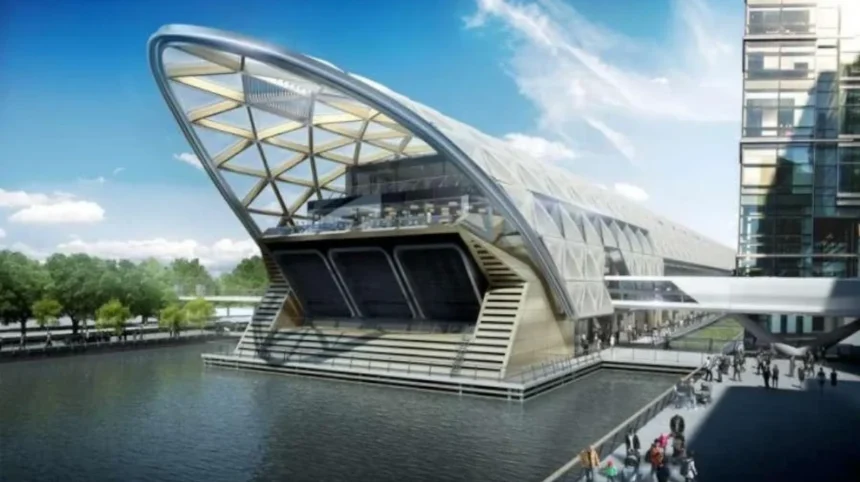
Crossrail Place is a major mixed-use development associated with the Elizabeth line station. Its design incorporates retail facilities, transport infrastructure and a publicly accessible rooftop garden.
The building demonstrates how large transport projects can become integrated into the surrounding urban landscape.
Wood Wharf
Wood Wharf represents the expansion of Canary Wharf into a more residential and mixed-use neighbourhood. Its development includes housing, commercial buildings, public spaces and waterside routes.
The architectural approach introduces a wider range of building forms and ground-level activities than the traditional office district.
Waterfront residential buildings
Residential development has increased the importance of everyday public spaces. Buildings facing the docks create opportunities for waterside walking, outdoor seating and local services.
The relationship between architecture and water is therefore an important part of Canary Wharf’s changing identity.
Where Can Visitors Explore Canary Wharf’s Waterfront Gardens and Public Spaces?
Canary Wharf offers a connected collection of landscaped gardens, public squares and waterfront spaces. Crossrail Place Roof Garden, Jubilee Park, Canada Square Park, Westferry Circus and Harbour Quay provide different environments for walking, relaxation and outdoor recreation.
Public spaces are an important part of Canary Wharf’s waterfront experience. They provide places for visitors and workers to spend time outdoors without leaving the commercial district.
The estate’s landscaped areas include gardens, pedestrian squares, planted routes and waterside seating.
Crossrail Place Roof Garden
Crossrail Place Roof Garden is one of the district’s most distinctive green spaces. Located above the Elizabeth line station, it features tropical and subtropical planting beneath a large timber-and-glass roof.
The garden’s planting reflects geographical differences between the eastern and western hemispheres. Visitors encounter bamboo, ferns, Japanese maple and other species along its walking paths.
The garden also provides seating and an amphitheatre for public activities. It is free to visit and offers a green environment within the surrounding commercial development.
Jubilee Park
Jubilee Park provides a landscaped outdoor environment between Canary Wharf’s main commercial buildings.
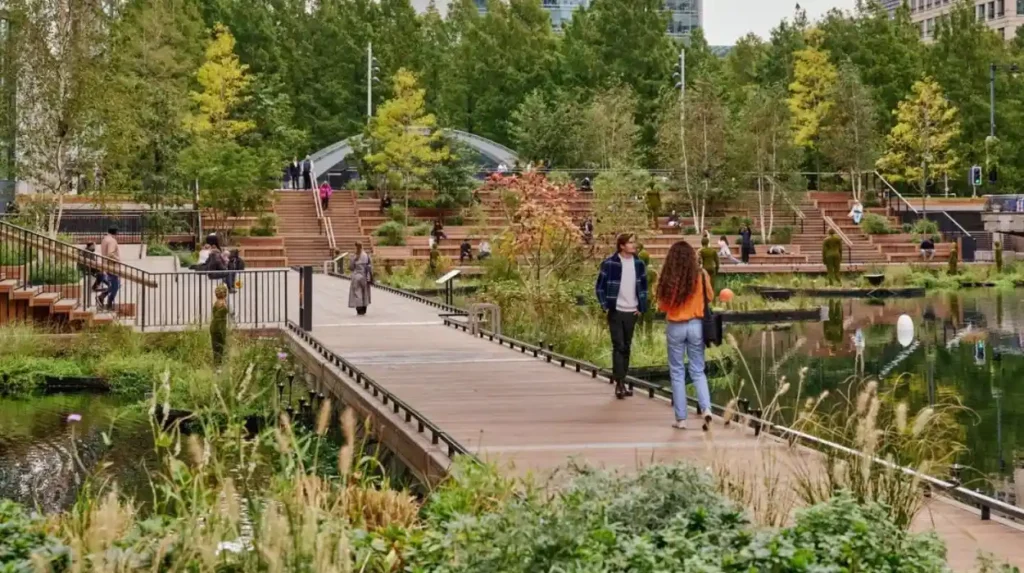
Its design includes trees, ponds, water features and pedestrian routes. The park offers a quieter alternative to the busy shopping and office areas.
Canada Square Park
Canada Square Park is a central gathering space surrounded by commercial buildings and retail facilities.
It hosts seasonal events, outdoor entertainment, performances and open-air film screenings. Its central position makes it a convenient stopping point during a waterfront visit.
Westferry Circus
Westferry Circus is a landscaped public space featuring planted areas, mature trees and public artworks.
Its circular design and gardens create a green setting near the western side of the Canary Wharf Estate.
Harbour Quay
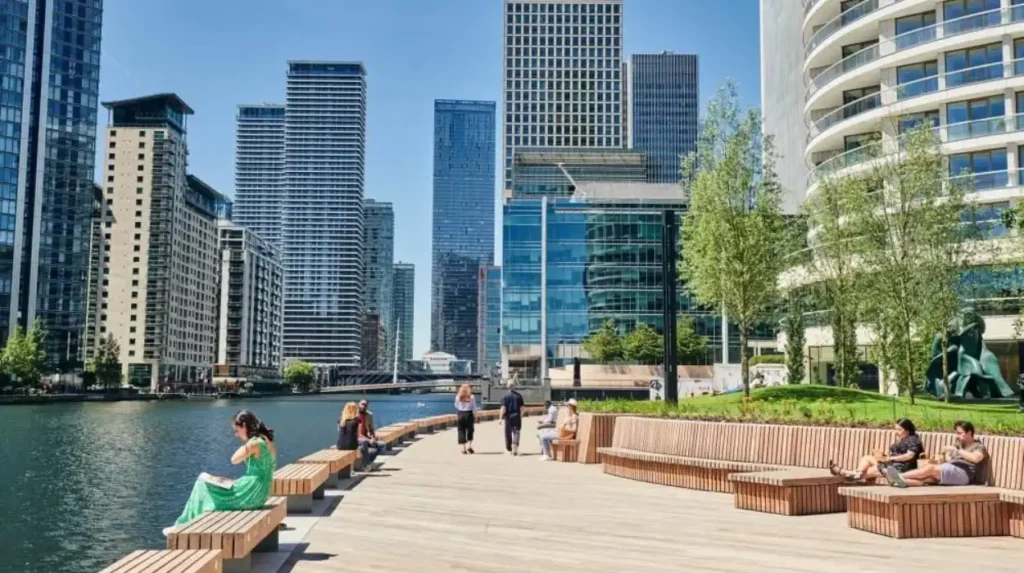
Harbour Quay provides a direct waterfront experience through its boardwalk, seating and planted areas.
Visitors can walk beside the water, enjoy outdoor fitness facilities and use the surrounding space for informal recreation.
These public spaces demonstrate how Canary Wharf incorporates landscaping into a high-density commercial environment.
How Is Eden Dock Changing the Relationship Between Nature and the Waterfront?
Eden Dock introduces nature-focused waterfront design through aquatic planting, marine habitats and recreational activities. Developed in partnership with the Eden Project, it demonstrates how Canary Wharf integrates biodiversity, public access and environmental awareness into its historic dockside surroundings.
Eden Dock is one of the most significant examples of Canary Wharf’s changing approach to waterfront development. Instead of treating the dock as an unused industrial water basin, the project introduces ecological features and opportunities for public engagement.
Its design incorporates aquatic islands, floating habitats and planting intended to support wildlife. These elements introduce a natural dimension to an environment dominated by glass buildings, concrete structures and commercial activity.
The partnership with the Eden Project brings environmental education and biodiversity into the district’s public realm.
The waterfront also supports recreational activities. Open-water swimming, yoga and other organised experiences connect visitors with the dock environment.
Eden Dock demonstrates several important principles of contemporary waterfront planning.
Biodiversity within urban development
Aquatic planting and floating habitats introduce ecological features into an established urban environment. These features provide additional opportunities for wildlife to use the dockside landscape.
Public access to water
The project encourages people to experience the water rather than simply view it from surrounding buildings. Recreational activities create a stronger relationship between visitors and the waterfront.
Environmental awareness
Nature-focused installations provide opportunities to understand urban biodiversity and the importance of maintaining healthy aquatic environments.
The development reflects a wider change in how Canary Wharf uses its historic infrastructure. The docks now contribute to recreation, environmental design and the quality of public spaces.
What Waterfront Walking Routes Can Visitors Explore Around Canary Wharf?
Canary Wharf provides connected pedestrian routes around its historic docks, landscaped squares and modern developments. Visitors can explore North Dock, South Dock, Harbour Quay, Wood Wharf and surrounding promenades through a combination of short walks and longer waterfront routes.
Walking is one of the most accessible ways to discover Canary Wharf’s changing landscape. The district’s pedestrian spaces connect shopping destinations, public gardens, residential developments and historic dock basins.
Visitors can organise their exploration around several key areas.
North Dock waterfront walk
The North Dock area offers views of modern commercial buildings, Crossrail Place and the surrounding water. It provides a useful starting point for visitors arriving through Canary Wharf’s Elizabeth line station.
The route connects transport facilities with public spaces and nearby retail destinations.
South Dock and Eden Dock
The southern waterfront provides opportunities to explore the dockside environment and see how recreational and ecological features have been incorporated into the former industrial landscape.
Visitors can combine a walk around South Dock with a visit to Eden Dock and nearby landscaped spaces.
Harbour Quay boardwalk
Harbour Quay offers a more direct waterside experience. Its boardwalk creates opportunities to walk beside the dock, stop at seating areas and observe the relationship between the water and nearby buildings.
Wood Wharf exploration
Wood Wharf extends the waterfront experience towards a newer mixed-use neighbourhood. Visitors encounter contemporary residential architecture, public spaces and commercial facilities.
The area demonstrates how Canary Wharf’s development is expanding beyond its traditional financial centre.
A longer visit can combine these locations with Jubilee Park, Canada Square Park and Crossrail Place Roof Garden.
The official Canary Wharf estate map identifies the principal public spaces and pedestrian connections, helping visitors understand how the different waterfront areas fit together.
These routes also provide opportunities for photography. Reflections of towers across the dock basins, landscaped boardwalks and contemporary bridges create different views throughout the day.
How Does Public Art Contribute to Canary Wharf’s Waterfront Identity?
Public art contributes to Canary Wharf’s identity by placing sculptures, installations and cultural displays within its gardens, squares and waterfront areas. These works connect contemporary artistic expression with the district’s architecture, public spaces and evolving urban environment.
Canary Wharf incorporates public art into its wider urban design. Sculptures and installations appear across pedestrian areas, landscaped squares and waterfront locations.
This approach creates additional points of interest for visitors exploring the district on foot.
The artwork includes permanent sculptures, temporary installations and pieces associated with seasonal cultural programmes.
Canada Square Park provides an important setting for public events and outdoor cultural activities. Its open layout supports performances, community gatherings and seasonal entertainment.
Other locations, including Columbus Courtyard and Wood Wharf, feature artworks within landscaped and architectural settings.
The waterfront also forms part of a wider East London cultural landscape. The Line, a public art trail connecting areas around Stratford and Greenwich, demonstrates how contemporary art interacts with London’s waterways, parks and regeneration projects.
Canary Wharf’s collection includes more than 100 public artworks, providing visitors with opportunities to discover artistic installations during ordinary walks around the estate. visitlondon.com+1
Public art also changes how visitors understand the district. Instead of experiencing Canary Wharf exclusively as a commercial centre, they encounter a destination with cultural and recreational functions.
For tourists, exploring the artwork provides an additional reason to visit the waterfront beyond shopping and architectural sightseeing.
How Has Waterfront Regeneration Changed Leisure and Tourism Around Canary Wharf?
Waterfront regeneration has expanded Canary Wharf’s role from a financial centre into a leisure and tourism destination. Gardens, restaurants, cultural attractions, shopping facilities and recreational activities encourage visitors to spend time in the district beyond traditional working hours.
The development of Canary Wharf has created a more diverse visitor experience. The area now combines business facilities with attractions suitable for tourists, residents and families.
Waterfront restaurants and cafés benefit from their proximity to the docks. Outdoor seating allows visitors to enjoy views of the surrounding buildings and water.
Retail destinations also contribute to the district’s leisure economy. Canada Place, Jubilee Place and Crossrail Place provide shopping and dining facilities within walking distance of the main waterfront spaces.
Visitors can also explore nearby cultural attractions.
London Museum Docklands
London Museum Docklands is located at West India Quay in a historic warehouse associated with the former commercial docks.
The museum explores London’s maritime history, international trade and the development of Docklands. Its location provides an important connection between the modern Canary Wharf district and its industrial past.
West India Quay
West India Quay retains historic warehouse architecture beside the former docks. Its restaurants and waterfront setting create a different atmosphere from the modern office towers.
Shopping and entertainment
The district’s retail and entertainment facilities attract visitors throughout the week. Canary Wharf Group reports more than 320 shops and over 80 cafés, bars and restaurants across the estate. CWG
These facilities support a wider visitor economy and provide convenient services for people exploring the waterfront.
The growing range of activities also makes Canary Wharf relevant to domestic business travellers. Visitors attending meetings and conferences can use their free time to explore gardens, restaurants and cultural attractions.
How Does Transport Infrastructure Connect Canary Wharf’s Waterfront to London?
Canary Wharf benefits from the Jubilee line, Elizabeth line and Docklands Light Railway, alongside river transport connections. These services connect the waterfront with central London, the City, Stratford, Greenwich and other important destinations across the capital.
Transport infrastructure has played an important role in Canary Wharf’s transformation. Improved connectivity has supported commercial investment, residential development and visitor access.
The district has several major public transport connections.
Jubilee line
Canary Wharf Underground station provides access to the Jubilee line. The service connects the district with London Bridge, Westminster, Waterloo and Stratford.
This connection makes the waterfront accessible from several major London attractions and business destinations.
Elizabeth line
Canary Wharf Elizabeth line station provides connections to central London, Heathrow Airport and destinations in East and West London.
The station forms part of Crossrail Place, linking transport infrastructure with retail facilities and the rooftop garden.
Docklands Light Railway
The DLR connects Canary Wharf with areas including Greenwich, Stratford, Lewisham and the City of London through its wider network.
It provides useful access to surrounding Docklands neighbourhoods.
River transport
Canary Wharf Pier provides access to Thames river services. River journeys offer an alternative way to experience London’s waterfront and connect with destinations along the river.
Visitors can use river transport to explore other riverside areas, depending on the available service and timetable.
Transport connectivity is particularly important for the district’s continued development. It enables visitors to explore Canary Wharf without relying exclusively on private vehicles.
According to Transport for London’s 2025 transport reporting, the Elizabeth line carried around 800,000 journeys per day, demonstrating its importance within London’s transport network.
What Environmental Challenges Affect Canary Wharf’s Changing Waterfront?
Canary Wharf’s waterfront faces environmental challenges involving water quality, biodiversity, urban heat, flood resilience and sustainable development. Its landscaped spaces, aquatic habitats and green infrastructure form part of the wider effort to balance intensive urban development with environmental considerations.
The transformation of Canary Wharf involves more than architectural and commercial development. Maintaining a healthy waterfront requires attention to environmental conditions.
The district’s enclosed dock basins and surrounding buildings create specific environmental considerations.
Water quality
Urban waterways require effective management to maintain suitable environmental conditions. Runoff, litter and pollution affect aquatic habitats and the quality of the waterfront environment.
Regular maintenance and responsible public behaviour help protect the docks.
Urban biodiversity
High-density commercial development reduces the availability of natural habitats. Aquatic planting, floating habitats and landscaped gardens introduce ecological features into the urban environment.
Eden Dock represents one example of incorporating nature into a developed waterfront.
Urban heat
Large areas of concrete, glass and other building materials absorb and retain heat. Trees, planted areas and green roofs provide shade and contribute to a more comfortable outdoor environment.
Jubilee Park and Crossrail Place Roof Garden illustrate the role of planted spaces within Canary Wharf.
Flood resilience
The Isle of Dogs occupies a low-lying area within the Thames floodplain. Development therefore requires consideration of flood risk, drainage and the protection of infrastructure.
The Thames Estuary and surrounding flood-management system form part of London’s wider approach to managing tidal flood risk.
Sustainable development
Modern waterfront planning increasingly considers energy efficiency, sustainable transport, biodiversity and public access.
Canary Wharf’s environmental initiatives demonstrate how regeneration projects incorporate ecological considerations alongside commercial and residential development.
These factors will remain important as the district continues to expand.
Explore More Area Guide
Tower Hamlets Heritage Guide to Victorian Buildings and Historic Streets
Explore Bethnal Green Markets: Food, Flowers & Vintage Finds
How Will Future Development Continue to Change Canary Wharf’s Waterfront?
Future development around Canary Wharf will continue to influence its residential character, public spaces, environmental design and leisure facilities. Mixed-use construction, improved pedestrian connections and nature-focused projects will remain important to the district’s long-term urban regeneration.
Canary Wharf is no longer defined exclusively by financial offices. Its changing development strategy increasingly incorporates residential accommodation, retail, hospitality, cultural attractions and accessible outdoor spaces.
Wood Wharf demonstrates this transition towards mixed-use development. Its buildings and public areas introduce additional residential activity and extend the waterfront beyond the traditional commercial core.
Future development also places greater importance on the quality of public spaces.
Residential expansion
New residential buildings increase the number of people using the district outside conventional office hours. This creates demand for local shops, restaurants, recreational facilities and attractive walking routes.
Improved public spaces
Landscaped waterfronts and connected pedestrian routes remain important to the district’s development. These spaces support everyday activities and improve access between commercial and residential areas.
Environmental improvements
Nature-based projects provide opportunities to introduce biodiversity into the urban landscape. Floating habitats, planted areas and green roofs demonstrate how environmental features contribute to contemporary development.
Cultural and leisure activities
Public art, outdoor performances and recreational facilities strengthen Canary Wharf’s position as a visitor destination.
The wider Isle of Dogs is also experiencing residential growth. Transport for London’s Travel in London 2025 report recorded 9,004 homes delivered in the Isle of Dogs Opportunity Area between April 2019 and March 2025. This illustrates the scale of residential transformation across the wider area. board.tfl.gov.uk
The future waterfront will therefore depend on balancing development with environmental quality, public accessibility and the preservation of historic dock infrastructure.
Why Should Tourists Include Canary Wharf’s Waterfront in an East London Visit?
Canary Wharf offers tourists an accessible introduction to modern East London through its skyscrapers, historic docks, landscaped gardens, public art and waterside attractions. Its combination of architecture, outdoor recreation and transport connections makes it suitable for independent sightseeing.
Canary Wharf provides a different experience from London’s traditional historic districts. Its identity comes from the combination of modern architecture and preserved industrial waterways.
Visitors interested in urban regeneration can observe how former commercial docks have become part of a contemporary neighbourhood.
Architecture enthusiasts can explore One Canada Square, Crossrail Place and Wood Wharf. These developments demonstrate different approaches to modern construction and mixed-use planning.
Nature enthusiasts can visit Jubilee Park, Crossrail Place Roof Garden and Eden Dock. These locations introduce landscaped environments within a high-density urban setting.
Photography enthusiasts can capture reflections across the dock basins, contemporary building designs and public art installations.
The district also offers convenient access to restaurants, shopping facilities and public transport.
A practical sightseeing visit can include:
- Starting at Canary Wharf Underground or Elizabeth line station.
- Exploring Crossrail Place Roof Garden.
- Walking around North Dock and the surrounding public spaces.
- Visiting Canada Square Park and Jubilee Park.
- Exploring South Dock and Eden Dock.
- Continuing towards Harbour Quay and Wood Wharf.
- Visiting West India Quay and London Museum Docklands.
The route connects modern development with the area’s maritime heritage.
Visitors should check individual attraction opening times and any activity booking requirements before travelling. Public gardens and waterfront walking areas provide several free sightseeing opportunities.
Canary Wharf’s waterfront ultimately demonstrates how an industrial landscape can support a different urban purpose. Its former docks remain visible, but their surroundings now accommodate business, residential communities, environmental projects and leisure activities.
For tourists exploring East London, the district provides an opportunity to understand both the architectural ambitions and the historical foundations of modern Docklands.
Where is Canary Wharf located in London?
Canary Wharf is located on the Isle of Dogs in the London Borough of Tower Hamlets, East London. It sits beside the River Thames and is surrounded by historic dock basins and modern developments.