Tower Hamlets is one of the most historically significant and geographically varied boroughs in East London. It stretches from the eastern edge of the City of London to the modern financial district of Canary Wharf and the residential areas around Bow, Mile End, Poplar and the Isle of Dogs.
- Which Tower Hamlets neighbourhoods should visitors know?
- What can visitors experience in Spitalfields and Banglatown?
- Why is Whitechapel important for visitors?
- What makes Bethnal Green worth visiting?
- What should visitors see around Wapping and St Katharine Docks?
- What can visitors do in Limehouse?
- Why should visitors explore Canary Wharf and the Isle of Dogs?
- What should visitors see around Poplar and Blackwall?
- Why are Bow and Mile End important for visitors?
- What makes Stepney and Shadwell interesting?
- How should visitors choose Tower Hamlets neighbourhoods for different interests?
- How can visitors explore Tower Hamlets efficiently?
- Why does neighbourhood-based exploration matter in Tower Hamlets?
For visitors, understanding Tower Hamlets by neighbourhood makes sightseeing easier. Spitalfields offers markets, historic streets and Bangladeshi cultural influences. Whitechapel combines major institutions with East End history. Bethnal Green provides markets, independent businesses and cultural venues. Wapping and St Katharine Docks focus on riverside heritage. Limehouse connects canals with former docklands. Canary Wharf presents contemporary architecture, public spaces and museums. Bow and Mile End provide parks, residential streets and East End heritage.
The borough’s physical character developed through migration, maritime trade, industry, transport and later regeneration. Tower Hamlets Council describes the area as the heart of London’s East End and highlights its combination of historic and modern places.
Which Tower Hamlets neighbourhoods should visitors know?
Tower Hamlets includes several distinct visitor areas, with Spitalfields, Whitechapel, Bethnal Green, Wapping, Limehouse, Canary Wharf, Poplar, Bow, Mile End and the Isle of Dogs offering different combinations of history, food, culture, parks, shopping and riverside experiences.
The borough is not a single sightseeing district. Its neighbourhoods developed at different periods and around different economic activities. The Thames, docks, canals, markets and transport routes strongly influenced this development.
Tower Hamlets Council identifies neighbourhood areas including Whitechapel, Shadwell, Spitalfields and Banglatown, Stepney Green, Wapping, Limehouse, Mile End, Poplar, Bow, Canary Wharf, Blackwall, Cubitt Town and Island Gardens. The council also recognises adopted neighbourhood plans for the Isle of Dogs and Roman Road/Bow.
For first-time visitors, the most useful approach is to group neighbourhoods according to experience. Central and western areas work well for markets, historic buildings and food. Riverside areas suit walks, architecture and dockland history. Eastern areas provide larger parks, residential streets and local cultural attractions.
This neighbourhood structure also explains why two parts of Tower Hamlets can feel very different despite being within the same London borough.
What can visitors experience in Spitalfields and Banglatown?
Spitalfields and Banglatown combine historic market streets, independent shops, restaurants, cultural venues and one of East London’s strongest concentrations of Bengali heritage, making the area particularly suitable for visitors interested in food, shopping and urban history.
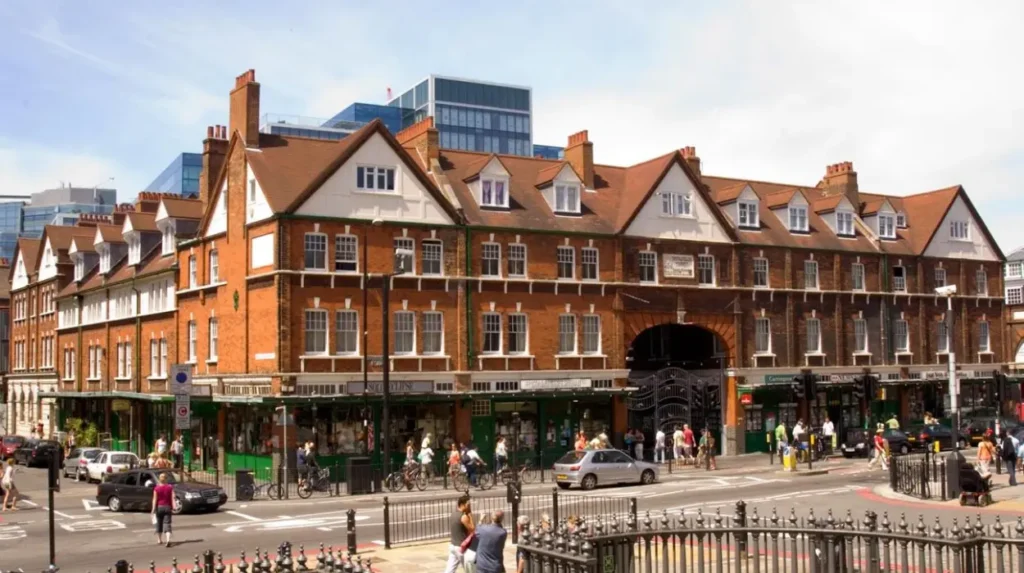
Spitalfields sits close to the City of London and has long functioned as a commercial and cultural meeting point. Spitalfields Market is a major visitor destination, while nearby streets connect the area with Brick Lane, Commercial Street and Fournier Street.
Brick Lane is closely associated with London’s Bengali community and South Asian food culture. The wider area also contains former Huguenot influences, historic religious buildings, warehouses and commercial premises.
The neighbourhood’s history reflects successive migration. Tower Hamlets Council records Flemish settlement, Huguenot silk weaving, Jewish migration and later migration from Bangladesh as important stages in the area’s development.
Visitors exploring modern Spitalfields are therefore moving through an area shaped by centuries of trade and migration. As you explore the modern streets, you are crossing land with a deep heritage. Read about the full to understand its origins.
Spitalfields also provides convenient access to neighbouring areas. Liverpool Street, Aldgate East and Shoreditch are close enough to connect several districts within one walking itinerary.
For food-focused visitors, Brick Lane and surrounding streets provide Bengali restaurants, cafés, bakeries and international cuisine. For architecture enthusiasts, the surviving Georgian streets and converted commercial buildings provide a clear contrast with the modern City skyline.
Why is Whitechapel important for visitors?
Whitechapel is an important East London visitor district because it combines major transport connections, historic streets, cultural institutions, medical heritage, public art, markets and direct access to Spitalfields, Brick Lane and the City of London.
Whitechapel developed as an important route between the City and the eastern districts. Its central position made it a major location for commerce, industry, housing and migration.
Today, Whitechapel provides a practical starting point for exploring Tower Hamlets. Whitechapel Station connects the area with the Elizabeth line, London Overground, District line, Hammersmith & City line and other rail services.
The area is also closely associated with the Royal London Hospital, Whitechapel Road and the historic East End. The Royal London Hospital dates from the eighteenth century, while the surrounding district contains layers of nineteenth- and twentieth-century urban development.
Whitechapel also connects directly with Banglatown and Brick Lane. Visitors can therefore combine museums, food, markets and historic streets without making separate journeys across London.
The neighbourhood’s cultural significance also reflects Tower Hamlets’ long history of migration. The borough has been home to successive immigrant communities for centuries, contributing to its present cultural diversity.
Whitechapel is particularly useful for visitors who want a neighbourhood with both practical transport connections and substantial cultural content.
What makes Bethnal Green worth visiting?
Bethnal Green combines a historic East End high street, local markets, cultural venues, museums, parks and independent food businesses, giving visitors an accessible neighbourhood experience between Shoreditch, Cambridge Heath, Mile End and central Tower Hamlets.
Bethnal Green Road is one of the neighbourhood’s main commercial corridors. Tower Hamlets Council describes its shops as including grocers, fishmongers, jewellers and Asian wedding businesses, while its food offer includes cafés, Turkish kebabs, curries, Italian cuisine and French restaurants.
The area also provides access to cultural venues. Rich Mix presents live music, theatre and film, while the V&A Museum of Childhood site provides another cultural destination nearby.
Green spaces add another dimension. Weavers Fields, Bethnal Green Gardens and Museum Gardens are within walking distance of the commercial centre.
Bethnal Green is also useful for visitors interested in everyday East London rather than landmark sightseeing alone. Its high street shows how traditional retail, international food businesses, community facilities and cultural organisations operate alongside one another.
The neighbourhood is well connected by Bethnal Green Underground Station on the Central line, Bethnal Green railway station and Cambridge Heath railway station. Whitechapel and Stepney Green are also nearby.
This makes Bethnal Green suitable as both a destination and a base for wider neighbourhood exploration.
What should visitors see around Wapping and St Katharine Docks?
Wapping and St Katharine Docks provide a riverside experience shaped by historic warehouses, maritime infrastructure, narrow streets, waterfront paths, restaurants and restored docks, creating a strong connection between modern London and its former port economy.
Wapping occupies a strategically important position beside the River Thames. Its historic development was closely connected with London’s port and maritime industries.
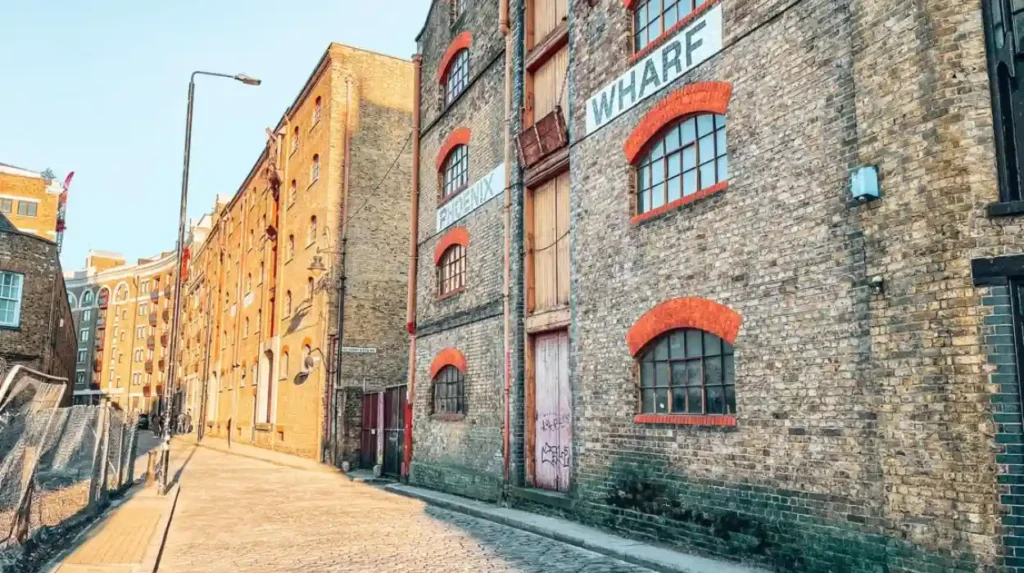
The area retains warehouses and riverside buildings that demonstrate the scale of former dock activity. Tower Hamlets Council’s conservation research states that Wapping contained major warehouse development during the expansion of riverside trade in the nineteenth century.
St Katharine Docks provides another important heritage destination. The dock opened in 1828 following a major engineering project associated with Thomas Telford. Around 1,250 houses were demolished for its construction, including buildings connected with the medieval St Katharine’s Hospital.
The docks later declined following wartime damage and changes in shipping. They closed commercially in 1968 and were subsequently regenerated as a marina and visitor destination.
Visitors can combine St Katharine Docks with Tower Bridge and the Tower of London. This creates a compact itinerary centred on the Thames, maritime history and major London landmarks.
Wapping is particularly suitable for visitors who prefer waterfront walking, historic architecture and quieter streets over major shopping districts.
What can visitors do in Limehouse?
Limehouse offers visitors a combination of canal scenery, riverside walking, historic warehouses, Limehouse Basin and connections to the Thames, making it one of Tower Hamlets’ strongest neighbourhoods for understanding London’s canal and dockland development.
Limehouse developed around maritime trade, canals and the Thames. Its location between the river and the wider canal network made it important to London’s industrial transport system.
The Regent’s Canal reached the area in the early nineteenth century, while Limehouse Cut provided another major water connection. Tower Hamlets records the opening of Limehouse Cut in 1770 and the development of the Regent’s Canal in the early nineteenth century.
Limehouse Basin is now a regenerated waterside area where canals connect with the Thames. The surrounding streets retain evidence of former industrial and residential development.
For visitors, Limehouse works well as a walking connection between Canary Wharf, the Thames Path and the eastern docklands. It also provides an alternative to the busier commercial districts.
The neighbourhood’s heritage is especially relevant to visitors studying London’s industrial transformation. The canals were built to move goods efficiently, while later railway and road networks changed the importance of water-based transport.
Today, the surviving waterways provide both a practical visitor route and a physical record of London’s industrial past.
Why should visitors explore Canary Wharf and the Isle of Dogs?
Canary Wharf and the Isle of Dogs demonstrate Tower Hamlets’ transformation from an international dock complex into a major financial and commercial district, combining skyscrapers, public spaces, shopping, restaurants, transport links, art and dockland heritage.
Canary Wharf occupies the northern part of the Isle of Dogs and developed around the former West India Docks. The docks opened in the early nineteenth century and became internationally important centres for imported goods.
Tower Hamlets Council records that the West India Docks were among the borough’s internationally important dock complexes. The wider docklands once formed part of the world’s largest port.
The modern Canary Wharf district is dominated by high-rise commercial buildings, but the dock basins remain visible. This combination creates a clear physical relationship between historic maritime trade and contemporary finance.
London Museum Docklands is located at West India Quay in a Grade I-listed former warehouse. Its permanent galleries examine London’s river, port, trade and communities. Entry to the permanent museum is free.
Canary Wharf also provides extensive transport connections through the Jubilee line, Elizabeth line and Docklands Light Railway. This makes it a practical starting point for exploring the Isle of Dogs and neighbouring Poplar.
Visitors interested in architecture can focus on the modern skyline. Visitors interested in history can follow the docks, warehouses and museum collections. Both experiences exist within the same neighbourhood.
What should visitors see around Poplar and Blackwall?
Poplar and Blackwall combine dockland heritage, residential neighbourhoods, historic churches, parks, modern regeneration and riverside development, providing visitors with a less commercial view of Tower Hamlets beyond the central attractions of Canary Wharf.
Poplar developed as an important settlement east of the City and became closely connected with London’s docks and maritime industries.
Blackwall occupies the eastern side of the Isle of Dogs and has a significant shipbuilding history. Tower Hamlets’ heritage research records Blackwall Yard as having been established in 1614 and becoming one of the country’s major private shipyards.
The district’s maritime history connects it with major vessels and shipbuilding activity. This makes Blackwall particularly relevant to visitors interested in London’s industrial and engineering history.
Poplar also provides access to parks and community spaces. The area forms a transition between the high-density commercial development of Canary Wharf and the more traditional residential districts farther east.
Visitors can combine Poplar with Limehouse or Canary Wharf because the neighbourhoods are physically close and connected by public transport.
The area is also useful for understanding the effects of regeneration. Former industrial land has been reused for housing, commercial buildings, public spaces and transport infrastructure.
Why are Bow and Mile End important for visitors?
Bow and Mile End provide large green spaces, historic streets, cultural landmarks, canal routes and strong connections with East End social history, making them useful neighbourhoods for visitors seeking parks, walking routes and local heritage.
Mile End sits between Bethnal Green, Bow, Stepney and the eastern docklands. Its position has made it an important movement corridor for centuries.
Mile End Park is one of the borough’s major open spaces. It provides a green route through a densely developed part of East London and connects several local districts.
Victoria Park is another major destination on the northern side of the borough. The park opened in 1845 and was created in response to severe overcrowding and poor environmental conditions in the East End. A petition supporting the creation of a royal park attracted 30,000 local signatures in 1840.
Today, Victoria Park contains gardens, sports facilities, play areas, a lake and spaces for community events. Visit London describes it as a park serving Bow and Mile End and records its opening to visitors in 1845.
Bow is also significant in labour and industrial history. The 1888 matchwomen’s strike at the Bryant & May factory became an important event in the development of organised labour. Tower Hamlets Council identifies the strike as part of the borough’s wider history of industrial action.
For visitors, Bow and Mile End therefore combine recreation with significant social history.
What makes Stepney and Shadwell interesting?
Stepney and Shadwell reveal the residential and community history behind Tower Hamlets’ famous docks, markets and financial districts, with historic churches, parks, housing estates, local businesses and connections to centuries of migration and industrial change.
Stepney developed around an historic parish and became increasingly urbanised as London’s eastern population expanded. Its location between Whitechapel, Limehouse and the wider docklands placed it within major industrial and residential changes.
Shadwell developed beside the Thames and became closely associated with maritime communities. Its position provided access to the river, docks and commercial routes.
The two neighbourhoods help visitors understand that Tower Hamlets’ history is not limited to major attractions. Residential streets, churches, parks and community buildings also preserve evidence of earlier periods.
Tower Hamlets’ local history collections contain historic documents dating from 1384, alongside maps, plans, photographs and newspaper cuttings. The collections also document changing communities and the development of London’s East End.
Visitors interested in local history can therefore use neighbourhood walks alongside archives and museums to understand how the borough developed.
Stepney and Shadwell are also useful connecting districts when walking between Whitechapel, Wapping and Limehouse.
How should visitors choose Tower Hamlets neighbourhoods for different interests?
Visitors can match Tower Hamlets neighbourhoods to specific interests: Spitalfields for markets and food, Whitechapel for culture, Bethnal Green for local shopping, Wapping for riverside heritage, Limehouse for canals, Canary Wharf for modern architecture, and Bow and Mile End for parks.
Neighbourhood choice depends on the type of experience a visitor wants rather than on one universal sightseeing route.
For food and markets, Spitalfields, Brick Lane, Banglatown and Bethnal Green provide strong choices. Whitechapel adds restaurants and cultural institutions around a major transport hub.
For historic architecture, Wapping, St Katharine Docks, Spitalfields and Limehouse provide particularly clear evidence of London’s maritime and commercial development.
For modern architecture, Canary Wharf provides the strongest concentration of contemporary towers and regenerated dockland. London Museum Docklands adds historical context to the same landscape.
For parks and outdoor recreation, Victoria Park and Mile End Park are central choices. Victoria Park’s origins are directly connected to nineteenth-century concerns about overcrowding, pollution and public health in the East End.
For visitors interested in social and migration history, Whitechapel, Spitalfields, Banglatown, Stepney and Bethnal Green provide multiple layers of evidence.
This variety makes neighbourhood-based exploration more useful than treating Tower Hamlets as one uniform destination.
Explore More Area Guide
Tower Hamlets Visitor Map: Areas, Attractions and Markets
Tower Hamlets Guide: First-Time Visitor Guide to East London
How can visitors explore Tower Hamlets efficiently?
Visitors can explore Tower Hamlets efficiently by grouping nearby neighbourhoods into walking areas, using Underground, Elizabeth line, Overground, DLR and bus connections between wider districts, and combining major attractions with markets, parks, museums and riverside routes.
A western itinerary can connect the Tower of London, St Katharine Docks, Wapping and Whitechapel. These areas provide a mixture of major landmarks, historic streets and riverside heritage.
A central itinerary can connect Spitalfields, Brick Lane, Bethnal Green and Stepney. This route focuses more heavily on markets, food, culture and community history.
An eastern itinerary can connect Mile End, Bow and Victoria Park. This combination prioritises green space, local streets and East End social history.
A docklands itinerary can connect Limehouse, Canary Wharf, Poplar and the Isle of Dogs. This route provides the strongest contrast between historic dock infrastructure and modern development.
Transport is an important part of the borough’s structure. Tower Hamlets includes major Underground, railway, Overground, Elizabeth line and DLR connections. Bethnal Green, Whitechapel, Canary Wharf and other major stations provide links across London.
Walking remains particularly effective for neighbouring districts because many streets, canals and riverside paths connect attractions without requiring a separate journey for every stop.
Why does neighbourhood-based exploration matter in Tower Hamlets?
Neighbourhood-based exploration reveals how Tower Hamlets developed through maritime trade, migration, industry, transport, housing, public parks and regeneration, allowing visitors to understand the borough as a connected collection of distinct historic and modern communities.
Tower Hamlets’ neighbourhoods represent different stages of London’s development. Spitalfields reflects migration and commerce. Whitechapel reflects transport, healthcare and East End urbanisation. Wapping and Limehouse preserve strong maritime connections. Canary Wharf represents dockland redevelopment and modern finance. Bow and Mile End demonstrate the importance of public parks, labour history and residential expansion.
The borough’s heritage strategy identifies maritime trade, migration and social change as central forces shaping its physical development. It also records the importance of shipbuilding, docks, warehouses and successive migrant communities.
The modern landscape therefore contains evidence from multiple periods. Historic warehouses stand beside offices. Former docks sit beside financial towers. Traditional markets operate close to major transport interchanges. Large public parks occupy areas once affected by overcrowding and industrial pollution.
Tower Hamlets also contains nationally significant heritage. The Tower of London is a World Heritage Site, while Island Gardens forms part of the setting of the Maritime Greenwich World Heritage Site.
For visitors, this means that exploring Tower Hamlets by neighbourhood provides a more complete understanding of East London. Each district contributes a different part of the borough’s geographic, economic and cultural identity.
The result is a visitor experience that connects markets, food, museums, parks, architecture, canals, docks and riverside landmarks within one of London’s most historically layered boroughs.
What are the main neighbourhoods to explore in Tower Hamlets?
The main neighbourhoods include Spitalfields, Whitechapel, Bethnal Green, Wapping, Limehouse, Canary Wharf, Poplar, Bow, Mile End, Stepney, Shadwell and the Isle of Dogs.