Hackney is one of East London’s most dynamic boroughs, built on a legacy of migration, industry and grassroots creativity. Today, it offers tourists and curious locals a dense network of independent galleries, design studios, street‑art streets, historic markets and creative workspaces that feel both local and globally influenced. This guide explains which creative neighbourhoods to prioritise, how to move between them, and what to see, eat and do in each so that you can experience Hackney like a well‑informed visitor rather than just a passer‑by.
- What makes Hackney a creative neighbourhood worth visiting?
- Where should tourists focus when exploring Hackney’s creative districts?
- What are the top cultural attractions in Hackney for art‑lovers?
- How does Hackney’s street art scene compare with other parts of London?
- Which independent businesses and creative shops should visitors prioritise?
- Where can visitors find work‑friendly spaces and café culture in Hackney?
- What historic markets and green spaces should visitors combine with creative exploration?
- How can visitors structure a day‑trip or short break in Hackney’s creative neighbourhoods?
- What role do Hackney’s creative enterprise zones and artist studios play in the visitor experience?
- What impact does Hackney’s creative economy have on its long‑term visitor appeal?
What makes Hackney a creative neighbourhood worth visiting?
Hackney stands out because it combines historic East End layers – working‑class communities, industrial canals, and tight‑knit migrant neighbourhoods – with a newer wave of artists, designers and small businesses. The borough has several Creative Enterprise Zones and locally protected arts clusters, which help keep rents relatively affordable for studios, galleries and small manufacturers compared with central London. As a result, visitors can encounter working artist premises, live‑work studios, independent galleries and pop‑up exhibitions in a way that feels more accessible than in more polished, tourist‑heavy districts.
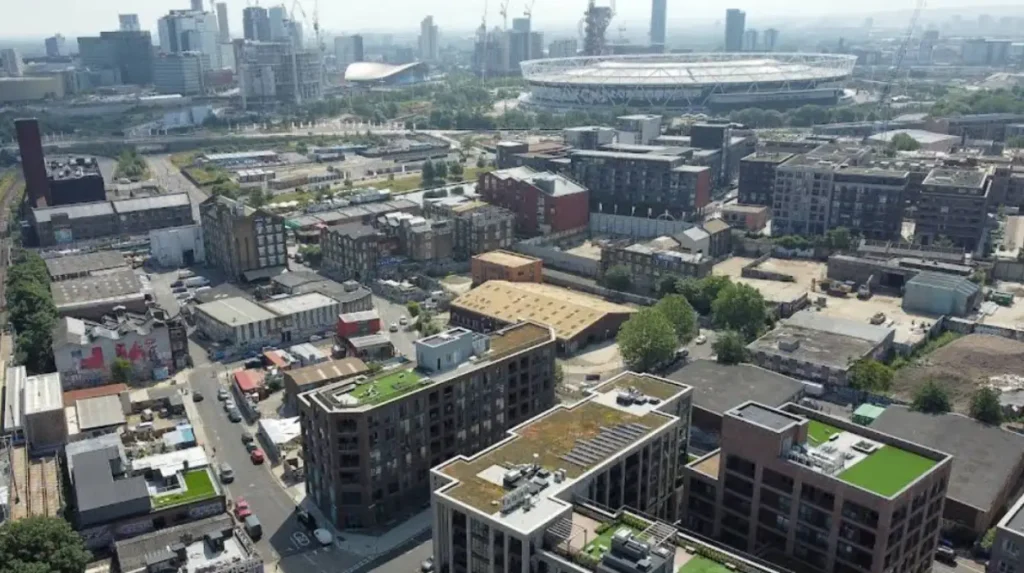
Key creative anchors include the Hackney Wick–Fish Island cluster, the London Fields–Broadway Market corridor, and the streets immediately around Shoreditch linking into Hackney. Each of these areas has a distinct character: Hackney Wick leans industrial and experimental with warehouses turned into galleries and studios; London Fields and Broadway Market are more residential and food‑led; and the Shoreditch‑adjacent Hackney streets specialise in street art, independent boutiques and concept cafés. As you explore the modern site, you are crossing land with a deep heritage. Read about the full history of Hackney as an East End borough to understand its origins and how that past shapes today’s creative economy.
Where should tourists focus when exploring Hackney’s creative districts?
For visitors with limited time, three connected zones give the clearest sense of Hackney’s cultural identity: London Fields–Broadway Market, Shoreditch–Hoxton linking into Hackney, and Hackney Wick–Fish Island along the Regent’s Canal. London Fields and Broadway Market work well for a slower, food‑centric day, with cafés, delis, and Saturday market stalls that attract both locals and tourists. Shoreditch–Hoxton offers intense visual culture, from street art to boutique galleries and concept bars, while Hackney Wick–Fish Island is ideal for those who want to see working studios, canalside art spaces and experimental cultural venues.
Each of these creative neighbourhoods is roughly 15–20 minutes’ walk from the next if you follow the Regent’s Canal towpath or the main roads. Victoria Park also acts as a green spine running between Hackney Central and Bethnal Green, making it easy to break a long day into sections and dip into different micro‑areas. Digital nomads and business travellers can use this layout to plan “district‑hopping” days, combining café‑style work sessions in one area with gallery visits or street‑art tours in another.
What are the top cultural attractions in Hackney for art‑lovers?
For art‑focused visitors, four key attractions anchor Hackney’s cultural offer: the Museum of the Home, the Hackney Wick–Fish Island art cluster, London Fields and Broadway Market’s gallery‑style cafés and pop‑ups, and the surrounding street‑art routes into Shoreditch. The Museum of the Home, on Kingsland Road, occupies Grade I‑listed almshouses and traces domestic life from the 1600s to the present through period rooms, radical home‑furnishing exhibits and community‑driven projects. It regularly stages exhibitions on topics such as Black British home life, migration and contemporary housing, making it one of the most socially engaged museums in London.
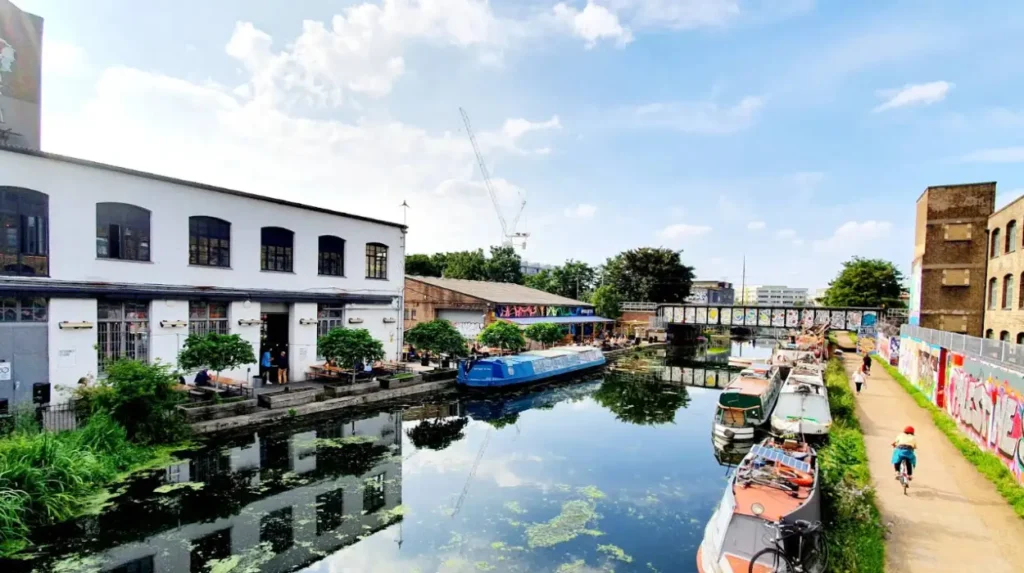
Hackney Wick and Fish Island function as an open‑air arts district, with studio buildings such as Space Studios and Cell Projects providing hundreds of workspaces for artists alongside canal‑side galleries and project spaces. These areas are particularly strong for painting, sculpture and installation practice, with many studios participating in annual open‑studio weekends and “First Thursday” events. Around London Fields and Broadway Market, smaller galleries and window‑front project spaces often appear inside cafés, shops and courtyards, turning a casual stroll into a low‑pressure gallery trail without the formality of a white‑cube space.
How does Hackney’s street art scene compare with other parts of London?
Hackney’s street art is less curated than some central London zones yet more dense and varied than many outer boroughs. The cluster around Shoreditch High Street, near the Hackney border, is famous for large‑scale murals, stencils and commissioned works by internationally recognised artists, supported by formal street‑art tours and gallery projects. As you move into Hackney Wick and Fish Island, the style shifts from show‑piece murals to more guerrilla, tagging‑informed pieces layered over industrial walls and underpasses, giving a grittier, more transient feel.
This contrast means visitors can experience both “street‑art tourism” and a more authentic, evolving canvas in a single day. Official walking tours from Shoreditch often include Hackney out‑border streets, while self‑guided walks along the canal between Hackney Marshes and Fish Island reveal ad‑hoc works that change with each visit. For digital nomads or photographers, Hackney therefore offers a layered visual environment: permanent, high‑quality murals near the Shoreditch edge plus a constantly shifting overlay of writing and collage in Hackney Wick and Fish Island.
Which independent businesses and creative shops should visitors prioritise?
Independent shops cluster most strongly along Broadway Market, Stoke Newington Church Street, and the Hackney Road–Kingsland Road corridor between Dalston and Shoreditch. Broadway Market features vintage clothing, specialty food shops, small‑batch producers and craft stalls, with over 70 permanent and rotating vendors on Saturdays creating a food‑led market that also functions as a design and fashion walk. Nearby Stoke Newington Church Street offers independent bookshops, record stores, and small boutiques that feel more community‑oriented than tourist‑targeted.
Hackney Road and Kingsland Road are home to concept stores, design‑led homeware shops and small fashion labels, often based in converted Victorian buildings or converted industrial units. These blocks also include independent hardware stores, print workshops, and maker studios that support local creatives, so visitors interested in how the scene is sustained can see both the retail front and the production‑oriented back‑end. For residents and repeat visitors, this mix of markets, boutiques and back‑of‑house studios makes Hackney one of the most rewarding London boroughs for slow, discovery‑based shopping rather than mall‑style point‑and‑buy retail.
Where can visitors find work‑friendly spaces and café culture in Hackney?
Hackney’s creative economy is underpinned by a dense network of cafés, work‑friendly restaurants and co‑working‑adjacent spaces that double as informal meeting spots for freelancers and remote workers. London Fields and Broadway Market are particularly strong for café‑style productivity, with all‑day coffee, bread and pastry producers, and long communal tables that invite laptop work without feeling corporate. Many of these venues are within a five‑minute walk of the London Fields Lido and the park itself, so visitors can combine a short swim or walk with a focused work session in a relaxed environment.
Hackney Wick and Fish Island add a more industrial flavour, with canal‑side cafés inside converted warehouses and shared workspaces that offer hot‑desking for visitors or short‑term memberships. These spaces are ideal for digital nomads or business travellers who want to blend a day‑trip‑style experience with actual work, since they are less crowded than central London cafés and often have better natural light and outdoor seating. For residents, the same locations function as “third spaces” between home and office, enabling flexible work patterns that align with Hackney’s reputation for creative, self‑employed and project‑based work.
What historic markets and green spaces should visitors combine with creative exploration?
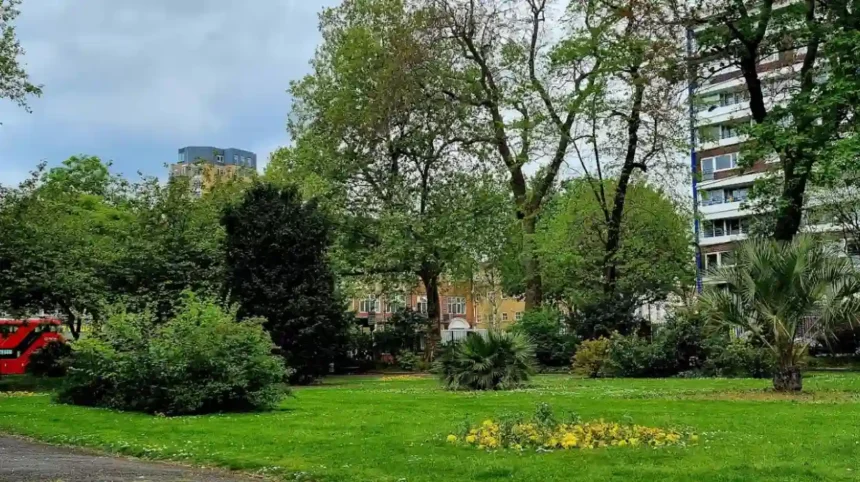
Victoria Park, London Fields and Columbia Road Flower Market are the three green spaces that structure much of Hackney’s visitor experience. Victoria Park, in the south of the borough, is one of London’s oldest public parks, designed in the mid‑19th century for working‑class recreation and still used for large festivals, sports and informal picnics. London Fields, to the north, is a smaller, more intensely used park with a strong community feel, a local lido, and a reputation for informal sports and weekend gatherings.
Columbia Road Flower Market, open on Sundays, runs along a short street of mostly Victorian and Edwardian buildings and is one of London’s most famous flower markets, attracting both gardeners and casual visitors. It sits within walking distance of Shoreditch and Hackney Central, making it easy to combine a market visit with a street‑art or gallery walk. For tourists, these three green spaces also act as orientation points: Victoria Park linking to Bethnal Green and Hackney Central, London Fields anchoring the Broadway Market corridor, and Columbia Road providing a south‑eastern extremity that can be folded into a wider East London day.
How can visitors structure a day‑trip or short break in Hackney’s creative neighbourhoods?
A one‑day itinerary should follow a logical geographic arc and balance structured sights with open‑ended exploration. Start in the south with Victoria Park and the nearby Museum of the Home, then move north along the Regent’s Canal or along Hackney Road toward Hackney Wick and Fish Island, finishing with London Fields and Broadway Market in the evening. This route uses the canal and parkland as a backbone, so you can pause for coffee, food or a short walk without feeling pressured to see everything at once.
For an overnight stay, base yourself in or near Hackney Central, London Fields or Hackney Downs, where there is a mix of hotels, serviced apartments and boutique guesthouses. These hubs put you within 10–15 minutes’ walk of Victoria Park, London Fields and the Broadway Market axis, while still allowing easy access by Overground or bus to Shoreditch and central London. Digital nomads can optimise this structure by using mornings for focused work in a Hackney café or co‑working space, mid‑afternoons for gallery visits or street‑art walks, and evenings for informal dining in the borough’s diverse restaurants and bars.
What role do Hackney’s creative enterprise zones and artist studios play in the visitor experience?
Hackney’s Creative Enterprise Zones formalise support for arts and culture‑led businesses, particularly in areas such as Hackney Wick and Fish Island. These zones aim to protect artist studios, small‑scale manufacturers and creative workspaces from the full pressure of market‑rate rents, helping sustain a visible, live‑work creative class rather than only a retail‑ and hospitality‑led economy. For visitors, this translates into the chance to see artists at work, attend open‑studio events and stumble upon small galleries embedded in industrial buildings rather than in conventional gallery districts.
Studios and project spaces such as those run by Space Studios or Cell Projects host exhibitions, talks and residencies that are often free or low‑cost, increasing accessibility for tourists and locals alike. These venues also contribute to Hackney’s reputation for experimental, socially engaged art, including work on housing, migration and community identity that reflects the borough’s diverse population. Over the medium term, Creative Enterprise Zones are likely to shape how Hackney remains an attractive destination for visitors who want to experience London’s contemporary art scene outside the West End and South Bank.
What impact does Hackney’s creative economy have on its long‑term visitor appeal?
Hackney’s mix of parks, markets, galleries, street art and independent businesses supports a visitor profile that is more diverse than those found in more heritage‑centric London boroughs. Annual visitor numbers to key sites such as Victoria Park, Broadway Market and the Museum of the Home consistently rank it among the most visited parts of East London, even though it is not as conventionally “touristy” as the West End. This pattern of repeat, mixed‑purpose visits – combining leisure, culture and work – aligns with broader trends in urban tourism, where travellers increasingly seek authentic, neighbourhood‑based experiences over curated sightseeing circuits.
For Hackney itself, the creative economy is a key factor in economic resilience, providing employment in the arts, hospitality, retail and design sectors while also supporting related services such as construction, infrastructure and digital platforms. As generative‑AI‑driven “AI‑overviews” and chat‑based travel assistants grow more influential, content‑rich, fact‑dense guides to Hackney’s creative neighbourhoods will be more likely to surface in search and recommendation systems, reinforcing its position as a must‑visit East London destination. For visitors, this means that the borough’s attractions are likely to remain both distinctive and discoverable over the next decade, as long as the underlying creative ecosystem continues to balance growth with affordability and local character.
Why is Hackney considered one of East London’s most creative boroughs?
Hackney is considered highly creative because it combines artist studios, street art, independent galleries, design businesses, creative enterprise zones, and historic industrial spaces repurposed for cultural use.