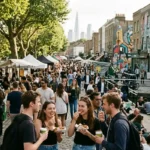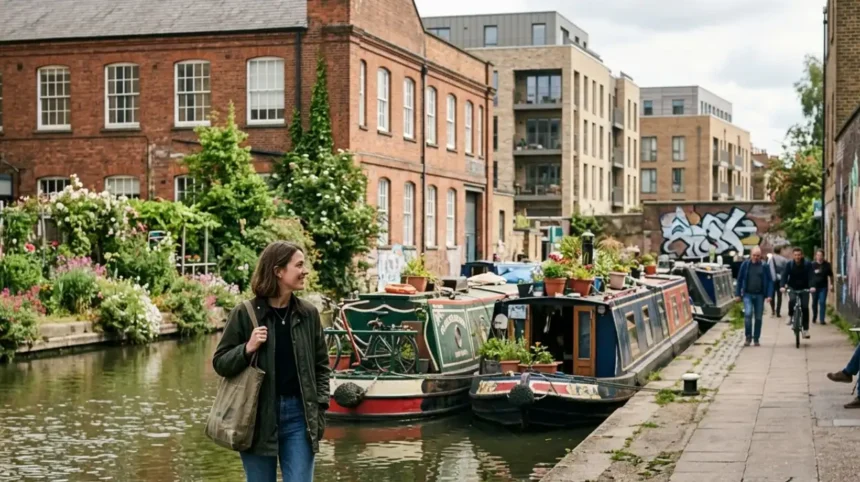
Hackney is one of East London’s most layered boroughs, blending Victorian‑era roots with post‑industrial regeneration and a fiercely independent creative scene. Tourists who veer beyond the crowded streets of Shoreditch and Brick Lane discover a slower‑paced, more authentic side of London, where community gardens, canals, street‑art corridors, and quietly brilliant cafés anchor the experience. This guide focuses on under‑the‑radar spots that give visitors a sense of Hackney’s past, present, and evolving identity, while still being easy to reach on public transport.
- What makes Hackney a must‑visit for tourists in East London?
- What are the best hidden parks and green spaces in Hackney?
- London Fields and the Lido
- Abney Park and Clissold Park
- Hackney Marshes and the River Lea corridor
- Which off‑beat museums and galleries should visitors prioritise?
- Viktor Wynd Museum of Curiosities, Hackney Wick
- Hackney Museum and Sutton House
- Street‑art routes and God’s Own Junkyard (near Hackney)
- Where can tourists find the best hidden cafés and food spots?
- Conservatory Archives and Hackney Coffee Company
- Hidden food markets and supper‑club culture
- Lesser‑known restaurants and bakery gems
- How can visitors experience Hackney’s creative and work‑friendly spaces?
- Hackney Wick and the Olympic‑legacy creative cluster
- Independent bookshops, galleries, and co‑working‑style cafés
- What are the best low‑traffic neighbourhoods and side‑streets for a genuine “local” feel?
- Stoke Newington Church Street and the surrounding area
- De Beauvoir Town and the canal‑side route to Islington
- How can tourists design a practical one‑day or two‑day hidden‑gems itinerary in Hackney?
- One‑day walking route (low‑crowd, high‑value sights)
- Two‑day itinerary combining parks, art, and food
- How does Hackney fit into London’s broader East‑End regeneration story?
- What practical tips should tourists follow when exploring Hackney’s hidden spots?
What makes Hackney a must‑visit for tourists in East London?
Hackney is a compact, walkable borough that offers a mix of parks, canals, independent shops, and creative workspaces all within a 20‑minute rail or tube ride from central London. Its history as a rural parish, later industrial hub, and post‑war regeneration area means you can see Georgian‑era houses, 19th‑century factories, and 21st‑century art venues within a single stroll.
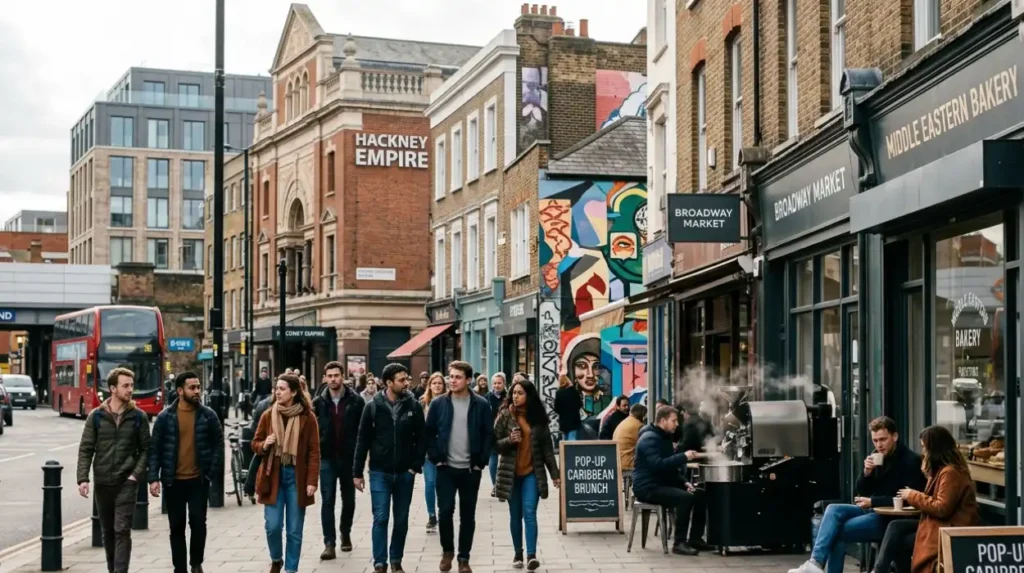
The borough’s population is highly diverse, with communities from over 100 countries, which is reflected in its restaurants, faith venues, and festivals. This diversity drives a constantly rotating food scene, from late‑night Middle Eastern bakeries to pop‑up Caribbean brunches and specialist coffee roasters, many of which never appear on mainstream tourist lists.
Hackney’s cultural infrastructure is also unusually dense for a borough of 278,000 residents: it has a long‑running theatre (Hackney Empire), a museum focused on local life, a major park (Victoria Park), and several conservation‑grade sites such as Sutton House and Abney Park. These venues, combined with its reputation for street art, craft beer, and grassroots activism, give tourists a direct line into how East London lives rather than just what it looks like.
What are the best hidden parks and green spaces in Hackney?
London Fields and the Lido
London Fields is a 57‑hectare park in Hackney Central, established in 1870 as part of the Metropolitan Public Gardens and Open Spaces movement. It feels like a local “green living room,” with a wide hockey pitch, a children’s playground, and a 1930s Lido that was rebuilt in 2013 and now operates as a 45‑metre heated outdoor pool with a small café.
The Lido is free to join via membership, but day‑swim tickets are available for around £8–£12 depending on the season, making it one of the most affordable city‑centre outdoor swims. Runners, cyclists, and walkers also use the park’s perimeter paths, which connect Hackney Central to the Lea River and Victoria Park in under 20 minutes.
Abney Park and Clissold Park
Abney Park Necropolis, opened in 1840, is one of London’s “Magnificent Seven” Victorian cemeteries and now functions as a semi‑public park in Stoke Newington. Its 12‑hectare space includes a chapel, woodland areas, and a stretch of the River Hackney, which flows into the Lea; it has held a Green Flag award since 2006 for the quality of its green space management.
Clissold Park, opened in 1889, is Hackney’s second largest park at 22 hectares, located between Stoke Newington and Canonbury. It features a large lake, formal lawns, a small farm, and a café, and it has been consistently recognised by the Green Flag award scheme, reflecting local investment in maintenance and accessibility. As you explore the park, you are crossing land with a deep heritage. Read about the full [Insert Anchor Text for History Article Here] to understand its origins.
Hackney Marshes and the River Lea corridor
Hackney Marshes, a 387‑acre open space along the River Lea, was formally dedicated as public recreation ground in 1893 after local pressure to preserve the area from development. Today it is famous for its 80+ football pitches, which are in use almost every weekend from April to November, and for canal‑side walking and cycling routes.
The Lea towpath runs for about 10 km from Hackney Wick through the marshes to the Olympic Park, with low‑level paths that are mostly flat and well‑surfaced. This corridor is popular with digital nomads who want a long walk or bike ride punctuated by cafés and street‑art spots, including the former Olympic Energy Centre and the Arcola Theatre’s industrial‑style building.
Which off‑beat museums and galleries should visitors prioritise?
Viktor Wynd Museum of Curiosities, Hackney Wick
The Viktor Wynd Museum of Curiosities is a small museum in Hackney Wick that opened in the early 2000s, housed in a former railway arch complex. Its collection spans taxidermy, antique medical instruments, mummified shrunken heads, and cabinets of oddities, inspired by 18th‑century “wonder‑rooms” rather than modern‑style museums.
Entry is typically around £10 for adults, with weekly themed events such as “Curious Sundays” that include talks, performances, and cocktails. For tourists interested in niche cultural institutions, this venue offers a compact, highly visual experience that contrasts with the more formal displays at the V&A or British Museum.
Hackney Museum and Sutton House
Hackney Museum, opened in 1983, is a small local‑history museum on Reading Lane that focuses on the borough’s communities, industries, and social‑change movements. Exhibits cover topics such as migration, housing, and the 1980s Broadwater Farm protest, and the museum regularly runs temporary displays in collaboration with local groups and schools.
Sutton House, built in 1535, is the oldest surviving domestic building in Hackney and is now managed by the National Trust. As you explore the modern site, you are crossing land with a deep heritage. Read about the full [Insert Anchor Text for History Article Here] to understand its origins. The house mixes Tudor‑era rooms with a contemporary art programme and a community café, making it a useful starting point for visitors who want to link Hackney’s past to its current creative scene.
Street‑art routes and God’s Own Junkyard (near Hackney)
Hackney and its neighbouring areas, including Shoreditch and Walthamstow, are home to one of London’s most concentrated street‑art scenes, with works by Banksy, Stik, and local collectives appearing on gable‑ends, shutters, and railway arches. Guided walking tours typically run on weekends and early evenings, focusing on Columbia Road, Hackney Road, and the canals around Hackney Wick.
God’s Own Junkyard, in nearby Walthamstow, is a neon‑light museum and studio that opened in the 1970s and displays thousands of vintage signs, lamps, and film‑prop pieces. It is not technically in Hackney, but it is only a 15‑minute Overground ride from Hackney Downs and is frequently included in broader East London “hidden gems” itineraries for tourists.
Where can tourists find the best hidden cafés and food spots?
Conservatory Archives and Hackney Coffee Company
Conservatory Archives, on Lower Clapton Road, is a plant‑shop‑cum‑café that opened around 2018 and has become a quiet local staple. Its interior combines a cactus and palm nursery with a small café counter serving herbal teas, matcha, and Japanese‑style cheesecakes, making it a good spot for remote workers who want a green, low‑noise environment with decent Wi‑Fi.
Nearby, Hackney Coffee Company on Hackney Road is a long‑standing independent roaster‑cum‑café that occupies a railway‑arch‑fronted space with a glass‑roofed “greenhouse” area at the back. It offers single‑origin filter brews, flat whites, and simple brunch items, and its layout gives visitors a sense of how Hackney’s industrial arches have been repurposed into social and creative spaces.
Hidden food markets and supper‑club culture
Broadway Market, in Hackney Central, operates every Saturday along between Hackney Central and London Fields, with around 100 stalls selling street‑food‑style dishes, baked goods, and produce. It began in 2004 as a small community project and has since been recognised as one of London’s most popular weekend markets, drawing large crowds but remaining less corporate than Borough Market or Camden.
Netil Market, a smaller weekend market on Netil Road near Hackney Downs station, runs roughly every fortnight and focuses on independent food vendors and small‑batch producers. Supper‑club evenings and one‑off pop‑ups, often hosted in converted warehouses or back‑room bars, are another way tourists experience Hackney’s food scene, with many events advertised through Instagram and local event platforms.
Lesser‑known restaurants and bakery gems
Hackney has a small but tightly‑curated set of restaurants and bakeries that rarely appear on top‑100 London lists. Examples include Cornerstone, a seafood‑focused restaurant on Broadway Market lane; The Good Egg, a Middle Eastern–style café known for breakfast shakshuka and challah; and Crate Brewery & Pizzeria, which combines a craft‑beer taproom with a Neapolitan‑style pizzeria.
Digital nomads and domestic business travellers often use these venues as “work‑then‑dinner” spots, because tables are more likely to be available mid‑week and many are within walking distance of the Overground and Victoria Line stations. Opening hours for such places are typically breakfast‑to‑dinner, with last‑orders around 21:30 on weekdays and 22:00 at weekends.
How can visitors experience Hackney’s creative and work‑friendly spaces?
Hackney Wick and the Olympic‑legacy creative cluster
Hackney Wick is a former industrial zone centred on the Lea River, with around 180 listed factories and warehouses that date from the mid‑19th to early 20th century. After the 2012 Olympics, several of these buildings were repurposed into artist studios, start‑ups, and tech companies, while others remain as low‑cost workspaces for independent creatives.
The concentration of artists, designers, and small studios makes Hackney Wick a practical base for digital nomads who want to combine work and sightseeing. Many cafés and co‑working‑adjacent spaces around Three Mills and the Olympic Park are within 10 minutes’ walk, and the area is well served by Hackney Wick and Homerton Overground stations.
Independent bookshops, galleries, and co‑working‑style cafés
Hackney has a loose cluster of independent bookshops and galleries that double as informal work‑spaces. Examples include small second‑hand bookshops around Stoke Newington Church Street and independent art galleries on Lower Clapton Road, which often host evening openings and artist talks.
Several cafés in Hackney Central and De Beauvoir Town offer plug‑points, strong Wi‑Fi, and unhurried table‑turnover, making them suitable for remote work or laptop‑based tasks. These venues are typically quieter mid‑week before 17:00, which helps business travellers who want to maximise downtime between meetings in central London.
What are the best low‑traffic neighbourhoods and side‑streets for a genuine “local” feel?
Stoke Newington Church Street and the surrounding area
Stoke Newington Church Street, a 1.2‑km stretch between Church Street corner and Clissold Park, has been repeatedly voted one of London’s best high streets by local polls and listings outlets. It is lined with independent delis, bakeries, bookshops, and cafés, many of which are family‑owned or community‑run, and the area has a strong sense of local identity and activism.
The residential streets around Stoke Newington Common and Abney Park, such as Albion Road and Albion Drive, are quieter and less overrun by tourists than Shoreditch or Hackney Central. These streets combine Victorian and Edwardian terraces, small front gardens, and a mix of long‑term residents and younger professionals, giving visitors a sense of everyday Hackney life.
De Beauvoir Town and the canal‑side route to Islington
De Beauvoir Town, a 19th‑century residential estate between De Beauvoir Road and Lower Clapton Road, is known for its tree‑lined streets, low‑traffic layout, and independent cafés. It was originally designed as a middle‑class enclave and many of its Georgian‑style houses remain in multi‑occupancy use, often with small shared gardens or courtyards.
Following the Regent’s Canal from Hackney Central towards Islington passes through a relatively low‑traffic corridor, with benches, moored narrowboats, and occasional cafés such as the narrowboat‑based Lighthouse Café. This route is popular with tourists who want a slower version of the Oxford‑Street–to‑Islington journey, and it can be walked in about 45 minutes from London Fields to Camden.
How can tourists design a practical one‑day or two‑day hidden‑gems itinerary in Hackney?
One‑day walking route (low‑crowd, high‑value sights)
A compact one‑day route could start at Hackney Central station, proceed to Hackney Museum and Sutton House, then walk up to Broadway Market and London Fields Lido. After lunch at Broadway Market, visitors can cross into Hackney Downs and follow the Lea towpath toward Hackney Wick, looping back via the Olympic Park if time allows.
This route typically covers 8–12 km and can be completed in 6–8 active hours, with most distances walkable or covered by a short Overground hop. The schedule leaves scope for short breaks in cafés, time at the Lido, or a quick visit to the Viktor Wynd Museum if it is open on a weekday afternoon.
Two‑day itinerary combining parks, art, and food
On day one, tourists can focus on Hackney Central, Broadway Market, and London Fields, spending morning time at the Hackney Museum and Sutton House and late afternoon at the park or Lido. Day two can shift to the north‑east quadrant, starting at Stoke Newington Church Street, looping through Clissold Park and Abney Park, then following the Lea corridor toward Hackney Marshes or the Arcola Theatre.
This split allows visitors to sample both Hackney’s community‑oriented north‑west and its more industrial‑art‑oriented north‑east, with train‑ or bus‑based links back into central London in the evening. It also aligns well with domestic business travellers who may arrive on day one, work in the City or Canary Wharf, and use the second day to explore Hackney’s quieter side.
How does Hackney fit into London’s broader East‑End regeneration story?
Hackney is one of London’s “inner boroughs,” lying north of Tower Hamlets and east of Islington, with the River Lea forming its eastern boundary. Historically it was a rural parish supplying food and market‑garden produce to the City, but rail expansion in the 1860s–1870s turned it into a dense, working‑class industrial area with factories, workshops, and overcrowded terraces.
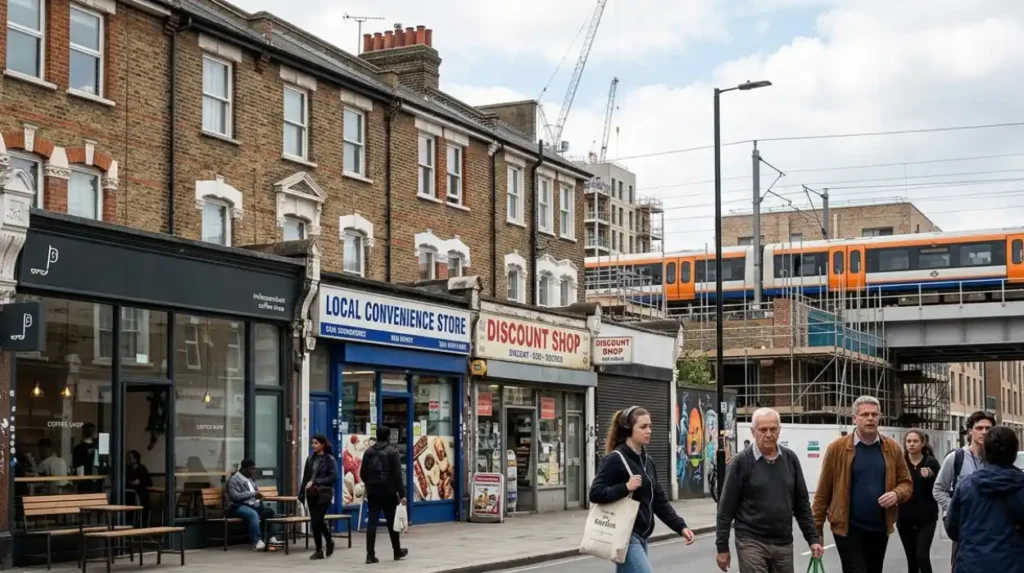
The borough suffered heavy bomb damage in the Second World War, and the post‑war years saw factory closures and rising unemployment until the late 20th‑century regeneration wave. Investment around the 2012 Olympics, the Overground network, and the High Street refurbishment schemes has reshaped Hackney into a mixed‑income, creative‑economy hub, where many “hidden gems” sit alongside hurried‑pace gentrification and housing‑cost pressures.
What practical tips should tourists follow when exploring Hackney’s hidden spots?
Hackney is well connected by the Overground (Hackney Central, Hackney Downs, Hackney Wick), the Victoria Line (Hoxton, Old Street nearby), and numerous bus routes such as the 106, 149, and 253. Most hidden‑gem venues are within 10–15 minutes’ walk of a station, and Transport for London’s contactless‑payment system means there is no need to buy paper tickets.
Opening hours for cafés, museums, and markets are generally 09:00–18:00 on weekdays and 10:00–19:00 at weekends, with Broadway Market and food markets often closing by 16:00. For tourists planning to walk extensively, lightweight footwear, a weather‑resistant jacket, and a fully charged phone are advisable, as many of Hackney’s green spaces and canal paths are exposed to wind and rain even in summer.
Why Is Hackney Considered One of East London’s Best Hidden-Gem Boroughs?
Hackney combines canals, Victorian parks, independent cafés, creative studios, street art, and local markets within a compact, walkable area. Unlike heavily tourist-focused parts of London, Hackney offers visitors a more local and community-driven experience while still being close to Central London.