Tower Hamlets is one of East London’s most diverse visitor destinations. The London borough combines the Tower of London, Tower Bridge, historic docklands, major markets, contemporary business districts, public parks, galleries, canals and neighbourhoods shaped by centuries of migration.
- Why is Tower Hamlets worth visiting on a London holiday?
- What are the most important historic attractions in Tower Hamlets?
- What can visitors see around Brick Lane and Spitalfields?
- Which markets are best for holidaymakers in Tower Hamlets?
- What can visitors discover in Whitechapel?
- What is there to do around Canary Wharf?
- Where can visitors enjoy museums and cultural attractions?
- Which parks and green spaces are best for visitors?
- What riverside experiences can holidaymakers enjoy?
- Which Tower Hamlets neighbourhoods should holidaymakers explore?
- How can visitors plan a one-day Tower Hamlets itinerary?
- Is Tower Hamlets suitable for families?
- What makes Tower Hamlets useful for digital nomads and business travellers?
- What is the best way to travel around Tower Hamlets?
- When is the best time to explore Tower Hamlets?
- How can visitors experience Tower Hamlets beyond the main tourist attractions?
- What should holidaymakers know before visiting Tower Hamlets?
- Why does Tower Hamlets remain important for London’s future?
Its geography creates a particularly varied holiday experience. The southern edge follows the River Thames, while neighbourhoods such as Whitechapel, Spitalfields, Brick Lane, Bethnal Green, Bow, Limehouse, Poplar and Canary Wharf provide distinct cultural and architectural environments.
Tower Hamlets also has strong connections with London’s commercial and maritime development. The Tower of London represents medieval royal and military history. The former docks represent Britain’s global trading history. Canary Wharf represents the transformation of former docklands into a major financial district.
The borough council describes Tower Hamlets as the heart of London’s East End and highlights its combination of ancient places, museums, markets, cultural attractions and modern architecture.
For holidaymakers, this means Tower Hamlets works well for history-focused days, food-focused visits, cultural trips, riverside walks, shopping, photography, family outings and short breaks.
Why is Tower Hamlets worth visiting on a London holiday?
Tower Hamlets is worth visiting because it combines royal heritage, docklands history, multicultural neighbourhoods, markets, museums, parks and modern architecture within one East London borough. Its attractions suit first-time visitors, returning tourists, families, business travellers and independent explorers.
Tower Hamlets occupies an important position between central London and the eastern part of the capital. Its southern boundary reaches the River Thames, creating direct connections with the historic Pool of London and the modern Docklands.
The borough takes its name from the historical relationship between the Tower of London and the hamlets surrounding it. Human activity in the area extends back thousands of years, with archaeological evidence including Stone Age and Bronze Age tools.
The area later developed around trade, manufacturing, immigration, housing and the docks. These layers remain visible in the streetscape.
Holidaymakers can therefore experience several different versions of London in a relatively compact area. Medieval fortifications stand close to Victorian infrastructure. Historic markets operate near contemporary office towers. Traditional East End streets sit beside regenerated waterfront districts.
The variety also makes Tower Hamlets suitable for different travel styles. A visitor interested in history can focus on the Tower of London and Museum of London Docklands. A food-focused traveller can explore Brick Lane and surrounding markets. Visitors seeking green space can use Victoria Park and Mile End Park.
What are the most important historic attractions in Tower Hamlets?
The Tower of London and Tower Bridge are the borough’s defining historic landmarks, while Whitechapel, Spitalfields, Brick Lane and the former docks reveal additional layers of medieval, Victorian, industrial, religious, commercial and migration history.
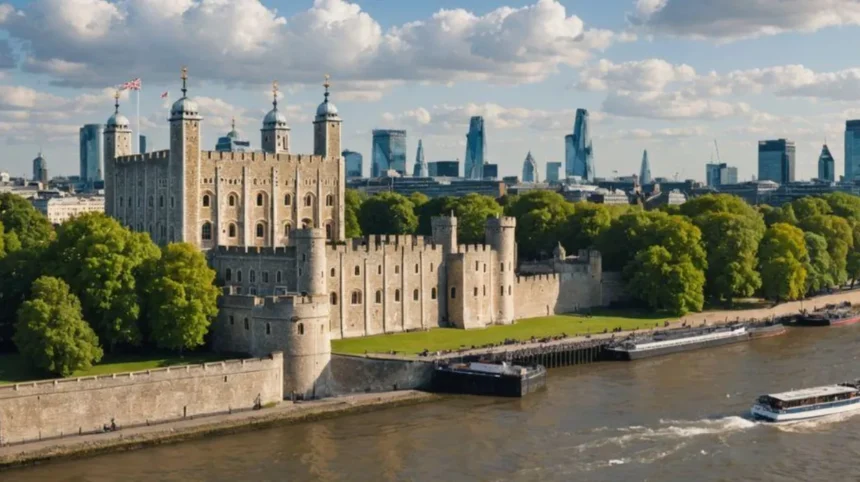
The Tower of London is the most significant historic attraction in the borough. William the Conqueror began the White Tower in 1066 as a demonstration of Norman power and as a strategic defensive structure beside the Thames. UNESCO inscribed the Tower of London as a World Heritage Site in 1988.
The complex developed over several centuries. Royal buildings, defensive walls and institutional functions were added during the medieval period. The Tower also served as a prison, royal residence, armoury, record repository and treasury.
The Crown Jewels remain one of its major visitor attractions. The Tower’s historic significance extends beyond royalty because it reflects the development of English government, military power and the Norman transformation of England.
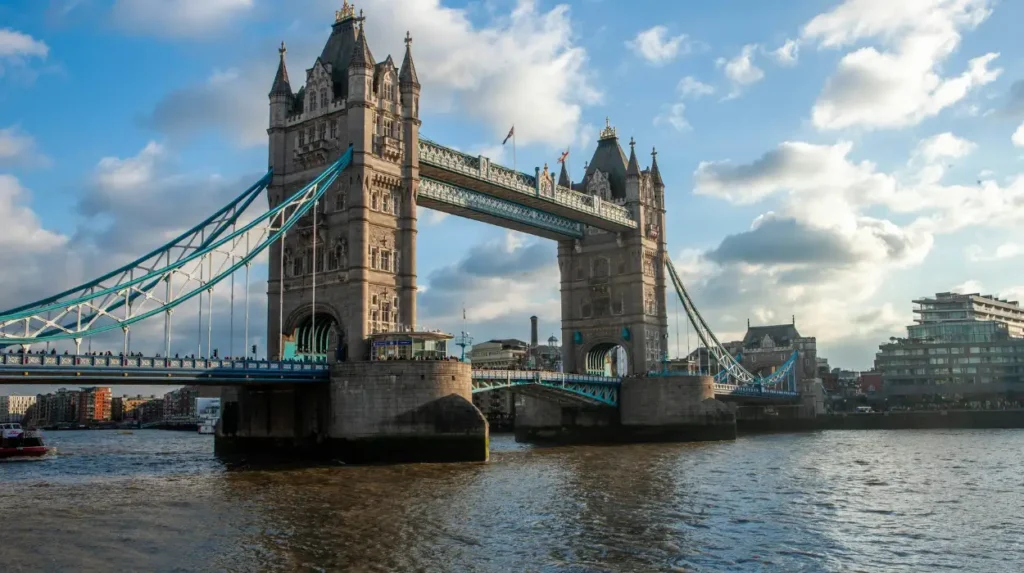
Tower Bridge provides a different historical experience. The bridge officially opened on 30 June 1894 after construction began in 1886. Its two high-level walkways stand about 42 metres above the River Thames.
Visitors inside Tower Bridge can explore the North and South Towers, high-level walkways, glass floors and Victorian Engine Rooms. The original steam-powered machinery operated the bridge lifts until the system changed to electricity in 1976.
Whitechapel and Spitalfields provide another historical layer. The streets reflect successive Huguenot, Jewish and Bangladeshi communities, alongside earlier industrial and commercial development.
As you explore the modern streets, you are crossing land with deep heritage. Read about the full to understand its origins.
What can visitors see around Brick Lane and Spitalfields?
Brick Lane and Spitalfields form one of East London’s strongest visitor districts for markets, food, street art, independent retail, historic buildings and multicultural heritage. The area combines traditional East End history with contemporary creative businesses and visitor activity.
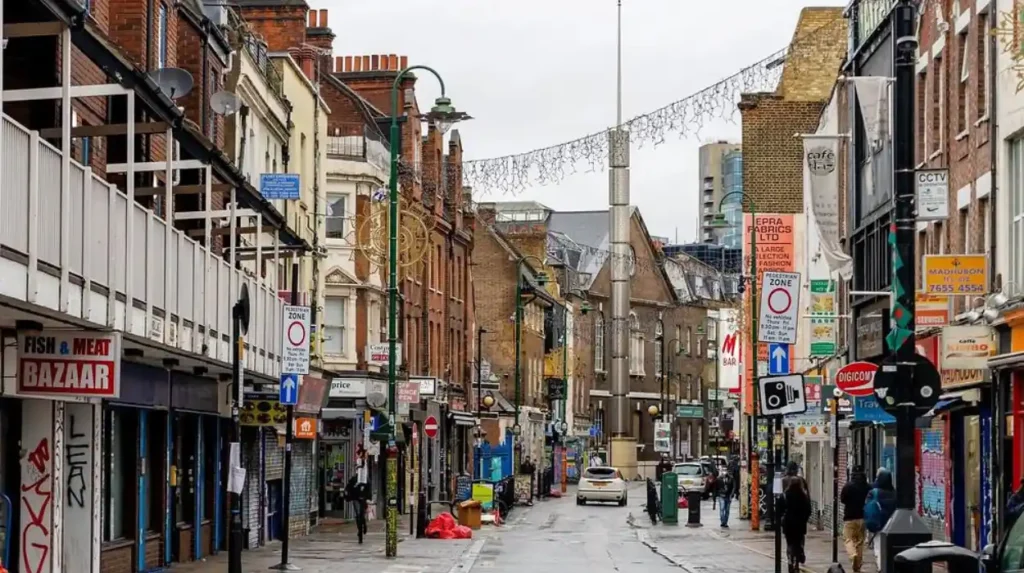
Brick Lane is one of the borough’s best-known streets. Tower Hamlets Council records its importance to the East End and highlights its historical connections with French Huguenot, Jewish and Bangladeshi communities.
The street is particularly busy on Sundays, when Brick Lane Market operates. The council lists fashion, food, art, jewellery, retro clothing, household goods and flea-market products among the market’s attractions. The market dates back to 1888 in its modern documented form.
The surrounding streets add further interest. Cheshire Street contains independent businesses and market activity. Sclater Street retains historic buildings connected with the area’s earlier commercial development.
Spitalfields sits immediately west of Brick Lane and provides a useful continuation of the walking route. Visitors can combine historic architecture with shopping, cafés, restaurants and market browsing.
Old Spitalfields Market is particularly useful for visitors seeking an indoor market environment. Its location makes it practical during unsettled weather and allows travellers to combine market browsing with nearby Christ Church Spitalfields and Brick Lane.
Christ Church Spitalfields is another important architectural landmark. Designed by Nicholas Hawksmoor, the church was completed in 1729. Its monumental design reflects the expansion of the East End during the eighteenth century.
Which markets are best for holidaymakers in Tower Hamlets?
Tower Hamlets has a broad network of established markets covering food, flowers, fashion, antiques, household goods and street food. Brick Lane, Columbia Road, Petticoat Lane, Roman Road, Whitechapel and Chrisp Street provide distinct market experiences.
Markets are central to the visitor experience in Tower Hamlets. The council currently identifies ten street markets, including Brick Lane, Bethnal Green Road, Chrisp Street, Columbia Road, Petticoat Lane, Roman Road, Roman Road Square, Sclater Street, Watney Market and Whitechapel Market.
Columbia Road Flower Market is one of the most distinctive. It operates on Sundays and specialises in flowers and plants. The council lists opening hours of 8am to 2pm and notes around 60 independent shops, galleries, antique sellers, cafés and pubs along the surrounding street.
This makes Columbia Road particularly suitable for visitors interested in photography, horticulture, independent retail and neighbourhood atmosphere.
Petticoat Lane Market has a different identity, with clothing, accessories and general market goods forming part of its traditional offer.
Roman Road Market provides another established East London market experience in Bow. Its location also makes it useful for visitors exploring Victoria Park and the surrounding residential streets.
Whitechapel Market provides a strong connection with the commercial and multicultural character of the area. It sits within a neighbourhood known for its long history of migration and trade.
Market opening days differ. Holidaymakers should check the council’s current information before travelling, particularly around public holidays and seasonal events.
What can visitors discover in Whitechapel?
Whitechapel combines medical history, religious heritage, public art, markets, food and multicultural communities. Its strongest visitor attractions include the Royal London Hospital heritage, Whitechapel Market, galleries, historic streets and nearby cultural sites.
Whitechapel is one of the most historically significant neighbourhoods in Tower Hamlets.
The Royal London Hospital has a documented history stretching back to the eighteenth century. Its foundation stone on Whitechapel Road was laid in 1752, and the first patients entered the hospital in 1757. The original Front Block was completed in 1759.
The hospital also played an important role in medical education. The London Hospital Medical College developed from earlier teaching activity, and a purpose-built medical school building opened in 1785.
The former hospital buildings later gained a new civic role. Tower Hamlets Council purchased and refurbished the historic Whitechapel Road building, which opened as Tower Hamlets Town Hall in 2023.
Whitechapel also connects naturally with Brick Lane and Spitalfields. Visitors can walk between these areas rather than treating them as isolated destinations.
The neighbourhood’s markets, restaurants and independent businesses reflect the continuing multicultural character of East London. This makes Whitechapel especially relevant to travellers who want cultural experiences beyond London’s conventional landmark circuit.
What is there to do around Canary Wharf?
Canary Wharf provides a modern contrast to historic Tower Hamlets through skyscrapers, public squares, riverside spaces, restaurants, retail, art installations and transport connections. It is especially useful for photography, dining, business downtime and contemporary architecture.
Canary Wharf occupies part of the former Docklands and represents one of London’s most substantial examples of waterfront regeneration.
Its skyline is dominated by high-rise commercial buildings. The area is internationally recognised as a financial and business centre, but it also contains public spaces, restaurants, shops, cultural programming and riverside routes.
The district is particularly useful for domestic business travellers. Visitors staying in nearby hotels can reach restaurants, cafés, public spaces and transport links without travelling into central London.
For leisure travellers, the architecture provides a strong contrast with the older East End. Tall office towers rise beside the historic waterways associated with London’s dock system.
Jubilee Park provides green space within the financial district. The landscaped environment creates a place for walking and short breaks between shopping, dining and sightseeing.
Canary Wharf also provides access to the River Thames. Visitors can combine the district with a riverside journey towards Greenwich or central London.
The area works particularly well as part of a wider Docklands itinerary rather than as a standalone historical attraction.
Where can visitors enjoy museums and cultural attractions?
Tower Hamlets has museums and cultural venues covering docklands history, local heritage, visual art, architecture and social history. The Museum of London Docklands is especially important for understanding the borough’s transformation through trade, shipping, industry and regeneration.
The Museum of London Docklands is one of the most important cultural institutions for understanding East London’s waterfront history.
Its subject is the history of London’s docks, the River Thames and the city’s relationship with global trade. The museum provides context for understanding why areas such as Limehouse, Poplar, Canary Wharf and the Isle of Dogs developed as major working waterfront districts.
Visitors interested in social history can combine the museum with a walking route through the surrounding Docklands.
Whitechapel Gallery provides a contrasting cultural experience. Established in 1901, the gallery has a long association with contemporary art and the cultural development of East London.
Its location makes it convenient to combine with Whitechapel Market, Brick Lane and Spitalfields.
The borough also contains historic religious buildings and architectural landmarks. Christ Church Spitalfields is particularly notable for its eighteenth-century design by Nicholas Hawksmoor.
For holidaymakers, these venues provide useful alternatives during rainy weather. They also give visitors a way to understand the social and economic forces that shaped the neighbourhoods surrounding the main tourist landmarks.
Which parks and green spaces are best for visitors?
Victoria Park is Tower Hamlets’ largest park and its strongest green-space attraction, covering 86 hectares. Mile End Park, local gardens, canalside routes and riverside spaces add further opportunities for walking, picnics, sport, relaxation and outdoor recreation.
Victoria Park is the largest park in Tower Hamlets. The council states that it covers 86 hectares and receives more than 9 million visitors each year. It opened in 1845 as a public park serving the working population of London’s East End.
The park contains sports facilities, play areas, picnic spaces, floral displays, a bandstand, refreshments, toilets and other visitor amenities. It also holds Green Flag and Green Heritage recognition.
Victoria Park works well for families because its facilities include dedicated play areas. It also suits travellers looking for open space after several hours of sightseeing.
The park forms part of a wider green corridor connecting areas towards Limehouse, the Regent’s Canal, Mile End Park and Queen Elizabeth Olympic Park.
Mile End Park is useful for travellers interested in combining greenery with canal-side walking. Its position between central East London neighbourhoods and Victoria Park makes it practical for longer walking itineraries.
The parks also provide an important balance to Tower Hamlets’ dense urban districts. Holidaymakers can combine museums and markets with outdoor recreation without leaving the borough.
What riverside experiences can holidaymakers enjoy?
The River Thames provides one of Tower Hamlets’ strongest sightseeing corridors, linking the Tower of London, Tower Bridge, historic wharves and Docklands. Walking routes and river services provide different ways to experience the borough’s waterfront.
The Thames defines much of southern Tower Hamlets.
The Tower Pier provides a particularly useful transport and sightseeing point. It serves the Tower of London and Tower Bridge and connects with the River Bus network. The pier is accessible and located close to Tower Hill Underground station.
Uber Boat by Thames Clippers operates river services across London, with 24 piers extending from Putney to Barking Riverside. The service connects residential areas, business districts and cultural destinations.
For visitors, a river journey changes the perspective of Tower Hamlets. Historic structures and modern skyscrapers appear together along the waterfront.
Walking beside the Thames is another straightforward option. The route around Tower Bridge provides views towards the City of London, the Tower of London and the river.
The waterfront also explains the borough’s economic history. London’s docks handled huge volumes of imported and exported goods before containerisation and changing shipping patterns transformed the industry.
Modern Docklands developed from this industrial landscape. Canary Wharf now represents the commercial transformation of former dock areas.
Which Tower Hamlets neighbourhoods should holidaymakers explore?
Holidaymakers should explore Tower Hill, Whitechapel, Spitalfields, Brick Lane, Bethnal Green, Bow, Limehouse, Poplar and Canary Wharf because each neighbourhood provides a distinct combination of history, food, architecture, markets, green space, culture or waterfront experiences.
Tower Hill is the strongest starting point for major historic attractions. It provides access to the Tower of London, Tower Bridge and the Thames.
Whitechapel is suited to visitors interested in medical history, markets, migration, architecture and food.
Spitalfields connects historic architecture with independent retail, restaurants and market activity.
Brick Lane is particularly associated with street food, markets, fashion, art and multicultural East End heritage.
Bethnal Green provides access to Victoria Park and a network of independent businesses and local streets.
Bow is useful for combining Roman Road Market with Victoria Park and canalside routes.
Limehouse provides stronger waterfront and canal associations. The area connects with the former dock system and the Regent’s Canal.
Poplar provides further Docklands history and access to modern waterfront developments.
Canary Wharf provides the strongest modern architectural contrast, with high-rise offices, public spaces, retail and riverside views.
These neighbourhoods should not be treated as identical destinations. Each represents a different part of Tower Hamlets’ urban development.
How can visitors plan a one-day Tower Hamlets itinerary?
A practical one-day itinerary starts around Tower Hill, continues through Tower Bridge and the riverside, moves towards Whitechapel and Spitalfields, then finishes around Brick Lane or another nearby neighbourhood for food and evening activity.
Begin at Tower Hill in the morning. Visit the Tower of London and allow sufficient time for the fortress complex.
Walk towards Tower Bridge after leaving the Tower. Visitors with a ticket can explore the high-level walkways and Engine Rooms, while those on a shorter itinerary can cross the bridge and continue along the river. Tower Bridge currently lists daily opening hours of 09:30 to 18:00, with last entry at 17:00, although visitors should check the official schedule before travelling.
Continue towards Whitechapel and Spitalfields. This section introduces a different side of the borough, with historic streets, markets, religious buildings, restaurants and independent businesses.
Finish around Brick Lane when the market is operating. Sunday provides the strongest market-focused itinerary because Brick Lane Market and Columbia Road Flower Market both operate that day, although their opening times differ.
A longer itinerary can replace part of the central walking route with a trip to Canary Wharf or Victoria Park.
The best itinerary therefore depends on the visitor’s priorities. Historic attractions require more time inside major sites. Markets and neighbourhoods require more flexible walking time.
Is Tower Hamlets suitable for families?
Tower Hamlets is suitable for families because it combines major landmarks, museums, parks, markets, riverside walks and child-friendly outdoor facilities. Victoria Park provides dedicated play areas and recreational facilities, while Tower Bridge offers an interactive engineering-focused attraction.
Families can structure a day around one major attraction and one outdoor destination.
Victoria Park is particularly useful because the council lists separate play areas, sports facilities, picnic areas, toilets and refreshments.
Tower Bridge also offers an educational component. Its visitor experience explains architecture, engineering and the people who constructed and operated the bridge. The Engine Rooms contain original Victorian machinery associated with the historic lifting system.
The Tower of London provides another major historical experience. Its scale allows families to explore fortifications, royal history and the Crown Jewels within one attraction.
Markets offer shorter, flexible activities. Families can combine food stops with browsing rather than committing an entire day to a single venue.
River services also provide a practical way to vary transport during a sightseeing day. Tower Pier has step-free access and serves the Tower of London and Tower Bridge area.
What makes Tower Hamlets useful for digital nomads and business travellers?
Tower Hamlets suits digital nomads and business travellers through its combination of major transport links, cafés, public spaces, restaurants, modern offices, riverside environments and cultural attractions. Canary Wharf provides the strongest business setting, while Spitalfields and Brick Lane offer more informal environments.
Canary Wharf is the borough’s most important business district. Its concentration of offices, restaurants, shops and transport connections makes it practical for travellers with limited free time.
A business traveller staying in the area can use downtime for a riverside walk, visit a public park, eat in Spitalfields or travel towards the Tower of London.
Digital nomads can also use neighbourhood cafés and informal work environments around Spitalfields, Brick Lane, Whitechapel and Canary Wharf. Work suitability depends on individual venue policies, Wi-Fi quality, seating and peak-period demand, so visitors should confirm conditions directly with each venue.
Public spaces provide alternatives when indoor working environments are unsuitable. Canary Wharf’s landscaped areas and riverside spaces provide opportunities for breaks between meetings.
Transport is another advantage. Tower Hamlets contains Underground, Docklands Light Railway, Overground, National Rail and river connections. This makes the borough useful as a base for travellers who need access to several parts of London.
What is the best way to travel around Tower Hamlets?
The easiest way to explore Tower Hamlets is to combine walking with London Underground, Docklands Light Railway, Overground, buses and river services. Walking works best for compact neighbourhood routes, while public transport connects the borough’s wider attractions efficiently.
Tower Hamlets has a dense public transport network.
Tower Hill serves the District and Circle lines and is convenient for the Tower of London and Tower Pier. Tower Gateway provides access to the DLR and sits within walking distance of the waterfront.
Aldgate East provides access to Brick Lane and Whitechapel. Liverpool Street is also within walking distance of Spitalfields and Brick Lane.
Mile End is useful for Victoria Park and the surrounding neighbourhoods. The council estimates a walking time of around 10 to 15 minutes between Mile End station and Victoria Park via Grove Road.
The DLR is particularly valuable for Docklands journeys. It connects areas such as Canary Wharf, Poplar and the wider East London network.
River services provide a scenic alternative. Thames Clippers operates across the Thames and connects numerous piers throughout London.
Walking remains the most effective method for exploring Brick Lane, Spitalfields and Whitechapel because many attractions sit close together.
Visitors should use a journey planner before travelling because engineering works, service changes and special events affect London transport.
When is the best time to explore Tower Hamlets?
The best time depends on the attraction. Sundays suit visitors targeting Brick Lane and Columbia Road markets, while weekdays work well for quieter museum and business-district visits. Spring and summer provide longer daylight for parks and riverside walks.
Sunday is particularly significant for market-focused trips. Brick Lane Market operates on Sundays from 10am to 3pm, while Columbia Road Flower Market operates on Sundays from 8am to 2pm according to Tower Hamlets Council.
This makes Sunday useful for a combined market itinerary. Visitors can start at Columbia Road, continue towards Brick Lane and finish around Spitalfields.
Weekdays suit travellers prioritising museums, historic attractions and business districts.
Summer provides longer daylight hours for Victoria Park, riverside walks and outdoor photography. However, major attractions remain year-round destinations.
Winter offers a different visitor pattern. Indoor museums, markets, galleries and historic buildings become more important, while early sunsets reduce time for long outdoor itineraries.
Holidaymakers should also check attraction opening schedules before travel. Individual venues operate their own admission arrangements, seasonal programmes and temporary exhibitions.
How can visitors experience Tower Hamlets beyond the main tourist attractions?
Visitors can explore Tower Hamlets beyond major landmarks by walking its historic streets, visiting local markets, following canals, exploring independent shops, using public parks, viewing architecture and combining neighbourhoods rather than limiting the trip to headline attractions.
The borough’s strongest feature is its concentration of different experiences.
A visitor can start with royal history at the Tower of London, examine Victorian engineering at Tower Bridge, study docklands history at the Museum of London Docklands, browse markets in Brick Lane and relax in Victoria Park.
This sequence demonstrates the borough’s historical development from medieval fortress and port to industrial East End and modern financial district.
Local markets provide particularly strong opportunities to see everyday commercial activity. Tower Hamlets Council describes its markets as a distinctive part of the borough’s identity and highlights their range and diversity.
Historic streets also reward slower exploration. Brick Lane’s surviving buildings, Spitalfields architecture and Whitechapel’s institutional landmarks reveal how communities and industries shaped East London.
Canals provide another quieter route. The Regent’s Canal corridor links green spaces and neighbourhoods and forms part of the broader network around Victoria Park and Mile End.
The result is a borough that supports both conventional sightseeing and independent exploration.
Explore More Area Guide
Tower Hamlets Tourist Guide: Attractions, History & Culture
Tower Hamlets Sightseeing Guide: Top Places to See, East London 2026
What should holidaymakers know before visiting Tower Hamlets?
Holidaymakers should plan around attraction opening times, market days, walking distances, transport changes and weather. Combining nearby destinations reduces travel time and creates a more efficient itinerary across Tower Hill, Whitechapel, Spitalfields, Brick Lane, Victoria Park and Canary Wharf.
Tower Hamlets is large enough to require basic itinerary planning. The Tower Hill area and Canary Wharf are not next-door attractions, even though both sit within the same borough.
Visitors should group destinations geographically.
A historic riverside day can focus on the Tower of London, Tower Bridge and Tower Pier.
A culture and food day can focus on Whitechapel, Spitalfields and Brick Lane.
A green-space day can combine Victoria Park, Mile End Park and nearby canals.
A modern London day can focus on Canary Wharf, its public spaces, architecture, restaurants and waterfront.
Market visits require particular attention to days and times. Columbia Road and Brick Lane have Sunday-specific schedules.
Transport should also be checked before departure. River services, Underground routes and DLR services operate according to changing timetables.
For major attractions, advance ticket planning remains useful, especially during school holidays and peak tourism periods.
Why does Tower Hamlets remain important for London’s future?
Tower Hamlets remains important because it connects London’s historic core with regenerated Docklands, major business districts, established communities, cultural institutions, transport infrastructure and waterfront development, creating a borough where historic East London and modern London continue to operate together.
Tower Hamlets has already experienced major economic transformation.
The former docks represent the industrial phase of London’s global trading economy. Canary Wharf represents the subsequent development of a major international financial district.
The borough’s historic neighbourhoods continue to support markets, restaurants, cultural institutions and independent businesses. Its parks and waterways provide essential public spaces within a densely developed urban environment.
The Tower of London and Tower Bridge anchor the borough’s international tourism profile. UNESCO recognises the Tower of London for its outstanding cultural value and its importance as a rare surviving medieval fortress-palace complex.
Victoria Park demonstrates the continuing importance of large public green spaces. Its 86 hectares and more than 9 million annual visitors illustrate its significance to both residents and visitors.
River transport also strengthens Tower Hamlets’ connection with wider London. Thames Clippers currently serves 24 piers across the capital, providing a transport option that links residential, business and cultural destinations.
For holidaymakers, these characteristics create a complete East London destination. Tower Hamlets provides historic landmarks, cultural venues, markets, neighbourhoods, parks, waterways and modern architecture within one borough.
The most effective visit therefore goes beyond one famous attraction. Exploring several connected areas reveals how Tower Hamlets developed from medieval frontier and working waterfront into one of London’s most diverse and strategically important urban districts.
What are the best attractions in Tower Hamlets?
The best attractions in Tower Hamlets include the Tower of London, Tower Bridge, Museum of London Docklands, Victoria Park, Brick Lane, Spitalfields, Whitechapel and Canary Wharf. These destinations cover history, culture, markets, green spaces, architecture and riverside experiences.