Tower Hamlets is one of East London’s most historically significant boroughs, combining medieval churches, riverside fortifications, Georgian almshouses, Victorian civic buildings and historic commercial architecture. Its buildings document the development of London as a royal centre, a trading port, an industrial district and a multicultural urban community.
- Which historic buildings should visitors see in Tower Hamlets?
- Why is the Tower of London important to East London’s architectural history?
- What makes Christ Church Spitalfields a significant historic building?
- Where can visitors see medieval church architecture in Stepney?
- What can visitors learn from Trinity Green Almshouses?
- Which historic houses can visitors discover around Stepney Green?
- What historic buildings reveal the maritime heritage of Wapping?
- Where can visitors explore historic dock buildings and industrial architecture?
- What is the architectural significance of the Church of St George in the East?
- How does Tower Bridge contribute to Tower Hamlets’ historic built environment?
- Which historic public buildings explain Tower Hamlets’ civic development?
- How can visitors understand Tower Hamlets’ historic buildings through its conservation system?
- How can visitors plan a walking route around historic buildings in Tower Hamlets?
- Why should visitors explore historic buildings beyond Tower Hamlets’ major landmarks?
- What should visitors know before visiting historic buildings in Tower Hamlets?
Visitors can explore the borough’s architectural heritage through landmarks such as the Tower of London, Christ Church Spitalfields, St Dunstan and All Saints Church in Stepney, Trinity Green Almshouses and the former warehouses around the historic docks. These sites reveal how religion, maritime trade, public welfare, migration and urban development shaped East London.
The London Borough of Tower Hamlets identifies a substantial collection of nationally listed and locally significant heritage assets. Its historic buildings range from medieval structures to twentieth-century architecture, making the borough relevant to visitors interested in history, architecture, photography and cultural tourism.
Which historic buildings should visitors see in Tower Hamlets?
Tower Hamlets offers historic buildings from several architectural periods, including the Tower of London, Christ Church Spitalfields, St Dunstan and All Saints Church, Trinity Green Almshouses and historic dock structures. Each landmark explains a different aspect of East London’s religious, royal, commercial and social development.
The best starting point depends on the type of history a visitor wants to explore. The Tower of London represents royal authority and medieval defence. Christ Church Spitalfields demonstrates English Baroque architecture. St Dunstan and All Saints Church preserves the religious heritage of medieval Stepney, while Trinity Green reflects historic approaches to housing and charitable support.
Historic buildings are not limited to major visitor attractions. Former merchant houses, public institutions, churches, warehouses and surviving industrial structures provide evidence of how ordinary people lived and worked. Many are best appreciated from public streets and squares, even when their interiors are not open to visitors.
A useful sightseeing plan combines major attractions with smaller buildings in nearby neighbourhoods. Visitors can explore the Tower of London and surrounding riverside heritage before continuing towards Wapping, Whitechapel, Stepney, Mile End and Spitalfields.
Why is the Tower of London important to East London’s architectural history?
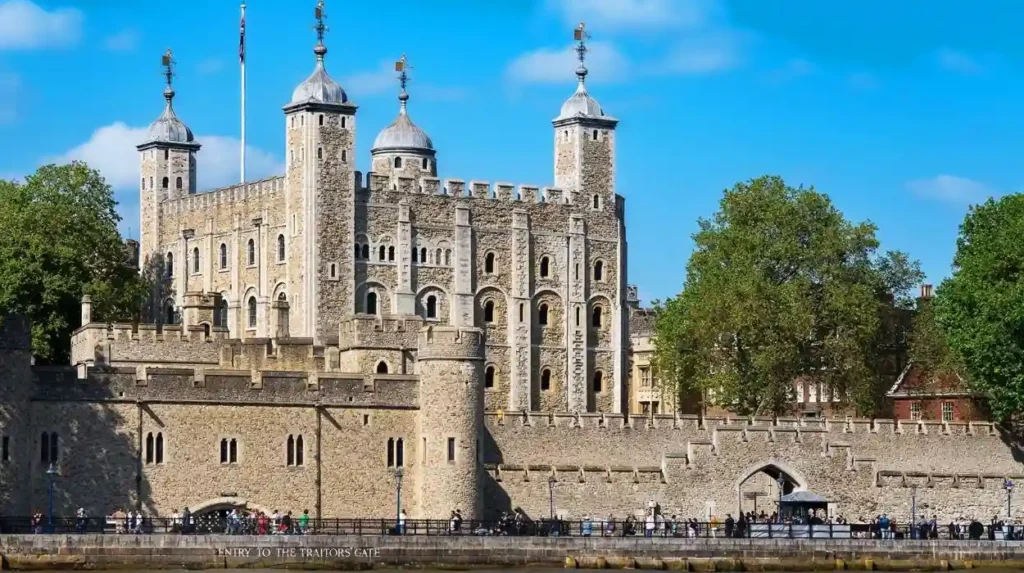
The Tower of London is a historic royal fortress on the River Thames and a UNESCO World Heritage Site. Its medieval defensive buildings, royal associations and surviving structures document centuries of English political, military and institutional history.
The Tower of London is one of the defining historic structures in the capital. William the Conqueror established the White Tower in the late eleventh century following the Norman Conquest of 1066. Subsequent monarchs expanded the complex with additional walls, towers and defensive features.
The White Tower is the central architectural landmark. Its substantial stone construction demonstrates the military and political importance of Norman royal fortifications. The wider complex developed over time to accommodate royal residence, administration, imprisonment and the protection of royal possessions.
The site also contains buildings associated with religious and institutional life. The Chapel of St Peter ad Vincula, within the fortress, is part of the historic complex. The Tower’s different structures show how a single royal site adapted to changing political and practical needs.
The London Borough of Tower Hamlets recognises the Tower of London as a World Heritage Site and identifies its buildings as nationally significant listed structures.
Visitors should allow time to explore the different areas rather than treating the White Tower as the entire attraction. Ticket arrangements, access conditions and opening times should be checked through the official Historic Royal Palaces website before travelling.
The Tower also provides a useful starting point for understanding the relationship between London’s historic centre and its eastern riverside districts. The Thames supported transport, defence and commerce, linking the capital’s royal institutions with the docks and trading communities further east.
What makes Christ Church Spitalfields a significant historic building?
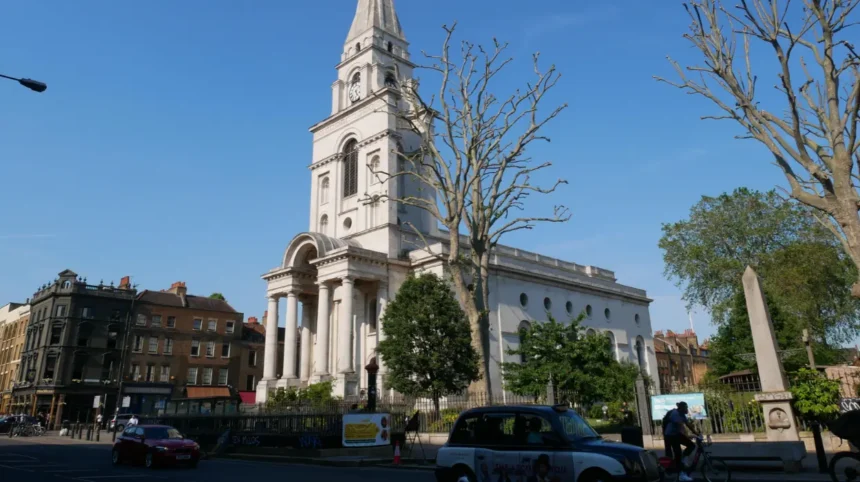
Christ Church Spitalfields is an eighteenth-century Anglican church designed by Nicholas Hawksmoor. Its monumental English Baroque architecture, prominent tower and carefully composed exterior make it an important landmark in the historic Spitalfields neighbourhood of Tower Hamlets.
Christ Church Spitalfields stands near Commercial Street and Fournier Street, in an area shaped by migration, textile production and commercial activity. The church was designed by Nicholas Hawksmoor, an architect known for his distinctive contribution to English Baroque architecture.
Construction began in the early eighteenth century, and the church was completed in 1729. Its scale and architectural composition distinguish it from the surrounding streets of smaller residential and commercial buildings.
The building features a substantial tower, classical architectural details and a carefully balanced exterior. These elements reflect the importance placed on prominent parish churches during a period when London was expanding rapidly beyond its older urban core.
Christ Church also provides context for understanding Spitalfields’ social history. The surrounding neighbourhood became home to communities of Huguenot refugees, Jewish migrants and, later, other immigrant groups. Textile trades and related businesses shaped the area’s streets and buildings.
The church should be considered alongside the historic houses and former commercial premises nearby. Together, these structures illustrate how religious institutions, residential architecture and trade developed within the same urban environment.
Visitors should check current access arrangements before planning an interior visit, as opening hours and access for worship, heritage visits and events can differ.
Where can visitors see medieval church architecture in Stepney?
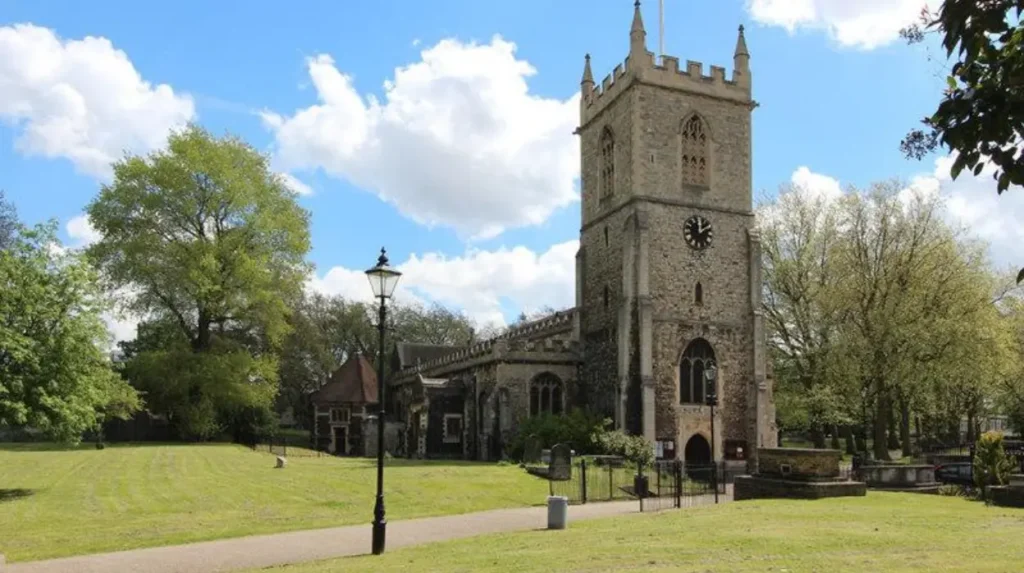
St Dunstan and All Saints Church in Stepney is a historic parish church with origins associated with the early medieval settlement. Its surviving architectural fabric and long religious history connect visitors with the development of Stepney before and after London’s medieval expansion.
St Dunstan and All Saints Church stands on Stepney High Street and is commonly known as the Church of the High Seas because of its historical associations with London’s maritime communities. The church has a long history, with origins traditionally placed in the early medieval period and surviving elements reflecting several centuries of rebuilding and alteration.
Stepney was an important settlement before the surrounding district became densely urbanised. Historic England’s research identifies archaeological evidence from the late Bronze Age and early Iron Age in the wider area, alongside evidence for an early medieval settlement. The Domesday Book also records Stepney as a substantial settlement in the eleventh century.
The church’s long development makes it relevant to visitors interested in how religious buildings evolve. Medieval churches often underwent alterations as congregations grew, religious practices changed and local communities gained new resources.
The churchyard also contributes to the historic setting. Its gates and railings, recorded by Historic England as dating from 1844, form part of the area’s protected architectural heritage.
Visitors should observe any restrictions around services, private areas and photography. The surrounding streets provide additional opportunities to examine older buildings and understand the historic character of Stepney.
The site is particularly useful for a walking itinerary focused on East London’s early settlement patterns, parish institutions and connections with river-based occupations.
What can visitors learn from Trinity Green Almshouses?
Trinity Green Almshouses are a late seventeenth-century charitable housing complex on Mile End Road. Their brick cottages, central courtyard, chapel and historic entrance structures illustrate how organised philanthropy provided accommodation and support within London’s expanding communities.
Trinity Green, historically associated with Trinity Hospital, dates from 1695. Historic England records the surviving almshouses and chapel as a Grade I listed group, including the gates, railings, walls and entrance piers.
Almshouses are residential buildings established through charitable foundations to provide accommodation for people who met specified eligibility conditions. Historically, these conditions often related to poverty, age, occupation, religious affiliation or service to a particular institution.
Trinity Green’s layout includes two rows of cottages facing a central courtyard and a detached chapel at the northern end. Red brick, tiled roofs, decorative entrance details and formal architectural elements give the complex a distinct appearance.
The design also demonstrates the relationship between housing and religious provision. The chapel formed part of the original institutional arrangement rather than functioning as an unrelated building. The enclosed courtyard created a defined residential environment beside one of East London’s major historic roads.
For visitors, Trinity Green offers a different perspective from royal fortresses and monumental churches. It reveals how charitable organisations shaped the built environment and responded to the practical needs of London’s population.
The complex is a protected historic property, so visitors should view it respectfully from accessible public areas and check access arrangements before attempting to enter. Its location on Mile End Road makes it a useful stop within a wider Stepney and Mile End heritage walk.
Which historic houses can visitors discover around Stepney Green?
Stepney Green contains surviving historic houses that reveal how merchants and prosperous residents lived in East London during the seventeenth and eighteenth centuries. Its older brick buildings, sash windows, decorative doorways and historic streets provide a quieter alternative to the borough’s major tourist attractions.
One notable building is 37 Stepney Green, a house dating from around 1694. Historic England identifies it as a rare surviving example of the substantial brick classical houses that once characterised this part of East London. Its architectural details include a decorated doorway, a shell-shaped hood and historic interior features.
The building’s history also reflects the social and economic inequalities associated with London’s commercial expansion. Its original owner, Dormer Sheppard, was a merchant and slave owner. The house later belonged to Dame Mary Gayer, whose husband had served as governor of Bombay for the East India Company. It subsequently served an institutional role, including use as a home for older Jewish residents, before returning to private residential use in 1998.
This history illustrates why architectural heritage involves more than identifying a building’s age or style. Historic houses also document the people, businesses, imperial networks and institutions associated with their occupation.
Stepney Green contains other listed Georgian houses. Numbers 21 and 23, for example, date from around 1740 and feature yellow brick, red brick dressings, sash windows and decorative entrance details. Historic England records these buildings as part of a group of historic properties in the street.
Visitors can explore the neighbourhood on foot, examining the relationship between the historic houses, garden spaces and surrounding streets. Since many properties remain in private use, exterior viewing from public pavements is the appropriate approach unless access is specifically offered.
What historic buildings reveal the maritime heritage of Wapping?
Wapping’s historic buildings reflect London’s maritime economy through former dock offices, warehouses, workshops and surviving dock structures. These buildings document the people and businesses responsible for handling cargo, maintaining ships and managing river traffic along the Thames.
Wapping developed alongside the River Thames, where access to shipping supported warehouses, commercial premises and maritime services. Its historic streets preserve elements of the built environment associated with the working river.
The Dockmaster’s Office at St Katharine Docks is one example of a building connected with the organisation of dock operations. Historic England’s local heritage collection describes the building as historically associated with the oversight of activity within the docks.
A dockmaster supervised operational matters within a dock, including the coordination of vessels and activities within the harbour area. Buildings associated with this role therefore provide evidence of the administrative systems that supported maritime trade.
Other historic properties in the wider area include former ships’ chandlers’ workshops and sail lofts. Ships’ chandlers supplied vessels with equipment and provisions, while sail lofts supported the manufacture and repair of sails. These specialist businesses depended on the movement of ships and the concentration of maritime services around the river.
Historic warehouses are equally important. Their substantial brick construction, loading arrangements and position near water or former dock entrances reflect the requirements of storing and transferring goods.
Wapping’s architectural heritage is best explored as part of a wider riverside walk. Visitors should distinguish surviving historic buildings from later conversions and new developments, as many former industrial premises now serve residential, hospitality or commercial purposes.
The district demonstrates how an industrial landscape can retain evidence of its original functions even after the industries that created it have changed.
Where can visitors explore historic dock buildings and industrial architecture?
Historic dock buildings in Tower Hamlets include warehouses, dock walls, pumping infrastructure and structures associated with former commercial basins. Their design reflects the engineering and storage systems that supported London’s international trade during the eighteenth, nineteenth and twentieth centuries.
The West India Docks transformed the Isle of Dogs and neighbouring districts by providing enclosed facilities for handling international cargo. The docks opened in 1802 and became an important part of London’s expanding commercial infrastructure.
Warehouses were essential to this system. They provided secure storage for goods arriving by ship before distribution into London or onward transport to other destinations. Their size and construction reflected the value, volume and handling requirements of the commodities passing through the docks.
Historic England’s heritage records identify structures associated with the West India Docks, including dock walls and remains connected with the former Blackwall Basin. These features demonstrate the engineering work required to create and maintain enclosed waterways for commercial shipping.
The Museum of London Docklands, located in a historic warehouse at West India Quay, offers a way to explore this history through exhibitions and collections. The surrounding buildings provide architectural context for understanding the movement of cargo, workers and ships through the area.
Industrial heritage includes more than large warehouses. Pumping stations, dock offices, workshops and surviving water-related infrastructure also explain how the port operated. Wapping Hydraulic Power Station is an example of important industrial architecture recognised through listed-building protection.
Visitors interested in industrial design should look for differences in building scale, window placement, brickwork and the relationship between structures and waterways. These features help identify the original function of former commercial buildings.
The docklands also show how urban regeneration changes historic environments. Warehouses now used for museums, homes, offices and restaurants retain links to their original industrial setting while serving contemporary needs.
What is the architectural significance of the Church of St George in the East?
The Church of St George in the East is an eighteenth-century parish church associated with architect Nicholas Hawksmoor. Its monumental form and classical Baroque design contribute to the architectural heritage of the East End and illustrate the period’s investment in prominent urban churches.
St George in the East is among the historic churches associated with the eighteenth-century development of East London. Nicholas Hawksmoor designed several major London churches, and his work is known for substantial proportions, strong architectural geometry and distinctive towers.
The church belongs to a period when London’s population was growing and new parish infrastructure was needed. Churches served as places of worship and as important landmarks within expanding neighbourhoods.
Its architectural significance is strengthened by its relationship with the surrounding streets. The building’s scale distinguishes it from the smaller houses and commercial premises nearby, reflecting the institutional role of the parish church in the local community.
Church architecture also provides evidence of changing approaches to public buildings. Classical elements, symmetrical compositions and monumental entrances communicated the importance of religious institutions within the urban landscape.
Visitors should check whether the church is open before planning an interior visit. Even when internal access is unavailable, viewing its exterior within the surrounding street pattern helps explain the relationship between architecture and neighbourhood development.
St George in the East also complements visits to Christ Church Spitalfields and St Dunstan and All Saints Church. Comparing these buildings reveals differences in architectural style, historical period and local setting across Tower Hamlets.
How does Tower Bridge contribute to Tower Hamlets’ historic built environment?
Tower Bridge is a historic Thames crossing with major architectural and engineering significance. Its towers, suspension elements and bascule mechanism connect the development of London’s river transport with the growth of the eastern commercial districts and the wider capital.
Tower Bridge opened in 1894. Its design addressed the need for a new river crossing while preserving access for ships travelling along the Thames. The bridge combines a movable central section with suspension spans and prominent architectural towers.
A bascule bridge uses pivoting sections that lift to allow vessels to pass. At Tower Bridge, the lifting mechanism enabled river traffic to continue moving through a busy section of London while road users crossed above.
The bridge’s towers and external detailing give it a distinctive appearance, but its significance also lies in its practical function. Its construction responded to growing road traffic and the continuing importance of river transport.
The London Borough of Tower Hamlets includes Tower Bridge among its Grade I listed heritage assets.
For visitors, Tower Bridge offers an opportunity to examine how engineering infrastructure can also become a historic landmark. The surrounding riverfront provides views of the bridge, the Tower of London and the built environment on both sides of the Thames.
Visitors should distinguish between the bridge itself and the separate Tower Bridge visitor experience. Access to the walkways and engine rooms follows the attraction’s own ticketing and opening arrangements.
Tower Bridge also provides context for the evolution of East London. The bridge improved connections across the river while the surrounding districts continued to develop as centres of housing, commerce, industry and transport.
Which historic public buildings explain Tower Hamlets’ civic development?
Tower Hamlets preserves historic public buildings that document the growth of local government, public services and community institutions. Former vestry halls, libraries and civic premises show how nineteenth-century urban authorities responded to population growth and changing administrative responsibilities.
The former Mile End Vestry Hall on Bancroft Road is an important example of civic architecture. Historic England’s research records that its earliest section was built in 1860–61 for the vestry of Mile End Old Town. A vestry was a local parish body responsible for various community and administrative matters before modern local government structures developed.
The building was designed by James Knight, the vestry surveyor. Later extensions followed in 1905–06 and 1936–37 as the premises adapted to changing public uses. The building’s conversion to library use reflects the development of public educational and cultural services in the borough.
Civic buildings are useful architectural landmarks because they show how local authorities expressed their public role. Their scale, formal façades and purpose-built rooms reflected the need for meeting spaces, administrative offices and services for residents.
Tower Hamlets’ historic civic environment should also be understood alongside its churches, charitable institutions and commercial buildings. Each served a different purpose, but together they reveal how neighbourhoods organised religious life, welfare, commerce and public administration.
Visitors interested in civic history can examine these buildings from public streets and research their former functions through Historic England’s records. Current use and public access should be checked before arranging an interior visit.
How can visitors understand Tower Hamlets’ historic buildings through its conservation system?
Historic buildings in Tower Hamlets receive different levels of recognition according to their architectural, historic and local significance. National listing, conservation areas and local heritage records help identify important structures and guide decisions about their protection, alteration and future use.
The statutory listed-building system in England has three principal grades:
- Grade I: buildings of exceptional interest, including the Tower of London and Christ Church Spitalfields.
- Grade II*: buildings of more than special interest, including important examples of industrial architecture.
- Grade II: buildings of special architectural or historic interest, including many houses, churches and local structures.
These grades identify the level of recognised significance rather than a visitor rating. A Grade II building can provide valuable evidence about local history even when it is less visually prominent than a major monument.
Tower Hamlets Council provides information about listed buildings and locally listed heritage assets. Its guidance explains that listed-building consent is generally required for alterations affecting the special architectural or historic character of a protected building. Unauthorised work that affects this character can constitute a criminal offence.
Conservation areas protect the character of a wider neighbourhood rather than focusing exclusively on an individual building. They help preserve relationships between streets, buildings, open spaces and historic layouts.
Historic England’s National Heritage List for England allows visitors to investigate a building’s designation, statutory description and recorded architectural features. These records are particularly useful when a building is difficult to interpret from its exterior alone.
Understanding conservation also changes how visitors approach historic sites. Original brickwork, old windows, decorative ironwork and building layouts provide evidence about past construction techniques and uses. Protecting these details helps retain the information that future researchers and visitors rely on.
How can visitors plan a walking route around historic buildings in Tower Hamlets?
Visitors can explore Tower Hamlets’ architectural heritage through neighbourhood-based walks that combine major landmarks with smaller historic streets. A practical route groups buildings by location, checks access arrangements in advance and allows time for museums, church interiors and riverside views.
A route through the borough works best when it follows geographical clusters rather than attempting to visit every landmark in one day.
For a central and riverside heritage walk, begin around the Tower of London and Tower Bridge. Continue towards the historic waterfront and Wapping to examine the relationship between fortifications, river crossings and former maritime buildings.
For an eighteenth-century architecture walk, explore Christ Church Spitalfields and the surrounding historic streets. Continue towards Whitechapel and Stepney to examine older houses, religious buildings and the surviving structures associated with charitable institutions.
For a Stepney and Mile End walk, include St Dunstan and All Saints Church, historic properties around Stepney Green and Trinity Green Almshouses. Check the walking distance and opening arrangements before setting out, especially when visiting buildings with restricted interior access.
A useful visit involves three practical steps. First, identify the building and its location through an official heritage record. Second, confirm whether the site offers public access or exterior viewing only. Third, check travel arrangements and any ticket requirements for managed attractions.
Visitors should allow additional time for photography and reading building descriptions. Architectural details are easier to understand when considered alongside the building’s original function, construction period and surrounding street layout.
People combining sightseeing with remote work or business travel can also plan a shorter route around one neighbourhood. A focused walk through Spitalfields, Stepney or the docklands provides an introduction to the borough without requiring a full-day itinerary.
Explore More Area Guide
Best Places for Architecture Lovers in Tower Hamlets
Tower Hamlets Shopping Guide: Markets, Shops and Local Finds
Why should visitors explore historic buildings beyond Tower Hamlets’ major landmarks?
Smaller historic buildings provide evidence of everyday life, trade, housing and community services that major monuments do not fully explain. Exploring houses, almshouses, former workshops and civic buildings gives visitors a broader understanding of how East London developed across different periods.
The Tower of London attracts attention because of its national importance, but the borough’s wider heritage tells a more detailed local story. Historic houses demonstrate changes in domestic architecture and social status. Almshouses document charitable housing. Former dock offices and warehouses reveal the practical organisation of trade.
Religious buildings provide another perspective. Parish churches served local communities across centuries, while their rebuilding and extensions reflect changing populations, resources and architectural preferences.
Civic buildings add the history of public administration and education. The former Mile End Vestry Hall, for example, demonstrates how a nineteenth-century administrative building later adapted to library use.
These categories of heritage are connected. Commercial growth increased demand for housing, transport, public services and places of worship. Migration changed the social and cultural life of neighbourhoods. Industrial development reshaped the riverfront, while later regeneration gave many historic structures new uses.
For a fuller understanding of how these places developed, connect your visit with the wider historical background of the borough. Explore the [History of Tower Hamlets and East London’s Transformation] as a complementary guide to the events and communities that shaped the buildings visitors see today.
Historic buildings also remain relevant to contemporary urban planning. Their conservation requires decisions about maintenance, accessibility, sustainable reuse and the relationship between old structures and new development. Continued research and responsible visitor access help keep their architectural and social significance visible.
What should visitors know before visiting historic buildings in Tower Hamlets?
Visitors should check opening hours, ticket requirements, worship schedules and accessibility information before travelling. Some landmarks operate as staffed attractions, while others remain active religious buildings, private residences or working premises that visitors can appreciate from public spaces.
The Tower of London has managed visitor access and ticket arrangements. Christ Church Spitalfields and other churches follow their own schedules for worship, events and heritage visits. Residential properties such as historic Stepney Green houses are not automatically open to the public simply because they appear on a heritage list.
Weather and daylight also affect outdoor sightseeing. Allow extra time for riverside walks and street-level architectural observation, particularly during winter when daylight hours are shorter.
Visitors should respect residential privacy, avoid entering enclosed courtyards without permission and follow notices at religious buildings. Photography restrictions differ between sites, especially inside active places of worship and ticketed attractions.
Official heritage records are valuable preparation tools. Historic England provides listing descriptions and archival material, while Tower Hamlets Council publishes information about conservation areas and locally significant buildings. These sources help visitors distinguish verified historical information from informal descriptions.
For international visitors, combining a major attraction with nearby buildings creates a more complete itinerary. For residents, revisiting familiar neighbourhoods with an architectural focus reveals details that ordinary journeys often overlook.
Tower Hamlets’ historic buildings are not isolated monuments. They form part of a living urban environment shaped by royal power, religious institutions, migration, trade, industry and civic development. Exploring them together provides a clearer understanding of East London’s architectural heritage and its continuing place in modern London.
What are the most famous historic buildings in Tower Hamlets?
The most famous historic buildings in Tower Hamlets include the Tower of London, Christ Church Spitalfields, St Dunstan and All Saints Church, Trinity Green Almshouses and historic warehouses around West India Quay. These landmarks represent royal, religious, residential and industrial heritage.