Tower Hamlets is one of East London’s most historically significant boroughs. Located on the northern bank of the River Thames, it combines centuries of maritime history, industrial development, migration, education and contemporary culture. Its museums, heritage buildings, archives and educational attractions provide visitors with opportunities to understand how East London developed into one of the capital’s most diverse and culturally important areas.
- Why Is Tower Hamlets an Important Destination for Museums and Educational Attractions?
- Maritime trade and industrial development
- Victorian education and social reform
- Migration and cultural diversity
- Which Museums in Tower Hamlets Explore London’s Maritime and Docklands History?
- Where Can Visitors Discover Victorian Education and Social History in Tower Hamlets?
- What Can Visitors Learn at Young V&A in Bethnal Green?
- Where Can Visitors Explore Art, Design and Cultural Education in East London?
- Where Can Researchers Explore Tower Hamlets’ Local History and Archives?
- Which Art Galleries in Tower Hamlets Offer Educational Cultural Experiences?
- What Other Heritage Attractions Help Explain Tower Hamlets’ History?
- How Can Visitors Plan an Educational Museum Day in Tower Hamlets?
- Explore the Bethnal Green and Whitechapel area
- Explore Mile End and the Regent’s Canal
- Explore Canary Wharf and West India Quay
- Explore Stratford and Queen Elizabeth Olympic Park
- Are Tower Hamlets Museums Suitable for Families, Students and International Visitors?
- Educational attractions for families
- Educational attractions for students
- Attractions for international tourists
- Cultural destinations for digital nomads and business travellers
- Which Tower Hamlets Museums Offer Free Admission?
- How Do Tower Hamlets’ Museums Preserve the Borough’s Cultural Heritage?
- Preserving maritime history
- Preserving educational history
- Preserving migration and community histories
- Supporting future cultural education
- What Should Visitors Know Before Exploring Tower Hamlets Museums?
From the historic warehouses of West India Quay to interactive family exhibitions in Bethnal Green, Tower Hamlets offers educational experiences for different ages and interests. Visitors can explore London’s international trading history, discover Victorian education, examine historical documents, investigate migration and experience contemporary art and design.
The borough also connects historical collections with modern educational spaces. The arrival of major cultural institutions at Queen Elizabeth Olympic Park has expanded its appeal to visitors interested in creativity, architecture, fashion, performance and design.
Whether planning a family day out, researching local heritage or exploring East London between business commitments, Tower Hamlets provides several worthwhile cultural destinations.
Why Is Tower Hamlets an Important Destination for Museums and Educational Attractions?
Tower Hamlets is an important museum destination because its heritage connects London’s maritime trade, Victorian education, migration, industry and contemporary culture. Its museums preserve historical collections, explain the development of East London and provide educational experiences for families, students, researchers and international visitors.
The London Borough of Tower Hamlets occupies an important geographical position between the City of London, the River Thames and the wider East End. Its historical development is closely connected with London’s expansion as an international trading centre.
The borough includes historic neighbourhoods such as Whitechapel, Bethnal Green, Stepney, Poplar, Limehouse, Bow and the Isle of Dogs. Each area contributes different historical perspectives to the borough’s cultural identity.
Three major historical developments explain the importance of its museum collections.
Maritime trade and industrial development
The expansion of London’s docks transformed the riverside communities of Tower Hamlets. West India Docks, established in 1802, became an important part of Britain’s international trading network.
Ships transported sugar, coffee, timber, spices and other commodities through the port. This commercial activity created employment opportunities while connecting East London with international markets and colonial trading systems.
Victorian education and social reform
Tower Hamlets experienced significant population growth during the nineteenth century. Industrial employment attracted families to the East End, where overcrowding and poverty affected access to education.
Educational reformers established institutions to support children from disadvantaged backgrounds. The Ragged School Museum preserves evidence of these educational initiatives.
Migration and cultural diversity
Migration shaped the borough’s neighbourhoods, businesses, religious institutions and cultural traditions. Communities from different parts of Europe, South Asia and other regions established new lives in East London.
These historical developments are represented through museum collections, archival documents, photographs, exhibitions and preserved buildings.
The Tower Hamlets Council also identifies museums, galleries and historic landmarks as important components of the borough’s cultural attractions.
Which Museums in Tower Hamlets Explore London’s Maritime and Docklands History?
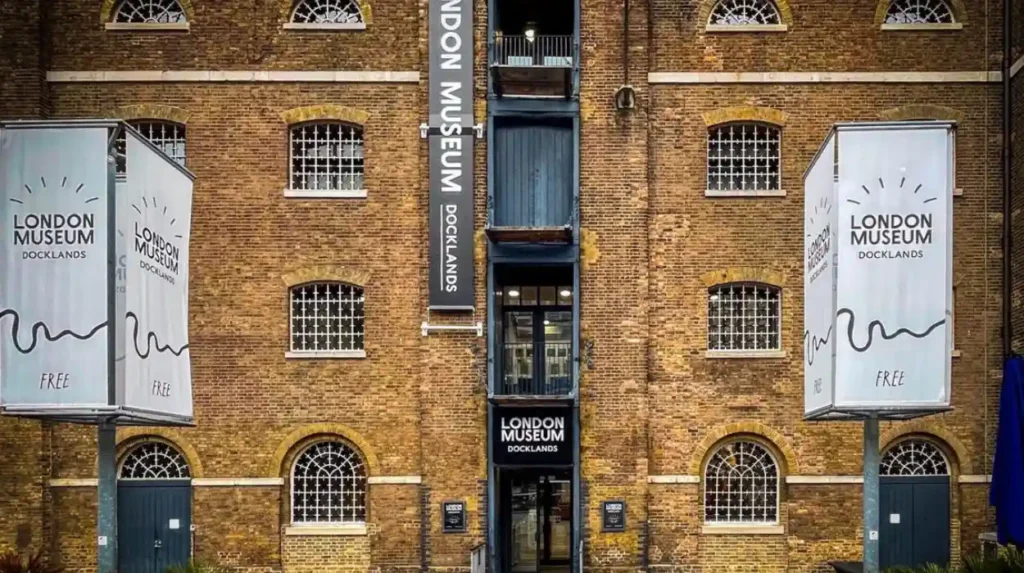
London Museum Docklands is the principal museum for understanding Tower Hamlets’ maritime heritage. Its permanent galleries explain the development of London’s port, international trade, migration and slavery, using historical objects, reconstructed environments and educational displays inside a historic warehouse.
London Museum Docklands
London Museum Docklands is one of the most important cultural attractions in Tower Hamlets.
The museum occupies No. 1 Warehouse at West India Quay. This historic warehouse forms part of the former West India Docks, which played a major role in London’s commercial development.
The building itself contributes to the educational experience. Its architecture reflects the industrial infrastructure that supported international shipping and storage.
The museum explores approximately 400 years of London’s river, port and trading history. Its collections explain how the Thames became an important commercial route and how dockland communities developed around maritime employment.
Major subjects include:
- The development of London’s docks, including West India Docks.
- International shipping and commercial trade, including sugar and coffee.
- The experiences of sailors, merchants and dock workers.
- The relationship between colonial trade and London’s economic growth.
- Migration and the development of riverside communities.
One particularly important gallery is London, Sugar and Slavery. It examines London’s involvement in the transatlantic slave trade and the economic relationships that connected British businesses with enslaved African people and Caribbean plantations.
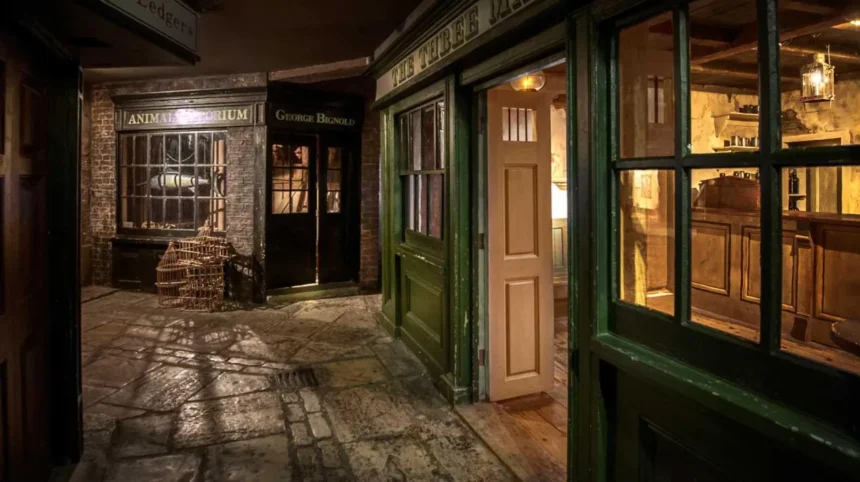
The museum also includes Sailortown, a reconstructed environment representing aspects of nineteenth-century dockland life.
Families can visit Mudlarks, an interactive gallery designed for younger children. Its exploratory activities introduce basic ideas about London’s river, trade and historical environment.
General admission to the museum’s permanent galleries is free. Special exhibitions and selected activities can carry separate charges.
Transport: West India Quay DLR station is approximately three minutes away on foot. Canary Wharf and Westferry also provide convenient connections.
Understanding the Historical Importance of West India Quay
West India Quay is an important educational destination beyond the museum building.
The surviving warehouses demonstrate how London managed imported goods before modern container shipping transformed international logistics.
Visitors can observe the relationship between historic dock infrastructure and contemporary Canary Wharf architecture. This contrast helps explain the transformation of East London’s industrial waterfront into a major financial and commercial district.
As you explore the modern waterfront, you are crossing land with a deep industrial heritage. Discover the [History of West India Docks and the Transformation of London’s Docklands] to understand how maritime trade shaped the area.
This historical connection makes London Museum Docklands particularly valuable for visitors researching London’s economic development.
Where Can Visitors Discover Victorian Education and Social History in Tower Hamlets?
The Ragged School Museum provides an educational introduction to Victorian childhood, poverty and school reform in East London. Its reconstructed classrooms and historical collections explain how charitable education supported disadvantaged children during the nineteenth century.
Ragged School Museum
Ragged School Museum is one of Tower Hamlets’ most distinctive historical attractions.
The museum occupies former school buildings beside the Regent’s Canal in Mile End. The buildings preserve an important connection with Victorian educational reform.
The institution tells the story of the East End’s working-class communities and the development of free education for disadvantaged children.
The museum’s history is connected with Thomas Barnardo, a nineteenth-century philanthropist who established educational and welfare initiatives for poor children.
Ragged schools provided education to children who experienced poverty and limited access to formal schooling. Lessons covered basic subjects such as reading, writing and arithmetic.
The museum’s reconstructed Victorian classroom helps visitors understand the physical environment of nineteenth-century education.
Its educational interpretation explores:
- Classroom conditions, including traditional desks and teaching equipment.
- Children’s experiences of poverty and education.
- Victorian charitable organisations and social reform.
- Changes in educational opportunities for working-class families.
- The relationship between education and wider social development.
The museum is particularly relevant to school groups, families and visitors researching British social history.
Its location beside the Regent’s Canal also connects the attraction with the industrial and transport history of Mile End.
Visitors should check the museum’s official website before travelling because opening days, admission arrangements and educational programmes vary.
Why Is the Ragged School Museum Educationally Important?
The museum provides a physical introduction to the educational challenges experienced by working-class children during the Victorian period.
Historical classroom environments make social history easier to understand. Visitors can examine how teaching spaces, educational resources and children’s experiences differed from modern schools.
Its collections also demonstrate how charitable organisations contributed to the development of social welfare in London.
For students studying Victorian Britain, the Industrial Revolution or the history of education, the museum provides useful historical context.
What Can Visitors Learn at Young V&A in Bethnal Green?
Young V&A is a museum dedicated to childhood, creativity, design and play. Located in Bethnal Green, it provides interactive exhibitions and educational experiences that introduce children and families to art, storytelling, creative problem-solving and the history of objects.
Young V&A
Young V&A is part of the Victoria and Albert Museum family.
Previously known as the V&A Museum of Childhood, the institution reopened as Young V&A in 2023 following a major redevelopment.
Its purpose is to introduce younger audiences to art, design and creative learning through interactive museum experiences.
The museum is organised around three main galleries: Play, Imagine and Design.
Play introduces children to toys, games, exploration and sensory experiences. Its activities encourage younger visitors to investigate objects and participate in interactive learning.
Imagine focuses on storytelling, performance and imaginative expression. Children explore how creative ideas develop through visual and narrative activities.
Design introduces older children and teenagers to creative thinking, making and problem-solving. Its displays explain how designers develop objects and respond to practical challenges.
The museum combines historical collections with contemporary creative experiences.
Its exhibitions also demonstrate how objects reflect changes in childhood, technology, entertainment and design.
Young V&A is especially useful for families seeking an educational attraction that encourages participation rather than relying entirely on traditional displays.
General admission is free, although some special events and activities have separate charges. Visitors should consult the official V&A website for current opening arrangements and programme information.
Location: Cambridge Heath Road, Bethnal Green, London E2 9PA.
Nearest station: Bethnal Green Underground and Overground stations.
What Makes Young V&A Suitable for Family Learning?
Young V&A connects museum visits with practical learning.
Children encounter objects, creative displays and activities that introduce concepts through exploration. Parents and teachers can use these experiences to discuss design, cultural history and everyday technology.
The museum also supports educational visits for schools and organised groups.
Its location in Bethnal Green makes it convenient to combine with other East London attractions, including the local markets, parks and historic neighbourhoods.
Where Can Visitors Explore Art, Design and Cultural Education in East London?
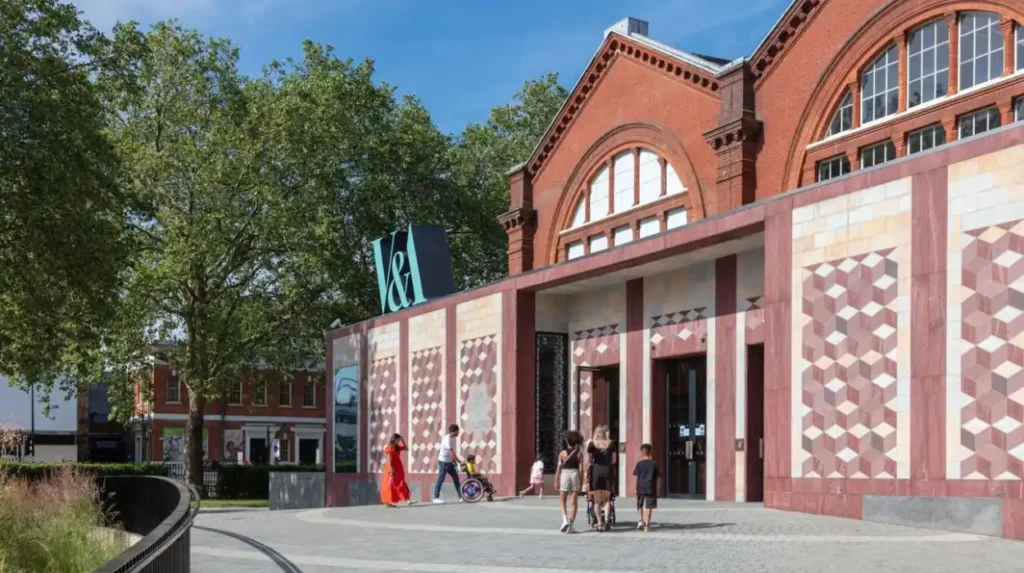
V&A East expands Tower Hamlets’ cultural attractions through two major institutions at Queen Elizabeth Olympic Park. V&A East Museum presents exhibitions about global creativity, while V&A East Storehouse provides public access to extensive collections, archives and museum conservation activities.
V&A East Museum
V&A East Museum is part of the Victoria and Albert Museum’s cultural development in East London.
Located within the East Bank cultural district, the museum explores the relationship between art, design, fashion, performance and contemporary society.
Its exhibitions examine how creative industries influence everyday life and international culture.
The museum provides visitors with opportunities to explore:
- Fashion and textile design, including contemporary clothing and historical garments.
- Music and performance, including creative movements and cultural expression.
- Art and visual culture, including objects and exhibitions from different communities.
- Design and innovation, including the relationship between creativity and technology.
Its exhibition programme changes over time. This provides opportunities for repeat visitors to explore different themes and collections.
The museum is particularly relevant to design students, creative professionals, families and tourists interested in contemporary culture.
Admission to general museum galleries is free, although selected exhibitions and events require separate payment.
Location: 107 Carpenters Road, Queen Elizabeth Olympic Park, London E20 2AR.
V&A East Storehouse
V&A East Storehouse provides a different museum experience.
Rather than displaying only a conventional selection of objects, the Storehouse gives visitors access to a much wider part of the V&A’s collections.
The institution contains approximately half a million works and provides opportunities to understand how museums store, organise, research and preserve objects.
The central Collections Hall allows visitors to explore objects across different artistic and cultural disciplines.
The Storehouse also includes:
- Mini displays explaining selected objects and collections.
- Object Encounters, which introduce visitors to specific objects through staff-led sessions.
- A conservation viewing area where visitors observe aspects of museum preservation work.
- A Study Centre providing access to selected research resources.
- The David Bowie Centre, which houses the musician’s archive.
One particularly interesting feature is the Order an Object experience. Visitors can request access to selected objects held in storage through a free appointment arranged in advance.
This provides a closer understanding of how museums manage collections that are not permanently displayed in galleries.
General admission is free. The official visitor information states that the Storehouse opens daily from 10am to 6pm, with extended hours until 10pm on Thursdays and Saturdays.
Why Is V&A East Important for Educational Tourism?
V&A East introduces visitors to the relationship between museums, education and the creative industries.
Its two institutions provide different learning experiences. The museum concentrates on exhibitions and contemporary cultural themes, while the Storehouse provides access to collection management and research.
Together, they support learning in art, fashion, design, architecture, conservation and cultural studies.
Their location also strengthens the cultural identity of Stratford and the wider Olympic Park area.
Where Can Researchers Explore Tower Hamlets’ Local History and Archives?
Tower Hamlets Local History Library and Archives is an important research destination containing historical documents, photographs, maps, newspapers, films and rare publications. Its collections document the borough’s neighbourhoods, migration, industries, communities and changing urban landscape.
Tower Hamlets Local History Library and Archives
Tower Hamlets Local History Library and Archives provides one of the most comprehensive resources for understanding the East End’s historical development.
The archive is housed in a Grade II listed building dating from 1860. Its collections cover the geographical area of the modern London Borough of Tower Hamlets, which developed from the former metropolitan boroughs of Bethnal Green, Poplar and Stepney.
Unlike a conventional museum, the institution focuses on original historical evidence and research materials.
Its collections include:
- Historical photographs documenting neighbourhoods and everyday life.
- Maps showing changes to streets, buildings and industrial areas.
- Original documents and historical records.
- Newspapers, press cuttings and rare publications.
- Films and digital audio-visual materials.
- Records relating to migration, local industries and political movements.
These resources are particularly valuable for people researching family history, historical buildings, local businesses and community development.
The archive also provides access to a Reading Room where visitors can consult selected original materials.
Its exhibitions introduce historical subjects through documents and photographs. Educational workshops and research activities also support students, schools and community organisations.
The archive is especially relevant to visitors who want to understand the East End through primary historical sources rather than general museum interpretation.
Nearest stations: Stepney Green and Mile End.
Opening arrangements: The Reading Room operates on selected weekdays and Saturdays. Thursday has extended opening until 7pm. Check the official visitor information before travelling.
Who Should Visit the Local History Archives?
The archive serves several educational audiences.
University students can investigate historical subjects using original documents. Family historians can research ancestors who lived in East London. Architecture enthusiasts can examine historical photographs and maps to understand changes to local buildings.
Digital nomads and independent researchers can also use the Reading Room for focused research, subject to its visitor arrangements and available facilities.
The institution demonstrates that educational attractions include research libraries and archival collections as well as traditional museums.
Which Art Galleries in Tower Hamlets Offer Educational Cultural Experiences?
Whitechapel Gallery is an important cultural institution in the Whitechapel area, presenting contemporary art through exhibitions, public programmes and educational activities. Its location connects visitors with East London’s artistic communities and wider cultural history.
Whitechapel Gallery
Whitechapel Gallery is one of East London’s established public art institutions.
Founded in 1901, the gallery has played an important role in making modern and contemporary art accessible to London audiences.
Its exhibition programme presents work by established and emerging artists. Exhibitions cover different artistic approaches, including painting, photography, sculpture, installation and multimedia.
The gallery also organises public learning programmes and events.
Its educational activities introduce visitors to:
- Contemporary artistic movements, including installation and conceptual art.
- International artists and cultural perspectives.
- The relationship between art and social change.
- Visual communication and creative practice.
- The development of modern art institutions.
Whitechapel Gallery is particularly relevant to visitors interested in contemporary cultural debates and the relationship between art and society.
Its location also places it within a historically significant part of East London. Whitechapel has developed through migration, religious diversity, commercial activity and working-class community life.
The gallery therefore offers an opportunity to explore contemporary artistic expression within a neighbourhood shaped by centuries of social change.
Visitors should check the official exhibition programme for admission arrangements, event schedules and any ticket requirements.
The Art Pavilion in Mile End Park
The Art Pavilion provides another opportunity to experience local art and community exhibitions.
The venue supports exhibitions, creative events and cultural activities. Its programme connects artists, educational institutions and local communities.
Exhibitions can cover several artistic disciplines, including painting, photography, textiles, ceramics and mixed-media work.
Its community-facing approach makes it relevant to visitors interested in local creative projects rather than only large national collections.
The pavilion also demonstrates how public cultural spaces support creative participation and educational engagement within residential neighbourhoods.
Its location inside Mile End Park allows visitors to combine an exhibition visit with outdoor recreation.
Location: Clinton Road, Mile End Park, London E3 4QY.
What Other Heritage Attractions Help Explain Tower Hamlets’ History?
Tower Hamlets’ heritage attractions extend beyond conventional museums. Historic buildings, religious sites, preserved industrial structures and specialist collections provide additional evidence of the borough’s development, including its medical, maritime, architectural and migration history.
Royal London Hospital Museum
Royal London Hospital Museum preserves the medical history associated with one of East London’s most important hospitals.
The hospital’s history extends back to the eighteenth century. Its development reflects changes in medical education, healthcare provision, surgery and public health.
The museum explores the relationship between the hospital and the surrounding East End community.
Its historical themes include:
- The development of medical treatment and surgery.
- Hospital life and nursing.
- Medical equipment and historical clinical practices.
- Healthcare provision for East London’s growing population.
- The relationship between medicine and social conditions.
One of the museum’s most recognisable historical connections is with Joseph Merrick, commonly known as the Elephant Man. Merrick became associated with the hospital during the nineteenth century and was cared for by surgeon Frederick Treves.
The collection provides historical context for the development of medical knowledge and the treatment of patients.
However, access to the museum is subject to its opening and visitor arrangements. It is important to check availability before making a dedicated journey.
Dennis Severs’ House
Dennis Severs’ House is a distinctive historic house attraction near the Tower Hamlets neighbourhood of Spitalfields.
The property presents an interpretation of domestic life inside a former Huguenot silk-weaver’s house.
Huguenots were French Protestants who migrated to Britain and other countries, particularly during periods of religious persecution in France.
The house uses carefully arranged interiors, furniture, objects and domestic details to represent different historical periods.
Its interpretation introduces visitors to the lives and material culture of London’s historic weaving communities.
Unlike conventional museums with large object labels and chronological galleries, the experience uses preserved domestic environments to communicate social history.
It is particularly relevant to visitors interested in architecture, historic interiors, migration and the development of Spitalfields.
Visits generally operate through timed arrangements, so visitors should check the official website before attending.
Museum of Immigration and Diversity
The Museum of Immigration and Diversity represents another important part of Tower Hamlets’ cultural heritage.
Its historic building reflects the area’s connections with different migrant communities.
The property was formerly associated with Huguenot residents and later became connected with Jewish religious and community life.
The institution explores migration, identity, cultural exchange and the development of communities in East London.
Its historical significance is connected with the wider transformation of Spitalfields, where different migrant groups established homes, businesses and religious institutions.
Access is not necessarily available every day. Visitors should check the organisation’s current opening arrangements before planning a visit.
These specialist heritage attractions demonstrate that Tower Hamlets’ educational value extends beyond its larger museums.
How Can Visitors Plan an Educational Museum Day in Tower Hamlets?
Visitors can organise an educational day in Tower Hamlets by grouping attractions according to geographical location and historical subject. Combining nearby museums, galleries and archives reduces unnecessary travel and provides a clearer understanding of East London’s cultural development.
The borough has several distinct cultural areas. Choosing one geographical cluster helps visitors manage their time effectively.
Explore the Bethnal Green and Whitechapel area
A visit to Bethnal Green can begin at Young V&A.
Families can explore the Play, Imagine and Design galleries before travelling towards Whitechapel.
Whitechapel Gallery offers a different experience through contemporary art exhibitions.
Visitors interested in medical history can also investigate the Royal London Hospital Museum, subject to its access arrangements.
This route provides an educational introduction to childhood, creative design, contemporary art and healthcare history.
Explore Mile End and the Regent’s Canal
Mile End is particularly suitable for visitors interested in Victorian education and local historical research.
The Ragged School Museum provides insight into nineteenth-century social reform.
Tower Hamlets Local History Library and Archives offers access to original historical records.
Visitors can also explore the Regent’s Canal, which provides additional context about East London’s transport and industrial development.
This area is especially relevant to students, researchers and visitors interested in working-class history.
Explore Canary Wharf and West India Quay
London Museum Docklands is the main attraction in this area.
Visitors can explore the historical relationship between the River Thames, international trade, shipping and migration.
After the museum visit, the surrounding waterfront provides an opportunity to observe how the former docklands have been redeveloped.
This route connects industrial heritage with modern urban development.
Explore Stratford and Queen Elizabeth Olympic Park
Stratford is particularly suitable for visitors interested in contemporary culture and creative industries.
V&A East Museum introduces exhibitions covering art, design, fashion and performance.
V&A East Storehouse provides access to extensive museum collections and educational resources.
Visitors can also explore the surrounding Queen Elizabeth Olympic Park, which connects cultural institutions with public spaces and modern architecture.
Are Tower Hamlets Museums Suitable for Families, Students and International Visitors?
Tower Hamlets offers educational attractions for different visitor groups, including families, schoolchildren, university students, researchers and international tourists. Its combination of interactive exhibitions, historical collections, archives and contemporary galleries supports different learning interests and budgets.
Educational attractions for families
Families benefit from institutions that combine historical information with interactive activities.
Young V&A provides creative learning through its three main galleries. London Museum Docklands offers Mudlarks, an exploratory family gallery. The Ragged School Museum introduces children to Victorian classrooms and historical education.
These attractions help children understand historical subjects through objects, environments and practical activities.
Educational attractions for students
University and college students can explore several subjects through the borough’s cultural institutions.
History students can investigate London’s maritime development at London Museum Docklands. Design students can explore collections at V&A East. Social science students can examine migration, inequality and community development through historical archives.
The Local History Library and Archives is particularly valuable for students who require primary historical sources.
Attractions for international tourists
International visitors can use Tower Hamlets’ museums to understand London’s development as an international city.
The Docklands collections explain commercial relationships between London and overseas trading regions. Whitechapel’s history introduces migration and cultural diversity. V&A East presents international perspectives on creativity and design.
These experiences provide useful cultural context for tourists exploring East London.
Cultural destinations for digital nomads and business travellers
Digital nomads and business travellers can incorporate cultural visits into their free time.
The Local History Library and Archives offers a formal research environment for visitors undertaking historical work, subject to its visitor policies.
Canary Wharf and West India Quay provide convenient access to London Museum Docklands. Stratford offers another accessible cultural area through V&A East.
Museum visits provide structured activities between professional commitments without requiring a full-day excursion.
Which Tower Hamlets Museums Offer Free Admission?
Several major Tower Hamlets cultural attractions offer free general admission, including London Museum Docklands, Young V&A, V&A East Museum and V&A East Storehouse. Some special exhibitions, events, workshops and private heritage experiences have separate admission requirements.
Free museums make educational tourism more accessible to residents and visitors.
Free admission does not necessarily mean every activity is free. Special exhibitions, workshops and selected events sometimes require advance booking or payment.
Visitors should also check whether a particular attraction requires timed entry.
How Can Visitors Reduce Museum Visit Costs?
Planning museum visits around free permanent collections is an effective way to reduce sightseeing expenses.
Visitors can prioritise institutions with free general admission and then select paid exhibitions according to their interests.
Using public transport also helps control travel costs. The Docklands Light Railway, London Underground, Elizabeth line and London Overground connect different parts of Tower Hamlets.
Families should check educational programmes during school holidays because some museums organise additional activities for children.
Explore More Area Guide
Best Places to Experience Docklands Waterfront in East London
Rightmove Names Havering Among Unhappiest Places to Live in Havering 2026
How Do Tower Hamlets’ Museums Preserve the Borough’s Cultural Heritage?
Tower Hamlets museums preserve cultural heritage by collecting historical objects, documenting community experiences, maintaining historic buildings and presenting educational exhibitions. These activities protect local knowledge and help future generations understand the borough’s social, economic and cultural development.
Heritage preservation involves more than protecting old buildings.
Museums and archives also preserve photographs, documents, personal histories, industrial objects and evidence of everyday life.
Preserving maritime history
London Museum Docklands protects the historical memory of the Port of London.
Its collections explain how shipping influenced the development of the Thames waterfront and surrounding communities.
The historic warehouse also demonstrates the architectural importance of industrial infrastructure.
Preserving educational history
The Ragged School Museum maintains evidence of Victorian charitable education.
Its reconstructed classroom helps visitors understand the educational conditions experienced by disadvantaged children.
This history provides context for the development of wider educational opportunities in Britain.
Preserving migration and community histories
Tower Hamlets Local History Library and Archives documents the experiences of communities that shaped the East End.
Its photographs, maps and original documents preserve evidence of migration, local industries, political movements and neighbourhood change.
These materials are important for understanding the development of contemporary London.
Supporting future cultural education
New institutions such as V&A East expand the range of educational experiences available in East London.
Their collections and programmes connect historical objects with contemporary creative industries.
Museum conservation, public research and educational activities help ensure that cultural collections remain accessible to future generations.
The borough’s cultural institutions therefore contribute to education, tourism, historical research and community identity.
What Should Visitors Know Before Exploring Tower Hamlets Museums?
Visitors should check opening times, admission arrangements, accessibility information and exhibition schedules before travelling. Many major museums offer free entry, but smaller heritage institutions and specialist collections operate different visitor arrangements and sometimes require advance booking.
A little preparation helps visitors avoid unnecessary travel and missed exhibitions.
Check opening times
Museum schedules vary according to the institution.
V&A East Museum and V&A East Storehouse publish daily opening arrangements, including extended Thursday and Saturday hours.
Tower Hamlets Local History Library and Archives has different schedules for its Reading Room and exhibition spaces.
Smaller heritage attractions often have more restricted opening arrangements.
Check accessibility
Visitors with mobility requirements should review accessibility information before travelling.
V&A East Storehouse provides step-free access, lifts and wheelchair-accessible routes through its public areas.
The Local History Library and Archives has ground-floor exhibition access and a lift serving the Reading Room.
Visitors should check individual facilities, including accessible toilets and assistance arrangements.
Consider transport connections
Tower Hamlets has several convenient transport connections.
- Canary Wharf: Jubilee line, Elizabeth line and DLR.
- West India Quay: DLR.
- Bethnal Green: Central line and London Overground.
- Mile End: Central, District and Hammersmith & City lines.
- Whitechapel: District, Hammersmith & City and Elizabeth lines.
- Stratford: Central, Jubilee, Elizabeth and DLR connections, as well as Overground services.
Transport connections make it possible to visit different cultural districts without relying on private vehicles.
Check photography and visitor policies
Photography permissions differ between museums and individual exhibitions.
Some permanent galleries allow personal photography, while temporary exhibitions impose restrictions.
Visitors should also check rules concerning food, large bags, children and guided tours.
Allow sufficient time
Museum visits require different amounts of time depending on their collections and activities.
A short visit to an archive exhibition requires less time than exploring London Museum Docklands or the extensive collections at V&A East Storehouse.
Families with children should allow additional time for interactive galleries.
Tower Hamlets is an important destination for visitors interested in London’s history, education and cultural development. Its museums and heritage attractions explain the borough’s transformation from an industrial and maritime centre into a diverse modern part of the capital.
London Museum Docklands provides an essential introduction to maritime trade and the River Thames. The Ragged School Museum preserves Victorian educational history, while Young V&A introduces children and families to creative learning.
V&A East expands the borough’s cultural offer through art, design and access to major museum collections. The Local History Library and Archives provides valuable historical resources for researchers, while Whitechapel Gallery connects visitors with contemporary artistic expression.
Together, these institutions make Tower Hamlets an excellent destination for educational tourism, family activities, cultural exploration and historical research.
What are the best museums to visit in Tower Hamlets?
Some of the best museums in Tower Hamlets include London Museum Docklands, Young V&A, Ragged School Museum and V&A East. These attractions explore maritime history, Victorian education, childhood, creativity and London’s cultural development.