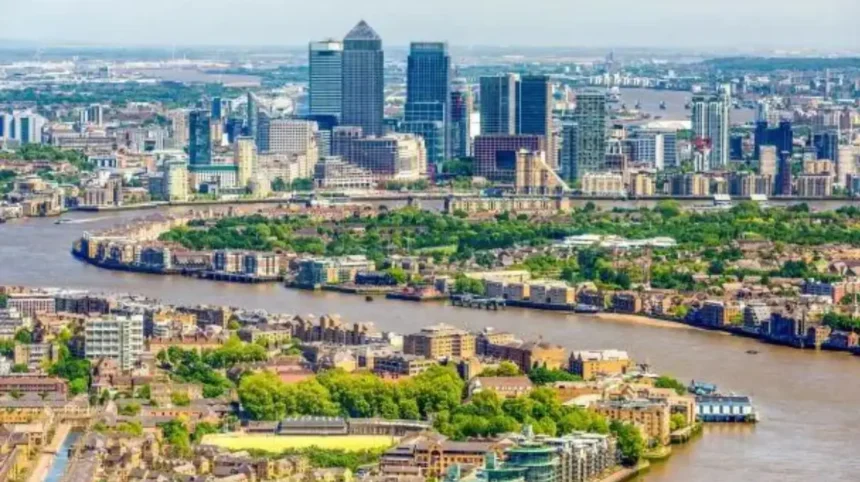
Tower Hamlets is one of London’s most geographically compact but historically varied boroughs. It sits immediately east of the City of London and stretches from the historic East End through the Docklands and Isle of Dogs to the River Thames.
- What makes Tower Hamlets different from other parts of East London?
- Which Tower Hamlets neighbourhoods are best for historic streets and cultural heritage?
- Which Tower Hamlets areas are best for parks, canals and outdoor experiences?
- Which Tower Hamlets neighbourhoods are best for food, markets and local shopping?
- Spitalfields and Brick Lane
- Whitechapel Market
- Bethnal Green
- Roman Road and Bow
- Poplar and Chrisp Street
- Canary Wharf
- Which Tower Hamlets neighbourhoods are best for docklands and riverside architecture?
- What makes Canary Wharf different from the traditional East End neighbourhoods?
- Which Tower Hamlets neighbourhoods are best for understanding local communities?
- How should visitors choose between Tower Hamlets neighbourhoods?
- Why is Tower Hamlets worth exploring beyond its famous attractions?
The borough combines historic markets, Victorian streets, immigrant heritage, industrial landscapes, major cultural destinations, large parks, riverside districts and modern financial architecture. Tower Hamlets Council describes the area as the heart of London’s East End and highlights attractions including the Tower of London, Tower Bridge, Columbia Road Flower Market, Banglatown, Canary Wharf, Mile End Park and Victoria Park.
For visitors, this diversity creates a neighbourhood-based travel experience. Spitalfields and Banglatown provide food, markets and multicultural heritage. Whitechapel connects medical, commercial and community history. Bethnal Green and Globe Town offer East End streets, culture and local shopping. Bow and Mile End combine residential neighbourhoods with canals and major green spaces.
Further south, Wapping, Limehouse, Poplar and the Isle of Dogs reveal London’s docklands history. Canary Wharf provides a contrasting modern skyline, waterside public realm and financial district. Tower Hamlets also contains 58 conservation areas, demonstrating the breadth of its architectural and historic environment.
What makes Tower Hamlets different from other parts of East London?
Tower Hamlets combines historic East End communities, international food districts, major parks, docklands heritage, riverside landscapes and modern skyscrapers within one London borough, creating distinct neighbourhood identities that suit different visitor interests and travel styles.
Tower Hamlets takes its name from the historical hamlets surrounding the Tower of London. Its location beside the historic City of London shaped centuries of settlement, trade, industry and migration.
The borough’s history reaches far beyond the modern East End. Archaeological evidence records prehistoric activity, while Roman roads and burial grounds demonstrate the area’s connection with Londinium. Medieval development included settlements around Stepney and Bethnal Green, while drainage and embankment works gradually changed marshland into usable agricultural land.
Industrial expansion accelerated as London’s population grew. Areas outside the City became important locations for crafts, manufacturing and industries that required more space. Immigration also became an important part of local development. The borough later became strongly associated with Jewish, Bangladeshi, Caribbean, Chinese, Somali and other communities.
That historical layering remains visible today. Markets, religious buildings, warehouses, terraces, docks, railway infrastructure, parks and modern towers often sit within relatively short distances of one another.
The council’s area profiles divide the borough into locations including Bethnal Green, Bow, Bromley-by-Bow, Limehouse, Mile End, Millwall, Shadwell, Spitalfields and Banglatown, Stepney Green, St Katharine’s and Wapping, Whitechapel and other local areas.
This means a visitor should not treat Tower Hamlets as one uniform destination. Each neighbourhood offers a different combination of attractions, streets, food, architecture, public spaces and cultural history.
Which Tower Hamlets neighbourhoods are best for historic streets and cultural heritage?
Spitalfields, Whitechapel, Bethnal Green, Stepney and Wapping provide some of Tower Hamlets’ strongest historic experiences, with markets, religious buildings, conservation areas, historic streets, museums, former docks and architecture reflecting London’s changing communities.
Spitalfields and Banglatown
Spitalfields is one of the most recognisable visitor districts in Tower Hamlets. Its identity combines historic streets, independent businesses, markets, restaurants, galleries and proximity to the City of London.
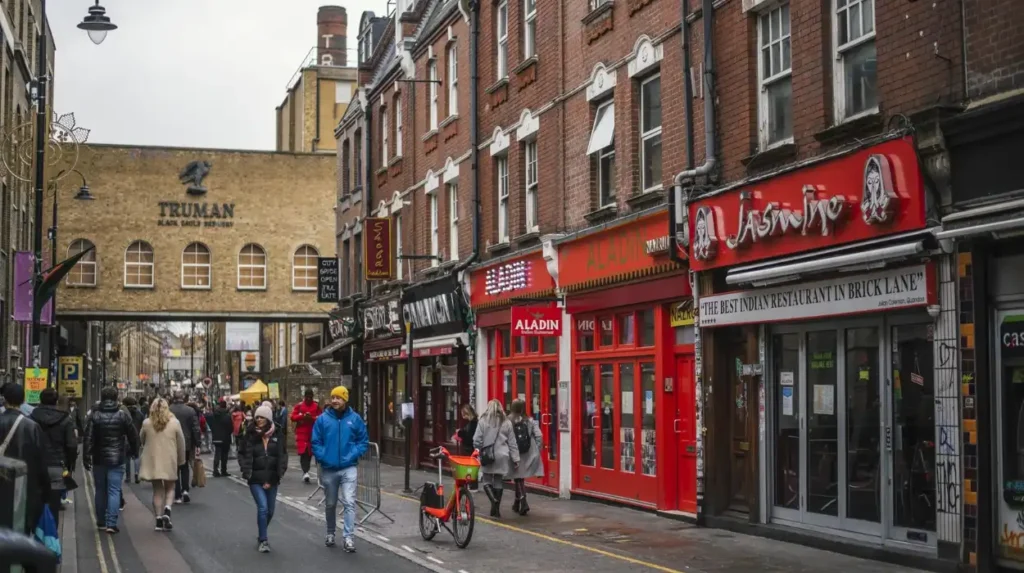
Brick Lane forms the area’s best-known visitor corridor. It is strongly associated with Bangladeshi heritage, restaurants, street food, vintage businesses, independent retail and creative activity.
Spitalfields Market provides another important destination. The surrounding streets connect the market district with historic buildings and the wider East End.
Banglatown is particularly significant for understanding the borough’s migration history. The area demonstrates how successive communities have shaped the cultural identity of East London.
The neighbourhood is also useful for visitors interested in architecture. Historic buildings sit alongside contemporary shops, restaurants and creative spaces. The contrast is part of the area’s urban character.
Whitechapel
Whitechapel is one of Tower Hamlets’ most strategically located neighbourhoods. It sits beside the City of London and connects major transport routes with markets, cultural institutions, hospitals and historic streets.
Whitechapel Road has long been an important commercial route. The area is also associated with the East London Mosque, Whitechapel Market and the Royal London Hospital.
The Whitechapel Gallery provides an established contemporary-art destination. The neighbourhood also contains the Idea Store Whitechapel, which combines library, learning and community facilities in a prominent modern building.
Whitechapel is therefore useful for visitors interested in the relationship between East End history and modern urban development.
Bethnal Green and Globe Town
Bethnal Green provides a different East London experience. Its streets include traditional terraces, independent businesses, cultural venues and access to major green spaces.
The Museum of Childhood, part of the Victoria and Albert Museum group, has historically made Bethnal Green an important family-oriented cultural destination. Victoria Park lies close to the eastern side of the neighbourhood and provides a large open-space destination.
Columbia Road is also nearby, although the market itself sits within the wider Shoreditch/Bethnal Green area. The famous Columbia Road Flower Market operates on Sundays and creates a strong connection between local shopping and visitor activity.
Stepney
Stepney provides a quieter route into Tower Hamlets’ history. St Dunstan’s, Stepney, is one of the area’s most important historic churches, with origins reaching back many centuries.
The neighbourhood also illustrates the borough’s long history of population change. Historic streets sit alongside post-war housing, community facilities and modern development.
Stepney is useful for travellers who want to move beyond the best-known tourist districts and understand how East London developed as a residential community.
Wapping
Wapping occupies a distinctive riverside position between the City and Limehouse. Its identity is closely connected with the Thames, docks and maritime trade.
The neighbourhood contains historic warehouses, cobbled streets, riverside walks and former industrial buildings. St Katharine Docks lies immediately west of Wapping and provides another waterside destination close to the Tower of London.
The Thames Path provides opportunities to experience the river landscape on foot. Wapping is particularly relevant for visitors interested in London’s port history because the area’s built environment still reflects its relationship with the river.
As you explore these modern streets and cultural districts, you are crossing land shaped by centuries of migration, trade and urban development. Read about the full [Tower Hamlets History and Heritage Background] to understand its origins.
Which Tower Hamlets areas are best for parks, canals and outdoor experiences?
Victoria Park, Mile End, the Regent’s Canal, Limehouse Basin, Island Gardens and the Thames riverside provide Tower Hamlets’ main outdoor experiences, combining large parks, waterways, walking routes, landscaped spaces and views across London’s changing urban landscape.
Victoria Park
Victoria Park is one of the borough’s major green spaces. It sits between Bethnal Green, Bow and Hackney Wick and provides extensive lawns, mature trees, water features, paths and recreational areas.
The park is important for both residents and visitors. Its scale provides space for walking, cycling, informal recreation and seasonal events.
Its location also makes it a useful connection between neighbourhood exploration and outdoor activity. Visitors can combine Bethnal Green streets with Victoria Park before continuing towards Bow or the Queen Elizabeth Olympic Park area.
Mile End Park
Mile End Park stretches through a dense section of East London. Its landscape includes gardens, sports facilities, waterways, bridges, public art and open spaces.
The park is particularly useful because it connects several neighbourhoods rather than functioning as an isolated attraction. Visitors can use it as a walking route between Mile End, Bow and the Regent’s Canal.
Mile End Park also demonstrates how public open space functions within a densely populated urban borough.
Regent’s Canal
The Regent’s Canal passes through northern Tower Hamlets and connects the borough with wider East London and London’s canal network.
The towpath provides a different perspective from busy roads and commercial centres. Visitors can encounter residential streets, bridges, industrial remnants and modern developments along the water.
Canal walking works particularly well when combined with visits to Victoria Park, Bethnal Green, Mile End and Bow.
Limehouse Basin
Limehouse Basin connects the Regent’s Canal with the Thames. The basin represents an important part of London’s historic waterway infrastructure and provides a transition between inland canals and the river.
Modern residential buildings and public spaces now surround much of the basin. The area provides an accessible waterside environment close to Limehouse station.
Island Gardens
Island Gardens sits on the southern side of the Isle of Dogs. It provides one of Tower Hamlets’ most distinctive views because the River Thames separates it from Greenwich.
The park forms part of the setting of the Maritime Greenwich World Heritage Site. The Greenwich Foot Tunnel connects the Isle of Dogs with Greenwich beneath the Thames.
This makes Island Gardens particularly valuable for visitors combining Tower Hamlets with Greenwich.
Which Tower Hamlets neighbourhoods are best for food, markets and local shopping?
Spitalfields and Banglatown lead Tower Hamlets’ visitor food and market scene, while Whitechapel, Bethnal Green, Bow, Poplar and Canary Wharf provide additional choices ranging from traditional markets and independent businesses to contemporary restaurants and modern retail destinations.
Spitalfields and Brick Lane
Brick Lane is the strongest food-focused destination for many visitors. Its restaurant scene reflects the area’s Bangladeshi heritage while also including international cuisines and contemporary food businesses.
The surrounding streets add cafés, bakeries, street-food options, vintage shops and independent retailers.
The area is especially active at weekends when markets and independent businesses create a dense visitor environment.
Whitechapel Market
Whitechapel Market provides a long-established local shopping environment. Its stalls and surrounding businesses reflect the neighbourhood’s diverse population.
The market is useful for travellers seeking an experience based on everyday commerce rather than a conventional tourist attraction.
Bethnal Green
Bethnal Green has a strong independent-business environment. Its streets contain cafés, restaurants, pubs and small shops alongside residential areas.
Visitors can combine local food with cultural attractions and a walk towards Victoria Park.
Roman Road and Bow
Roman Road is an important shopping street in Bow. It provides a local high-street experience with independent shops, cafés and food businesses.
The area offers a useful contrast to the more heavily visited Brick Lane and Canary Wharf districts.
Bow also connects directly with Victoria Park and the Regent’s Canal, allowing food-focused visits to develop into longer neighbourhood walks.
Poplar and Chrisp Street
Poplar has a distinct community identity shaped by its history as a docklands and residential area. Chrisp Street provides a local shopping centre serving the surrounding community.
Poplar is particularly relevant to visitors exploring the transition between historic East End neighbourhoods and the regenerated Docklands.
Canary Wharf
Canary Wharf provides the borough’s most concentrated modern dining and retail environment. Restaurants, cafés, shops, public spaces and waterside venues occupy the district around its major office developments.
The area also contains public art, landscaped spaces and access to the Thames.
Visit London’s current neighbourhood guide describes Canary Wharf as a rapidly evolving East London district combining modern architecture with former dock warehouses, waterside dining, gardens, outdoor art and entertainment.

Which Tower Hamlets neighbourhoods are best for docklands and riverside architecture?
Wapping, Limehouse, Poplar, Blackwall, Cubitt Town, Millwall and Canary Wharf offer the clearest contrast between historic docks and modern Docklands, with warehouses, basins, riverside parks, converted industrial sites and high-rise commercial architecture.
Limehouse
Limehouse developed around maritime and industrial activity. Its location beside the Thames and Regent’s Canal made water transport central to its historic character.
Today, Limehouse Basin provides the clearest visitor-facing connection between the old waterways and contemporary residential development.
Poplar
Poplar’s history is closely linked with the docks and working communities of East London. The neighbourhood experienced extensive redevelopment during the twentieth and twenty-first centuries.
Chrisp Street and Lansbury form important parts of the local urban landscape. Poplar also provides access towards Canary Wharf and the Isle of Dogs.
Blackwall and Cubitt Town
Blackwall occupies the eastern side of the Isle of Dogs and has a strong maritime history. Cubitt Town developed significantly during the nineteenth century as London’s docks expanded.
The modern neighbourhood combines residential buildings, waterfront spaces and access to the Docklands Light Railway.
Millwall
Millwall occupies the central and southern parts of the Isle of Dogs. Its identity changed substantially as the docks declined and large-scale redevelopment reshaped the peninsula.
The neighbourhood now contains residential developments alongside waterways and commercial districts.
Canary Wharf
Canary Wharf represents the most visible transformation of former dockland land into a modern business district.
The area grew around the former West India Docks. Its towers now form one of London’s most recognisable skylines.
This neighbourhood is particularly relevant for business travellers and visitors interested in contemporary architecture, public art, waterfront design and London’s financial economy.
What makes Canary Wharf different from the traditional East End neighbourhoods?
Canary Wharf differs through its high-rise skyline, financial institutions, modern transport connections, landscaped public spaces, waterside restaurants, shopping areas and contemporary architecture, while its former dock infrastructure preserves a direct physical connection with Tower Hamlets’ maritime industrial past.
Canary Wharf should be treated as a distinct visitor environment within Tower Hamlets.
Its architectural scale is substantially different from Spitalfields, Stepney or Wapping. Tall commercial buildings dominate the skyline, while the dock basins create open water between office and residential developments.
The area also has a strong public-realm component. Landscaped squares, gardens, sculptures, promenades and waterside paths provide spaces away from office buildings.
For digital nomads, Canary Wharf has extensive cafés, restaurants and public transport connections. For business travellers, the concentration of offices makes the district particularly practical for short periods of free time.
The Docklands Light Railway, Jubilee line and Elizabeth line connections also make Canary Wharf an important transport hub.
The neighbourhood therefore demonstrates one of Tower Hamlets’ central characteristics: historic infrastructure remains physically embedded within a highly modern urban environment.
Which Tower Hamlets neighbourhoods are best for understanding local communities?
Whitechapel, Spitalfields and Banglatown, Bethnal Green, Stepney, Shadwell, Poplar and Bow provide strong opportunities to understand Tower Hamlets through markets, religious buildings, community businesses, local streets, cultural institutions, historic archives and neighbourhood centres.
Tower Hamlets has experienced substantial migration for centuries. The borough’s communities have included Jewish, Bangladeshi, Caribbean, Chinese, Somali, Indian, Pakistani and other groups.
This diversity is particularly visible through food, places of worship, languages, festivals, markets and independent businesses.
Spitalfields and Banglatown are central to understanding Bangladeshi heritage in East London. Whitechapel also demonstrates the changing relationship between migration, commerce and community institutions.
The Tower Hamlets Local History Library and Archives provides another route into this history. Its collections include documents dating from 1384, maps, plans, photographs and newspaper cuttings.
The archive specifically supports research into migration, communities, local industries, political movements and changing landscapes.
Visitors should therefore consider community history as part of the physical neighbourhood experience. A market street, church, mosque, community centre or historic shopfront can reveal a different aspect of Tower Hamlets than a conventional landmark.
Explore More Area Guide
Tower Hamlets Area Guide: Attractions, Markets and Transport
Tower Hamlets Stopover Guide: Top Places to Visit
How should visitors choose between Tower Hamlets neighbourhoods?
Visitors should choose Tower Hamlets neighbourhoods according to their main interest: Spitalfields for markets and food, Whitechapel for culture, Victoria Park and Mile End for open space, Wapping for riverside heritage, and Canary Wharf for modern architecture and Docklands.
A first-time visitor with limited time can focus on a small number of connected areas rather than attempting to cover the whole borough.
A heritage-focused visit suits Spitalfields, Whitechapel, Stepney and Wapping. These areas contain historic streets, markets, religious buildings, former industrial sites and conservation areas.
A food-focused visit suits Spitalfields, Banglatown, Brick Lane and Whitechapel. These districts provide particularly strong connections between food and migration history.
An outdoor visit suits Victoria Park, Mile End Park, the Regent’s Canal and Island Gardens.
A modern architecture visit suits Canary Wharf, the Isle of Dogs and parts of Poplar and Blackwall.
A riverside visit suits Wapping, Limehouse, Canary Wharf and Island Gardens.
A local-life visit suits Bow, Bethnal Green, Stepney, Shadwell and Poplar, where high streets, markets, parks and community facilities form part of everyday neighbourhood life.
The borough’s formal neighbourhood planning framework also demonstrates that these identities are recognised locally. Existing neighbourhood plans include the Isle of Dogs and Roman Road Bow, while designated neighbourhood areas include Spitalfields, Wapping, Limehouse and Poplar.
Why is Tower Hamlets worth exploring beyond its famous attractions?
Tower Hamlets is worth exploring beyond individual landmarks because its neighbourhoods reveal how London’s East End evolved through migration, industry, waterways, commerce, public parks, regeneration and modern finance, creating a connected but highly varied visitor landscape within one borough.
The strongest way to understand Tower Hamlets is through its neighbourhood contrasts.
The Tower of London represents the borough’s internationally recognised medieval heritage. Spitalfields represents markets, migration and creative commerce. Whitechapel represents community, culture and East End history. Bethnal Green connects residential streets with major public spaces.
Bow and Mile End provide access to parks, canals and local high streets. Wapping and Limehouse reveal the historic relationship between London and the Thames. Poplar, Blackwall, Cubitt Town and Millwall explain the physical transformation of the former docklands.
Canary Wharf represents the modern financial city.
These areas are not isolated destinations. Roads, railways, canals, footpaths, markets and the Thames connect them.
Tower Hamlets’ heritage infrastructure reinforces this depth. The council identifies conservation areas, listed buildings, registered parks and gardens, scheduled monuments and World Heritage-related sites among its heritage assets.
For tourists, this makes neighbourhood exploration more useful than relying only on headline attractions. The borough’s character becomes clearer when historic and modern places are considered together.
For residents, the same geography provides opportunities for repeat exploration through parks, markets, local food streets, waterways and cultural institutions.
For digital nomads and business travellers, Canary Wharf, Whitechapel and the City Fringe provide work-oriented environments while nearby parks, markets and riverside areas provide alternative downtime settings.
Tower Hamlets ultimately works as a collection of interconnected neighbourhood experiences. Each area contributes a different part of the borough’s history, culture, landscape or modern identity. That variety is the central reason the borough remains one of the most distinctive parts of East London.
What are the main neighbourhoods in Tower Hamlets?
Tower Hamlets includes Spitalfields and Banglatown, Whitechapel, Bethnal Green, Bow, Mile End, Stepney, Wapping, Limehouse, Poplar, Shadwell, the Isle of Dogs and Canary Wharf. Each area has a distinct mix of heritage, food, parks, waterways and modern development.