Key Points
- Immediate Custodial Sentence: Daniel Hadley of Rainham has been sentenced to nine months in prison at Basildon Crown Court after pleading guilty to four counts of fly-tipping committed between November 2024 and July 2025.
- Strict Five-Year Restriction: The court imposed a five-year Criminal Behaviour Order (CBO) prohibiting Hadley from carrying waste, alongside ordering the complete surrender and forfeiture of his vehicle.
- Cross-Borough Collaboration: Havering Council’s Enforcement Teams and partly funded Section 92 Police officers worked alongside Brentwood Borough Council to track, identify, and apprehend the offender.
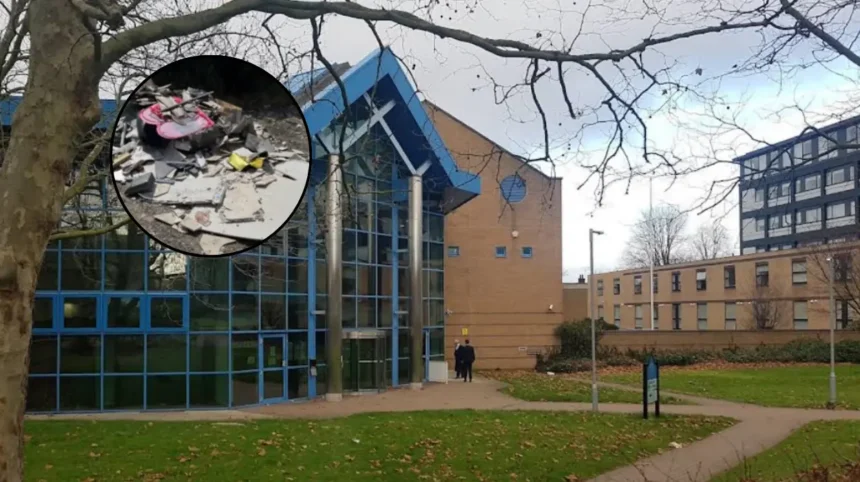
- Environmental Damage and Fire Hazard: The offences involved dumping substantial amounts of commercial and domestic waste across rural and public sites in Brentwood, with one incident involving waste being set on fire, requiring emergency intervention from the fire service.
- Multi-Agency Support: The successful prosecution was supported by National Enforcement Solutions, Birketts LLP, Six Pump Court, and the Metropolitan Police Service.
Brentwood (East London Times) September 28, 2026 – A serial fly-tipper has been handed an immediate nine-month custodial sentence and a five-year ban on transporting waste following a joint multi-agency enforcement operation led by Havering Council and Brentwood Borough Council. Daniel Hadley, residing at Hubert Road, Rainham, Essex, appeared before Basildon Crown Court where he pleaded guilty to four separate fly-tipping offences executed between November 2024 and July 2025. In addition to the custodial sentence and the five-year Criminal Behaviour Order (CBO), the court ordered the permanent surrender and forfeiture of the vehicle used to carry out the illicit dumping activities.
How Was the Joint Enforcement Operation Executed to Catch the Offender?
The successful prosecution of Daniel Hadley relied on coordinated intelligence sharing and field enforcement across local authority boundaries. Havering Council’s Enforcement Teams, working in direct conjunction with Section 92 Police officers—who are partly funded by Havering Council—spearheaded the initial operational breakthrough.
The Havering enforcement personnel and Section 92 officers successfully identified, located, and seized the vehicle belonging to Hadley. Following the vehicle’s confiscation, Havering authorities arranged for its official transfer to Brentwood Borough Council to serve as crucial physical evidence within the primary prosecution file.
Beyond the vehicle seizure, Havering Council played an integral role in coordinating information sharing between various local authority departments, legal specialists, and law enforcement teams. This coordinated intelligence gather ensured that all evidence gathered across different sites was systematically compiled to secure a guilty plea at Basildon Crown Court.
The comprehensive investigation featured operational contributions from multiple external bodies, including National Enforcement Solutions, legal representation from Birketts LLP, chamber advocacy from Six Pump Court, and active operational assistance from the Metropolitan Police Service.
What Impact Did the Fly-Tipping Have on the Local Environment and Communities?
The criminal acts committed by Hadley involved depositing massive quantities of waste across numerous rural and public locations within the Borough of Brentwood. These illegal activities resulted in environmental contamination, physical disruption to public spaces, and substantial financial burdens on local taxpayers and landowners who ultimately absorb the clean-up expenses.
Of the four specific incidents brought before the court, one significant event involved a large mound of dumped refuse being intentionally set alight. The resulting blaze posed severe safety hazards and environmental risks, requiring emergency attendance and suppression by the local fire service.
Highlighting the importance of cross-boundary local authority collaboration, Councillor Terry Brown, Havering Council’s Cabinet Member for Planning and Public Protection, stated:
“This action clearly shows that we do not tolerate fly tipping. We’re pleased that the fly tipper has been brought to justice. Information sharing between Council Enforcement Teams working together, recognised the sheer misery that this offender was causing to all residents, regardless of boundaries. Fly tipping is a crime and affects residents and is costly to deal with. We will always look to take the strongest action possible against those who commit this crime. I would like to thank our enforcement teams here at Havering, the Section 92 Police team and everyone involved.”
Background of the Particular Development
Fly-tipping and illegal waste disposal remain persistent operational challenges for municipal authorities across East London and Essex. The border corridors between outer London boroughs like Havering and rural Essex districts such as Brentwood are frequently targeted by rogue waste operators due to the prevalence of secluded country lanes, unlit public spaces, and rapid access to major trunk roads like the A12, A127, and M25.
Historically, enforcement actions against cross-border fly-tipping faced procedural delays due to jurisdictional boundaries separating London borough enforcement officers from Essex district teams and police forces. To combat these systemic vulnerabilities, local authorities in the region have increasingly invested in dedicated enforcement frameworks.
Havering Council’s partial funding of Section 92 Police officers represents a strategic initiative aimed at embedding dedicated law enforcement capabilities directly within municipal enforcement teams. This approach allows local authorities to combine civil environmental powers with criminal policing capabilities, enabling direct vehicle seizures, intelligence pooling, and joint operations with external legal partners such as Birketts LLP and Six Pump Court. The prosecution of Daniel Hadley highlights a maturing policy shift toward regional enforcement networks designed to prevent offenders from exploiting administrative boundaries.
Prediction: How This Development Can Affect Local Residents and Commercial Waste Operators
The conviction of Daniel Hadley and the enforcement precedents set by Basildon Crown Court are anticipated to have several key operational and behavioural impacts across the region:
- Impact on Local Residents and Ratepayers: Residents across Havering and Brentwood are likely to experience increased environmental protection and a potential reduction in municipal expenditure redirected toward clearing illegal waste dumps. Furthermore, the explicit use of Criminal Behaviour Orders (CBOs) provides local communities with direct legal recourse; any breach of the five-year waste-carrying ban by Hadley will constitute a separate criminal offence carrying additional prison sentences.
- Deterrent Effect on Illicit Waste Carriers: The immediate custodial sentence and mandatory forfeiture of the operational vehicle send a clear regulatory warning to unlicensed waste collectors operating in East London and Essex. The outcome demonstrates that judicial authorities are increasingly willing to impose prison terms rather than relying solely on financial fines for repeated environmental crimes.
- Expansion of Inter-Council Enforcement Protocols: The successful multi-agency collaboration between Havering Council, Brentwood Council, National Enforcement Solutions, and the Metropolitan Police is expected to serve as an operational model for future environmental crime prosecutions. Neighboring local authorities may adopt similar intelligence-sharing frameworks and joint Section 92 policing arrangements to target systematic waste offences across local authority borders.