Tower Hamlets is an inner-London borough on the eastern side of the capital, covering historic neighbourhoods, the River Thames waterfront, major markets, public parks, museums, galleries and distinctive streets. Its location places visitors close to the City of London, Canary Wharf, the Thames and several major East London transport routes.
- What is Tower Hamlets known for?
- Which historic attractions should visitors explore in Tower Hamlets?
- What can visitors do around Brick Lane and Spitalfields?
- Which parks and green spaces are best for visitors in Tower Hamlets?
- What can visitors see around Canary Wharf?
- What museums and cultural attractions are worth visiting in Tower Hamlets?
- How can visitors explore the River Thames in Tower Hamlets?
- Which markets should visitors include in a Tower Hamlets itinerary?
- How should visitors travel around Tower Hamlets?
- What is a good one-day Tower Hamlets itinerary?
- Which Tower Hamlets areas are best for different types of visitors?
- Why is Tower Hamlets important to the wider East London visitor experience?
What is Tower Hamlets known for?
Tower Hamlets is known for its historic East End neighbourhoods, Tower of London, Brick Lane, Spitalfields Market, Canary Wharf, Victoria Park, Regent’s Canal and diverse cultural heritage. Its attractions combine medieval history, industrial development, markets, waterfront spaces, museums, food destinations and modern architecture.
Tower Hamlets occupies approximately 20 square kilometres immediately east of the City of London. The borough extends from the River Thames northwards towards Victoria Park and includes well-known districts such as Whitechapel, Spitalfields, Bethnal Green, Stepney, Wapping, Limehouse, Poplar, Bow and Canary Wharf.
The borough has a particularly strong connection with London’s East End. Its historic development reflects successive periods of immigration, manufacturing, maritime commerce, housing expansion and financial redevelopment.
The area also contains internationally recognised landmarks. The Tower of London, a UNESCO World Heritage Site, stands beside the River Thames near Tower Hill. Further east, Canary Wharf represents London’s modern financial district, with high-rise offices, shopping, public art and waterside spaces.
Visitors therefore encounter two very different aspects of London within the same borough: historic East End streets and rapidly modernising waterfront districts.

Which historic attractions should visitors explore in Tower Hamlets?
Visitors should prioritise the Tower of London, St Katharine Docks, historic Spitalfields, Whitechapel and Wapping. These areas reveal Tower Hamlets’ medieval, Tudor, maritime and industrial history while placing major landmarks within walkable East London neighbourhoods.
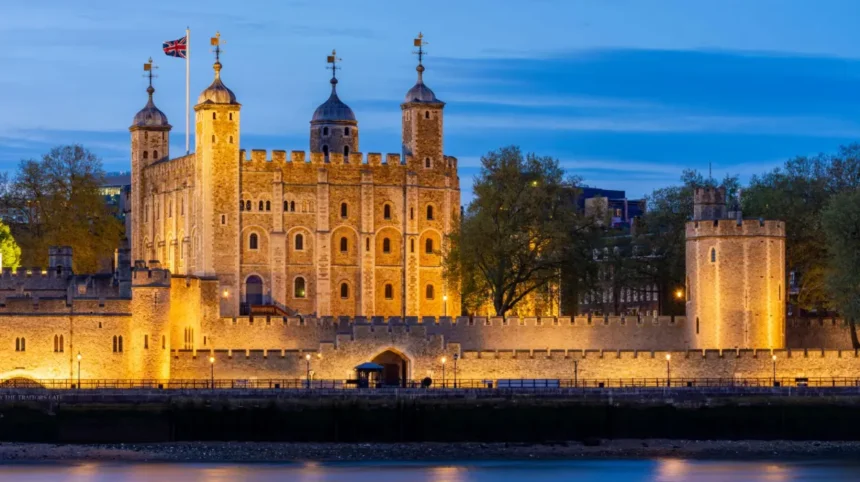
The Tower of London is the borough’s most prominent historic attraction. Founded after the Norman Conquest, the fortress developed over centuries into a royal palace, prison, armoury and treasury. It is managed by Historic Royal Palaces and is recognised internationally for its architectural and political importance.
The White Tower forms the oldest central part of the complex. William the Conqueror began construction in the 1070s. The wider fortress expanded substantially during later medieval reigns.
Visitors can also see the Crown Jewels, ceremonial objects and historic defensive structures within the complex. The site provides a direct introduction to the relationship between royal authority, military power and London’s development.
St Katharine Docks lies immediately east of the Tower of London. The former commercial docks opened in 1828 and were designed to bring ships close to warehouses serving central London. The dock system later declined as shipping technology changed.
Today, St Katharine Docks combines preserved maritime architecture with restaurants, offices, residences and moorings.
Spitalfields provides another important historic area. Old Spitalfields Market developed from the original market established in the seventeenth century. The surrounding streets retain buildings associated with London’s textile trade, immigrant communities and commercial expansion.
As you explore the modern neighbourhood, you are crossing land with a deep East London heritage. Read about the full to understand its origins.
Wapping also provides strong historical context. The riverside district developed around docks, warehouses and maritime industries. Its historic warehouses and narrow streets reflect London’s former position as one of the world’s major trading ports.
What can visitors do around Brick Lane and Spitalfields?
Brick Lane and Spitalfields provide a concentrated East London experience built around markets, independent businesses, street art, food, fashion and historic architecture. Visitors can combine these attractions with nearby galleries, historic streets and the wider Whitechapel and Shoreditch area.
Brick Lane runs through the historic East End between Whitechapel and Shoreditch. It became particularly associated with Jewish immigration during the nineteenth and early twentieth centuries and later developed a strong Bangladeshi cultural identity.
Today, Brick Lane is recognised for restaurants, cafés, vintage shops, independent businesses, street art and market activity.
The area’s food culture is one of its major visitor attractions. Bangladeshi restaurants and curry houses form an important part of Brick Lane’s commercial identity. Other businesses sell international food, baked goods and speciality products.
Old Spitalfields Market provides a more structured market environment. Its present form incorporates historic market architecture with contemporary retail and food businesses.
Visitors can walk between Spitalfields, Brick Lane and nearby streets as part of a compact East London itinerary. The area also connects easily with Liverpool Street, Shoreditch and the City.
The Whitechapel Gallery, founded in 1901, is another significant cultural destination nearby. It is one of London’s established contemporary art institutions and presents exhibitions, events and educational programmes.
The Royal London Hospital Museum provides further historical context. It documents the development of healthcare in East London and the history of the hospital.
Which parks and green spaces are best for visitors in Tower Hamlets?
Victoria Park is Tower Hamlets’ principal large public park and one of the best places for walking, recreation and outdoor relaxation. Other useful green spaces include Mile End Park, Weavers Fields, Island Gardens and Mudchute Park and Farm.
Victoria Park opened in 1845 and covers more than 200 acres. It was created as a major public park for East London’s growing population and remains one of the borough’s most important green spaces.
The park contains large lawns, mature trees, water features, sports areas and walking routes. Its broad layout makes it suitable for visitors who want outdoor space without leaving the central East London area.
The Chinese Pagoda is one of Victoria Park’s recognisable features. The park also contains historic features connected with London’s urban development and public recreation.
Mile End Park forms another important green corridor. It stretches for more than a mile along the River Lea and incorporates gardens, sports facilities, play areas and walking routes.
Its location makes it useful for visitors travelling between Bethnal Green, Mile End and Bow.
Mudchute Park and Farm occupies a large open area on the Isle of Dogs. The site combines countryside-style open space with a working urban farm. It provides a different experience from the formal gardens and landscaped spaces found elsewhere in London.
Island Gardens sits at the southern end of the Isle of Dogs. The park provides views across the River Thames towards Greenwich and the historic Old Royal Naval College.
These green spaces also support visitors looking for lower-cost activities. Walking, public parks and outdoor sightseeing require no attraction admission fee.

What can visitors see around Canary Wharf?
Canary Wharf offers a modern East London experience centred on skyscrapers, financial institutions, public art, shopping, restaurants, canals and riverside spaces. Visitors can explore its architecture and waterfront environment while connecting easily with other Tower Hamlets attractions.
Canary Wharf developed from the former West India Docks. The docks opened in the early nineteenth century and became important centres for international trade.
The docklands declined during the twentieth century as shipping requirements changed. Large-scale redevelopment transformed Canary Wharf into one of London’s principal business districts.
Today, the area contains major office towers, retail spaces, restaurants, public squares and waterside routes.
One Canada Square is one of the district’s defining buildings. Completed in 1991, it became a landmark of the modern Docklands skyline.
Visitors do not need to work in Canary Wharf to explore the area. Public spaces connect the major buildings and docks, creating routes for walking and photography.
The Museum of London Docklands provides the strongest historical connection. Located in a former warehouse beside West India Docks, the museum explains London’s relationship with the River Thames, trade, slavery, migration and dockland communities.
The museum is particularly useful for understanding how today’s Canary Wharf emerged from an industrial waterfront.
What museums and cultural attractions are worth visiting in Tower Hamlets?
Tower Hamlets offers museums and cultural institutions covering London’s royal history, docklands, medicine, art, migration and local communities. The Tower of London, Museum of London Docklands, Whitechapel Gallery and Royal London Hospital Museum provide distinct cultural perspectives.
The Museum of London Docklands is essential for understanding East London’s waterfront history. Its collections document the Thames, London’s port, global trade and the communities connected to the docks.
The museum occupies a historic nineteenth-century warehouse. Its location adds physical context to the exhibitions because visitors stand inside the former dockland environment.
The Whitechapel Gallery provides a different cultural focus. Its programme centres on modern and contemporary art and places East London within the international art scene.
The Tower of London combines history, architecture and royal heritage. Its long institutional history makes it relevant to visitors interested in medieval and early modern London.
The Royal London Hospital Museum focuses on medical and social history. Its collections help explain healthcare provision in one of London’s densely populated historic districts.
Tower Hamlets also benefits from proximity to major cultural institutions outside the borough. The City of London, South Bank and Greenwich are accessible through public transport, making the borough a practical base for wider London sightseeing.
How can visitors explore the River Thames in Tower Hamlets?
Visitors can experience the Thames through riverside walks, historic docks, waterfront parks, boat services and viewpoints around Wapping, Limehouse, Canary Wharf and the Isle of Dogs. The river connects historic maritime landscapes with modern financial and residential districts.
The River Thames is fundamental to Tower Hamlets’ history. London’s port developed around the river, and docks transformed large sections of the borough during the eighteenth and nineteenth centuries.
Wapping contains former warehouses and riverside buildings associated with London’s maritime trade. The Thames Path provides opportunities to explore sections of the riverfront on foot.
Limehouse offers another important waterfront environment. The area became associated with shipbuilding, pottery and industrial activity before later residential redevelopment.
The Limehouse Basin connects the Regent’s Canal with the Thames. It provides a useful starting point for visitors interested in waterways and walking routes.
On the Isle of Dogs, the river surrounds much of the peninsula. Island Gardens provides one of the clearest public viewpoints towards Greenwich.
Visitors can also use river transport from piers around the Thames. Services vary by route and operator, so checking current timetables before travelling is important.
The waterfront works particularly well as part of a longer walking itinerary. Visitors can combine historical buildings, docks, public parks and modern architecture without relying entirely on road transport.
Which markets should visitors include in a Tower Hamlets itinerary?
Visitors should include Old Spitalfields Market and Brick Lane markets when planning a Tower Hamlets itinerary. These destinations combine food, clothing, vintage goods, crafts, independent retail and East London culture within a compact area near Liverpool Street and Shoreditch.
Old Spitalfields Market is one of the borough’s best-known covered markets. Its retail and food businesses operate within a historic market environment.
Brick Lane Market is associated with stalls selling clothing, vintage products, food, art and miscellaneous goods. Its character changes across different days, with weekends generally providing the strongest market activity.
Markets also provide an important connection between tourism and local commerce. Visitors can see independent businesses operating alongside long-established commercial traditions.
The surrounding streets contain cafés, restaurants, galleries and small shops. This creates a dense visitor district where several activities fit into a single walking route.
For travellers with limited time, Spitalfields and Brick Lane are particularly efficient because they sit close to Liverpool Street station and several major transport connections.
How should visitors travel around Tower Hamlets?
Visitors can explore Tower Hamlets efficiently using the London Underground, Docklands Light Railway, Elizabeth line, London Overground, buses, river services and walking routes. Liverpool Street, Whitechapel, Canary Wharf, Mile End and Stratford provide major connections into and across East London.
Tower Hamlets has an extensive public transport network.
The London Underground serves several stations within and around the borough. District and Hammersmith & City line services provide connections through Whitechapel, Stepney Green and Mile End.
The Elizabeth line provides high-speed cross-London connections through Whitechapel and nearby Liverpool Street. It links East London with central and western parts of the capital.
The Docklands Light Railway, commonly called the DLR, serves Canary Wharf, the Isle of Dogs, Poplar, Limehouse and other Docklands districts. Its elevated sections provide useful views of the changing East London landscape.
The London Overground provides additional connections around the borough and its surrounding districts.
Buses remain important for shorter journeys between neighbourhoods.
Walking is particularly effective in central Tower Hamlets. Brick Lane, Spitalfields, Whitechapel and the City are close enough for visitors to combine several destinations on foot.
Visitors should use Transport for London’s current journey planner before travelling because routes, engineering works and service patterns change.
What is a good one-day Tower Hamlets itinerary?
A practical one-day Tower Hamlets itinerary starts with the Tower of London, continues through Wapping or Whitechapel, explores Spitalfields and Brick Lane, then finishes around the Thames, Canary Wharf or Victoria Park depending on interests and available time.
Start near Tower Hill and allow several hours for the Tower of London. The fortress contains enough historic material to justify a substantial visit.
Continue towards St Katharine Docks and Wapping. This section provides maritime architecture and Thames views.
Travel or walk towards Whitechapel and Spitalfields. Explore the Whitechapel Gallery if contemporary art is a priority.
Continue to Old Spitalfields Market and Brick Lane. This section works well for lunch, independent shopping and street-level exploration.
In the afternoon, choose between two different directions.
Visitors interested in modern architecture can travel towards Canary Wharf and the Isle of Dogs. The Museum of London Docklands provides historical context before exploring the modern financial district.
Visitors prioritising green space can travel towards Victoria Park. The park provides open lawns, walking routes and recreational areas.
A full day therefore works best when organised geographically rather than trying to visit every attraction.
Explore More Area Guide
Best Visitor Destinations in Tower Hamlets London 2026
Tower Hamlets Attractions & Experiences Guide, London 2026
Which Tower Hamlets areas are best for different types of visitors?
Different Tower Hamlets districts suit different travel priorities. The Tower and Wapping suit history, Spitalfields and Brick Lane suit markets and food, Canary Wharf suits architecture and business travel, while Victoria Park and the Isle of Dogs suit outdoor exploration.
History-focused visitors should concentrate on the Tower, Wapping, Whitechapel and Spitalfields. These districts contain the strongest concentration of historic landmarks and surviving urban fabric.
Food-focused visitors should prioritise Brick Lane, Spitalfields and Whitechapel. The districts contain long-established restaurants and international food businesses.
Architecture-focused visitors should combine historic areas with Canary Wharf. This creates a direct comparison between medieval fortifications, Victorian commercial buildings, former warehouses and modern skyscrapers.
Outdoor visitors should prioritise Victoria Park, Mile End Park, Limehouse Basin, Island Gardens and riverside walking routes.
Digital nomads and business travellers can use Canary Wharf, Spitalfields and nearby commercial districts for cafés, restaurants and work-friendly public environments, while keeping leisure activities within easy reach.
Why is Tower Hamlets important to the wider East London visitor experience?
Tower Hamlets provides a compact introduction to East London because it connects royal history, docklands, migration, markets, parks, contemporary art, financial districts and the River Thames. Its transport network also makes the borough a practical gateway to wider East London.
Tower Hamlets represents several major stages of London’s development.
The Tower of London demonstrates the borough’s medieval and royal importance. Spitalfields and Brick Lane demonstrate migration, commerce and changing East End identities. The docks demonstrate London’s industrial and global trading history.
Canary Wharf demonstrates the transformation of former industrial land into a major international financial centre.
Victoria Park and Mile End Park demonstrate the continuing importance of accessible public green space in a densely developed part of London.
The borough’s significance therefore extends beyond individual attractions. Visitors can use a Tower Hamlets travel planner to understand how different parts of London connect through geography, transport, commerce, migration and the River Thames.
For tourists, the borough provides major landmarks and distinctive neighbourhood experiences. For residents, it offers parks, markets and cultural venues. For business travellers, it provides immediate access to Canary Wharf and the City. For digital nomads, its cafés, public spaces and transport links create practical bases for combining work with sightseeing.
Tower Hamlets is consequently one of the most varied areas to explore in East London. A well-planned visit does not require long journeys between every attraction. Historic landmarks, markets, cultural venues, waterways and green spaces sit within a connected urban landscape.
What is Tower Hamlets famous for?
Tower Hamlets is famous for the Tower of London, Brick Lane, Spitalfields Market, Canary Wharf, Victoria Park, historic docklands and its diverse East End cultural heritage.