Tower Hamlets is an East London borough on the northern bank of the River Thames, known for its historic docks, maritime heritage, modern business districts and accessible riverside spaces. Its waterfront connects centuries of London’s trading history with contemporary leisure destinations, including Canary Wharf, Limehouse Basin, Wapping and St Katharine Docks.
- Why is Tower Hamlets an important waterfront destination in East London?
- What is the historical background of the Tower Hamlets waterfront?
- Which historic waterfront attractions should visitors explore in Tower Hamlets?
- Where can visitors enjoy the best riverside walks in Tower Hamlets?
- What can visitors see and do along the Canary Wharf waterfront?
- Where can visitors find riverside dining and traditional pubs in Tower Hamlets?
- What is dining like at St Katharine Docks?
- Which historic pub should visitors consider in Wapping?
- Where can visitors eat near Canary Wharf?
- How can visitors discover Tower Hamlets’ maritime heritage?
- Which quieter waterfront places are worth exploring?
- How can visitors plan a practical Tower Hamlets waterfront itinerary?
- What can visitors do in two hours?
- What can visitors do in half a day?
- What can visitors do in a full day?
- How accessible is the Tower Hamlets waterfront by public transport?
- What should visitors know about river safety and environmental protection?
- Why does the Tower Hamlets waterfront remain important to London’s future?
The borough’s relationship with the Thames shaped its development as a centre for shipping, warehousing, manufacturing and international trade. Today, former industrial areas accommodate residential developments, restaurants, public walkways, cultural attractions and offices. Visitors can explore surviving dock infrastructure, walk beside the river, watch boats and enjoy views of London’s changing skyline.
A Tower Hamlets waterfront visit suits tourists, local residents, business travellers and remote workers. The area offers short riverside walks, longer Thames Path sections, historic landmarks and places to stop for food or refreshments. Understanding the geography and history of these locations helps visitors plan a route that combines waterfront scenery with East London’s cultural heritage.
Why is Tower Hamlets an important waterfront destination in East London?
Tower Hamlets is an important waterfront destination because the River Thames connects its historic port districts, former commercial docks, public riverside paths and modern business centres. The borough combines maritime history, architectural heritage, leisure facilities and access to London’s wider river network.
The River Thames forms much of Tower Hamlets’ southern boundary. Its curved course passes historic Wapping, Limehouse and the Isle of Dogs before continuing towards the eastern reaches of London. This geography influenced the location of wharves, warehouses, shipyards and enclosed docks.
The borough’s waterfront is not a single attraction. It is a collection of connected but distinct environments. St Katharine Docks provides a marina setting near central London. Wapping retains historic streets and warehouse architecture. Limehouse Basin links the Thames with the Regent’s Canal. Canary Wharf combines commercial towers with landscaped public spaces.
Tower Hamlets Council identifies the Thames and Bow Creek, London’s canals, Limehouse Basin and several dockland sites as important locations for nature conservation. These designations demonstrate that the borough’s waterways have environmental as well as historical and economic significance.
Visitors benefit from this variety because a single day can include riverside walking, historic buildings, boat watching, food stops and modern architecture without leaving East London.
What is the historical background of the Tower Hamlets waterfront?
Tower Hamlets developed as a major riverside district because the Thames provided access to shipping, overseas trade and inland transport. Enclosed docks expanded during the eighteenth and nineteenth centuries, transforming marshland and riverside settlements into London’s commercial port.
The waterfront’s development began with riverside settlements and small commercial wharves. By the sixteenth and seventeenth centuries, areas such as Limehouse supported maritime businesses, while Wapping developed a strong connection with sailors, shipping and riverside trade.
The construction of enclosed docks increased the capacity to handle goods and protect valuable cargo. The London Docks opened in Wapping in 1805, while St Katharine Docks opened in 1828. The West India Docks, established on the Isle of Dogs in 1802, strengthened London’s position as a major trading port.
These commercial systems depended on ships, dock labourers, warehouses, customs operations and inland transport. Cargoes included sugar, tea, spices, tobacco and other imported commodities. London’s port economy also benefited from imperial trade, including the exploitation of enslaved people. The London Museum documents the connection between the wealth generated by imperial commerce and the development of the London Docks.
Container shipping, changing vessel sizes and the relocation of port operations away from central London contributed to the decline of the enclosed docks during the twentieth century. London Dock closed in 1968, and other docklands experienced similar industrial decline.
Regeneration subsequently transformed former dockland sites into residential neighbourhoods, office districts, cultural destinations and leisure spaces.
For a deeper understanding of how these changes shaped the borough, explore the [Tower Hamlets Maritime and Docklands History] historical background article. This is the single historical internal-link placeholder for the waterfront guide.
Which historic waterfront attractions should visitors explore in Tower Hamlets?
Historic waterfront attractions in Tower Hamlets include St Katharine Docks, Wapping Pierhead, Limehouse Basin and the surviving dockland streets. These locations reveal how London’s port operated and how historic warehouses, waterways and dock infrastructure have been adapted for modern visitors.
The most rewarding historic locations are spread along the northern bank of the Thames. Each provides a different perspective on the borough’s commercial past.
St Katharine Docks
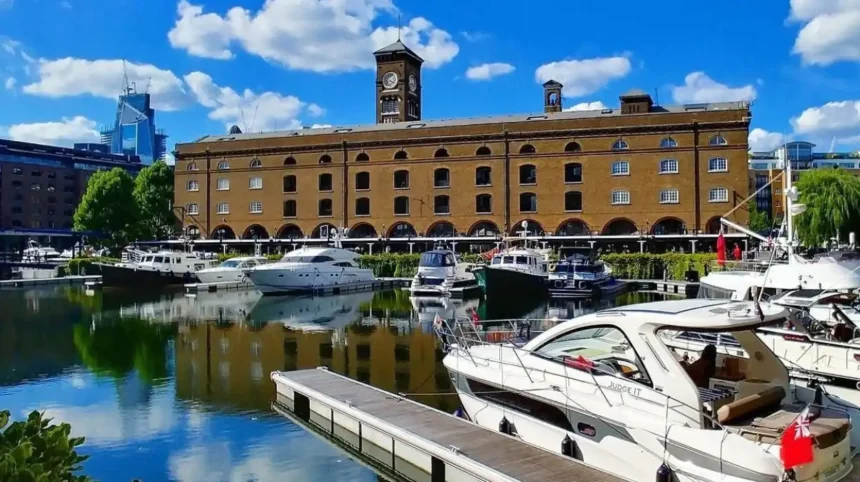
St Katharine Docks sits beside Tower Bridge and the Tower of London. The dock complex opened in 1828 following a redevelopment scheme associated with engineer Thomas Telford. Its construction involved the clearance of existing housing and the medieval St Katharine’s Hospital.
The docks later lost their commercial role and closed in 1968. The site has since become a marina and visitor destination with restaurants, moored boats and historic architecture. The surviving Ivory House warehouse is an important reminder of the original dockland environment.
Visitors can walk around the dock basins, examine the relationship between historic buildings and the water, and stop for refreshments. The location also provides a convenient starting point for a walk towards Wapping and Limehouse.
Wapping Pierhead
Wapping Pierhead preserves the character of the former London Docks entrance. Its Georgian terraces were built between 1811 and 1813, when dock officials needed homes close to the commercial facilities they supervised.
The original dock entrance has been filled in, but the surrounding streets and buildings preserve the area’s historic layout. The conservation area also contains listed buildings and former warehouse structures.
The area suits visitors interested in architectural details, quieter streets and the relationship between residential development and the historic port.
Limehouse Basin
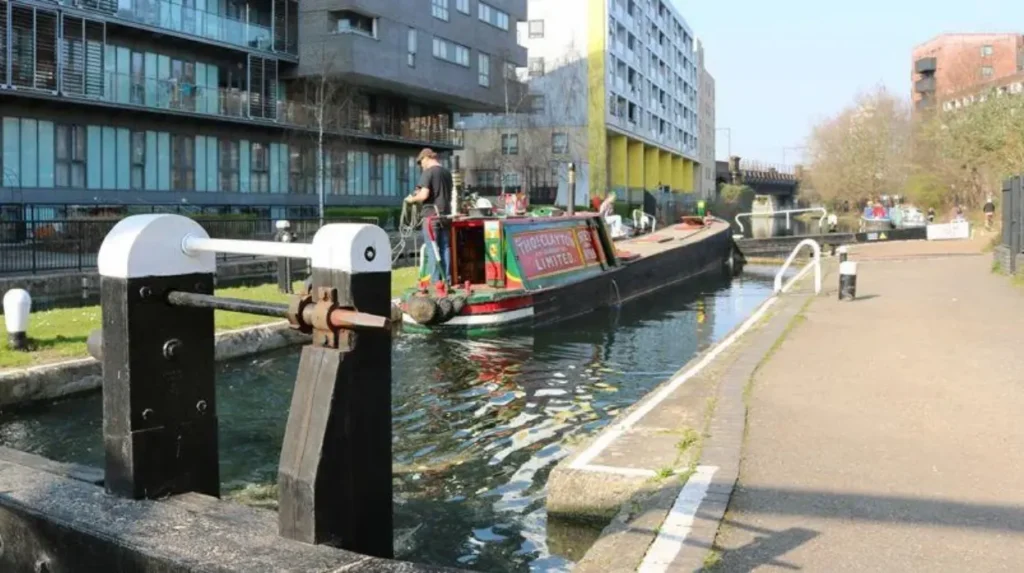
Limehouse Basin connects the River Thames with the Regent’s Canal through a navigable lock. It originally operated as Regent’s Canal Dock and opened in 1820, providing a transfer point where seagoing vessels and smaller canal boats exchanged cargo.
The basin became commercially successful as canal transport expanded during the nineteenth century. Its location illustrates the connection between London’s river trade and the inland waterways that distributed goods beyond the port.
Today, visitors can explore the marina, watch boats and follow paths towards Narrow Street and Canary Wharf. It is also a useful place to understand how London’s river and canal networks operated together.
Where can visitors enjoy the best riverside walks in Tower Hamlets?
The best riverside walks in Tower Hamlets include the Thames Path between Tower Bridge and Canary Wharf, the Wapping riverside route and the Limehouse Basin waterfront. These routes combine river views, historic buildings, marina scenery and access to local cafés.
Walking is one of the most practical ways to explore the borough’s waterfront. Routes vary from short marina circuits to longer journeys connecting several neighbourhoods.
Thames Path: Tower Bridge to Canary Wharf
The Thames Path is a long-distance walking route that follows the river through London and other parts of England. Its Tower Hamlets section connects prominent landmarks with historic dockland neighbourhoods.
The Tower Bridge to Canary Wharf walk passes St Katharine Docks and continues through Wapping and Limehouse before reaching the Isle of Dogs. Visitors encounter marina views, converted warehouses, historic riverside pubs and modern buildings along the way.
Allow additional time for stops, photography and refreshments. The overall walking time depends on the selected route, diversions and pace.
Wapping riverside walk
Wapping offers a quieter walking experience than the busiest central London waterfront areas. Its narrow streets, old warehouse buildings and historic riverside establishments reveal the district’s former relationship with shipping.
A route through Wapping can include Wapping Pierhead, the Thames-side paths and historic pubs. The Prospect of Whitby is a recognised riverside landmark associated with the area’s maritime history.
The route suits visitors who want to combine a walk with architectural exploration and a meal or drink.
Limehouse Basin to Canary Wharf
The Limehouse Basin to Canary Wharf route connects the marina with the modern business district. It passes dockside paths and waterways before reaching the high-rise skyline of the Isle of Dogs.
This route demonstrates the transition from historic transport infrastructure to contemporary urban development. It is suitable for visitors with limited time who want to see both environments during one outing.
Before setting out, check the current route information and any temporary path restrictions. Not every riverside stretch provides uninterrupted public access directly beside the water.
What can visitors see and do along the Canary Wharf waterfront?
Canary Wharf offers visitors waterside promenades, landscaped public spaces, modern architecture, shops and places to eat. Built around former commercial docklands, the district combines financial offices with pedestrian areas and gardens that provide accessible places to pause beside the water.
Canary Wharf stands on the Isle of Dogs, a peninsula surrounded by the Thames and former dock infrastructure. The West India Docks opened in 1802 and supported international trade for generations. As traditional port operations declined, the area underwent major redevelopment into a financial and commercial centre.
The Canary Wharf development plan incorporated landscaped open spaces, pedestrian routes and public squares. The resulting environment provides a contrast between modern office towers and the water basins that reflect the area’s trading past.
Which public spaces are worth visiting?
Jubilee Park offers landscaped grounds within the Canary Wharf district. Its paths and planted areas provide a break from the surrounding commercial streets.
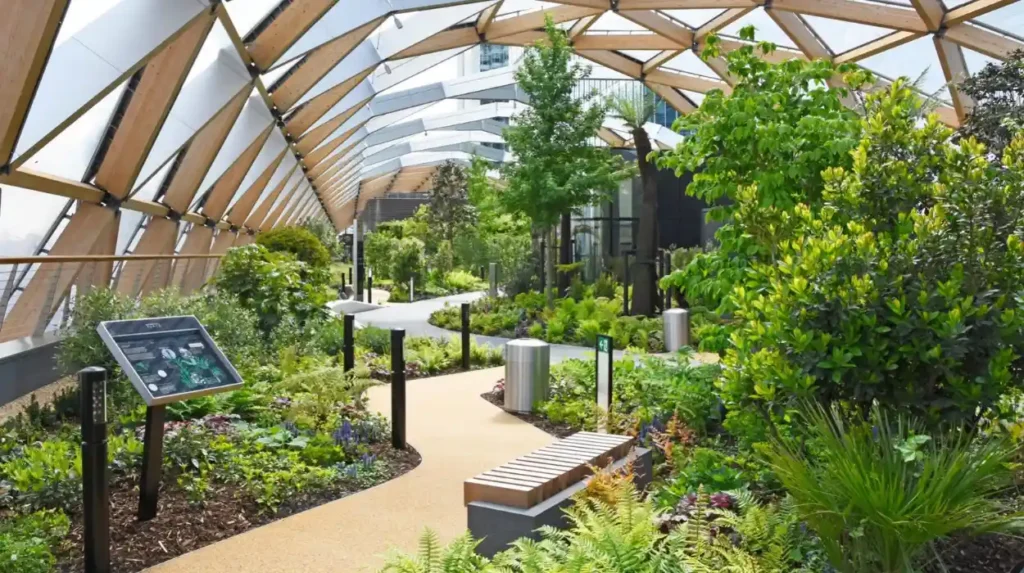
Crossrail Place Roof Garden contains planted areas beneath the roof of the Crossrail Place building. It introduces greenery into the dense urban environment and offers visitors a different perspective on the district’s architecture.
The waterfront around the docks provides opportunities to watch passing boats and photograph the skyline. Visitors should follow local signs identifying public areas, private premises and any restrictions on access.
Is Canary Wharf suitable for a short visit?
Canary Wharf suits travellers with an hour or two between meetings, transport connections or other London activities. Visitors can walk around the water, explore public gardens, browse shops and stop for food without committing to a full-day excursion.
For a longer outing, combine Canary Wharf with Limehouse Basin. The walk connects modern commercial architecture with a historic canal and marina setting, making the transition between London’s industrial and financial eras easy to observe.
Where can visitors find riverside dining and traditional pubs in Tower Hamlets?
Tower Hamlets offers riverside dining around St Katharine Docks, historic pubs in Wapping and restaurants near Limehouse and Canary Wharf. These locations provide different settings for meals, from marina-side cafés to established waterside pubs and contemporary dining venues.
Food is a useful part of a waterfront itinerary because several historic and modern districts contain places to stop along walking routes. Visitors should check current opening hours, menus, prices and booking requirements before travelling.
What is dining like at St Katharine Docks?
The marina setting provides opportunities to eat or drink while looking across the water and moored boats. Restaurants and cafés occupy the dockside environment, making this a convenient stop after visiting Tower Bridge or walking east from central London.
The enclosed basin gives the area a different atmosphere from the open Thames embankment. Visitors can combine a meal with a circuit around the marina and views of its surrounding buildings.
Which historic pub should visitors consider in Wapping?
The Prospect of Whitby is a well-known historic pub on the Wapping waterfront. Its location connects the experience of eating and drinking with the area’s former maritime community.
The pub is frequently included in local heritage walks. Visitors can combine a stop there with Wapping’s old streets and riverside paths rather than treating it as an isolated destination.
Where can visitors eat near Canary Wharf?
Canary Wharf has a broad range of restaurants, cafés and casual dining venues serving workers, residents and visitors. The commercial district offers convenient options for lunch, coffee breaks and evening meals.
Dining availability varies by day and time, particularly outside normal office hours. Checking venue information in advance helps visitors identify suitable options and avoid unnecessary detours.
How can visitors discover Tower Hamlets’ maritime heritage?
Visitors can discover Tower Hamlets’ maritime heritage by exploring historic dock entrances, surviving warehouses, canal connections and the Museum of London Docklands. These places explain how shipping, imported commodities, dock labour and international trade influenced East London’s physical and social development.
The Museum of London Docklands, at West India Quay, is a valuable indoor stop for visitors interested in the wider history of the Thames port. Its collections and exhibitions explore London’s river, docks, trade and dockland communities.
The museum helps explain the wider system behind the waterfront landmarks. A marina or warehouse represents only one part of a larger network that once connected ships, customs facilities, labourers, storage buildings and canal transport.
What do the old warehouses reveal?
Warehouses were essential to the storage and handling of cargo arriving from overseas. Their proximity to the docks reduced the need to move goods over long distances before inspection, distribution or onward transport.
Historic warehouse buildings also reveal how commercial architecture shaped riverside streets. In Wapping and around St Katharine Docks, surviving structures preserve evidence of the scale and organisation of London’s former port.
Why is the history of trade important?
The history of London’s docks includes both commercial expansion and the unequal systems that supported imperial wealth. Cargoes such as sugar and tobacco were connected to colonial economies and, in some cases, slavery and forced labour.
A complete visit therefore includes the economic achievements of the port alongside its human consequences. The London Museum’s account of London Dock provides context for understanding these connections.
Which quieter waterfront places are worth exploring?
Quieter waterfront locations in Tower Hamlets include Limehouse Basin, parts of Wapping, Shadwell Basin and East India Dock Basin. These areas offer water views, local walking routes and historic surroundings away from the busiest central London tourist corridors.
Shadwell Basin
Shadwell Basin forms part of the former dock network near Wapping and Limehouse. Its waterside setting is surrounded by residential development, with paths that provide opportunities for a local walk and views across the basin.
The area is also associated with outdoor activity facilities. Visitors should check current access arrangements before planning activities that require equipment or organised sessions.
East India Dock Basin
East India Dock Basin preserves a different aspect of the former port landscape. The area is recognised by Tower Hamlets Council as a site of borough importance for nature conservation.
Its waterside environment offers opportunities to observe urban wildlife and experience a quieter part of the docklands. Visitors interested in birds and nature should bring binoculars and remain on designated paths.
Narrow Street in Limehouse
Narrow Street retains an identifiable connection with Limehouse’s maritime past. Historic buildings and former wharf-side structures illustrate the district’s development around the Thames.
A walk through this area works well with a visit to Limehouse Basin. Together, the street and basin explain how riverside commerce and canal transport supported the growth of East London.
How can visitors plan a practical Tower Hamlets waterfront itinerary?
Visitors can plan a Tower Hamlets waterfront itinerary by choosing a manageable section of the river, checking transport connections and allowing time for historic sites, food stops and photography. Walking between nearby attractions reduces backtracking and provides a clearer view of the changing docklands.
The best itinerary depends on the time available, walking preferences and interest in history or contemporary architecture.
What can visitors do in two hours?
A short visit can focus on St Katharine Docks and the nearby Thames-side paths. Start with a circuit of the marina, explore the surrounding architecture and continue towards the river for views of Tower Bridge.
This itinerary is appropriate for travellers staying near central London or visitors with limited time between other activities.
What can visitors do in half a day?
A half-day itinerary can begin at Tower Bridge and follow the Thames Path through St Katharine Docks and Wapping towards Limehouse.
Allow time to stop at historic buildings, take photographs and have refreshments. The exact duration depends on the chosen route, walking speed and the length of each stop.
What can visitors do in a full day?
A full day allows visitors to explore the historic riverfront and the modern Docklands district. Start in Wapping or St Katharine Docks, continue towards Limehouse Basin, then visit Canary Wharf.
Add the Museum of London Docklands if its opening hours and current exhibitions suit the schedule. This combination provides a broad overview of the borough’s maritime history, regeneration and contemporary waterfront spaces.
How accessible is the Tower Hamlets waterfront by public transport?
Tower Hamlets waterfront is accessible through London’s Underground, Docklands Light Railway, London Overground, buses and river services at selected piers. Visitors should choose transport according to their starting point, walking route and destination rather than assuming every waterfront attraction has a nearby station.
The borough’s transport network makes it practical to explore the river without a car. Stations serving the main waterfront districts include Tower Hill, Tower Gateway, Wapping, Limehouse and Canary Wharf.
St Katharine Docks is within walking distance of Tower Hill and Tower Gateway. Wapping has a London Overground station, while Limehouse is served by the Docklands Light Railway and National Rail services. Canary Wharf has Underground, Elizabeth line and Docklands Light Railway connections.
Walking distances vary according to station exits, crossing points and the exact destination. Check current Transport for London information before departure, particularly when travelling with children, luggage or mobility equipment.
Is the waterfront suitable for families?
Many waterfront paths and marina areas suit families looking for outdoor sightseeing. Children can watch boats, explore public spaces and learn about the history of London’s docks.
However, not every riverside path has barriers beside the water, and some historic streets have uneven paving or steps. Adults should supervise children near river edges, locks and marina basins.
Can visitors with reduced mobility explore the waterfront?
Accessibility varies between individual locations. Modern public spaces often provide step-free routes, while older streets, bridges and dockside paths present different conditions.
Visitors should check the accessibility information for specific attractions and transport stations before travelling. River conditions, construction works and temporary diversions also affect route suitability.
Explore More Area Guide
Tower Hamlets Guide to East London’s Hidden Neighbourhoods and Local Culture
Best Places to Explore Tower Hamlets’ Past and Present
What should visitors know about river safety and environmental protection?
Visitors should follow riverside signs, remain on authorised paths and keep a safe distance from the Thames edge. Tidal water levels, slippery surfaces, vessel movements and changing weather conditions require attention throughout a waterfront visit.
The River Thames is a tidal river through this part of London. Water levels change with the tides, and exposed foreshore areas present hazards that are not always obvious from the riverbank.
Visitors should avoid entering the water or walking onto the foreshore without understanding local safety conditions. They should also keep clear of working locks, moorings and restricted dock facilities.
Environmental protection is equally important. Tower Hamlets recognises the Thames, London’s canals and several dockland locations as important for nature conservation. These waterways support habitats within a densely developed urban environment.
Visitors can help protect these spaces by disposing of litter responsibly, avoiding disturbance to birds and respecting signs around wildlife habitats.
Why does the Tower Hamlets waterfront remain important to London’s future?
Tower Hamlets waterfront remains important because it combines historic infrastructure, public recreation, commercial activity and urban regeneration. Its docks and river paths preserve evidence of London’s trading past while supporting modern neighbourhoods, workplaces and visitor destinations.
The borough’s waterfront demonstrates how urban land uses change over time. Former cargo-handling areas now accommodate homes, offices, restaurants, gardens and cultural attractions.
This change also creates a continuing need to protect historic buildings and improve public access to the river. Conservation areas, heritage records and environmental designations help identify places where development must account for historical or ecological value.
For visitors, the result is a destination with several distinct experiences. Wapping provides historic streets and river views. Limehouse Basin connects the Thames with the canal network. St Katharine Docks offers a marina beside major London landmarks. Canary Wharf combines contemporary architecture with landscaped public spaces.
These destinations make Tower Hamlets suitable for short visits, extended walking routes and repeat exploration. Each area reveals a different aspect of East London’s relationship with water, trade, architecture and urban life.
Tower Hamlets offers one of East London’s most varied waterfront experiences. Visitors can explore historic docks, follow the Thames Path, discover surviving warehouses, enjoy riverside dining and experience the modern skyline of Canary Wharf.
St Katharine Docks, Wapping, Limehouse Basin and Canary Wharf provide a practical starting point for discovering the borough. Combining these places into a single route helps visitors understand the transition from London’s historic port to its contemporary waterfront.
The most effective visit balances riverside walking with time for heritage sites, food stops and quieter waterside spaces. Checking transport, opening times and access conditions before departure makes the experience easier to plan.
What are the best waterfront places to visit in Tower Hamlets?
The best waterfront places in Tower Hamlets include St Katharine Docks, Wapping, Limehouse Basin, Shadwell Basin and Canary Wharf. These destinations offer historic docklands, riverside walks, marina views, modern architecture and places to eat.