Key Points
- Not Guilty Pleas Entered: Dominic Charles-Turner, 31, and Moses Edwards, 45, have formally denied committing an arson attack on a historic East London synagogue.
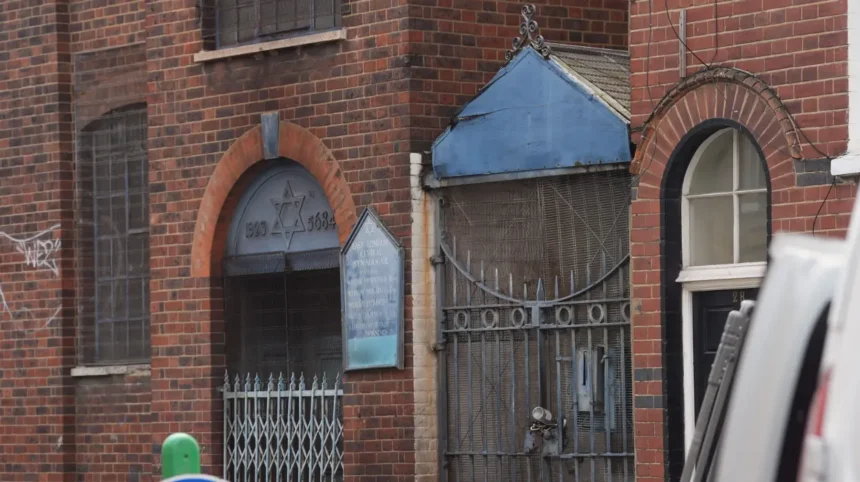
- Incident Details: The prosecution alleges two explosions occurred followed by a fire at the main entrance and gates of the East London Synagogue on Nelson Street, Whitechapel, on 5 May.
- Building History and Redevelopment: The synagogue, which belongs to the Federation of Synagogues, ceased active operations in 2020 but still displayed visible Jewish symbols. At the time of the blaze, it was undergoing a purchase by a Muslim community group intended for conversion into a mosque and community centre.
- Legal Charges: Both defendants face charges of destroying or damaging property being reckless as to whether life would be endangered.
- Court Proceedings: Following their appearance at the Central Criminal Court (the Old Bailey), the two men were remanded into custody ahead of a three-week trial scheduled to commence on 28 April.
Whitechapel (East London Times) October 24, 2026 – Two men have entered not guilty pleas at the Old Bailey after being accused of orchestrating an arson attack on a historic East London synagogue that was in the process of being sold to a Muslim community organisation.
As reported by legal affairs correspondents covering the Central Criminal Court, 31-year-old Dominic Charles-Turner and 45-year-old Moses Edwards, both residents of East London, appeared before the court to formally deny the charges levied against them. The allegations stem from an incident on 5 May, during which emergency services were called to the former East London Synagogue situated on Nelson Street in Whitechapel.
The prosecution contends that two distinct explosions occurred before a fire broke out at the front entrance and perimeter gates of the premises. Both defendants stand accused of destroying or damaging property belonging to the Federation of Synagogues, alongside the aggravated charge of being reckless as to whether human life would be endangered as a consequence of the blaze.
What is the Background and Current Status of the Whitechapel Synagogue Premises?
The property at the centre of the proceedings holds significant cultural and architectural history within the East End of London, having served the local Jewish community for decades under the auspices of the Federation of Synagogues.
As documented in local reporting, the synagogue officially closed its doors to regular worship in 2020 following demographic changes in the borough of Tower Hamlets. Despite its closure four years prior to the incident, the exterior of the building on Nelson Street continued to feature prominent Jewish symbols and iconography.
At the exact period when the alleged arson took place, the property was subject to an ongoing property transaction. A local Muslim community group was in the active process of acquiring the building from the Federation of Synagogues, with finalized plans to redevelop the site into a local mosque and community hub to serve the surrounding neighbourhood.
What Are the Next Steps in the Judicial Process for the Accused?
During the preliminary hearing at the Old Bailey, the court outlined the procedural timetable for the legal proceedings against both Charles-Turner and Edwards.
Following the formal entry of their not guilty pleas to the indictment, the presiding judge ordered that both defendants remain remanded in custody. No application for bail was granted during the hearing. The court officially listed the case for a full criminal trial, which is scheduled to begin on 28 April of next year. The judicial estimate for the duration of the trial has been set for up to three weeks, during which the prosecution and defense will present their full arguments and evidence before a jury.
Background of the Particular Development
The East London Synagogue on Nelson Street in Whitechapel represents an enduring artifact of the diverse religious and demographic transitions within the London Borough of Tower Hamlets. During the late 19th and early 20th centuries, Whitechapel served as the primary settlement area for thousands of Jewish immigrants fleeing persecution in Eastern Europe, leading to the establishment of numerous communal facilities, schools, and places of worship across the region.
Over subsequent decades, as older generations migrated to outer suburban boroughs, the active congregational attendance across central East London synagogues experienced a steady decline. The Nelson Street premises officially ceased regular religious services in 2020 due to this shifting local demographic landscape.
Concurrently, the area has seen a growing demand for Islamic religious and social facilities to accommodate the established Muslim population in Tower Hamlets. The agreement by the Federation of Synagogues to transfer the site to a Muslim community organization for conversion into a mosque and community centre reflected a documented trend of urban interfaith property acquisition, wherein historic religious infrastructure is repurposed to serve current neighborhood demographics.
Prediction: How This Development Can Affect the Local Community and Inter-Faith Relations
The ongoing court proceedings and the ultimate resolution of the trial scheduled for April are poised to impact several local stakeholder groups across East London.
Impact on the Local Jewish Community
For the Jewish community in Tower Hamlets and broader London, the criminal proceedings provide formal judicial tracking of an act targeting a site that, despite being decommissioned, maintained visible cultural symbols. The resolution of this legal case will likely be watched closely by communal security groups and heritage organizations monitoring the safety and protection of historical institutions.
Impact on the Local Muslim Community
For the Muslim community group involved in the purchase of the Nelson Street property, the judicial process ensures legal clarity regarding the security of the venue before renovation work can proceed. The conclusion of legal proceedings will allow the organization to assess the extent of the structural repairs required at the entrance and move forward with their scheduled transition of the site into an operational mosque and community centre.
Impact on Neighborhood Relations and Security Planning
Local authorities and the Metropolitan Police Service will likely utilize the outcome of this case to inform future community safety strategies around venues undergoing transitional ownership. Clear judicial management of such incidents helps maintain public transparency, reassures local residents regarding public safety, and reinforces legal protections for heritage properties across multicultural urban districts.