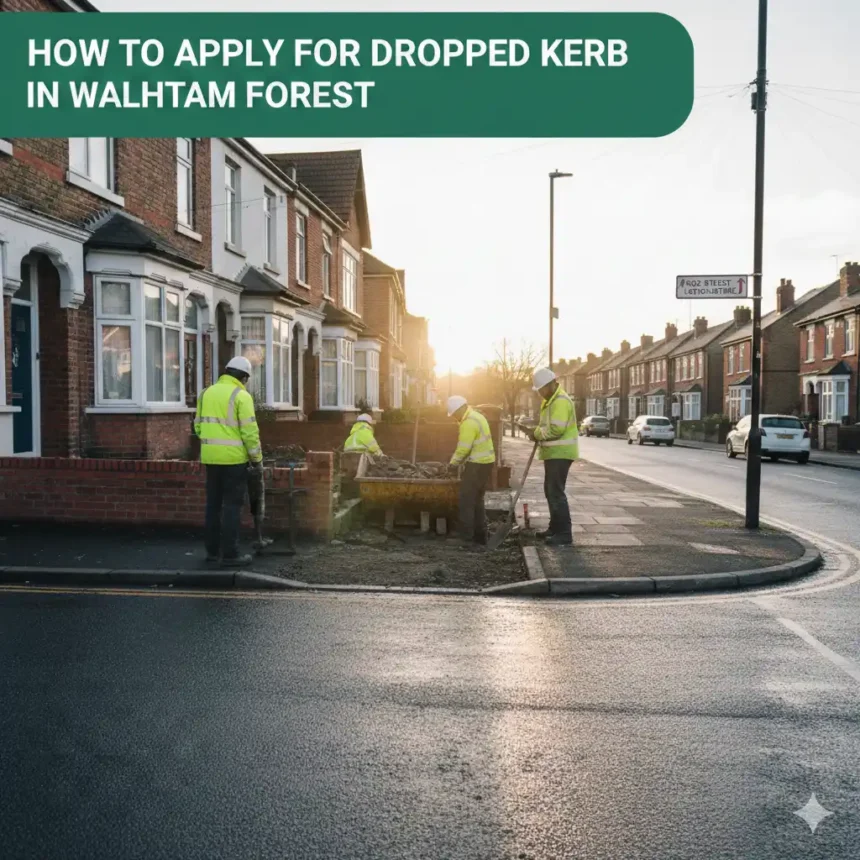
To apply for a dropped kerb in Waltham Forest, property owners must submit an online application through the London Borough of Waltham Forest council’s portal, providing property details, measurements, photos, and proof of ownership. The process involves an inspection, potential planning permission, and payment of fees before approval and construction by approved contractors. Local residents in East London boroughs like Waltham Forest follow similar council-led procedures to ensure legal vehicle access.
Why Dropped Kerbs Matter to East London Residents
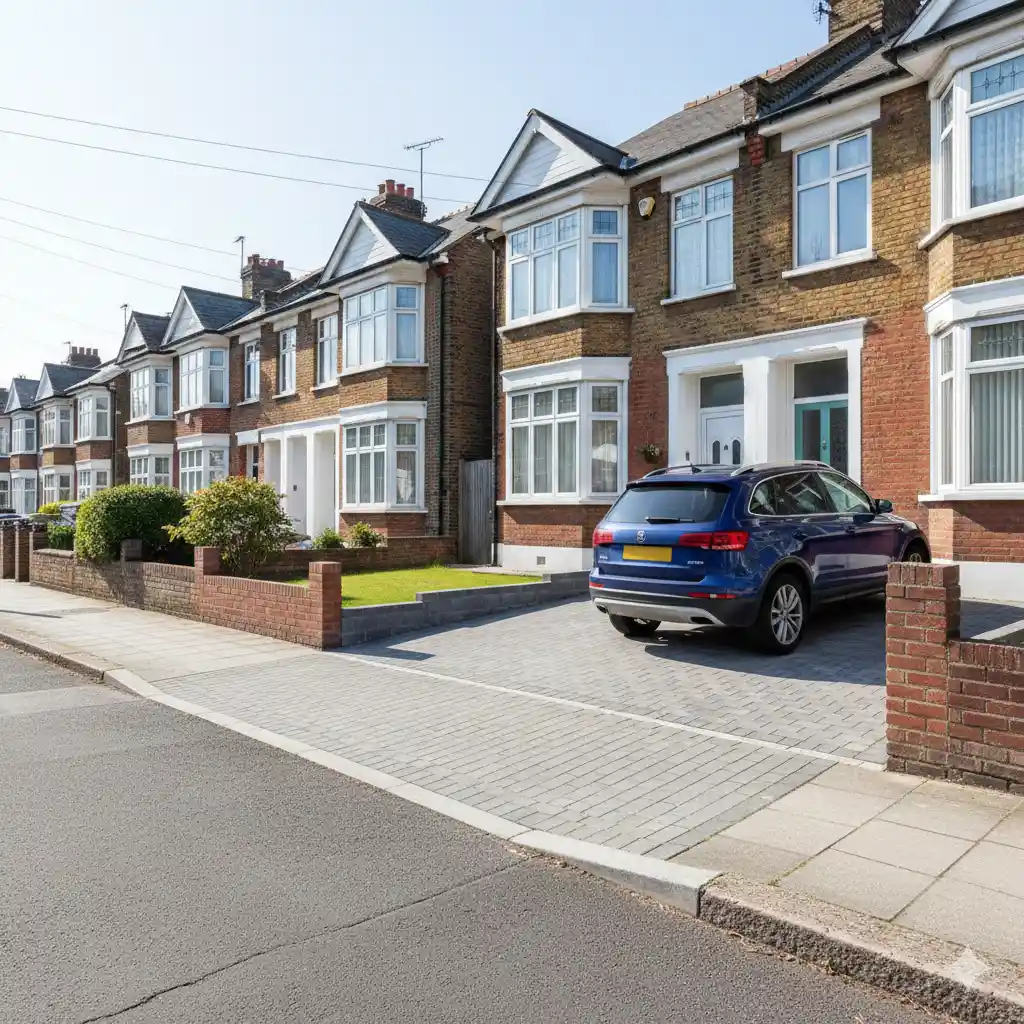
Living in bustling East London boroughs such as Waltham Forest, Newham, Tower Hamlets, Hackney, Redbridge, and Barking & Dagenham often means tight parking spaces and heavy traffic. A dropped kerb, also known as a vehicle crossover, allows safe and legal access from the public road to a private driveway, reducing the need to park on streets where spaces are scarce.
For local residents, this matters because it enhances home security by keeping vehicles off the road, minimises pavement obstruction, and complies with UK highways regulations. In areas with growing families and multiple cars per household, it provides practical relief from parking stress without harming pedestrian access or street aesthetics.
Many East London council properties already feature these crossings, making them a standard solution for modern living. Without one, residents risk fines for unauthorised verge crossings or vehicle damage from uneven kerbs.
Which Council Service Handles Dropped Kerbs
In Waltham Forest, the Highways and Engineering team within the Parking, Roads and Travel service manages dropped kerb applications. This council department assesses safety, structural integrity, and compliance with local plans.
East London councils like Newham council, Tower Hamlets council, and others delegate this to their highways or street works teams. Waltham Forest’s service ensures applications align with borough policies, coordinating with planning if front gardens exceed certain sizes.
Residents contact this service via the council’s online portal for initial queries. The team handles everything from site visits to contractor approvals, maintaining consistency across Waltham Forest streets.
Step-by-Step Guide to Applying
Applying for a dropped kerb in Waltham Forest follows a clear, council-guided process. Start by confirming eligibility as a property owner or with landlord consent.
- Check your frontage: Measure at least 2.5 metres width between boundaries, with no utilities, trees, or lamps obstructing the area.
- Gather documents: Prepare a site plan, photos of the front, and ownership proof.
- Submit online: Use Waltham Forest council’s vehicle crossover application form, paying the non-refundable fee.
- Await inspection: Council officers visit within weeks to measure and assess visibility for drivers and pedestrians.
- Receive decision: If approved, get a quote for works; planning permission may be needed for larger driveways.
- Arrange works: Hire a council-approved contractor to lower the kerb and lay foundations.
- Final inspection: Council verifies completion before issuing permission to use.
This sequence ensures legal compliance and safety. East London residents in Hackney or Redbridge follow near-identical steps via their local council portals.
Information and Documents Needed
Councils require precise details to process dropped kerb requests efficiently. For Waltham Forest, submit a scaled drawing showing kerb position, garden dimensions, and nearby features like drains or signs.
Key items include:
- Proof of property ownership, such as a land registry title or tenancy agreement with consent.
- High-resolution photos of the current kerb, pavement, and driveway entrance.
- Measurements: Minimum 2.75 metres between property boundaries, with 90-degree access visibility.
- Planning permission reference if altering more than 50% of front garden hardstanding.
East London council applications demand similar paperwork to verify no impact on utilities or traffic flow. Incomplete submissions delay processing, so double-check before sending.
Expected Response Times
Waltham Forest council aims to acknowledge applications within 10 working days. A full site inspection and decision typically follow within 6-8 weeks, depending on volume.
If planning permission is required, add 8 weeks for that stage. Quotes for approved works arrive shortly after, with construction starting once paid—often within 4-6 weeks.
Tower Hamlets council and Newham council report comparable timelines, though peaks in demand, like spring, may extend waits. Track progress via the application portal for updates.
What to Do If Follow-Up Is Needed
If no response arrives within expected times, log into the Waltham Forest portal to check status. Email the highways team with your reference number for polite follow-up.
For refusals, review the reasons—common issues include poor sightlines or utility conflicts—and resubmit with corrections. Appeal via the council’s formal process if errors seem present.
East London residents facing delays across boroughs should prepare alternative parking plans. Persistent issues may warrant a councillor query, but always reference your application first.
Rights and Responsibilities Under UK Rules
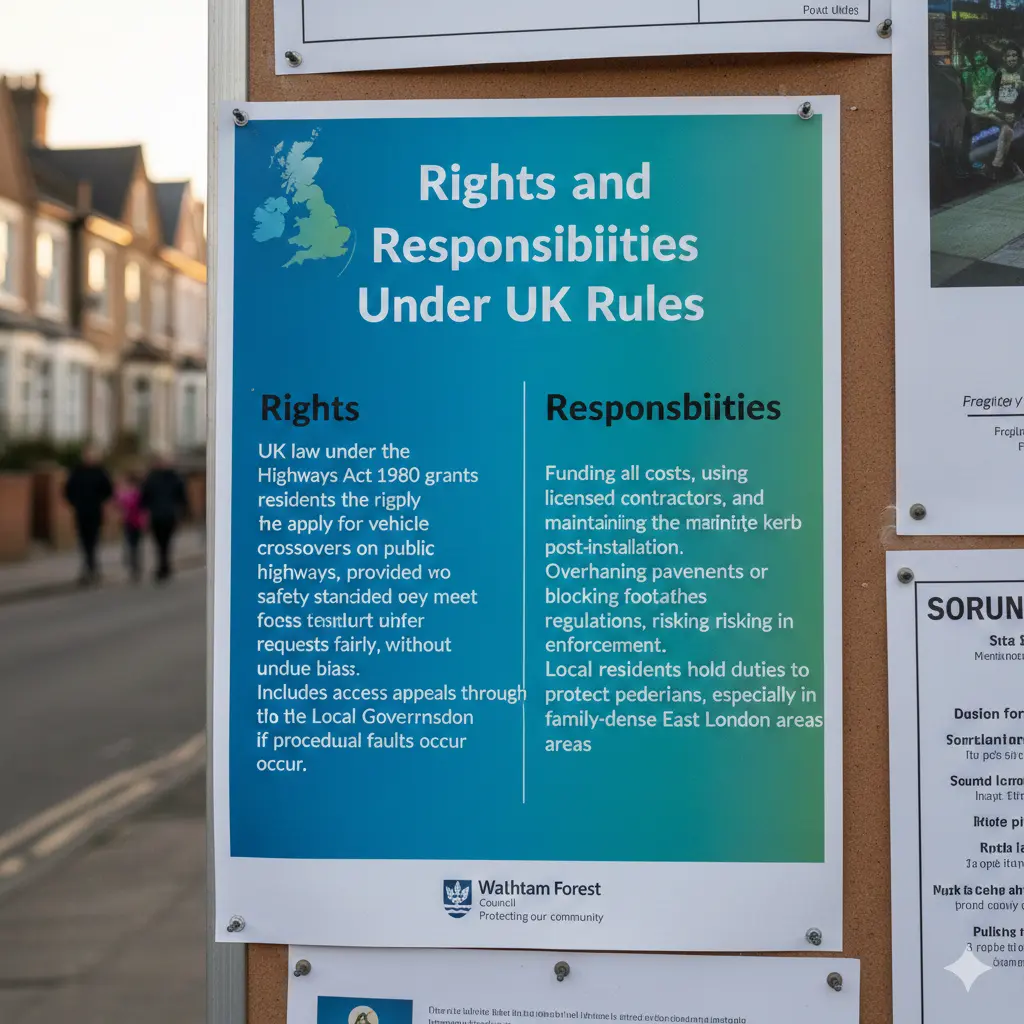
UK law under the Highways Act 1980 grants residents the right to apply for vehicle crossovers on public highways, provided they meet safety standards. Waltham Forest council must consider requests fairly, without undue bias.
Responsibilities include funding all costs, using licensed contractors, and maintaining the kerb post-installation. Overhanging pavements or blocking footpaths violates regulations, risking enforcement.
Local residents hold duties to protect pedestrians, especially in family-dense East London areas. Rights include access appeals through the Local Government Ombudsman if procedural faults occur.
Practical Tips to Avoid Future Problems
Prevent issues by parking considerately before applying—avoid verge mounting to evade fines. Maintain garden boundaries clearly to show intent for off-street use.
Choose permeable driveway materials to manage rainwater, aligning with sustainable drainage rules in Waltham Forest. Regularly inspect for cracks, reporting repairs promptly to the council.
For East London council moves, check property plans for existing permissions. Educate neighbours on shared access to foster community support during applications.
Future-proof by assessing space early: Larger frontages suit bigger vehicles, reducing reversal needs. These steps keep the process smooth for Barking & Dagenham or Redbridge households too.
Securing a dropped kerb transforms daily parking hassles into seamless home access for Waltham Forest locals. By following council steps diligently, East London residents ensure lasting, legal solutions amid urban constraints.