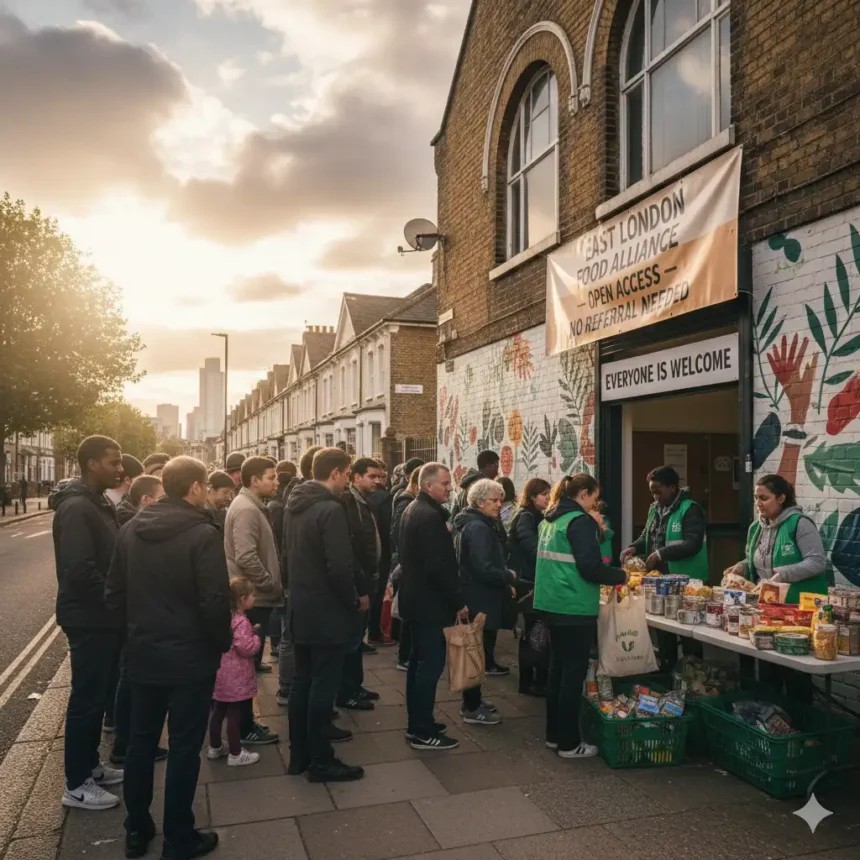
Finding a local food bank in East London is straightforward for residents of Newham, Tower Hamlets, Hackney, Waltham Forest, Redbridge, and Barking & Dagenham. Start by checking your borough council’s website or contacting their community support team for a list of nearby options, many of which offer open access or simple referrals. This quick guide provides practical steps to get help promptly.
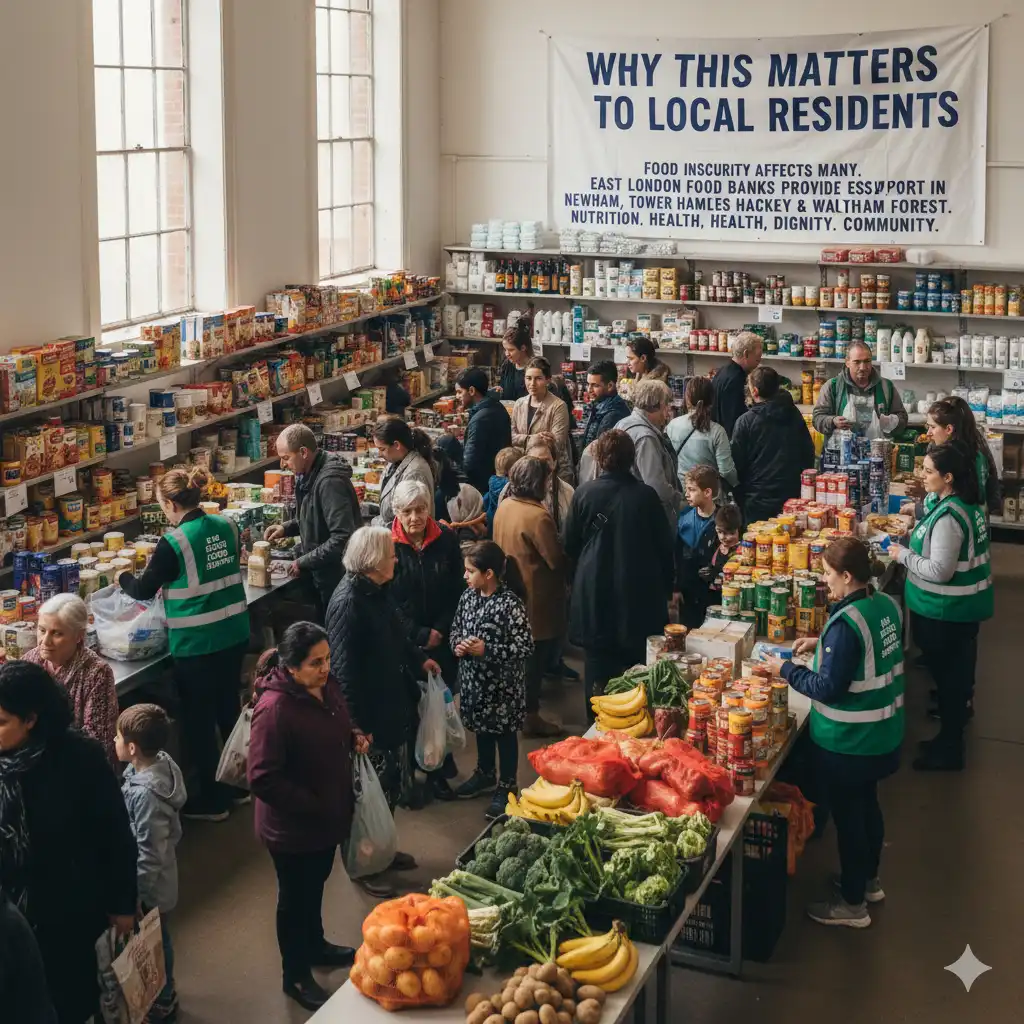
Why This Matters to Local Residents
Food insecurity affects many households in East London, where rising living costs can strain budgets. Boroughs like Newham and Tower Hamlets see high demand, with food banks providing essential non-perishable items, fresh produce, and sometimes hygiene products to bridge short-term gaps.
Accessing a food bank ensures families maintain nutrition without debt or delay, supporting health and stability in diverse communities. Local residents benefit from tailored services that respect privacy and dignity.
In Hackney and Waltham Forest, these resources help working families facing unexpected bills, preventing reliance on less sustainable options.
Step-by-Step Actions to Solve the Problem
Follow these clear steps to locate and use a food bank efficiently.
- Identify your borough: Confirm if you live in Newham, Tower Hamlets, Hackney, Waltham Forest, Redbridge, or Barking & Dagenham using your postcode on the council website.
- Search council resources: Visit your East London council site (e.g., Newham council or Tower Hamlets council) and look for “food support” or “crisis help” sections, which list verified food banks.
- Contact a referral agency: Reach out to Citizens Advice, your GP, or a local school for a voucher if required—many food banks in Tower Hamlets and Newham operate this way.
- Check operating hours: Note session times, such as Tuesdays or Wednesdays at Bow Foodbank in Tower Hamlets, and arrive prepared with ID.
- Attend your session: Bring any voucher and family details; open-access sites like some in Hackney welcome walk-ins.
- Follow up if needed: Register for ongoing support if the food bank offers it.
These actions typically take under an hour to initiate.
Which Council Service Handles It
Each East London council oversees community welfare, directing residents to food banks via dedicated teams. Newham council manages crisis support through its community hub, issuing vouchers for local sites like Newham District Foodbank.
Tower Hamlets council provides a food aid map on their site, linking to options like Bow Foodbank. Hackney council’s strong communities team coordinates with Trussell Trust affiliates, while Waltham Forest, Redbridge, and Barking & Dagenham councils use similar welfare portals.
Contact your local East London council’s customer service for the nearest service—no specialist department is needed beyond general advice lines.
Information or Documents Needed
Preparation simplifies the process. Bring proof of address (e.g., utility bill or council tax statement) to verify residency in your borough.
A food bank voucher from a professional referrer, if required, includes basic details like household size. ID such as a passport or driving licence confirms identity, though some open-access food banks in East London accept self-referrals without documents.
For families, note children’s ages and dietary needs; no income proof is universally mandated, respecting privacy under UK guidelines.
Expected Response Time
Most food banks respond within hours or the same day for walk-ins. Open sessions, like Wednesdays at Bow Foodbank, provide immediate parcels.
Referred access via Newham council or Tower Hamlets council often yields vouchers same-day or next working day, with food collection following quickly.
In busier boroughs like Hackney, expect 1-2 days for coordination, ensuring three days’ worth of nutritionally balanced supplies promptly.
What to Do If Follow-Up Is Required
If initial help falls short, return to the food bank for repeat visits, often limited to every few weeks. Request signposting to additional council services like welfare advice during your session.
Contact your East London council again for escalated support, such as crisis grants, or speak to the food bank’s volunteer coordinator. Track referrals by noting names and dates for continuity.
For persistent needs, local residents can join waiting lists for community pantries in Waltham Forest or Redbridge.
Rights and Responsibilities Under UK Rules
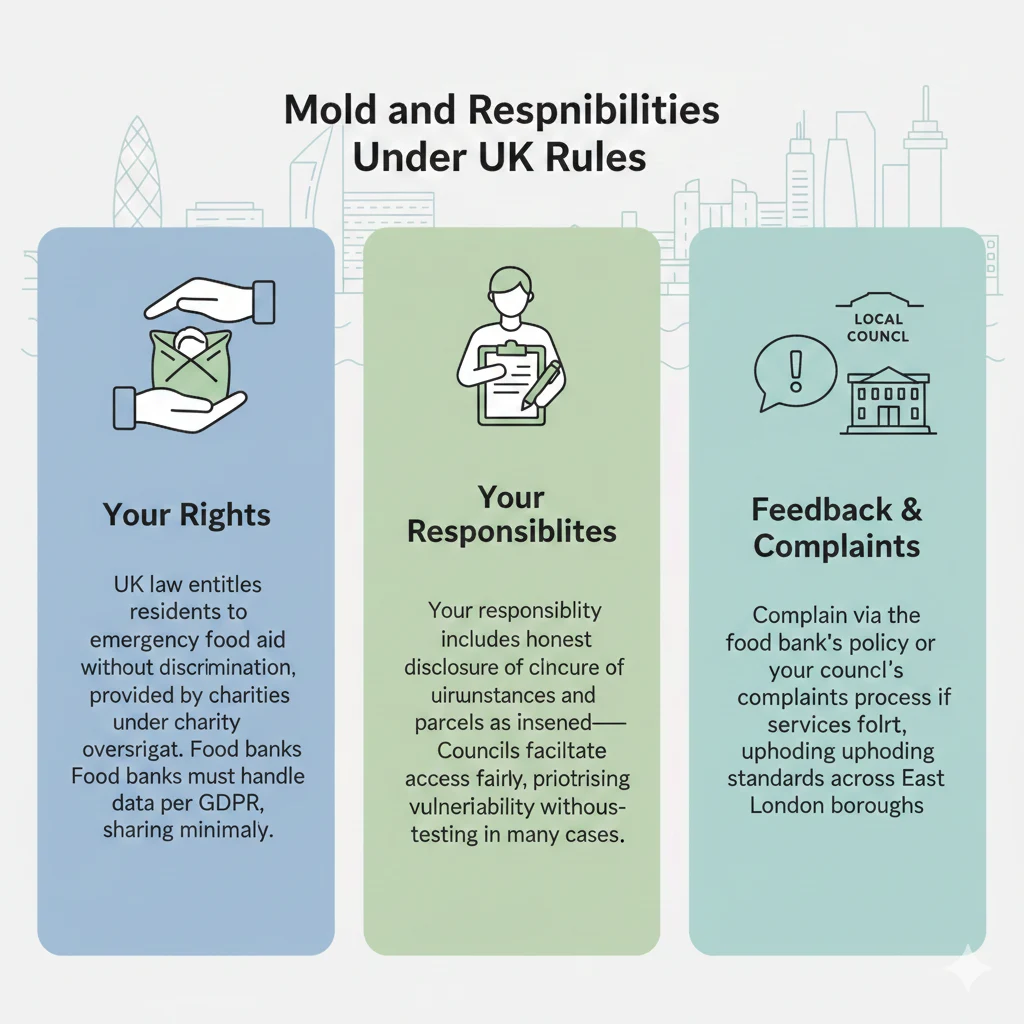
UK law entitles residents to emergency food aid without discrimination, provided by charities under charity commission oversight. Food banks must handle data per GDPR, sharing minimally.
Your responsibility includes honest disclosure of circumstances and using parcels as intended—no resale. Councils facilitate access fairly, prioritising vulnerability without means-testing in many cases.
Complain via the food bank’s policy or your council’s complaints process if services fall short, upholding standards across East London boroughs.
Practical Tips to Avoid the Problem in Future
Build resilience with these habits tailored for local residents. Stock non-perishables like tinned goods and rice for a basic pantry, rotating stock monthly.
Budget via apps tracking East London-specific costs, claiming benefits through Newham council or Tower Hamlets council portals early.
Join community schemes: Waltham Forest’s pantries offer affordable surplus food; volunteer at Hackney food banks for priority access insights. Shop at discount supermarkets in Barking & Dagenham and grow herbs on balconies.
Seek energy grants proactively and attend free council budgeting workshops to stay ahead.
East London councils like Redbridge support cooking classes, reducing future reliance. Consistent small steps prevent crises effectively.