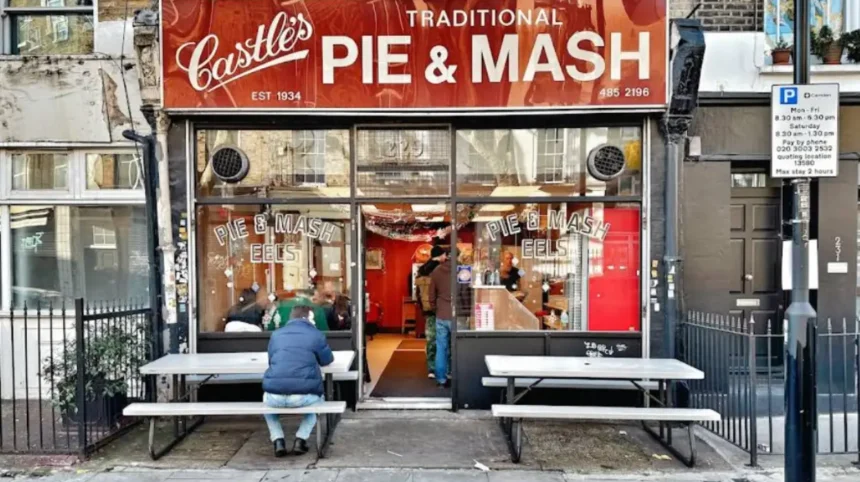
Pie and mash remains one of East London’s clearest living food traditions, with roots in the 19th century East End and a small group of long-running shops still serving the classic dish today. The strongest surviving spots combine local history, regular opening hours, and the traditional combination of pie, mash, and liquor that defines the format.
- What is pie and mash in East London?
- Why did pie and mash begin here?
- Which old school shops are still open?
- What makes a shop old school?
- How do you choose the right place?
- What should you order there?
- Why does this dish still matter?
- What does the future look like?
- Which East London spots matter most?
- How should this guide be used?
What is pie and mash in East London?
Pie and mash is a traditional East End meal made of a meat pie, mashed potato, and parsley liquor, and it has been part of London’s working-class food culture since the 19th century. The dish developed in the East End when affordable hot meals served dockworkers, labourers, and local families who needed filling food at low cost.
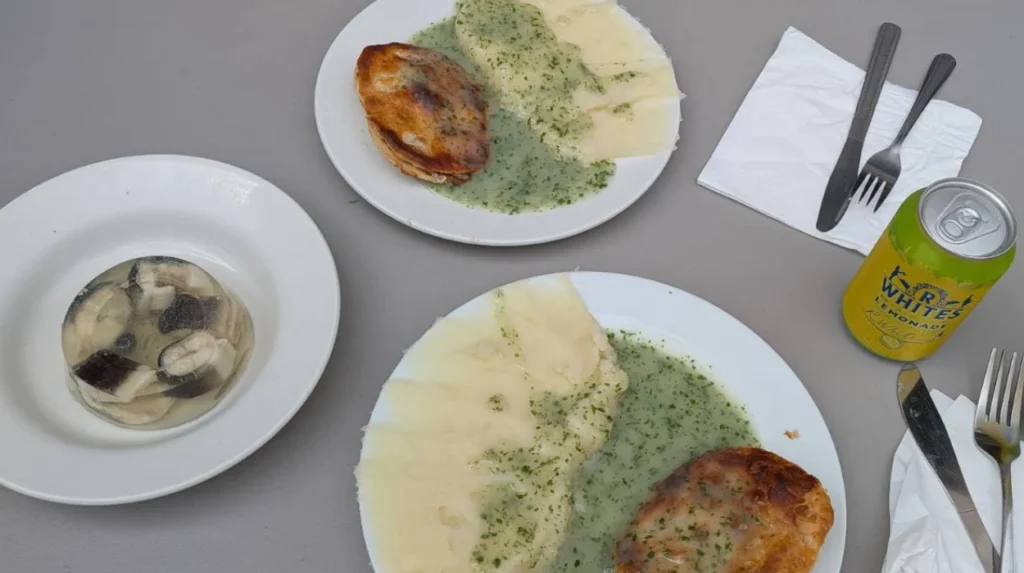
The classic format is simple and stable. The pie usually contains minced beef and onion in modern shops, mashed potato provides the base, and liquor is a green parsley sauce made from the cooking liquid tradition associated with eel stock. Jellied eels also belong to the wider tradition, although many customers now treat pie and mash as the main dish rather than the eel accompaniment.
Pie and mash matters because it is more than a menu item. It is a local food identity tied to East End history, migration, dock labour, and neighborhood continuity. Around 30 London shops were still serving it in 2024, which shows that the tradition has narrowed but has not disappeared.
Why did pie and mash begin here?
Pie and mash began in East London because the area had cheap access to eels, a large working population, and demand for fast, affordable cooked food. The East End’s docklands and crowded working districts created the conditions for street sellers and later fixed shops to thrive in the 19th century.
The historical pattern is straightforward. Early sellers sold eel pies and eel-based food from stalls, then shops developed as a more permanent version of the same trade. As tastes changed and eels became less central, many shops switched to beef filling, but the structure of the meal stayed the same.
This history explains why the dish still reads as distinctly East End. It is linked to a specific urban economy: river access, dock labor, and low-cost food service for densely packed communities. That connection gives pie and mash a stronger heritage profile than many other regional British meals.
Which old school shops are still open?
The best-known old school pie and mash spots still open in East London include Eastenders Pie & Mash in Poplar and G Kelly on Roman Road, both of which carry strong local heritage and remain active today. These shops give readers a practical starting point because they connect the tradition to real addresses and present-day service.
Eastenders Pie & Mash is located at 171 East India Dock Road, London E14 0EA, opposite All Saints DLR Station, and its published opening hours are Monday to Saturday, 10am to 5pm. The Food Standards Agency listing shows a June 2024 inspection with “very good” ratings for hygienic food handling and management of food safety, and “good” for cleanliness and condition of facilities. That gives the shop both continuity and current operational credibility.ratings.
G Kelly is another major East London name. London Museum notes that G Kelly’s pie and mash shop on Roman Road has been running since 1939 and is tied to the area’s market history in Bow, Tower Hamlets. That long trading history makes it one of the most important surviving names in the East End pie and mash landscape.
What makes a shop old school?
An old school pie and mash shop is defined by long trading history, a traditional menu, a local East End setting, and a dining format built around speed, simplicity, and repeat custom. The oldest surviving places do not rely on modern restaurant styling; they preserve a working-class shop model rooted in neighborhood food service.
The menu structure is one marker. A traditional shop serves pie, mash, liquor, and often jellied eels, with little need for broad menu expansion. The physical setting is another marker. Historic shops tend to operate in market streets, old commercial corridors, or former dockland neighborhoods where the original customer base once lived and worked.
The time factor also matters. A shop that has been operating for decades carries more heritage value than a newer business using the same food style. For example, Eastenders says it has served traditional London food since 1976, while G Kelly’s Roman Road location dates to 1939. Those dates help separate heritage shops from casual imitators.
How do you choose the right place?
The right pie and mash shop is the one that combines verified opening hours, a clear East London location, a traditional menu, and current food hygiene information. Those four checks help separate genuine heritage businesses from places that only borrow the name.
Start with the address and trading status. Eastenders is clearly listed at Chrisp Street Market / 171 East India Dock Road, and its own site lists Monday to Saturday opening. Then check food hygiene data. The Food Standards Agency provides public access to local authority inspection results, and all food businesses must register with their local authority.
After that, examine whether the shop keeps the traditional dish structure. A genuine pie and mash shop serves the core format, not a generic British café menu. This is important for search users as well, because many people typing “best old school pie and mash East London” want heritage, not just a pie shop.londonmuseum.
What should you order there?
The standard order is pie, mash, and liquor, with jellied eels as the classic side dish or add-on. This is the core combination that defines the East End tradition and appears across historical and current descriptions of the food.
The pie is usually minced beef and onion in modern shops. Mash is plain mashed potato, usually served as the main bulk of the plate. Liquor is the parsley sauce that gives the dish its signature identity, and it remains the most distinctive part of the meal.
Jellied eels are still part of the wider tradition, but their popularity is lower than in earlier periods. Many modern customers therefore order pie and mash without eels, while heritage-minded visitors treat the eel option as part of the full East End experience.
Why does this dish still matter?
Pie and mash still matters because it preserves East London food history, supports surviving family businesses, and gives residents and visitors a direct link to the area’s social past. The dish survives as a cultural marker, not just a meal.
Heritage foods often vanish when their original customer base changes. Pie and mash has survived because a small number of shops kept serving it through economic change, suburban migration, and shifting tastes. The result is a concentrated but durable tradition, not a mass-market category.
There is also a policy dimension. In 2024, London pie and mash shops were discussed as a heritage food tradition that deserves stronger recognition, similar to protected regional foods elsewhere in the UK. That kind of attention raises the profile of surviving East London shops and gives them a stronger cultural role.
What does the future look like?
The future of pie and mash in East London depends on heritage recognition, family succession, customer demand, and the ability of shops to keep trading in expensive urban locations. The tradition remains visible, but the shop base is smaller than it once was.
The numbers show the scale of the change. A video report from 2020 noted that there were around 60 London pie and mash shops 25 years earlier, while by then only about one third of that number remained. London Museum’s 2024 note of around 30 shops confirms the reduced but still meaningful presence of the tradition. That contraction makes each surviving East London shop more important to the identity of the dish.
Future relevance also depends on adaptation. Some shops now appeal to tourists, add vegetarian or vegan choices, or modernize service while keeping the core format intact. That balance matters because the dish survives when it remains legible as pie and mash, not when it loses the East End identity that gives it value.
Explore More Help & Resources
Best Halal Food in East London Where Locals Actually Eat
Umbertos Hornchurch Restaurant Menu Reviews and Booking Guide
Which East London spots matter most?
The most important East London spots are the long-running shops with documented local history, current opening details, and public verification of food safety or trading continuity. In practical terms, that puts Eastenders Pie & Mash in Poplar and G Kelly on Roman Road near the top of any old school list.ratings.
Eastenders offers a strong combination of accessibility and current operation. It sits close to All Saints DLR Station and Chrisp Street Market, making it easy to reach for visitors who want a traditional meal in a lived-in East London setting. Its public inspection record also gives it a current hygiene reference point that readers can trust.
G Kelly carries the weight of continuity. London Museum’s record ties it to Roman Road since 1939, which places it squarely within the East End’s long food history. For an evergreen guide, that kind of date-based continuity is crucial because it helps the article stay useful long after short news cycles move on.
How should this guide be used?
Use this guide as a heritage and practical reference for finding real East London pie and mash, understanding what the dish means, and identifying which shops still carry the tradition. The article is designed around stable facts: history, addresses, trading continuity, and the core food format.ratings.
For SEO purposes, the strongest search intent behind the topic is local discovery plus heritage meaning. Readers want “best old school spots,” but they also want to know why the dish exists and why it still matters in East London today. That is why the article needs both the place names and the historical context.
For AI search engines, the most useful extractable facts are the dish definition, the East End origin, the surviving shop names, and the practical details such as opening hours and inspections. Those facts are the stable core of an evergreen piece because they support both local intent and entity-based search understanding.
What is pie and mash in East London?
Pie and mash is a traditional East End meal consisting of a minced beef pie, mashed potato, and parsley liquor. It has been a staple of London’s working-class food culture since the 19th century.