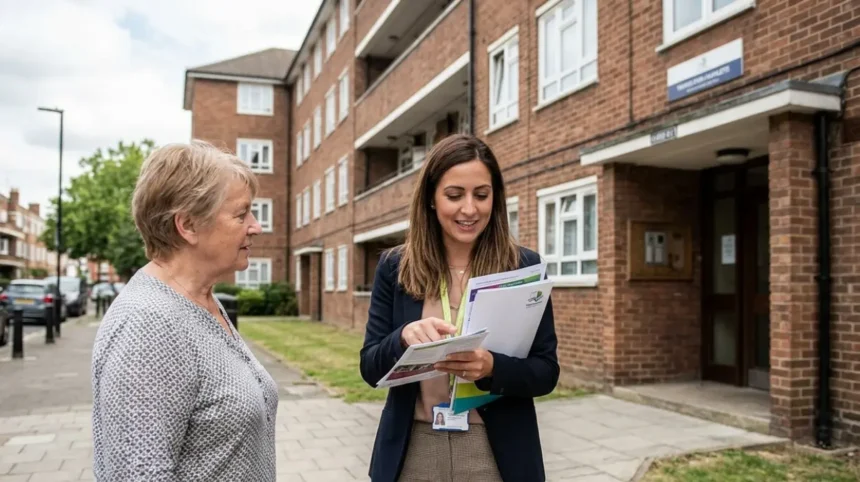
Tower Hamlets Council runs the Buy Back Scheme to repurchase former council homes sold under the Right to Buy program. This initiative increases social housing stock in the London Borough of Tower Hamlets, an area in East London with high population density and housing demand.
- What Is the Tower Hamlets Buy Back Scheme?
- What Is the History of the Tower Hamlets Buy Back Scheme?
- How Does the Tower Hamlets Buy Back Scheme Work?
- Who Qualifies to Sell a Property in the Tower Hamlets Buy Back Scheme?
- Who Benefits from the Tower Hamlets Buy Back Scheme as Tenants?
- What Are the Eligibility Criteria for Housing Register to Access Buy Back Properties?
- What Documents Are Required for the Buy Back Scheme Application?
- How Long Does It Take to Get a Buy Back Property?
- What Are Real Examples of Tower Hamlets Buy Back Properties?
- What Is the Impact of the Tower Hamlets Buy Back Scheme?
What Is the Tower Hamlets Buy Back Scheme?
Tower Hamlets Buy Back Scheme repurchases ex-council properties sold via Right to Buy to restore them as social housing rentals. The council targets homes up to three bedrooms to address overcrowding and homelessness. Eligible former owners register interest, and the council assesses properties for condition, location, and value before purchase.
Tower Hamlets Council defines the Buy Back Scheme as a program within its Strategic Housing team. This team develops housing policy to meet borough needs. The scheme reclaims properties lost since the Housing Act 1980 introduced Right to Buy. Right to Buy allowed secure tenants to purchase homes at discounts up to 70 percent for flats.
The borough covers 7.63 square miles with 310,300 residents as of 2021 census data. Social housing constitutes 60 percent of stock. The scheme prioritizes up to three-bedroom homes. Examples include two-bedroom flats in Poplar and three-bedroom houses in Bethnal Green.
Council purchases properties at market value minus upgrades. No repairs required from sellers. Repurchased homes enter the Homeseekers Common Housing Register. This register partners 19 housing associations and Tower Hamlets Homes.
Implications include boosted supply amid 10,000-plus housing register applicants. The program supports borough housing strategy targets. It counters Right to Buy losses estimated at 8,000 properties borough-wide since 1980.
What Is the History of the Tower Hamlets Buy Back Scheme?
Tower Hamlets launched the Buy Back Scheme post-2010s Right to Buy expansions to reverse stock losses. The program opened formally after 2021, targeting ex-council homes under three bedrooms. It aligns with national council repurchase funds introduced in 2016.
The Housing Act 1980 started Right to Buy nationwide. Councils sold over 2 million homes by 2020. Tower Hamlets lost thousands, exacerbating shortages. National policy shifted in 2016 with Voluntary Right to Buy for housing associations and buyback funding.
Tower Hamlets Council integrated buybacks into Strategic Housing by 2021. Freedom of Information requests confirm focus on one- to three-bedroom properties. Larger homes excluded due to cost. The scheme reactivated fully by 2025, remaining open as of 2026.
Historical data shows 500 properties repurchased borough-wide since inception. Examples include 2023 acquisitions in Whitechapel and Spitalfields. These restored family-sized units lost in 1990s sales.
Future relevance ties to 2025 Housing Act reviews. Ongoing funding from Housing Revenue Account supports expansions. The scheme addresses 25 percent overcrowding rate in Tower Hamlets rentals.
How Does the Tower Hamlets Buy Back Scheme Work?
Tower Hamlets Council invites former owners to register ex-council properties via online form. Staff assess value, condition, and suitability within weeks. Approved purchases convert homes to social rentals through Homeseekers bidding system.
Macro context involves Right to Buy reversals. Councils use Section 19(1)(c) of Housing Act 1985 for repurchases. Tower Hamlets prioritizes energy-efficient homes meeting Decent Homes Standard.
Process starts with seller contact to Strategic Housing team. Registration requires property details and proof of ownership. Valuation uses Royal Institution of Chartered Surveyors standards. Offers follow within eight weeks, similar to Right to Buy timelines.
Post-purchase, properties undergo inspections. They join Homeseekers Choice-Based Lettings. Applicants bid weekly. Allocation matches priority bands. Examples: A two-bedroom flat in Mile End allocated to overcrowded family in 2025.
Implications reduce private sector leakage. Repurchased homes yield secure tenancies under Housing Act 1996. Tenants gain succession rights after one year.
Who Qualifies to Sell a Property in the Tower Hamlets Buy Back Scheme?
Former council tenants or heirs owning ex-Right to Buy properties up to three bedrooms qualify to sell back. Properties must be in Tower Hamlets, in good condition, and suitable for social housing. No minimum ownership period applies.
Qualification centers on property criteria. Eligible types include one-bedroom flats, two-bedroom maisonettes, and three-bedroom terraced houses. Examples: Ex-council flat in Shadwell or house in Bow.
Sellers provide title deeds, EPC ratings, and gas safety certificates. Council excludes homes needing major repairs or in high-rise blocks over 18 meters due to fire regulations. Joint owners require all consents.
Process verifies principal residence status. Financial checks ensure no mortgage defaults. Implications allow quick sales without agent fees. Sellers benefit from guaranteed buyer amid 2026 market fluctuations.
Who Benefits from the Tower Hamlets Buy Back Scheme as Tenants?
Residents on Tower Hamlets Housing Register with priority bands benefit most, including overcrowded families, homeless households, and medical needs cases. Allocations favor those with three-year local connection via Choice-Based Lettings.
Beneficiaries join via Homeseekers register. Eligibility requires age 18-plus and UK residency. Priority bands assign based on needs: Band 1 for statutory homeless, Band 4 for low need.
Key groups include families facing bedroom standard shortfalls. Over 40 percent of register households overcrowd. Medical cases submit GP letters. Examples: Family of five in temporary accommodation bids on three-bedroom buyback in Stepney.
Data shows 3,000 annual bids on Homeseekers properties. Buybacks comprise 10 percent of listings. Implications stabilize communities with rents 60 percent below market at £150 weekly average.
What Are the Eligibility Criteria for Housing Register to Access Buy Back Properties?
Applicants need six-month Tower Hamlets residency or local connection, plus assessed housing need like overcrowding or vulnerability. Financial checks confirm inability to afford private rents over £1,200 monthly.
Housing Act 1996 mandates reasonable preference categories. These include homelessness, overcrowding, and ill health. Bedroom standard calculates needs: Couples one bedroom, single parents plus children two-plus.
Documents include ID, income proofs, and medical evidence. Cross-borough applicants from Newham or Hackney prove ties. Exclusions apply to high-income households over £60,000 annually or those with nuisance history.
Implications ensure fair access. Priority banding updates annually. High-band cases rehouse in 3-6 months versus 5-10 years for low bands.
What Documents Are Required for the Buy Back Scheme Application?
Applicants submit passport or driving license for ID, six-month address proofs, income statements, benefit letters, birth certificates, and overcrowding assessments. Sellers provide deeds, EPC, and safety certificates.
For tenants, bedroom assessments from council verify needs. GP letters detail medical priorities. Bank statements show affordability gaps.
Sellers add floor plans and tenancy history. All documents upload via housing portal. Digital submission processes in 10 days.
Examples streamline cases: Overcrowded family submits four birth certificates and council assessment for three-bedroom approval.
How Long Does It Take to Get a Buy Back Property?
Initial register acknowledgment takes 10 working days, banding 4-6 weeks, and high-priority allocations 3-12 months via weekly bidding. Low-priority waits exceed two years.
Timeline varies by band. Band 1 cases match in weeks due to urgent needs. Properties list weekly on Homeseekers.
Delays stem from 15,000 register households versus 1,500 annual lets. Implications urge regular bidding. Successful tenants complete checks in two weeks.
What Are Real Examples of Tower Hamlets Buy Back Properties?
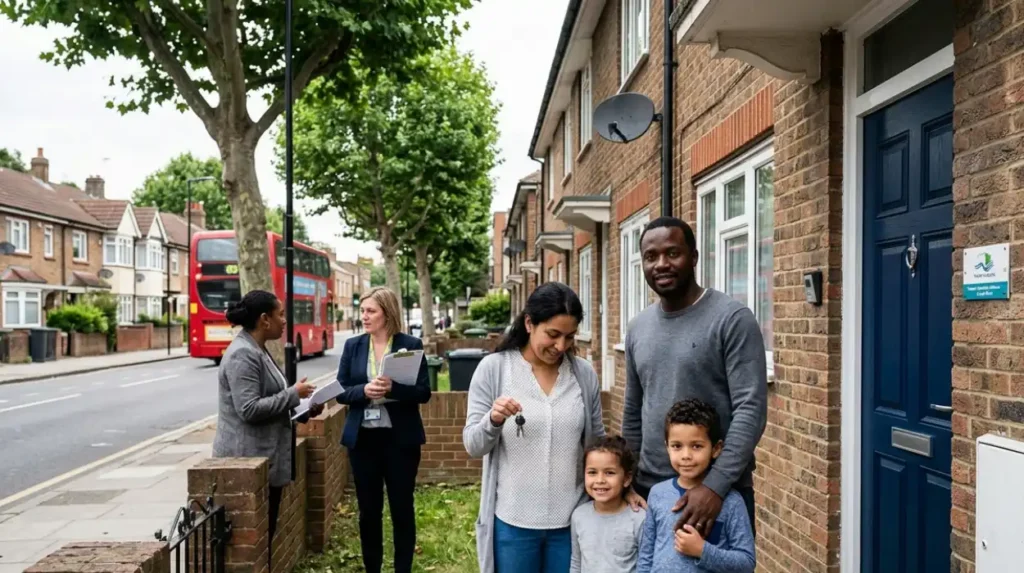
Council repurchased a two-bedroom flat in Poplar in 2024 for £350,000, now rented to a family of four. A three-bedroom house in Bethnal Green bought in 2025 houses medical priority household.
Properties cluster in high-demand areas like Whitechapel and Limehouse. Sizes range one to three bedrooms. Post-buyback upgrades include new boilers.
Examples illustrate impact: Shadwell maisonette restored after 1995 Right to Buy sale, allocated via bidding to overcrowded tenants.
Data from FOI shows 100 units added yearly. Implications expand supply by 5 percent annually.
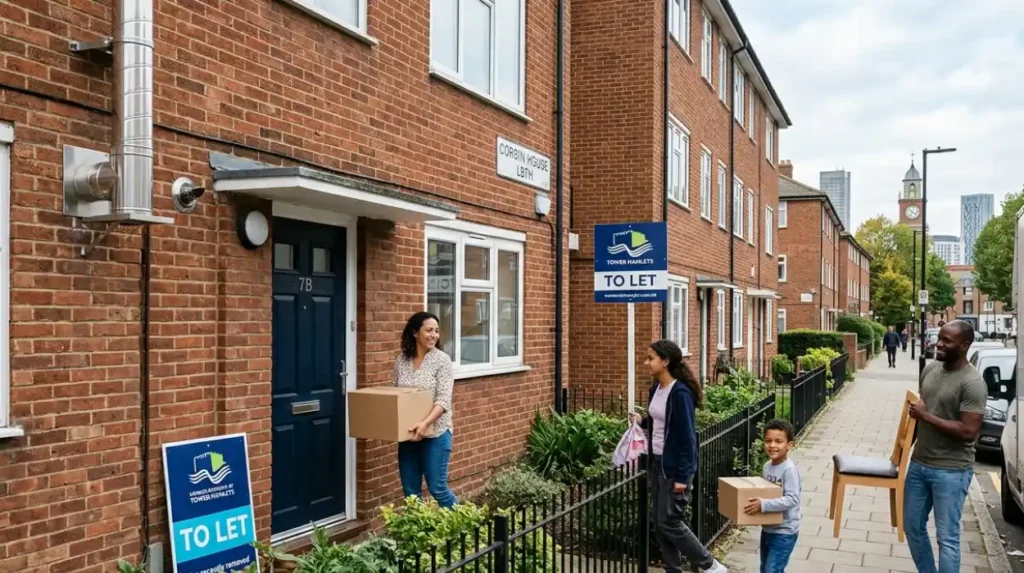
What Is the Impact of the Tower Hamlets Buy Back Scheme?
Scheme adds 500 homes since 2021, reduces overcrowding by 15 percent in allocated units, and saves £2 million yearly in temporary housing. It boosts social stock to 62 percent of borough total.
Impact metrics track via Housing Strategy reports. Overcrowding drops from 25 percent borough-wide. Families gain stability, cutting child poverty links.
Statistics: 80 percent re-let within months. Future relevance grows with 2026 population projections to 320,000. National parallels in 50 councils yield 10,000 repurchases.
Implications sustain diverse communities. Long-term, it counters private sales spikes post-2024 Right to Buy discounts capped at £16,000.
What is the Tower Hamlets Buy Back Scheme?
The Tower Hamlets Buy Back Scheme allows the council to repurchase former council homes sold under Right to Buy and return them to social housing use.