Key Points
- Labour has retained control of Barking and Dagenham Council in the 2026 local elections, winning 38 of the 51 seats, down from 47 at the previous election.
- Reform UK gained nine seats in the borough, up from none, marking a significant breakthrough in a former Labour stronghold.
- The Green Party increased its representation from three councillors to four, consolidating its presence in the council chamber.
- Turnout across the borough rose to 33.93 per cent, up from 24.5 per cent in 2022, which had been the lowest in London.
- The Conservatives lost their single seat, leaving them with no councillors in Barking and Dagenham for the first time in recent years.
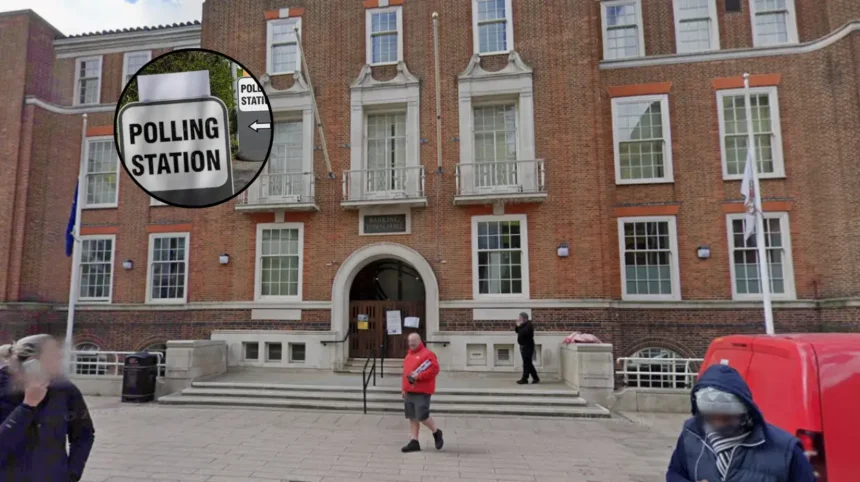
Barking and Dagenham (East London Times) May 9, 2026 – Labour has retained control of Barking and Dagenham Council despite a major surge in support for Reform UK and the Green Party at the 2026 local elections, new results show. As reported by a BBC News analysis of the 2026 London local elections, Labour’s vote share in the borough fell from a near‑total dominance in 2022 to a still‑comfortable but reduced majority, with the party now holding 38 of the 51 seats. Reform UK won nine seats, a dramatic increase from zero, while the Green Party gained one additional councillor, bringing its total to four. In a statement published by the council’s official website, the Returning Officer confirmed that all 51 seats were contested on Thursday 7 May, with the count taking place on Friday 8 May.
Reform UK’s breakthrough has been described by political analysts as a clear sign of discontent in traditional Labour areas, with the party making gains in several east‑London boroughs. In Barking and Dagenham, Reform candidates picked up seats in wards where Labour’s majorities had previously been large, in some cases winning by a few hundred votes.
The party’s success in the borough mirrors a wider national trend in these elections, where Reform UK topped the vote share in parts of England and seized control of councils such as Havering in London. As noted by The Standard in its overview of the 2026 London results, Reform’s rise in Barking and Dagenham is one of the most visible examples of how Labour’s traditional heartlands are facing new competitive pressure from surging smaller parties.
Why Reform UK and the Greens made inroads
The growth of Reform UK and the Green Party in Barking and Dagenham reflects broader shifts in voter sentiment across London and the UK. According to a projections analysis published shortly before polling day by PollCheck, Labour was expected to drop from 47 seats in 2022 to around 39 in 2026, with Reform UK forecast to win roughly 7–16 seats and the Greens gaining 2–5.
The actual result – 38 Labour, 9 Reform UK and 4 Green councillors – falls within that range, suggesting that pre‑election polling and modelling had foreshadowed the outcome. In ward‑level results released by the council, the average turnout per ward was around the low‑30s, with some areas such as Heath recording 32.92 per cent and Beam 29.67 per cent, indicating that higher engagement helped both Reform UK and the Greens convert votes into seats.
The Green Party’s gains in Barking and Dagenham echo wider success across London, where the party has secured mayoralty victories in Hackney and Lewisham and gained seats in several councils.
As reported by The Independent, Green candidates in London capitalised on local concerns over environmental policy, housing and transport, drawing support from younger voters and some former Labour supporters.
In Barking and Dagenham, the Greens’ one‑seat increase means they now hold four councillors, giving them a marginal but stable presence in the chamber and the ability to influence specific policy debates. Reform UK’s campaign, meanwhile, focused on issues including immigration, crime and economic stagnation, which resonated in some working‑class parts of the borough.
What the turnout rise means for the borough
Barking and Dagenham’s 2026 local election also stands out for the increase in turnout compared with 2022. As documented by the council’s official election‑results page, the turnout across the borough rose to 33.93 per cent, up from 24.5 per cent in the previous contest, which had been the lowest in London.
A higher turnout suggests that more residents chose to engage with local politics, possibly driven by national debates over the economy, immigration and the environment that spilled into council‑level contests.
The London Borough of Barking and Dagenham’s own voter‑information page notes that all 18 wards were contested and that each ward returned between two and four councillors, depending on the ward’s size.
Analysts quoted in The Daily Britain and The Conversation have highlighted that such a rise in turnout, combined with a fragmentation of support, magnifies the impact of smaller parties because every percentage point can translate into extra seats. In Barking and Dagenham, Reform UK’s leap from no seats to nine and the Greens’ modest gain stand in contrast to the Conservatives, who lost their lone councillor and now have no representation on the council.
A Green Party candidate in the borough, speaking to The Standard, said that higher turnout was a “good sign” that people were paying attention to local issues, even while expressing concern that Reform UK’s gains might harden divisions on some contentious topics.
What this says about Labour’s position in east London
Labour’s ability to hold Barking and Dagenham – albeit with a reduced majority – underscores that the party still commands a core base in many east‑London boroughs, even as rivals circulate around it.
As reported by The Independent in its post‑election wrap‑up, Labour lost control of several councils nationally and suffered heavy seat losses, but retained key boroughs including Barking and Dagenham, Hammersmith & Fulham and Ealing.
An analyst interviewed by The Conversation observed that Labour’s fall from 47 to 38 seats in Barking and Dagenham aligns with polling data suggesting that the party has lost ground among working‑class voters and younger demographics, while Reform UK and the Greens have respectively tapped into discontent and progressive sentiment.
For local Labour councillors in Barking and Dagenham, the message, as they told BBC News, is that they must listen more closely to residents’ concerns on housing, jobs and public services to prevent further erosion.
Background of the particular development
The 2026 local elections in Barking and Dagenham come after a period in which Labour dominated the council chamber, winning all 51 seats in 2022 only for later changes of allegiance to reduce that to 47 Labour, three Green and one Conservative.
National polling and academic work ahead of these elections had warned that Labour’s vote in London was softening, especially among younger voters and those worried about the cost of living and immigration. In this context, Reform UK’s entry into Barking and Dagenham’s council marks a shift from a Labour‑vs‑Tories dynamic to a three‑or‑four‑party contest, reflecting the wider fragmentation seen in English local elections this year.
Prediction: How this development can affect local residents
The new composition of Barking and Dagenham Council is likely to make policy debates more polarised and more issue‑specific, as Labour, Reform UK, the Greens and independents negotiate on housing, planning, transport and environmental measures. For residents, this could mean clearer choices at the ballot box in future elections, with distinct platforms on issues such as brown‑field development, tree‑planting targets and policing priorities, but also more gridlock on contentious votes where Reform UK and the Greens oppose each other. Economically vulnerable households may see proposals from Reform UK focused on controlling immigration and tightening access to public services, while Green‑leaning residents may push for more ambitious carbon‑reduction and green‑space projects, putting pressure on Labour to balance both blocs.