Key Points
- A freight train derailment occurred at approximately 1:30 PM between Woodgrange Park and Barking, causing severe operational delays across east London rail corridors.
- Platforms 7 and 8 at Barking station have been blocked by the derailed freight wagons, preventing standard operations along affected routes.
- Transport operators have confirmed major suspensions: London Overground services are restricted to operating solely between Gospel Oak and South Tottenham, while c2c services between Barking and Grays via Dagenham Dock, Rainham, and Purfleet are fully suspended.
- Ticket acceptance agreements have been activated across alternative transport networks, including London Buses, London Underground District line, Greater Anglia, and First Essex bus services.
- Network engineers and response teams were deployed to assess structural track damage and execute recovery operations, with major network disruptions expected to continue until at least the end of the operating day.
Barking (East London Times) October 24, 2026 – Commuters and rail passengers across east London are facing widespread travel disruption following a freight train derailment near Barking station. The incident, which occurred around 1:30 PM on the line running between Woodgrange Park and Barking, resulted in multiple freight wagons coming off the tracks and obstructing vital rail capacity. Platforms 7 and 8 at Barking station remain completely blocked as recovery teams inspect the infrastructure and work to clear the site. As a result, major service revisions, line suspensions, and cancellations have been implemented across key rail operators serving Essex and east London.
- Key Points
- How Are Rail Operators Handling the Immediate Operational Impact?
- What Do Official Post-Incident Images Reveal About the Track Infrastructure?
- Which Ticket Mutual Acceptance Agreements Have Been Put in Place for Passengers?
- How Is Delay Repay and Passenger Compensation Being Administered?
- Background of the Derailment and East London Rail Bottlenecks
- Predictions: How This Development Will Affect Passengers and Regional Operations
How Are Rail Operators Handling the Immediate Operational Impact?
As detailed by reporting staff at RailAdvent, the freight derailment occurred between Woodgrange Park and Barking, immediately causing structural blockages on multiple tracks. London Overground confirmed via official service bulletins that passenger services along the Suffragette line have been severely curtailed, operating only between Gospel Oak and South Tottenham, with all service to Barking Riverside halted.
Concurrently, regional operator c2c announced that services running between Barking and Grays via Dagenham Dock, Rainham (Essex), and Purfleet have been completely suspended. Reports published by the Romford Recorder highlighted that the blockage on Platforms 7 and 8 at Barking station has created severe bottlenecks, forcing trains to be held, revised, or diverted away from the impacted corridor.
What Do Official Post-Incident Images Reveal About the Track Infrastructure?
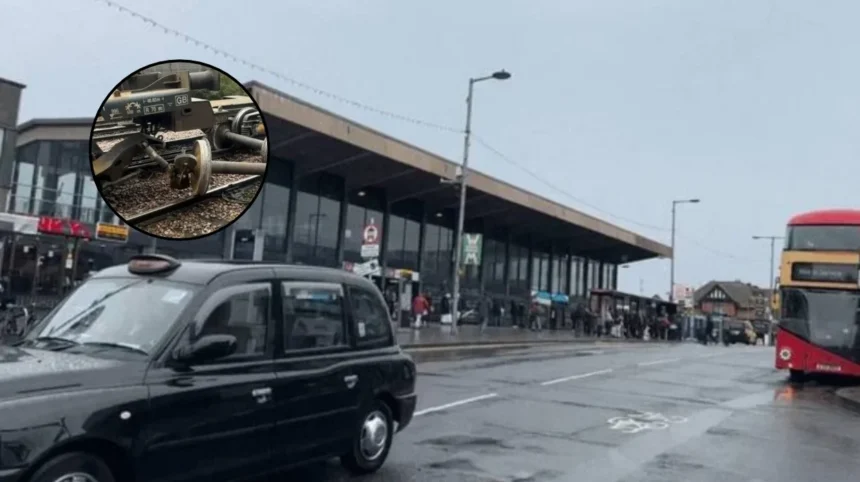
Visual evidence released by network operators and reviewed across regional media outlets illustrates the physical severity of the derailment. As reported by news journalists at London Now, photographic evidence released directly by c2c Railway shows derailed wheelsets, damaged wagon undercarriages, and heavy container freight wagons standing noticeably off alignment on the ballast.
The damage to the trackbed and underlying signaling infrastructure requires extensive technical evaluation before clearance equipment can safely move the derailed rolling stock. Network Rail engineers and incident response teams arrived at the site shortly after the incident to conduct initial safety investigations and begin the recovery process.
Which Ticket Mutual Acceptance Agreements Have Been Put in Place for Passengers?
To mitigate the impact on thousands of affected passengers during peak commuting hours, transport providers have established extensive ticket cross-acceptance measures across neighboring networks. As reported by news staff at This Is Local London, c2c and Transport for London (TfL) confirmed that valid train tickets will be honored across alternative routes without extra charge.
Passengers holding c2c or London Overground tickets can utilise the following travel options:
- London Buses: Accepted on all reasonable bus routes operating between Barking, Dagenham Dock, Rainham, Purfleet, and Grays.
- London Underground: Accepted on the District Line for journeys between Barking and Upminster.
- Greater Anglia: Accepted on rail services running between London Liverpool Street and Southend Victoria.
- First Essex Buses: Accepted on local bus services connecting Purfleet and Grays.
Travel operators have urged passengers to check real-time journey planners and allow substantial extra time for their journeys while clearance operations remain ongoing.
How Is Delay Repay and Passenger Compensation Being Administered?
In response to the mounting journey delays, passenger assistance teams have advised commuters to retain all physical and digital tickets to support future compensation claims. As highlighted by journalists at This Is Local London, c2c released an official customer notice stating that the operator is working diligently to keep passengers moving and confirming that passengers experiencing journey delays may be eligible for financial compensation under the standard Delay Repay scheme.
Background of the Derailment and East London Rail Bottlenecks
The rail corridor linking Woodgrange Park, Barking, and the surrounding east London freight terminals represents one of the most densely utilized rail junctions in the Greater London freight and commuter network. The route serves a dual purpose: accommodating high-frequency suburban passenger trains—such as the London Overground Gospel Oak to Barking line and c2c passenger routes from Essex into London Fenchurch Street—while simultaneously providing heavy rail freight connectivity to the Thames Estuary ports and industrial depots.
Because the rail infrastructure around Barking station operates near maximum capacity, a single physical disruption on the shared line generates immediate domino effects across adjacent passenger networks. Historically, freight train derailments on key intermodal lines require specialized heavy-lift crane equipment and infrastructure repairs to rail ties, ballast, and points mechanisms before lines can be certified safe for regular passenger traffic.
Predictions: How This Development Will Affect Passengers and Regional Operations
The freight train derailment at Barking is anticipated to have both short-term operational and long-term logistical ramifications for passengers, local businesses, and regional rail freight operators across east London and Essex.
- Severe Evening Rush-Hour Congestion: The immediate impact will be felt by thousands of daily commuters reliant on c2c and London Overground services. With key platforms at Barking offline and line suspensions in place between Barking and Grays, surrounding transport hubs—particularly London Underground’s District Line and local bus corridors—will experience severe overcrowding and increased journey times well into the evening and early morning periods.
- Multi-Day Schedule Modifications and Recovery Maintenance: Engineering recovery of derailed freight wagons and subsequent infrastructure repair work often extends beyond initial time estimates. Passengers should anticipate residual delays, emergency timetable modifications, and potential single-line working arrangements over subsequent days as Network Rail completes track re-alignment and safety checks.
- Increased Scrutiny on Freight Movement and Track Capacity: From a broader policy perspective, this development is likely to prompt rail safety regulators and regional transport authorities to review freight operations along shared suburban passenger lines. Heightened focus will be placed on maintenance schedules, axle weight limits, and emergency diversionary protocols to prevent similar freight incidents from paralyzing major London suburban corridors in the future.