Key Points
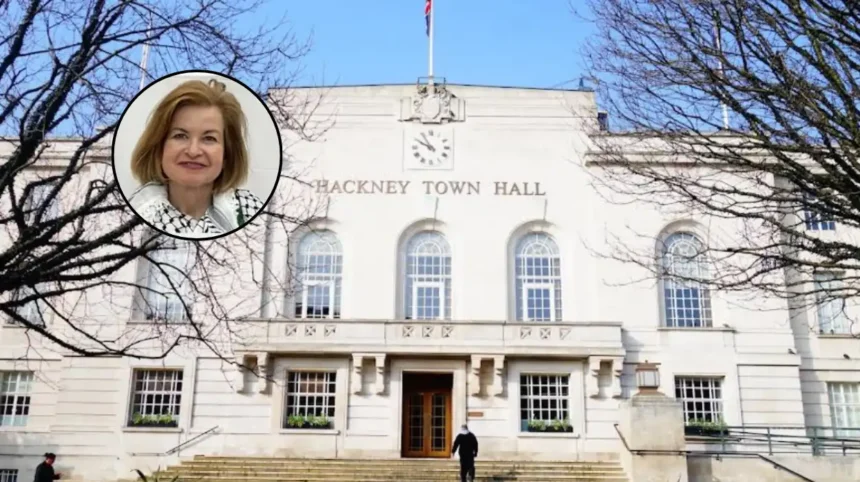
- Hackney Council removed a photograph of Councillor Brenda Puech wearing a keffiyeh from its official “Your Councillors” webpage
- UK Lawyers for Israel (UKLFI) submitted a letter on 3 June 2026 to Chief Executive Dawn Carter-McDonald requesting the removal
- UKLFI argued the keffiyeh is a divisive political symbol causing distress to at least one Jewish resident of the borough
- The organisation claimed the image could create an intimidating environment for Jewish residents and employees
- UKLFI referenced the Equality Act 2010, Hackney Council’s Code of Conduct, and the Public Sector Equality Duty in their complaint
- The photograph showed Councillor Puech wearing a black-and-white keffiyeh in her official council portrait
- UKLFI’s letter included appendix materials with examples from Puech’s social media showing similar attire
- UKLFI requested Puech refrain from wearing the keffiyeh while carrying out council business
- Brenda Puech is a Hackney Independent Socialist candidate for London Fields Ward
- Puech sits on the Hackney Palestine Solidarity Campaign committee
- Hackney Council currently has three Independent Socialist councillors: Fliss Premru, Claudia Turbet-Delof, and Penny Wrout
- The UK recognised the state of Palestine in September 2025
Hackney (East London Times) June 5, 2026 – Hackney Council has removed a photograph of Councillor Brenda Puech wearing a keffiyeh from its official website after receiving a formal complaint from UK Lawyers for Israel (UKLFI), marking another contentious development in the borough’s ongoing debates over political symbolism and community relations.
- Key Points
- What Exactly Happened in Hackney Council’s Decision to Remove the Keffiyeh Photograph?
- Why Did UKLFI File This Complaint Against Hackney Council?
- Who Is Councillor Brenda Puech and What Is Her Political Background?
- How Does This Incident Fit Into Broader UKLFI Activity?
- What Is the Political Context in Hackney Regarding Palestine?
- What Legal Framework Is Being Cited in This Dispute?
- Here Is the Background of the Particular Development
- Here Is the Prediction: How This Development Can Affect Hackney Residents and Councillors
What Exactly Happened in Hackney Council’s Decision to Remove the Keffiyeh Photograph?
As reported by UKLFI in their official press statement, the organisation sent a letter on 3 June 2026 to Hackney Council’s Chief Executive, Dawn Carter-McDonald, raising concerns about the inclusion of a photograph showing Councillor Puech wearing a keffiyeh on the council’s “Your Councillors” webpage. The letter argued that the image was causing distress to at least one Jewish resident of the borough.
UKLFI contended that the keffiyeh is a divisive political symbol which many Jewish and Israeli residents associate with hostility towards Israel and, in some cases, with terrorist organisations and antisemitism. The organisation explained that displaying the image on an official council website could create an intimidating, hostile, or offensive environment for Jewish residents and employees.
Why Did UKLFI File This Complaint Against Hackney Council?
According to UKLFI’s letter, the organisation argued that Councillor Puech’s continued use of the keffiyeh while undertaking council business could potentially engage provisions of the Equality Act 2010.
The letter also referred to Hackney Council’s Code of Conduct and the Public Sector Equality Duty, suggesting the council may have legal obligations to address the complaint.
UKLFI asked the council to ensure that Councillor Puech refrained from wearing the keffiyeh while carrying out council business and requested that an alternative official photograph be used on the council’s website. The organisation’s legal arguments centre on the potential for the image to create a hostile environment under equality legislation.
The original photograph, reproduced in the appendix to UKLFI’s letter, showed Councillor Puech wearing a black-and-white keffiyeh in her official council portrait photograph. The appendix also included examples from her social media showing her wearing similar attire, suggesting UKLFI conducted research into Puech’s public image beyond the official council photograph.
Who Is Councillor Brenda Puech and What Is Her Political Background?
Brenda Puech is a Hackney Independent Socialist candidate for London Fields Ward who has lived in London Fields for 25 years and has been deeply involved in community life.
As reported on the Hackney Greens candidates page, Puech has led a Tenants and Residents Association and sits on committees of Hackney Living Streets, Hackney Cycling Campaign, the London Fields User Group, and the Hackney Palestine Solidarity Campaign.
Professionally, Puech is a disability access consultant with a background in architecture and planning, and holds an MSc in Environmental Economics from the LSE. Her involvement with the Hackney Palestine Solidarity Campaign provides context for her wearing the keffiyeh, which has become a symbol of Palestinian solidarity in recent years.
The Hackney Independent Socialist Collective (HISC) was officially registered in December 2025 and will be on ballot papers for local elections. The party is currently represented at Hackney Town Hall by three councillors:
Fliss Premru for the Clissold Ward together with Claudia Turbet-Delof and Penny Wrout for the Victoria Ward. The group in its current form was established after three former Hackney Labour councillors resigned from the party in May 2024.
How Does This Incident Fit Into Broader UKLFI Activity?
UK Lawyers for Israel (UKLFI) is a pro-Israel activist group in the United Kingdom, formed in September 2016, known for launching numerous legal claims against what it sees as anti-Israel activities, sometimes described as “lawfare”.
The organisation is legally structured as two separate entities: the UKLFI Charitable Trust (set up in 2016) and UKLFI Ltd, a private company incorporated in 2010.
As documented in Wikipedia’s entry on UKLFI, the group has challenged the UK Government over its suspension of 30 arms export licences to Israel and raised complaints about the International Criminal Court’s seeking of arrest warrants against Israeli ministers.
UKLFI has a track record of similar complaints: in 2023, they filed a complaint against Chelsea and Westminster Hospital over an artwork display of decorated plates designed by children at two UN schools in Gaza, which the hospital removed in response.
In February 2026, UKLFI sent a letter to the British Museum denouncing the inclusion of the word “Palestine” in some displays, and the museum removed the terms, stating they were used “inaccurately” and are “no longer historically neutral”.
The British Museum acknowledged that the term “Palestine” is well-established in western and Middle Eastern scholarship as a geographical and neutral designation since the late 19th century, but added it has become a term without neutral designation.
Natasha Hausdorff, who joined UKLFI in 2014, has been described as the organisation’s public figure, appearing on news shows and giving evidence to the foreign affairs select committee. UKLFI CEO Jonathan Turner has made controversial statements, including criticising a Lancet analysis on the impact of the Gaza conflict on life expectancy, remarks the Palestine Solidarity Campaign called “utterly sickening”.
Explore More Hackney Council News
Green Party Wins Hackney Mayor: Zoë Garbett Stuns Labour, Hackney 2026
High Court Backs Disabled Child Housing Claim in Hackney 2026
What Is the Political Context in Hackney Regarding Palestine?
Hackney has emerged as a significant location for Palestine-related political activism. As reported by hackney4pal.co.uk, there are efforts to make Palestine an electoral issue in Hackney, with support for groups who explicitly support Palestine solidarity demands.
The website noted there are currently two Green councillors and three Independent Socialist councillors in Hackney, all five of whom stand with Palestine.
The council has faced pressure regarding divestment from companies tied to human rights breaches. Heather Mendick of HISC wanted to see the council divest from pension funds described as “complicit in war crimes” taking place in Gaza, accusing the current administration of “refusing” to do so.
The council argued it is restricted by legal obligations from divesting independently from firms such as Elbit Systems, an Israel-based international military technology company headquartered in Haifa.
Following the UK’s official recognition of the state of Palestine in September 2025, Hackney Mayor Caroline Woodley said the council would
“explore the changes required to engage with, and divest pension fund investments from, companies tied to human rights breaches, including conflict”.
Mayor Woodley stated:
“The Council is absolutely committed to taking decisive steps towards divesting pension fund investments from companies tied to human rights breaches, including conflict”.
What Legal Framework Is Being Cited in This Dispute?
UKLFI’s letter referenced three key legal and regulatory frameworks: the Equality Act 2010, Hackney Council’s Code of Conduct, and the Public Sector Equality Duty.
The Equality Act 2010 protects individuals from discrimination in the workplace and wider society, including protection from harassment related to race or religion.
The Public Sector Equality Duty requires public bodies, including local councils, to have due regard to the need to eliminate discrimination, advance equality of opportunity, and foster good relations between different people when carrying out their activities.
UKLFI’s argument suggests that displaying the keffiyeh photograph on the official council website may violate these duties by creating a hostile environment for Jewish residents.
Critics of UKLFI’s approach have raised concerns about the organisation’s tactics. In August 2025, it was reported that the UK Charity Commission was investigating a complaint against UKLFI, raised by CAGE International, which accused the organisation of
“concealing its funding sources, refusing to disclose the financial backers driving its campaign of professional harassment and governance, and institutional racism”.
The Public Interest Law Centre and the European Legal Support Center, a pro-Palestine advocacy group, filed a complaint with the Solicitors Regulation Authority against UKLFI over its alleged use of SLAPPs and operating as an unregulated law firm.
Here Is the Background of the Particular Development
The keffiyeh, a black-and-white checkered scarf traditionally worn in Arab countries, has become a polarising political symbol in recent years.
For Palestinian solidarity advocates, it represents resistance to occupation and support for Palestinian rights. For some Jewish and Israeli communities, particularly in the UK, it has become associated with antisemitism and hostility toward Israel.
Hackney Council has been at the centre of numerous Palestine-related controversies. The borough has a significant Jewish population, particularly in Stamford Hill and Stoke Newington, alongside active Palestine solidarity groups.
The tension between these communities has intensified since the escalation of the Gaza conflict in October 2023.
The Hackney Independent Socialist Collective emerged from Labour Party fractures over Palestine policy. Three former Hackney Labour councillors resigned in May 2024, citing disagreements over the party’s approach to Palestine and divestment. Their new party explicitly stands with Palestine, making Puech’s keffiyeh wearing consistent with her political identity.
UKLFI’s complaint strategy follows a pattern of legal and quasi-legal challenges aimed at institutions displaying Palestinian solidarity symbols.
The organisation has successfully pressured the British Museum, Chelsea and Westminster Hospital, and the Open University to remove or改 content related to Palestine. This pattern suggests UKLFI views the keffiyeh photograph as part of a broader campaign to challenge what they perceive as institutional antisemitism.
The UK’s recognition of the state of Palestine in September 2025 created new political dynamics. This governmental shift emboldened Palestine solidarity groups while prompting increased monitoring from pro-Israel organisations. Hackney Council’s decision to remove the photograph may reflect institutional caution in navigating this heightened political environment.
Here Is the Prediction: How This Development Can Affect Hackney Residents and Councillors
This development will likely affect East London residents and political participants in several significant ways. For Jewish residents in Hackney, particularly those in Stamford Hill and Stoke Newington, the council’s decision may provide reassurance that the institution takes concerns about antisemitism seriously. However, some residents may view the removal as capitulation to pressure campaigning, potentially undermining trust in the council’s independence.
For Palestine solidarity activists and supporters in the borough, including members of the Hackney Palestine Solidarity Campaign, this decision may be perceived as restricting freedom of expression and political symbolism.
Councillor Puech’s supporters, particularly in London Fields Ward where she is standing, may view the removal as political interference that disadvantages independent socialist candidates who explicitly stand with Palestine.
The incident may influence voting behaviour in future Hackney Council elections. Residents who prioritise Palestine solidarity may consolidate support for Independent Socialist candidates, while those concerned about antisemitism may shift toward Labour or other parties. The three existing Independent Socialist councillors (Fliss Premru, Claudia Turbet-Delof, and Penny Wrout) may face increased scrutiny over their own political symbols and statements.
For council officers and administrators, this case establishes a precedent for handling complaints about political symbols on official council materials.
The decision may encourage more cautious approaches to councillor photographs and social media content, potentially limiting the visibility of political positions on official council platforms. Chief Executive Dawn Carter-McDonald may face pressure to clarify the council’s policy on political symbolism while balancing competing equality duties.
The broader implication for East London’s political landscape involves the ongoing tension between free expression and equality obligations.
If similar complaints are lodged against other councillors wearing political symbols, Hackney Council may need to establish clearer guidelines. This could create uncertainty for councillors representing communities with strong political identities, potentially discouraging candidates from minority backgrounds who use cultural or political symbols to express their identities.
For local journalism and community discourse, this incident adds to ongoing debates about how to report on sensitive political issues without amplifying division.
East London news outlets covering council decisions may face pressure to frame stories in ways that acknowledge both Jewish residents’ concerns and Palestine solidarity activists’ perspectives without appearing to endorse either position.