Key Points
- Green Party Mayor Zoë Garbett has marked her first 100 days in office leading Hackney Council following May’s election victory.
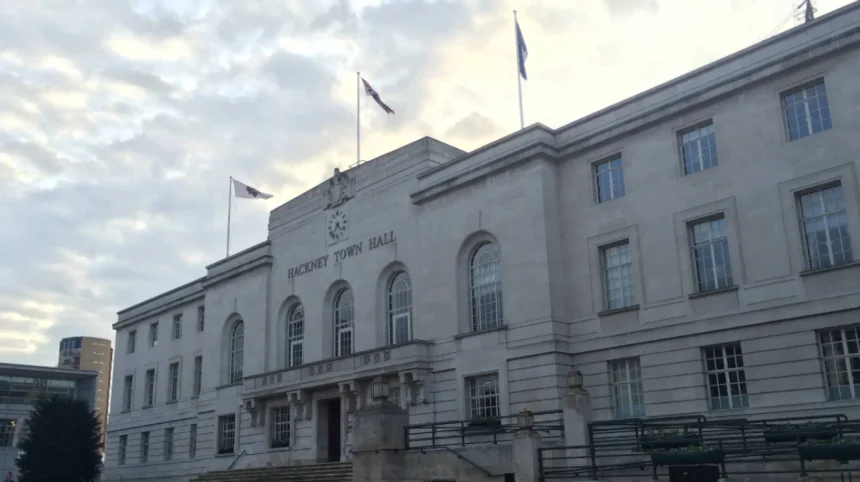
- Garbett has physically altered the Mayor’s office inside the Art Deco Town Hall, moving the executive desk to remove an “overpowering” setup.
- The administration faces substantial council challenges, with Garbett acknowledging “huge eye-opening issues” during her initial months in power.
- The Hackney Greens took control of the council by overturning a major Labour majority, securing 39 additional seats.
Hackney (East London Times) August 22, 2026 – Hackney Council has reached 100 days under Green Party control, with Mayor Zoë Garbett outlining the administration’s progress and initial challenges during an interview with the Local Democracy Reporting Service.
As reported by the Local Democracy Reporting Service, Garbett stated that there have been some “huge eye-opening issues” since taking office following the local elections. Upon entering her office at the Art Deco Town Hall, Garbett reorganised the layout of the room. The wood-panelled walls have been stripped back, and the primary structural change involved relocating the executive desk away from the larger mahogany table, a setup she described as too awkward and “overpowering”.
The physical adjustments inside the Town Hall reflect the transition in municipal leadership after the Hackney Greens secured control in May’s council elections. The election outcome saw the Green Party overturn Labour’s longstanding majority by winning 39 additional seats in the chamber.
What has the Mayor accomplished in her first 100 days?
According to reporting by the Local Democracy Reporting Service, Garbett has spent the initial period evaluating internal council structures and addressing operational matters following the shift in political administration. The transition marked the end of sustained Labour dominance in the borough, requiring a realignment of policy priorities across municipal departments.
How is the Green administration addressing local governance issues?
As detailed by the Local Democracy Reporting Service, Garbett noted that encountering the internal workings of the local authority revealed significant complexities across municipal services. The administration continues to navigate council operations, public service management, and budgetary constraints inherited from the previous cabinet.
Background of the particular development
The Green Party’s victory in May represented a significant shift in East London local governance. Prior to the election, Labour held a substantial majority on Hackney Council. The acquisition of 39 seats by the Greens ended decades of single-party dominance in the borough, placing Garbett at the head of the executive executive office. The first 100 days in municipal governance typically serve as a benchmark for establishing cabinet appointments, setting policy agendas, and implementing administrative reorganisations within the Town Hall.
Prediction
The transition to a Green Party administration in Hackney is expected to impact local residents, businesses, and public sector services across the borough. In the short to medium term, residents can anticipate potential shifts in council policy direction, particularly regarding housing, transport infrastructure, local environmental initiatives, and municipal spending priorities. For the wider community and local businesses, the political realignment within the Town Hall may lead to new consultative processes as the executive team attempts to enact its manifesto commitments against existing statutory responsibilities and financial pressures facing English local authorities.