Key Points
- City Hall Intervention: Jules Pipe, Deputy Mayor for Planning, Regeneration and the Fire Service, exercised powers to call in and approve the Shoreditch Works masterplan after Hackney Council failed to reach a decision within the statutory timeframe.
- Scale of Development: The approved masterplan encompasses 11 buildings across a triangular block in southern Shoreditch, featuring six new structures ranging between six and 18 storeys.
- Mixed-Use Delivery: The scheme will provide more than 57,000 square metres of office space alongside 78 new residential units on the southern edge of Hackney.
- Planning Friction: Hackney Council planning officers had repeatedly recommended the refusal of the project due to concerns over heritage harm, insufficient affordable workspace, and shortfalls in affordable housing targets.
- Economic Impact: The development is projected to deliver over 8 per cent of the jobs targeted for the City Fringe Opportunity Area, representing roughly 55 per cent of the office floorspace outlined in Hackney’s local plan.
- Heritage and Workspace Compromises: Approval was granted despite the inclusion of 5.2 per cent affordable workspace and a delayed restoration schedule for a listed terrace, with City Hall deeming the overall economic and public realm benefits to outweigh the heritage impact.
Shoreditch (East London Times) October 16, 2026 – The Greater London Authority has taken control of and approved the multi-million-pound Shoreditch Works redevelopment on the southern edge of Shoreditch, overriding the explicit refusal recommendations issued by Hackney Council’s planning officers. Jules Pipe, London’s Deputy Mayor for Planning, Regeneration and the Fire Service, granted planning permission for the expansive project on Wednesday 7 October, subject to the completion of a legal agreement with developer Linea Properties. The landmark decision authorises the construction of an 18-storey tower, dozens of new homes, and more than 57,000 square metres of commercial office space within the capital’s prominent Tech City cluster, effectively ending a months-long administrative stalemate between local authority planners and City Hall.
- Key Points
- Why did City Hall override local planning officer recommendations?
- How did the planning delay lead to a Mayoral call-in?
- What terms were agreed regarding affordable homes and workspace?
- Background of the Shoreditch Works planning dispute
- Prediction: How will this development affect local businesses and the property market?
Why did City Hall override local planning officer recommendations?
The decision by the Mayor of London’s office to approve the masterplan follows a prolonged period of political and administrative friction between the developer, local councillors, and local authority planning officers. Hackney Council officers had consistently urged politicians to reject the application, arguing that the scale and design of the scheme would inflict unmitigated harm on surrounding heritage assets, while failing to provide sufficient affordable workspace and residential accommodation to meet borough-wide planning targets.
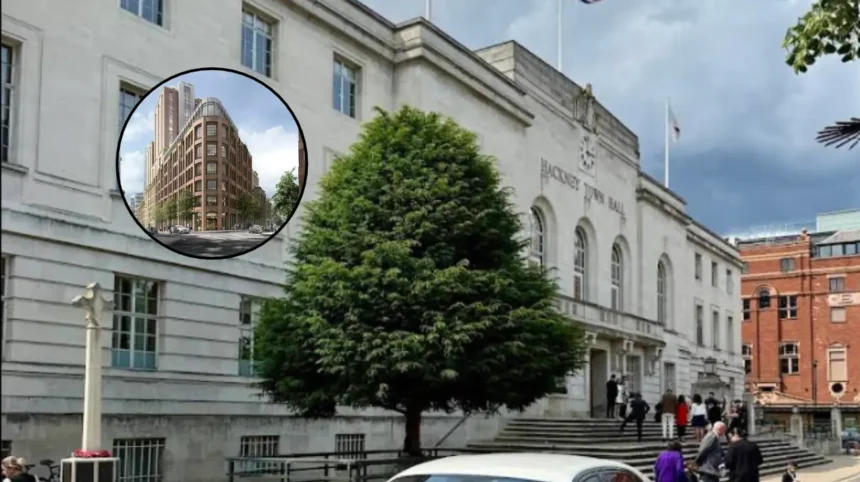
The Shoreditch Works masterplan involves the construction or comprehensive regeneration of 11 separate buildings occupying the majority of a prominent triangular block on the southern fringes of Shoreditch, an area widely designated as London’s “Tech City” or “Silicon Roundabout”. Designed by architectural firm KPF alongside heritage specialist practice Richard Griffiths Architects, the project includes six new structures ranging from six to 18 storeys in height.
Despite the objections raised by municipal planning officers regarding the height and density of the proposals, Jules Pipe determined that the economic and public benefits generated by the project surpassed the identified heritage detriments. Exercising his executive authority under Greater London Authority guidelines, Pipe concluded that the comprehensive regeneration of the site, alongside the creation of new public thoroughfares, justified the approval of the high-density commercial and residential hub.
How did the planning delay lead to a Mayoral call-in?
The path to approval was marked by extensive procedural delays and a breakdown in local determination. Linea Properties originally submitted the planning application for the comprehensive mixed-use redevelopment in October 2024, marketing the project as “London’s first Regenerative Business Hub.” However, nearly two years after the initial submission, local consensus remained elusive.
In February, Hackney Council’s planning committee convened for a five-hour meeting to debate the application. Planning officers presented a firm recommendation to refuse permission, citing two primary grounds: unacceptable harm to local heritage assets and an inadequate provision of affordable workspace. Officers further highlighted that the application fell well short of the borough’s affordable housing benchmarks, while noting that the level of detail provided within the full planning application resembled an outline submission. Municipal planners also described the high-level financial assumptions embedded within the developer’s viability assessments as unusually sparse for a scheme of such magnitude.
In a rare move, Hackney councillors voted 5-2 against their own officers’ recommendation to refuse the scheme. However, rejecting a recommendation to refuse did not legally constitute an approval, leaving the committee to defer the final decision. Hackney Council scheduled the application to return to the planning committee on 11 March, with officers again preparing documentation recommending refusal.
Before the committee could convene, planning consultants Montagu Evans, acting on behalf of Linea Properties, submitted a formal request on 3 March asking the Mayor of London to intervene and take over the application on the grounds that Hackney Council had failed to determine the submission within the statutory time limit. Pipe officially called in the application on 9 March, two days prior to the scheduled council meeting, stripping the local authority of its decision-making jurisdiction.
What terms were agreed regarding affordable homes and workspace?
Following the call-in, City Hall officers engaged in renegotiations with Linea Properties to establish updated terms for the draft legal agreement. Hackney Council’s statutory planning guidance recommends that 50 per cent of all new residential units and 10 per cent of new commercial workspace within new developments should be designated as affordable.
Under the revised framework accepted by City Hall, the project will deliver 5.2 per cent affordable workspace, alongside a commitment to a delayed restoration schedule for a listed terrace located within the development footprint. While these provisions fall beneath the standard threshold figures sought by Hackney planners, City Hall officials determined that the compromise was acceptable when balanced against the wider delivery of public space, high-spec commercial floorplate, and infrastructure enhancements.
In evaluating the flagship 18-storey ‘Verso’ tower—which sits outside areas specifically designated by Hackney Council as suitable for tall buildings—Pipe noted that while the structure exceeds local height guidance, its overall design and integration were acceptable within the context of the broader masterplan. Pipe stated that the overall public and economic benefits of the scheme “clearly and convincingly outweigh” the identified harm to local heritage, echoing the findings of the GLA’s internal planning assessment.
Pipe, who previously served as the directly-elected Mayor of Hackney for 14 years before assuming his regional role at City Hall, emphasized the strategic importance of the site for London’s broader economic goals. He highlighted that the Shoreditch Works development would deliver more than 8 per cent of the total jobs planned for the entire City Fringe Opportunity Area, equivalent to approximately 55 per cent of the total office floorspace targeted in Hackney’s local plan. He further commended the architectural design for opening up the historic site to the public through new pedestrian routes and open spaces for the first time in its recorded history.
Background of the Shoreditch Works planning dispute
The approval of Shoreditch Works represents the culmination of a multi-year debate over the direction of development along London’s City Fringe. The area surrounding Shoreditch and Old Street underwent rapid transformation over the past two decades, evolving from an industrial and light-manufacturing district into an international hub for technology startups, creative industries, and commercial real estate investment.
This commercial expansion has frequently brought private developers into conflict with local planning authorities and heritage protection groups. Hackney Council’s local planning policies have increasingly prioritized the retention of affordable workspace to prevent smaller creative enterprises from being priced out of the borough by large-scale corporate developments. Additionally, the council’s planning framework enforces strict guidelines regarding building heights and the preservation of conservation areas, seeking to maintain the architectural character of Shoreditch’s historic industrial streetscapes.
The friction surrounding the Shoreditch Works site specifically highlighted the operational tensions between local borough objectives and the strategic priorities of the Greater London Authority. While local planners focused heavily on section 106 targets for affordable housing, local heritage preservation, and workspace subsidies, regional planning policy under the Mayor of London prioritizes high-density commercial yield, job creation, and the expansion of key economic growth corridors such as the City Fringe Opportunity Area. The intervention by Jules Pipe underscores the broad scope of Mayoral call-in powers designed to prevent large-scale commercial developments of regional significance from being blocked or indefinitely delayed by municipal planning committees.
Prediction: How will this development affect local businesses and the property market?
The strategic approval of the Shoreditch Works project is expected to accelerate the commercial transformation of the southern edge of Shoreditch, consolidating its position as a primary extension of the City of London’s financial and technology sectors.
For local commercial tenants and startups, the addition of more than 57,000 square metres of high-grade office space will significantly increase supply within the Tech City corridor. However, because the approved level of affordable workspace stands at 5.2 per cent—substantially lower than Hackney Council’s 10 per cent policy target—smaller creative businesses and early-stage entrepreneurs may face ongoing pressure from rising average commercial rents across the surrounding area. The influx of corporate occupiers is likely to drive up land values, potentially prompting further consolidation of traditional industrial and low-rise sites along the Hackney-City border.
For residential communities and the local property market, the delivery of 78 new residential units will provide additional housing stock, though the total volume remains modest relative to regional demand. The compromise on affordable housing proportions suggests that market-rate units will dominate the scheme, further bolstering residential property values in southern Hackney.
Finally, the construction of six new buildings—including the 18-storey Verso tower—will permanently alter the skyline and pedestrian access of the immediate neighborhood. While local heritage groups may express continued concern over the impact on listed structures and conservation boundaries, local retail, hospitality, and service businesses are poised to benefit from the substantial increase in footfall generated by the thousands of workers projected to occupy the site upon completion.