Key Points
- Mayoral Approval Granted: The Mayor of London, via Deputy Mayor for Planning Jules Pipe, has approved the mixed-use Shoreditch Works masterplan following a public call-in hearing on 7 October 2026.
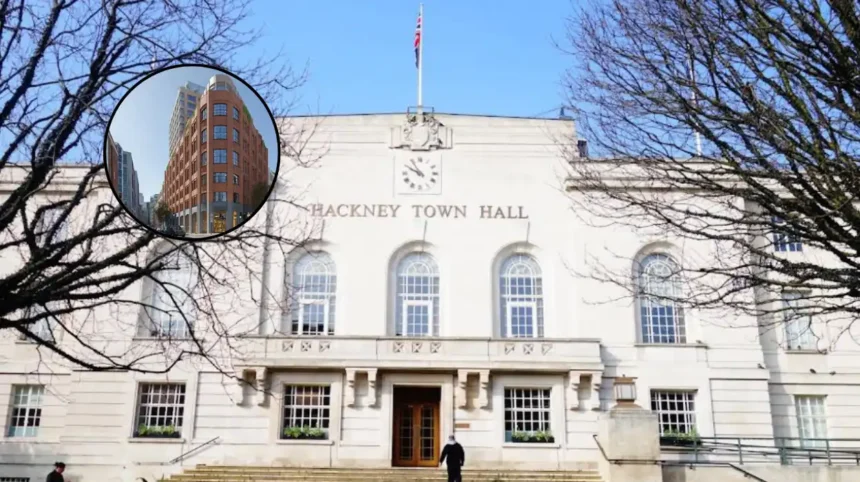
- Overriding Local Opposition: The decision overrides opposition from Hackney Council, whose councillors previously clashed with planning officers and opposed the major redevelopment scheme.
- Developer and Architect Details: The project is designed by architecture firm Kohn Pedersen Fox (KPF) on behalf of developer Linea Properties Ltd, with heritage specialist Richard Griffiths Architects also working on the scheme.
- Scale of Development: The 1.4-hectare site on the edge of the City of London currently contains over 30 separate buildings and will be transformed into 65,000 square metres of modern office space and 78 new residential homes.
- Heritage Considerations: The scheme encompasses several listed structures, including the Grade II*-listed 91–101 Worship Street and Grade II-listed 103 and 105 Worship Street, with plans specifying a phased delivery approach to retain existing structures where possible.
Shoreditch (East London Times) October 12, 2026 – The Mayor of London has granted planning approval for the ambitious Shoreditch Works masterplan, designed by architecture practice Kohn Pedersen Fox (KPF) for developer Linea Properties Ltd, following a formal call-in process that bypassed local council resistance. The decision was confirmed at a public hearing led by Deputy Mayor for Planning Jules Pipe on 7 October 2026, marking a decisive end to months of uncertainty surrounding the future of the 1.4-hectare site positioned on the boundary between the London Borough of Hackney and the City of London.
- Key Points
- Why did City Hall override Hackney Council’s initial refusal?
- What does the approved Shoreditch Works masterplan include?
- How will sensitive heritage assets on the site be preserved?
- What is the background of this development?
- How will this development affect real estate occupiers, local businesses, and residents?
Why did City Hall override Hackney Council’s initial refusal?
The planning application was taken over by City Hall after Hackney Council opposed the development, creating a sharp division between local authority elected members and planning officials. As reported by Ian Walmsley of Planning Geek, Deputy Mayor Jules Pipe ruled in favour of the applicant at the City Hall hearing, determining that the strategic economic and housing benefits of the scheme outweighed local land-use objections. As reported by the Architects’ Journal, the intervention allows the multi-million-pound redevelopment to proceed despite significant debate over its scale and impact on the local urban context.
What does the approved Shoreditch Works masterplan include?
The multi-building project will redevelop land currently occupied by more than 30 individual properties to deliver approximately 65,000 square metres of high-specification commercial workspace alongside 78 new residential dwellings. As reported by Building Magazine, the site represents one of the largest remaining fringe development plots adjacent to the Square Mile. As reported by New London Architecture, the complex layout is engineered to foster enterprise and employment within one of London’s recognized Creative Enterprise Zones, providing flexible floorplates to accommodate both corporate occupiers and local businesses.
How will sensitive heritage assets on the site be preserved?
The redevelopment footprint incorporates historic urban fabric, including the Grade II*-listed buildings at 91–101 Worship Street and the Grade II-listed properties at 103 and 105 Worship Street. As reported by the Architects’ Journal, heritage specialist Richard Griffiths Architects has been engaged alongside KPF to ensure the retention and integration of key listed structures into the overall design. Linea Properties Ltd has committed to delivering the complex masterplan in controlled phases, using retention-led architectural techniques to minimize embodied carbon while safeguarding historic streetscapes.
What is the background of this development?
The site comprising the Shoreditch Works masterplan was assembled by landowners over a period spanning five decades, culminating in the formation of Linea Properties Ltd specifically to lead the site’s regeneration. Situated at the junction of the City of London financial district, London’s Fashion District, and the Shoreditch tech cluster, the 1.4-hectare parcel has long been identified as a critical urban hinge.
Prior to the mayoral call-in, Linea Properties submitted detailed planning applications to Hackney Council aimed at replacing aging, fragmented light-industrial and office structures with a consolidated, sustainable mixed-use quarter. However, the proposal met with strong local opposition regarding building height, density, and impact on local character. When local elected representatives moved against favorable officer recommendations, the Mayor of London exercised statutory call-in powers to determine the application at the regional level, citing the project’s compliance with London Plan targets for growth, employment creation, and strategic housing delivery.
How will this development affect real estate occupiers, local businesses, and residents?
The mayoral approval for Shoreditch Works is anticipated to significantly alter the commercial and residential dynamics across the London Borough of Hackney and the broader City fringe market.
For commercial tenants and corporate occupiers, the addition of 65,000 square metres of modern office space will supply much-needed prime workspace tailored to technology, creative, and professional services sectors seeking proximity to the City of London. Local retail and hospitality businesses in Shoreditch are expected to experience increased footfall and long-term patronage driven by the influx of thousands of daily workers and new residents.
For local residents and community groups, the development brings mixed impacts: while providing 78 new homes and public realm enhancements, the multi-year construction phase will induce temporary logistical disruption, noise, and changes to the established low-rise street character along Worship Street. Neighboring landowners and property investors are likely to see heightened demand and upward valuation pressure on surrounding commercial and residential real estate as construction commences.