Key Points
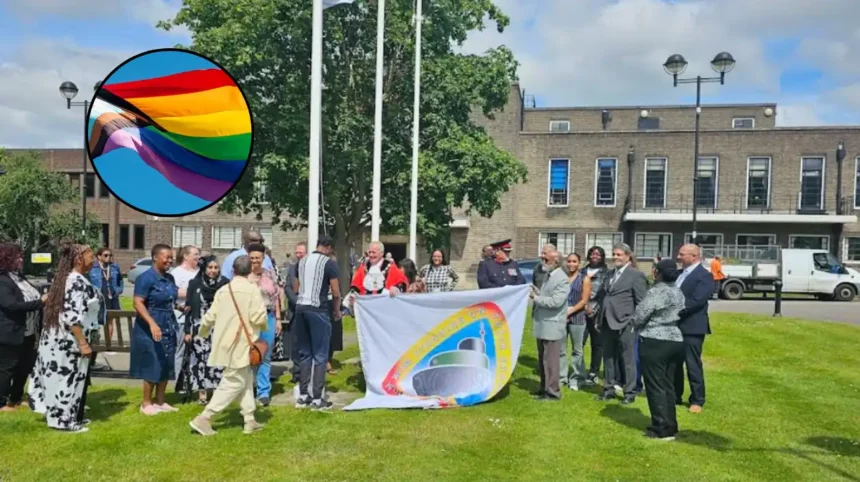
- Protestors attached a rainbow LGBT flag and a transgender flag to an unused flagpole at Havering Town Hall on 25 June in response to the council’s decision not to fly Pride flags during Pride Month.
- Havering Council’s new Reform UK administration announced it will only fly the Union Flag and the Armed Forces flag on civic buildings going forward.
- Councillor Keith Prince, leader of Havering Council, described the action as “trespass” and said the removed flags were “abuse-free” in a video posted to X.
- The Reform administration scrapped a Pride ceremony scheduled for the borough and said the Union Flag “sufficiently represented everyone.”
- The decision has prompted criticism from local politicians and LGBT organisations: Green Party leader Zack Polanski called the policy “Trumpian nonsense”; Kaleidoscope, an LGBT charity, described the move as “devastating” but said it would not erase the local LGBTQ community.
- The Havering Residents Association, the council’s former controlling group, called the decision “disappointing”; former deputy mayor Councillor Barry Mugglestone said it ignored the presence of LGBT personnel in the UK armed forces.
- London’s Pride parade is scheduled for 4 July, intensifying local attention on Havering’s flag policy.
Romford (East London Times) July 1, 2026 – Protestors who affixed a rainbow LGBT flag and a blue, pink and white transgender flag to an out-of-use flagpole at Havering Town Hall on 25 June removed them after council staff intervened, in a direct challenge to the council’s new policy that restricts civic flag flying to the Union Flag and the Armed Forces flag, a move introduced by the borough’s new Reform UK administration that has drawn criticism from local politicians and LGBT organisations.
- Key Points
- What did protestors do and why was it significant?
- What policy change prompted the protest?
- Who has criticised the council’s decision and what have they said?
- What has the council leadership said in response?
- How have community groups and residents reacted locally?
- How does this compare to flag policies elsewhere?
- What legal or procedural issues are involved?
- How does this decision affect local events and the timing with London Pride?
- What are the perspectives of elected opposition figures?
- What are the immediate next steps from council and community groups?
- Background of the development
- Prediction: how might this affect Havering residents and local stakeholders?
What did protestors do and why was it significant?
As reported by Sebastian Mann of the Local Democracy Reporting Service, activists attached two flags — the rainbow Pride flag and the transgender flag — to an unused flagpole outside Havering Town Hall on 25 June. The action was framed by those involved as a protest against the council’s decision not to fly Pride flags during Pride Month.
The flags were taken down by council workers, and the council has characterised the action as trespass. Councillor Keith Prince, leader of Havering Council, posted a video to X in which he said the flags had “abused our flagpoles” and stated that
“let me make it very clear to everybody who lives in Havering, or anyone else who’s interested, there is only one flag that is going to be sitting atop the town hall once we’ve got the flagpoles fixed.”
What policy change prompted the protest?
Following the May local elections in which Reform UK gained control of Havering Council, the new administration announced a change to flag-flying policy early in June. The leadership said civic buildings will, going forward, fly only the Union Flag and the Armed Forces flag.
The policy also led to the cancellation of a planned Pride ceremony in the borough. Councillor Prince and other Reform officials have said the Union Flag sufficiently represents everyone in the borough, and that the policy reflects their stance on civic symbolism.
Who has criticised the council’s decision and what have they said?
The decision has been publicly criticised across the political spectrum and by charities. As reported by local sources, Green Party leader Zack Polanski described the policy as “Trumpian nonsense.”
A spokesperson for Kaleidoscope, an LGBT charity that supports local LGBTQ+ people, called the council’s decision “devastating” but added that it
“would not erase the LGBTQ community in Havering.”
The Havering Residents Association, the group that controlled the council before the May elections, described the decision as “disappointing.” Former deputy mayor Councillor Barry Mugglestone specifically noted the inconsistency between the council’s gesture towards the Armed Forces and the exclusion of Pride flags, saying:
“I am disappointed that the Reform administration at Havering Council has refused to fly the Pride flag, when openly saying they support our Armed Forces community. We need to remember that now lesbian, gay, bisexual personnel are fully integrated and welcome to serve openly in the UK armed forces.”
What has the council leadership said in response?
Councillor Keith Prince, speaking on X and before a Union Flag backdrop, framed the flag incident as unauthorised and asserted a firm stance on future flag policy.
He said those who had affixed the Pride and transgender flags had “abused our flagpoles” and that, once the poles are repaired, the Town Hall will display only the flag(s) specified by the administration.
The council’s official position, as set out by Reform-aligned leadership, is that flying the Union Flag and the Armed Forces flag is appropriate for civic buildings and that other symbolic flags will not be routinely displayed.
How have community groups and residents reacted locally?
Local reactions have ranged from dismay to active protest. LGBT campaigners and some local politicians have said the policy and the cancelling of a Pride event marginalises the borough’s LGBTQ+ residents and contradicts the inclusive message symbolised by flying Pride flags during Pride Month.
Kaleidoscope’s spokesperson emphasised the emotional impact, calling it “devastating,” while also stressing the resilience of the community.
Online commentary includes criticism of the administration’s decision as unnecessarily exclusionary; supporters of the policy have argued flying only flags representing the nation and armed services is a neutral, unifying approach.
How does this compare to flag policies elsewhere?
Across the UK, councils take varied approaches to flag flying. Some local authorities routinely fly Pride flags during Pride Month or for specific awareness days, while others restrict flag flying to national flags or those with explicit civic or historic relevance.
The decision by Havering’s Reform administration to formalise a policy of flying only the Union Flag and the Armed Forces flag places it among councils that have tightened the range of flags permitted on civic buildings.
That contrast has become a focal point for debate about local identity, civic representation and the role of symbols in public life.
What legal or procedural issues are involved?
The council describes the protest act of fixing flags to a town-hall flagpole as unauthorised access to council property and framed it as “trespass.” Local authorities have responsibility for the safe and appropriate use of council-owned flagpoles and grounds; unauthorised attachment of items can raise safety and liability concerns.
No arrests have been reported in relation to the incident, and reporting thus far focuses on public statements from councillors and civic staff rather than police action.
How does this decision affect local events and the timing with London Pride?
The timing of the policy and the protest is significant because London’s annual Pride parade takes place on 4 July.
The cancellation of a local Pride ceremony in Havering, combined with the council’s new policy, has heightened scrutiny during a week when activity and visibility for LGBTQ+ rights and culture are at a peak across the capital and the country.
Residents and campaigners in Havering planning to attend wider Pride events in London will do so against a backdrop of heightened local controversy.
What are the perspectives of elected opposition figures?
Opposition councillors have criticised the decision for being tone-deaf and exclusionary. The Havering Residents Association, which previously controlled the council and now sits in opposition, labelled the move “disappointing.” Councillor Barry Mugglestone, the council’s former deputy mayor, emphasised the presence of LGBTQ+ members in the armed forces and called the policy inconsistent with the borough’s stated support for veterans and armed services personnel. Critics have sought to frame the decision as a rollback of inclusive civic practice.
What are the immediate next steps from council and community groups?
Following the incident, the council has maintained its announced flag policy and removed the unauthorised flags from the flagpole.
Community groups and activists have indicated they will continue to voice disquiet and pursue other avenues for visibility and support for local LGBTQ+ people, including participation in the wider London Pride events and local campaigning. The council has suggested it will pursue repairs to flagpoles and enforce its new policy.
Background of the development
Havering is a London borough that until May 2026 was controlled by the Havering Residents Association. In the May 2026 local elections, the Reform UK party won control of Havering Council. Soon after taking office the new administration announced a review and change to civic practices, including a new flag-flying policy restricting flags on council buildings to the Union Flag and the Armed Forces flag.
Historically, local authorities have had discretion to fly various flags for special events, commemorations and awareness days; flying Pride flags during Pride Month has been a common practice among many UK councils, but not a universal one.
The incident on 25 June, when protestors affixed Pride and transgender flags to an out-of-use flagpole, followed the council’s formal announcement and the cancellation of a Pride ceremony in the borough.
The removal of those flags by council staff and the leader’s public comments framed the episode in terms of unauthorised action and a firm new civic symbolism policy.
Nationally, debates over flag-flying and symbolic gestures by local authorities form part of broader conversations about identity, representation and the role of councils in public life.
Prediction: how might this affect Havering residents and local stakeholders?
- For LGBTQ+ residents and allies: The policy and cancellation of a local Pride event could increase feelings of marginalisation among LGBTQ+ people in Havering, prompting greater mobilisation around community-led events and stronger engagement with borough and city-wide support organisations such as Kaleidoscope. Some residents may choose to make their voices heard at council meetings or through local campaigning.
- For local politics: The decision is likely to remain a live political issue. Opposition parties and community groups may use the policy to galvanise support ahead of future local elections, while Reform councillors may frame the move as fulfilment of manifesto commitments. The issue could sharpen local electoral debates about representation and civic identity.
- For civic engagement and public events: With the town hall not flying Pride flags, local organisations may seek alternative venues for visible celebration or protest, increasing activity in community centres, parks and in London-wide Pride events. This could shift the locus of Pride-related visibility away from the town hall to other public or private spaces.
- For council-community relations: The incident risks eroding trust between sections of the community and the council leadership if residents perceive the policy as exclusionary. The administration may need to invest in outreach and dialogue to mitigate tensions; failure to do so could lead to sustained protest or reputational damage.
- For administrative practice and precedent: Other councils will watch reactions and consequences of Havering’s choice. If the decision proves politically costly locally, it may deter similar policies elsewhere; if the council can implement it without sustained fallout, other administrations with similar priorities may feel emboldened to adopt comparable restrictions.