Key Points
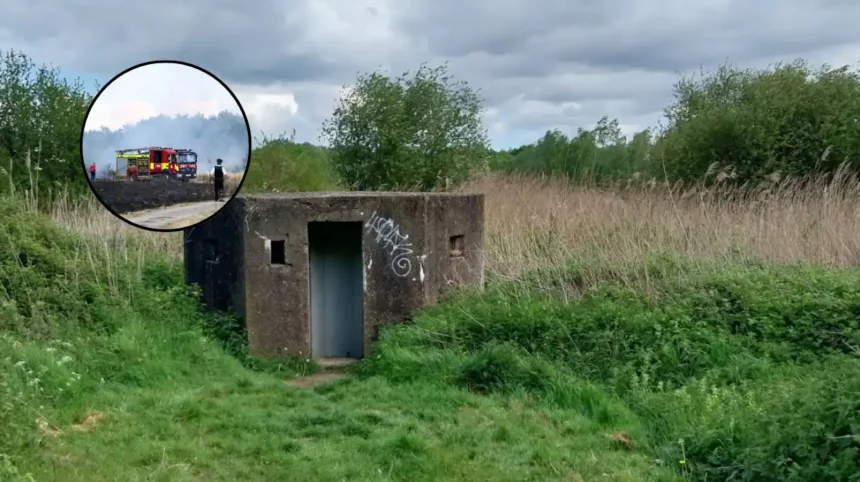
- Incident Details: A major wildfire broke out at Hornchurch Country Park in east London on Friday afternoon.
- Emergency Response: The London Fire Brigade (LFB) dispatched 14 fire engines and approximately 90 firefighters to tackle the blaze.
- Tactical Operations: Emergency crews fought multiple seats of fire across the park, using specialized equipment to contain the flames and prevent further spread.
- Safety Advisory: Fire officials issued urgent warnings to local residents, advising them to keep doors and windows firmly closed due to heavy plumes of smoke drifting across the region.
- Incident Containment: The fire was brought under control by 5:31 pm, though firefighters remained on site through the evening to perform dampening-down operations and address remaining hotspots.
- Wider Context: The incident occurs amidst prolonged dry weather, contributing to heightened wildfire risks across London and the wider UK.
Hornchurch (East London Times) August 15, 2026 — Emergency services responded to a significant wildfire that swept through Hornchurch Country Park on Friday afternoon, prompting a major operational response from regional fire services. The London Fire Brigade deployed 14 fire engines and roughly 90 firefighters after the initial emergency calls were received at approximately 3:16 pm. Large plumes of dark smoke were visible across miles of the surrounding borough, severely affecting visibility and local air quality.
Fire crews mobilized from stations in Romford, Ilford, Hornchurch, and neighboring districts to establish control over the sprawling blaze. Responders faced challenging environmental conditions as the fire established multiple active fronts across dry grassland.
The London Fire Brigade confirmed that tactical teams worked to suppress several distinct seats of fire simultaneously to stop the flames from advancing toward nearby residential areas.
How Did Emergency Services Respond to the East London Blaze?
Firefighters confronted difficult conditions upon arriving at the scene, where dry parkland and vegetation accelerated the speed at which the fire spread.
Responding teams deployed a range of specialist tools designed for open-land incidents, including backpack blowers, wildfire beaters, and off-road support vehicles equipped with high-pressure misting systems. Aerial drone units were also utilized to provide commanders with real-time thermal imagery and structural updates on the fire’s progression.
Due to the heavy volume of smoke generated by the burning grass and undergrowth, fire officials issued immediate public safety guidance for surrounding neighborhoods.
Residents living downwind were urged to stay indoors and keep all doors and windows sealed to minimize smoke inhalation risks.
By 5:31 pm, emergency control confirmed that the primary perimeter of the fire had been successfully contained.
However, operations continued long into the evening, with personnel remaining on-site to cool charred ground, check for underground smoldering, and dampen down remaining hotspots. The official cause of the incident remains unconfirmed and subject to investigation.
Explore More Hornchurch News
Fish Removed From Langtons Gardens Lake Amid Heatwave: Hornchurch 2026
Robin Hood Pantomime First Images Released: Queen’s Theatre Hornchurch 2026
Background of the Particular Development
Hornchurch Country Park—a former Royal Air Force airfield converted into a 290-acre nature reserve—has experienced heightened vulnerability to open-land grass fires during extended periods of dry, warm weather.
High summer temperatures and low rainfall across London have transformed open green spaces into dry vegetation, significantly elevating wildfire risks across the capital.
The London Fire Brigade has repeatedly highlighted the susceptibility of suburban parks and heathlands to grass fires during heatwaves. Previous incidents in the Havering area have demonstrated how rapidly flames can travel across open grassland when driven by light wind.
Authorities continue to maintain heightened readiness levels throughout summer months, routinely urging park users to avoid disposable barbecues, properly extinguish smoking materials, and dispose of glass litter to mitigate ignition hazards in public green spaces.
Prediction: How This Development Can Affect Local Residents and Public Policy
This latest wildfire at Hornchurch Country Park is likely to trigger immediate and long-term impacts across several key areas:
- Local Residents and Community Safety: In the short term, residents living adjacent to Hornchurch Country Park may experience lingering poor air quality, soot fallout, and restricted access to burned sections of the park while safety inspections and environmental recovery take place. The recurring risk of open-land fires may also lead to heightened anxieties regarding property safety during hot weather spells.
- Park Management and Operational Changes: Local authorities and conservation managers will likely enforce stricter oversight within the park. This could include expanded patrols, increased placement of fire-warning signage, temporary bans on outdoor cooking equipment, and dedicated creation of physical firebreaks to slow flame propagation in high-risk zones.
- Regional Fire Service Allocation: Frequent grassland fires require substantial resource commitments, drawing dozens of engines and specialized personnel away from municipal fire stations. Continued occurrences may prompt emergency services to reallocate permanent resources, increase seasonal drone surveillance, and demand broader public safety measures from municipal councils.