Key Points
- Widespread Supply Outage: Around 10,000 customers across 14 postcode areas in east London and Essex suffered low pressure or complete water loss following multiple major pipe bursts.
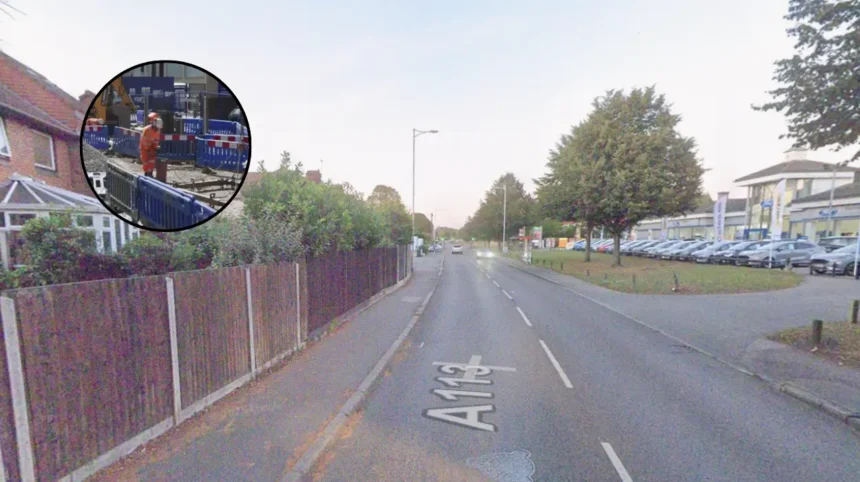
- Infrastructure Failure: The primary disruptions stemmed from double mains failures on Chigwell Road and Daisy Lane in South Woodford, exacerbated by hot weather and dry ground movement.
- Progress on Repairs: In a fresh update on Thursday morning, Thames Water stated engineers had made ‘good progress’ overnight, repairing one major line and fitting an encapsulation collar on Daisy Lane to bring the system back into supply.
- Community Disruptions: Local residents faced severe heat and were forced to queue for hours at bottled water stations in Fairlop Waters and Loughton, while vulnerable residents reported missed door-to-door deliveries.
- Political Escalation: Health Secretary and local MP Wes Streeting directly intervened, calling for additional distribution hubs and questioning Thames Water’s priority care delivery.
South Woodford (East London Times) August 15, 2026 — An end to the severe water outage that has left thousands of households without basic running water appears finally to be in sight, after Thames Water announced Thursday morning that repair teams made “good progress” overnight to rectify multiple burst water mains across east London and Essex.
- Key Points
- What Progress Has Thames Water Made Overnight?
- How Has The Outage Impacted East London Residents?
- Why Did The Pipes Burst Simultaneously?
- What Intervention Has Come From Political Figures?
- Background Of The Particular Development
- Prediction: How This Development Can Affect London Residents And Utility Customers
Around 10,000 properties across 14 postcode zones—including E4, E10, E11, E17, E18, IG2 through IG10, and RM4—have endured severe supply cuts or low pressure since the weekend. The disruptions began when two trunk mains ruptured in South Woodford on Chigwell Road and Daisy Lane.
The incident coincided with a prolonged heatwave, forcing residents to navigate soaring summer temperatures without functioning taps, showers, or sanitation.
What Progress Has Thames Water Made Overnight?
According to statements released by Thames Water, engineers worked straight through Wednesday night to complete critical mechanical fixes. A spokesperson for the utility company confirmed that one of the primary bursts on Chigwell Road had been isolated and repaired, while teams on Daisy Lane successfully began fitting a specialized “encapsulation collar” around the damaged section to safely restore pressure.
To stabilize network flow while permanent repairs are finalised, Thames Water deployed fleet tankers directly into the distribution system to inject clean water into local pipes.
While pressure has begun returning to select areas, officials cautioned that full system recovery across outlying postcodes would take time as the pipe network re-pressurises safely without triggering secondary bursts.
How Has The Outage Impacted East London Residents?
As reported by Ryan Kowalski of WE News, the disruption left more than 10,000 households struggling through extreme summer heat without basic domestic water.
Hundreds of affected residents were forced to queue in cars for up to two hours at designated emergency bottled-water distribution points, including the Fairlop Ice Kingdom in Ilford and New City College in Loughton.
Reporting by Xolani Mgijima of WE News highlighted the personal toll on local families. Adam Shah, a 44-year-old IT professional from Gants Hill, described the severe conditions after waiting in line at Fairlop Waters Country Park to collect bottled water.
Shah explained that basic tasks like brushing teeth or showering became impossible, noting that the outage revealed how heavily families rely on constant running water, particularly those caring for elderly relatives with complex hygiene needs.
Further coverage by BBC London revealed significant vulnerabilities among vulnerable residents. Abdul Jamil, a wheelchair user registered on Thames Water’s Priority Services list, disclosed that despite promises of direct emergency deliveries, no water arrived at his property.
Jamil voiced deep disappointment after his carer was forced to search empty local collection points when expected home deliveries failed to materialise.
Why Did The Pipes Burst Simultaneously?
Addressing the physical causes behind the widespread network breakdown, Thames Water attributed the dual failures to environmental pressure on underground infrastructure. A spokesperson for Thames Water stated:
“Dry ground conditions during this period of exceptionally hot and dry weather can cause movement around buried pipes, increasing the risk of bursts.”
Engineers noted that severe drying causes surrounding clay soils to shrink and shift, placing sudden, asymmetrical forces on ageing subterranean mains.
When one primary pipe fails under stress, the resulting hydraulic shock and diverted pressure often trigger secondary bursts along nearby weak points, as occurred between Chigwell Road and Daisy Lane.
What Intervention Has Come From Political Figures?
As reported by Grace McGachy of Hits Radio, local Member of Parliament and Health Secretary Wes Streeting intervened directly as the crisis entered its third day. Streeting confirmed that his parliamentary team remained in urgent contact with Thames Water management to demand immediate operational adjustments.
Streeting stated:
“My team and I have been in close contact with Thames Water regarding the water outages across Redbridge. I wanted to update everyone that we are urgently requesting Thames Water open up more water distribution points.”
Addressing reports of vulnerable residents being missed by distribution teams, Streeting added:
“We are escalating these incidents with Thames Water and if this is the case for you or someone you know locally, please contact my team and I.”
Exp;ore More Local East London News
The Urswick School Celebrates Record A-Level Results in Hackney 2026
Dagenham Man Fined Over £3,200 for Barking Dog Nuisance Dagenham 2026
Background Of The Particular Development
The burst mains crisis in east London occurs against a background of heightened public scrutiny surrounding Thames Water’s financial management, infrastructure investment, and operational performance.
The utility company, which services roughly 16 million customers across London and the Thames Valley, has faced mounting criticism over the resilience of its physical assets.
In recent months, public dissatisfaction has been fueled by financial disclosures regarding executive compensation. Reporting surrounding the outage noted public outrage over a £1 million signing-on fee paid to Thames Water’s chief financial officer, alongside broader corporate struggles with heavy debt burdens.
Furthermore, Thames Water was subject to a record £122.7 million fine by industry regulator Ofwat, primarily penalising the firm for systemic breaches concerning sewer spills and environmental management.
The structural vulnerability of east London’s water grid has been repeatedly highlighted by civil engineering experts. Much of the capital’s buried main architecture relies on Victorian and early 20th-century iron pipework, which remains exceptionally susceptible to thermal expansion and ground movement during climate extremes.
The recent disruption reflects long-standing industry debates regarding the pace of pipe replacement versus operational maintenance across the UK’s water sector.
Prediction: How This Development Can Affect London Residents And Utility Customers
The successful repair of the Chigwell Road and Daisy Lane mains will bring immediate physical relief to east London residents, but the broader operational fallout is expected to have long-lasting consequences for Thames Water and its customer base.
- Heightened Regulatory Penalties and Billing Pressure: Following Ofwat’s recent heavy enforcement actions, this multi-day failure across 14 postcodes will almost certainly trigger a formal investigation into Thames Water’s emergency response and priority customer care protocols. The regulator may impose further financial penalties or mandate targeted infrastructure reinvestment. However, with water bills having risen by up to 40% in April 2025, consumers will likely face continued political friction over paying higher prices for services that remain vulnerable to weather-induced breakdowns.
- Overhaul of Emergency and Priority Distribution Protocols: The documented failure to deliver emergency bottled water to registered Priority Services customers, such as wheelchair users and elderly residents, will force Thames Water to overhaul its logistics framework. Community groups and local councils will demand legally binding service-level agreements for vulnerable households during network emergencies.
- Accelerated Infrastructure Renewal in East London: To prevent recurring double-burst scenarios during future summer heatwaves, Thames Water will likely be forced to prioritize the complete structural replacement of legacy cast-iron trunk mains throughout Redbridge, Waltham Forest, and adjacent Essex postcodes. Residents should expect temporary road closures and localized civil engineering works over the next 12 to 24 months as pipe reinforcement projects are fast-tracked.