Key Points
- A commemorative exhibition in Hornchurch Country Park marked the Second World War Dambusters raid.
- The event took place over two days at the Essex Wildlife Ingrebourne Valley Visitors Centre.
- The raid, carried out by No. 617 Squadron on 16 and 17 May 1943, was the focus of the remembrance.
- Visitors from Havering and beyond attended the exhibition.
- The event was organised by military historian Richard Smith, his wife Kim, and volunteers.
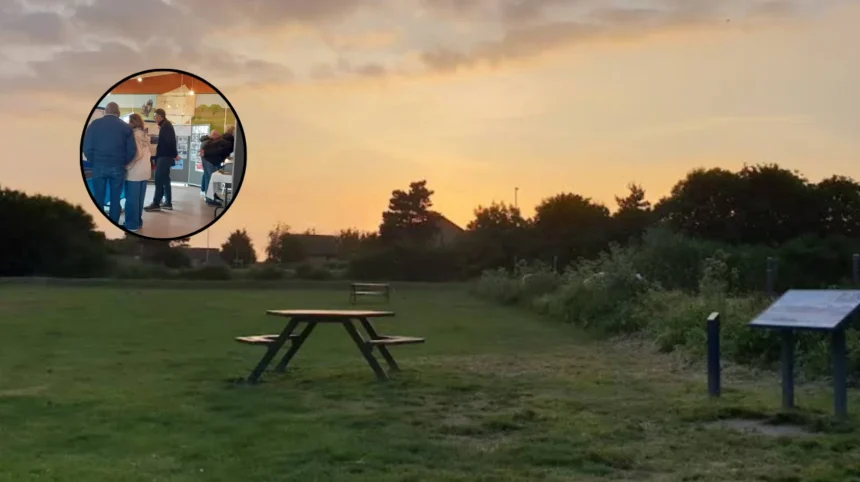
Hornchurch (East London Times) May 21, 2026 Essex Wildlife Ingrebourne Valley Visitors Centre, May 21, 2026 — Wartime heroes have been remembered in Havering at an annual exhibition that marked one of the most famous operations of the Second World War, as visitors gathered in Hornchurch Country Park to reflect on the Dambusters raid and the people involved in it. The two-day event at the Essex Wildlife Ingrebourne Valley Visitors Centre drew people from Havering and beyond, with the exhibition organised by military historian Richard Smith, his wife Kim and a team of volunteers.
What was remembered at the exhibition?
The exhibition focused on the Dambusters raid carried out by No. 617 Squadron on 16 and 17 May 1943, an operation that has remained one of the best-known missions of the war.
The raid is remembered not only for its military significance but also for the wider public interest it continues to generate at commemorative events and exhibitions.
According to the information available, the event in Hornchurch was designed as a remembrance of wartime service rather than as a wider historical re-enactment or display of military hardware.
It brought together local visitors and people from further afield, suggesting that the subject still resonates across different age groups and communities.
Who organised the event?
The exhibition was organised by military historian Richard Smith, along with his wife Kim and a group of dedicated volunteers.
Their role appears central to the event’s delivery, as the report specifically credits them with putting the exhibition together.
The available account does not quote the organisers directly, so the reporting remains limited to the factual description of their involvement. What is clear is that the event depended on volunteer support as well as historical expertise.
Why does the Dambusters raid still matter?
The Dambusters raid remains a significant part of wartime history because it is still widely recognised and commemorated more than eight decades later.
Public remembrance events such as the one in Havering show that interest in Second World War history continues beyond formal anniversaries and official ceremonies.
The exhibition also shows how local venues can help keep national history accessible to the public. By hosting the event at the Essex Wildlife Ingrebourne Valley Visitors Centre, organisers brought a major wartime story into a community setting.
Explore More Hornchurch News
Hornchurch Country Park Child Rescued from Riverbank, Hospitalised
Hornchurch Top Push, Dagenham Drop, Utd Back, Derbies
How was the exhibition received?
The report says the event attracted visitors from Havering and beyond, which indicates a wider public interest in the subject. No attendance figures were given, and no formal reaction from visitors was included in the available coverage.
Even without detailed audience comments, the turnout description suggests that wartime commemoration still draws a live audience when it is presented in a local and accessible way.
The venue in Hornchurch Country Park likely helped make the exhibition easy to visit for local residents.
What is the wider historical context?
The Dambusters raid was carried out by No. 617 Squadron on 16 and 17 May 1943, during the Second World War.
The raid has remained part of public memory through exhibitions, memorial events and anniversary coverage in later years.
Other commemorations have also marked the same operation in different locations, showing that remembrance of the raid is not limited to one area.
That broader pattern helps explain why a local exhibition in Havering can still connect with a national wartime narrative.
What does this mean for local visitors?
For local visitors, the exhibition offered a chance to engage with wartime history in a community venue rather than a formal museum. That kind of setting can make historical events feel more immediate and easier to understand.
The focus on remembrance rather than spectacle also suggests that the exhibition was aimed at education and reflection. For younger visitors, in particular, local events like this can help connect classroom history with a real place and a real community.
Background
The Dambusters raid is one of the most recognised operations of the Second World War and has been the subject of repeated commemorations over the years. Public events marking the raid have taken place at museums and memorial sites, including exhibitions opened on major anniversaries.
These commemorations often combine historical explanation with tribute, allowing audiences to learn about the operation while also remembering those involved. The Havering exhibition fits that pattern by placing the story in a local setting and inviting public attendance.
Prediction
For local history audiences, veterans’ groups and school visitors, this kind of exhibition is likely to sustain interest in wartime remembrance at a community level. It may also encourage more local venues to host small-scale historical displays around major anniversaries.
For Havering residents, the effect is likely to be a stronger link between local cultural activity and national history, especially when events are run by knowledgeable organisers and volunteers. The continued attention given to the Dambusters story suggests that future commemorations will still attract visitors when they are presented in accessible, local venues.